Sait Abasiyanik - A Useless Man
Здесь есть возможность читать онлайн «Sait Abasiyanik - A Useless Man» весь текст электронной книги совершенно бесплатно (целиком полную версию без сокращений). В некоторых случаях можно слушать аудио, скачать через торрент в формате fb2 и присутствует краткое содержание. Год выпуска: 2015, Издательство: Archipelago, Жанр: Классическая проза, на английском языке. Описание произведения, (предисловие) а так же отзывы посетителей доступны на портале библиотеки ЛибКат.
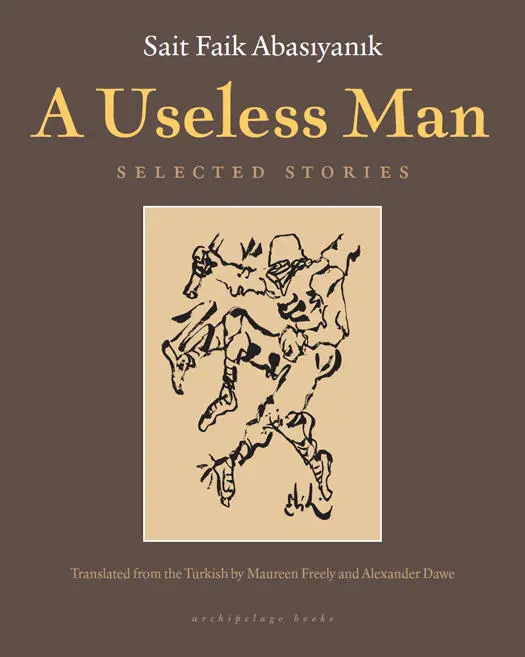
- Название:A Useless Man
- Автор:
- Издательство:Archipelago
- Жанр:
- Год:2015
- ISBN:нет данных
- Рейтинг книги:3 / 5. Голосов: 1
-
Избранное:Добавить в избранное
- Отзывы:
-
Ваша оценка:
A Useless Man: краткое содержание, описание и аннотация
Предлагаем к чтению аннотацию, описание, краткое содержание или предисловие (зависит от того, что написал сам автор книги «A Useless Man»). Если вы не нашли необходимую информацию о книге — напишите в комментариях, мы постараемся отыскать её.
Sait Faik donated his estate to the Daruşafaka foundation for orphans, and this foundation has since been committed to promoting his work. His former family home on Burgazada was recently restored, and now functions as a museum honoring his life and work. He is still greatly revered: Turkey's most prestigious short story award carries his name and nearly every Turk knows by heart a line or a story by Sait Faik.
A Useless Man — читать онлайн бесплатно полную книгу (весь текст) целиком
Ниже представлен текст книги, разбитый по страницам. Система сохранения места последней прочитанной страницы, позволяет с удобством читать онлайн бесплатно книгу «A Useless Man», без необходимости каждый раз заново искать на чём Вы остановились. Поставьте закладку, и сможете в любой момент перейти на страницу, на которой закончили чтение.
Интервал:
Закладка:
As he surveyed the garden’s middle rows — the cucumber flowers and the newly budding yellow squash — he puffed on a cigarette, his reward for a job well done.
I watched him from my window: he was sitting on a rock eating sunflower seeds and flicking the shells over the great mounds of earth, marveling at their flight. It was a late May afternoon and heavy lightning clouds had gathered in the sky like mist. He saw me and looked over his garden.
“Well, what do you think?”
I looked out.
“Magnificent, Papaz Efendi. You’ve won,” I said.
He thought for a moment.
“I am a soldier of the seed. The soil is my battlefield. Defeat would sully my name. Come on down.”
He was standing tall in the garden, leaning against his spade, and he seemed to me the spitting image of the shepherd from the Holy Book.
“You look like a victorious general,” I said.
He smiled.
“Pasha Papaz Aleksandros,” he said.
And he picked up a handful of moist red earth and rubbed it into his beard.
“Iron, magnesium, phosphorus, calcium, everything’s here,” he said. “But I know seeds. They’re little granaries, little eggs. But this thing, the earth, well that’s something else, something I could never understand. A scientist can analyze it and tell us there’s so much of this and so much of that. But seeds, well there’s no problem providing everything they need: scent, color, vitamins, minerals, iron, phosphorus, arsenic, sugars and, who knows what else?”
“Is that all? What about sunshine and the rain?”
“They’re less important, somehow. Maybe because they’re too proud. Rain makes us beg and pray for it, and when it comes pouring down from the sky, we rejoice and give our thanks to the Lord. And while the sun shimmers all day long in the sky, the earth says, I have something for every one of you. You can’t live without me. Without me all your efforts would be smoke . All winter the earth lies and waits silently beneath our feet, soiling our boots and our clothes. It’s pitch-black, or the color of ash, or yellow, or dark red, or lifeless mud or clay. Then with spring it releases unbridled joy. It showers us with its bounty, and the festival begins: clover spreads across the pastures. Poppies and daisies cover the hilltops. Even the straw brooms seem to smile. The earth gives without asking for anything in return. It’s generosity, sheer generosity! And then, after it has showered us with so much joy, it begins to recede. It decays and gives birth. It decays and gives birth. Women are of the earth, that much is clear. Mother Earth. Mother Earth! There’s a little earth in every female. Perhaps men are children of the sun. Perhaps we’re made of air and water. But women — they’re made of the earth.”
He opened his hand and let the soil fall over his eggplant seedlings.
“Have you ever heard me sing?”
“No,” I said.
“I have a beautiful voice. You should hear me sing. When I sing my prayers, it’s not Jesus and his father I’m praising. It’s the earth. You should hear me. These Byzantine dirges are dreadful. They’re painful and they’re false. The world they paint is an illusion. It’s a kind of slow madness, full of longing, and grief. Lust and enslavement. But I sing them differently. Everything changes when I sing with the earth in mind. The island has two beautiful voices. One is mine. No one doubts that. The other belongs to the fisherman Antimos. Have you ever heard him sing?”
“No, I haven’t,” I said.
“I’m sure you have, but you weren’t really listening. He sings when he’s weaving or mending his nets. You can’t understand the beauty of his voice if you’re too close. It’s nothing but a faint echo. He sings so softly you hardly hear him. Would you like to hear him? Take a rowboat out to sea when he sings beside the kiosk on the shore. Row out for ten minutes or so and stop in the middle of the sea. That’s when you’ll hear the fisherman’s song. When you’re just beside him you can’t really hear him, but no matter where else you go in the sea you’ll hear him. And so clearly that … Then listen to him for a while. At first you’ll feel restless, overwhelmed. Then start rowing swiftly, moving farther out from shore. Then even farther! Don’t be afraid. The voice will find you. And from the moment you stop hearing, to the moment you begin rowing toward it again, you will know. Maybe you’ve gone out just to catch a fish or two. But when you look into the sea and see its fish and the light on the water and the lapping waves splashing all around you, you will understand — this song is not of God, but of man. The fisherman might think he’s singing to God, but he’s not — he’s singing for the sea. He’s eighty years old, and he’s never hurt a soul. He’s spent his life weaving nets and taking his sustenance from the sea. If he didn’t fish for two days, he’d go hungry, but for seventy years he’s fished every day, catching enough to buy his daily bread. Nothing more. He’s found a treasure that offers him the same bounty every day and nothing more. He never deprives others of their fair share. I can’t tell you how much I love the song of thanks and praise that he sings for the sea. In church, I sing for the earth. But it’s a sinner’s lament. I earn my living peddling a drug that has deceived humankind for centuries. I am the opium for those who can’t sleep. Who knows what my people would do if they knew that every time I don my golden robe, I pray only for the earth. They’d leave me and I’d go hungry, hungry!”
He scooped up another handful of earth and said:
“I say my prayers for the earth. Listen to me and to the fisherman, too. He sings for the depths of the sea. He’s a holy man who has found truth, though he doesn’t know it. Eighty years old and in his whole life he’s only ever hurt a fish! But I’m a clever sinner. I envy fishermen and farmhands who till the soil. Only them and no one else …”
Once I heard Papaz Efendi preach, and I listened to the fisherman Antimos, both close and from a distance, and though the Byzantine litany remained a mystery to me, the songs gnawed away at me like dark worms, for days on end.
The two voices were always ringing in my ears and on sleepless nights I would listen to them through my window. I’d fall so deeply into myself I could hear the flow of blood in my veins.
When Papaz Efendi tilled the soil: now that was something worth seeing. His joy seemed boundless. The only priest-like thing about him left was his beard, as black as the beards of the youngest men of the earliest race of man. The villagers didn’t take well to Papaz Efendi, but he never begrudged them. He’d have long and friendly chats with anyone. He paid no heed to their gossip. Once, in the coffeehouse, he said:
“Now who’s the one saying I’m a ladies’ man?”
When no one said a word he looked directly into the eyes of the man who’d stirred up the gossip.
“Enjoying women is like breathing, and how can we live without breathing, my friends?”
One moonlit night I saw Papaz Efendi sipping cold rakı on the top of the island with a group of Greek men and women celebrating around a roasted lamb. His dark mohair frock tunic was tucked into his belt. It glistened in the moonlight as he danced with a plump young girl. In one hand he held her little hand and a pure white napkin that looked like mastic; in his other hand he held his glass of rakı; and every so often he stopped to mop her brow.
In the winter I’d go out to the island on Saturdays now and again. I’d find Papaz Efendi in the garden. He’d show me his spinach and onions.
“You shouldn’t come out here alone. It’s cold. You need someone to make you salad,” he said. On the days I wasn’t alone in our house, and Papaz Efendi saw the reflection of a woman in the window, he would flash me a smile, baring a row of strong teeth, and it was like the sun shimmering off the sea on a summer afternoon.
Читать дальшеИнтервал:
Закладка:
Похожие книги на «A Useless Man»
Представляем Вашему вниманию похожие книги на «A Useless Man» списком для выбора. Мы отобрали схожую по названию и смыслу литературу в надежде предоставить читателям больше вариантов отыскать новые, интересные, ещё непрочитанные произведения.










Обсуждение, отзывы о книге «A Useless Man» и просто собственные мнения читателей. Оставьте ваши комментарии, напишите, что Вы думаете о произведении, его смысле или главных героях. Укажите что конкретно понравилось, а что нет, и почему Вы так считаете.