Sait Abasiyanik - A Useless Man
Здесь есть возможность читать онлайн «Sait Abasiyanik - A Useless Man» весь текст электронной книги совершенно бесплатно (целиком полную версию без сокращений). В некоторых случаях можно слушать аудио, скачать через торрент в формате fb2 и присутствует краткое содержание. Год выпуска: 2015, Издательство: Archipelago, Жанр: Классическая проза, на английском языке. Описание произведения, (предисловие) а так же отзывы посетителей доступны на портале библиотеки ЛибКат.
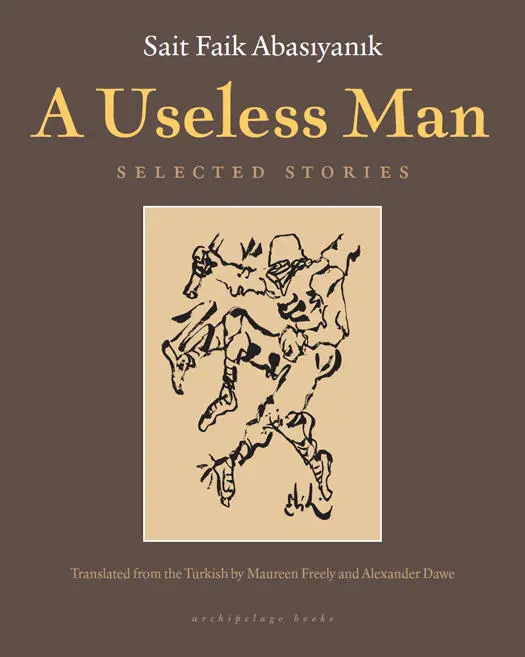
- Название:A Useless Man
- Автор:
- Издательство:Archipelago
- Жанр:
- Год:2015
- ISBN:нет данных
- Рейтинг книги:3 / 5. Голосов: 1
-
Избранное:Добавить в избранное
- Отзывы:
-
Ваша оценка:
A Useless Man: краткое содержание, описание и аннотация
Предлагаем к чтению аннотацию, описание, краткое содержание или предисловие (зависит от того, что написал сам автор книги «A Useless Man»). Если вы не нашли необходимую информацию о книге — напишите в комментариях, мы постараемся отыскать её.
Sait Faik donated his estate to the Daruşafaka foundation for orphans, and this foundation has since been committed to promoting his work. His former family home on Burgazada was recently restored, and now functions as a museum honoring his life and work. He is still greatly revered: Turkey's most prestigious short story award carries his name and nearly every Turk knows by heart a line or a story by Sait Faik.
A Useless Man — читать онлайн бесплатно полную книгу (весь текст) целиком
Ниже представлен текст книги, разбитый по страницам. Система сохранения места последней прочитанной страницы, позволяет с удобством читать онлайн бесплатно книгу «A Useless Man», без необходимости каждый раз заново искать на чём Вы остановились. Поставьте закладку, и сможете в любой момент перейти на страницу, на которой закончили чтение.
Интервал:
Закладка:
Well, it seems there’s no harm in saying it, seeing that I’ve already embarrassed myself enough: I hadn’t washed in seven years. In all that time it never even crossed my mind. But now I was itching, a terrible itching all over! I thought I had fleas. So I went into the hamam and I washed, oh how I washed! I washed off all the years of caked filth. I felt much better when I was done. But the sweat, so much sweat! Everywhere I rubbed I was sure to peel off bits of skin, grease, grime, or whatever it was. I was shocked at how much grease and grime a human being could carry. My skin was positively caked with it.
I left the hamam and got on the tram, thinking that I’d go home and then back out to Teşvikiye and the surrounding districts. But once my head hit the pillow I fell asleep and slept for a full twenty-four hours. I woke up the next day at two and hurried out for a bowl of tripe soup.
“God praise, Mansur Bey, you look the picture of perfect health,” Bayram said.
I couldn’t tell him I’d been to a hamam. I asked for soup without garlic. Then I went for my stroll. I was in Maçka by nightfall. A different world entirely. Back home I promised myself I wouldn’t leave my neighborhood for another seven years, but it didn’t happen that way. Something was making my head spin, and for the next two days my life made no sense. Can you guess what I got to thinking? That I’d sell our store and my apartment. And you know that nightclub I was telling you about, the one with the live music? And that girl working outside taking orders, you know the one with the small forehead. Well, I’d take her as my lover. And a year after that I’d die.
I’d jump on a Bosphorus boat one day, taking my seat on one of those benches at the back, and somewhere near Arnavutköy or Bebek, I’d stand up, check to make sure no one was looking and, if I was alone, I’d climb over the railing and jump into the sea.
Papaz Efendi

The church was just across the street from us. It was hemmed in by pines, which at twilight would sink into shadow, leaving the brick walls of the church to glow red and hot against a dark blue sky. Often we’d see a crow or a poet seagull landing beside the cross on the roof, which, lacking a bell tower, had been restored many hundreds of times by Greek master builders of the Orthodox faith (or others oblivious to it), and at times like these it seemed more like the home of a Byzantine feudal lord than a church. It wasn’t an ugly building, but it wasn’t pretty either. It had only one main dome; where there should have been smaller domes, there were holes and crenels that looked like gutters. By day it all looked rather crude and tired, but when the evening blues and greens turned dark enough to seep into the color of the tiles, the church looked so close you almost thought you could reach out and grasp the cross on the top and pull away the entire tableau, without so much as frightening a bird away, to stencil it onto a dark blue background in your notebook or hang it on your wall, to savor forever after. That’s how the church looked to me on May evenings. As a child I was always trying to get those evenings onto the page, perhaps I lamented the fact I wasn’t a painter or a child putting stickers in his notebook. The bell tower was in the front yard, though you couldn’t really call such a thing a bell tower. It had two bells: a big one that rang on the days someone died and a small one that rang to announce ferryboat and prayer times to the village. I first saw Papaz Efendi sitting cross-legged with a black hat in his lap on a board between two pines, a little behind the bells. His beard was pitch-black, and so were his eyes. He was wearing a raw silk shirt that he seemed to have slipped into without using his hands. It shimmered in the sunlight. The greasy tufts of hair hanging over his forehead gave him the look of an unruly child.
“Hello, sir.”
“Hello, Papaz Efendi.”
“How are you, sir? We’re neighbors, I believe.”
“That’s true.”
Whenever he flashed his bright teeth beneath his black beard, he suddenly looked less Orthodox, less Byzantine. Having shed his churchman’s mask, he would take on the delightful aspect of a workman relishing a meal.
“Tell your mother I’ll be tending the garden over the winter.”
“I’ll tell her.” And I did.
Early next morning I found Papaz Efendi tilling the garden with a spade. His long raincoat hung over an apple tree like a scarecrow. He had pale, muscular arms and long, white fingers that kept a firm grip on the spade. Leaning over, he picked up a handful of dirt:
“I love the earth for its quiet, its humility, its passion, its peace. The earth is the source of all life. How could anyone be more alive than the earth? That’s why they say we’re made of the earth.”
“So you’re a philosopher, Papaz Efendi?”
“Oh I’m not a philosopher and I’m not a priest. I’m a human being without any earth to call my own. Or home, or religion.”
“Religion?”
“In a way, absolutely. But if there’s a God, I suppose He created us to live. On those terms, I can accept Him.”
He paused.
“But let’s forget all that. Think of the earth …”
“How old are you?” I asked.
“Sixty-three.”
“What?”
He stood straight and tall: There wasn’t a pinch of spare flesh or flab on his body; well proportioned and straight as a rail, nothing he didn’t need.
“Heavens, that’s impossible. You don’t look a day over forty.”
“I live to eat. I’ll drink my fair share of wine if it’s around, and you’ll never see me without a cigarette hanging from my lips. I’ll eat leaves and birds and if there’s nothing else, I’ll eat the earth — but never human flesh. It’s my stomach — I have an iron stomach. But I don’t eat much, just the amount I need to get the gears turning. I’ll never overindulge, but I like my food and drink. It keeps me young. And another thing — I never listen to what others have to say about me: ‘The papaz drinks rakı, he gets drunk, he chases after girls, he laughs too much.’ That’s what they say. Well, let them talk. To me it’s mindless chatter, nothing more. I’ve always wanted to make something of my life but I never did. I never gambled, no, I never went that far. Of course, there’s a part of me that wishes I had. When I was young there was a time when I ate nothing but bread and onions, and if a pretty girl walked past me, I’d whinny like a colt.”
“I don’t believe you, Papaz Efendi.”
“That’s the way I was, sir. And why not? Because I’m a priest? I’m in love with beautiful things: beautiful women, good wines, and grass and trees and flowers and birds — everything that’s beautiful.”
And he spoke beautiful Turkish.
“You’ll have to excuse me now. But I’ll see you soon.” And with a soft thud he drove his spade into the moist red earth.
“Here, have a look,” he said. “How is this any different from a handful of gold? What’s gold to us anyway?”
He leaned over and pulled up a tuft of curled couch grass and looked me in the eye and smiled, showing me his sturdy teeth.
“Our teeth are strong because we don’t have gold, because we love the earth and are nourished by it. It’s a blessing not to have gold. If we did we’d have long since died of overindulgence. Our livers could never have taken it.”
When Papaz Efendi’s tussle with our little garden was over, he stood there like a man who’d won a lover’s quarrel, compassionate and proud; and there, bedecked with flowers, was the beauty who’d submitted to his will: the radiant earth. Every tree had the perfect number of branches. Not a trace of unwanted couch grass on the ground. The tomato vines had grown high.
Читать дальшеИнтервал:
Закладка:
Похожие книги на «A Useless Man»
Представляем Вашему вниманию похожие книги на «A Useless Man» списком для выбора. Мы отобрали схожую по названию и смыслу литературу в надежде предоставить читателям больше вариантов отыскать новые, интересные, ещё непрочитанные произведения.









Обсуждение, отзывы о книге «A Useless Man» и просто собственные мнения читателей. Оставьте ваши комментарии, напишите, что Вы думаете о произведении, его смысле или главных героях. Укажите что конкретно понравилось, а что нет, и почему Вы так считаете.