Sait Abasiyanik - A Useless Man
Здесь есть возможность читать онлайн «Sait Abasiyanik - A Useless Man» весь текст электронной книги совершенно бесплатно (целиком полную версию без сокращений). В некоторых случаях можно слушать аудио, скачать через торрент в формате fb2 и присутствует краткое содержание. Год выпуска: 2015, Издательство: Archipelago, Жанр: Классическая проза, на английском языке. Описание произведения, (предисловие) а так же отзывы посетителей доступны на портале библиотеки ЛибКат.
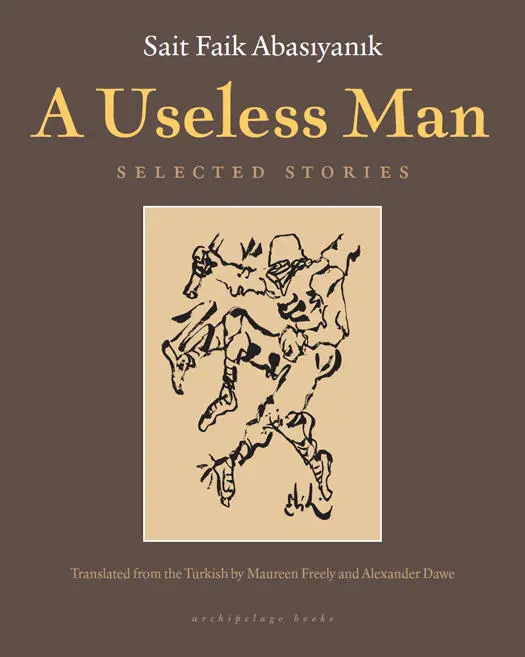
- Название:A Useless Man
- Автор:
- Издательство:Archipelago
- Жанр:
- Год:2015
- ISBN:нет данных
- Рейтинг книги:3 / 5. Голосов: 1
-
Избранное:Добавить в избранное
- Отзывы:
-
Ваша оценка:
A Useless Man: краткое содержание, описание и аннотация
Предлагаем к чтению аннотацию, описание, краткое содержание или предисловие (зависит от того, что написал сам автор книги «A Useless Man»). Если вы не нашли необходимую информацию о книге — напишите в комментариях, мы постараемся отыскать её.
Sait Faik donated his estate to the Daruşafaka foundation for orphans, and this foundation has since been committed to promoting his work. His former family home on Burgazada was recently restored, and now functions as a museum honoring his life and work. He is still greatly revered: Turkey's most prestigious short story award carries his name and nearly every Turk knows by heart a line or a story by Sait Faik.
A Useless Man — читать онлайн бесплатно полную книгу (весь текст) целиком
Ниже представлен текст книги, разбитый по страницам. Система сохранения места последней прочитанной страницы, позволяет с удобством читать онлайн бесплатно книгу «A Useless Man», без необходимости каждый раз заново искать на чём Вы остановились. Поставьте закладку, и сможете в любой момент перейти на страницу, на которой закончили чтение.
Интервал:
Закладка:
Papaz Efendi passed away last summer. He died of liver failure. His stomach was the size of a balloon.
“It’s cirrhosis. I shouldn’t have contracted something like this. I don’t believe in illness. The pain’s only in my head.”
“What’s happened, Papaz Efendi? There’s a rumor going around.”
“Don’t pay any attention to that. I did, and now I’m dying. That dishonorable villager slandered me. It’s a lie. You have to believe me. But maybe I’ll survive. I’ll get through this one, too.”
But he didn’t, and he died. Papaz Efendi was only guilty of leading on a silly girl. Three days before he died I saw him in a countryside café. His face was pale. This was the day I noticed the pockmarks under his beard. But she was still young, still beautiful. He’d lost a lot of weight but his stomach was clearly bloated.
“They started talking about it the other day,” he said. Then he pointed to a bright young girl with sun-kissed legs.
“Now if all this gossip had to do with a girl like that I wouldn’t feel such a pain in my heart.”
“But I thought you never gave such gossip any notice, Papaz Efendi.”
“It’s gotten to me this time, and now it’s under my skin,” he said. “Why are people so obsessed with each other’s lives? I suppose with death knocking at the door it’s harder to bear. Otherwise I wouldn’t mind. But who knows? Are they all just backstabbing fools and liars and thieves? Don’t I know that they’re all after each other’s livelihood, their wives and their daughters? But I’m not like that. I have three more days, and I intend to spend them laughing, and loving Mother Earth, and marveling at beautiful girls.”
Three days later, Papaz Efendi was dead.
The Valley of Violets

My friend was lost in thought. His head was resting in his gigantic hands. His half liter of wine stood half empty; his rank mackerel and rancid green beans were misery in still life; even someone who hadn’t eaten in days would know that the food was somehow alive, mourning its own decay: a single bite was bound to bring on sharp stomach pangs. Abandoned food in second-rate tavernas looks so forlorn: I see traces of the same resignation in men who haven’t chosen a mate and women who have not yet been chosen.
His name was Bayram: he was a big-boned man who spoke Turkish with an Albanian accent. Once upon a time he’d sold dried almonds that he turned back into fresh almonds with nitric acid and ash; after that he sold lottery tickets; then he was a driver, and for a while I suppose he was making a decent living, earning thirty or forty lira a day. That’s when I met him. But old habits die hard: he still dressed like a mobster and he could still burn through a week’s wage in a day. He hung out with the prettiest girls in the worst tavernas. Seher was one of them. She was incredibly tall. He had already moved in with her. I’d seen her in his car.
“Hey, my man,” he’d say. “You mark my words, that one’s a devil in disguise.”
And he’d crack his whip over his horses and the wiry mares would shoot through the narrow streets like lightning. So Bayram was living with Seher then, and they got into all sorts of fights. Once there was even a stabbing. He was on the run for days but eventually they caught him. They put him away for seven or eight months. That’s when Seher fell for an officer, she’d always had a thing for men in uniform. And then she stopped going to the taverna on Asmalimescit.
Bayram couldn’t work after that. His spine stuck out like pack poles on a saddleless camel. He’d start drinking in the morning. And he was bent on finding Seher. One day he drew an enormous knife out from under his belt and slashed her side. But she didn’t die. And she never told anyone who’d done it.
After she was released from the hospital she went back to the taverna but she refused to speak to Bayram. And that’s what really got to him. She was tough and had him tied up like a workhorse. But time went by and they made up and Bayram sold his carriage and his mares. And Seher burned through all his money. She was literally breaking Bayram’s back. By that time he was driving someone else’s carriage for ten lira a day. He didn’t like the people she spent time with. Eventually he lost his job driving the carriage and he went back to selling almonds.
I would find him drinking away his wages in the tavern; steeped in darkness, his face looking like a bombed-out European city. His eyes no longer flamed. The light had gone out of his chiseled face, the passion, too. And he had a harsh, dry cough. Some of the old luminosity came back when he was drinking, but the passion — it only returned when he headed out to kill Seher. Finding him in that pitiful state one night, I said:
“Bayram, my friend. What the hell’s happened? This is crazy.”
“Sit down,” he said, and then he shouted, “Barba! Another bottle of wine!”
Barba brought us a bottle of Çavuş white and we got pretty drunk. At one point Bayram gave me the strangest look; he was on the verge of saying something but stopped himself. I didn’t push him, but then he said:
“I love you like a brother, and you love me, right?”
“How could you think otherwise, Bayram?”
“So then would you take me home?”
“Sure. If you’re that drunk,” I said.
“No, not to my room,” he said. “Home, home, my real home. I haven’t been back in seven years.”
“Seven years?”
He smiled.
“One morning seven years ago, I left,” he said. “It was February and I had just turned twenty-one, but the waters in our stream were still as warm as a morning in spring, and the air was filled with the scent of violets. I set out for Beyoğlu with a bunch of flowers in my arms. I sold them in the Çiçekpasaj. I got nine lira for them. I hadn’t tasted drink before that. And then I did. I’d been married for three years but I’d never tasted a woman who was done up and perfumed. After that I never went back home. I wonder if any of them are still alive. In all this time, I’ve never run into one of them. My dad was already an old man then. Then there’s mother, and my wife and my two children, one a year and a half and the other just nine months. So I sold almonds, as you know, and you know the rest, too.”
He called out to the proprietor:
“Barba! A bottle of red, but make it a full liter.”
“Hold on, Bayram! You’ve had enough as it is.”
I asked the old waiter how many bottles he’d drunk.
“I really don’t know, brother,” he said, “I’m not too good with this sort of thing. I’ve written it down here, everything he drinks, but I may be wrong …”
In a warm voice Bayram said:
“Bring us the wine, but I won’t drink any.”
But he had some all the same. Then I ordered another bottle. When we were back on the street I could barely stand, and Bayram was no better. We stopped off at the taverna on Asmalımescit and asked for Seher and the waiter Bekir. We were told they’d gone to the Hilltop, so we jumped in a car and sped off. Bayram kept muttering:
“I’ll topple her down the hilltop.”
Thank God Seher wasn’t there. From there we set out on foot. It was damp and the wind was cold and pieces of icy cloud slid across the sky. From time to time the moon seemed more suspicious than usual. From time to time the driving wind was at our backs, and from time to time it pushed us back.
Suddenly we stopped and it was calm. A great old Ottoman house emerged from the night. We were in a cabbage patch; we had somehow stumbled over the garden walls. Bayram leading the way, we began descending into the darkness, trudging over the soft earth; the wind grew softer and softer and soon we were surrounded by thick, warm air. I could hear the sound of water. A soft light flowed from the huddle of buildings below. Dogs barked in the distance. We knocked on a door. A girl’s voice on the stairs:
Читать дальшеИнтервал:
Закладка:
Похожие книги на «A Useless Man»
Представляем Вашему вниманию похожие книги на «A Useless Man» списком для выбора. Мы отобрали схожую по названию и смыслу литературу в надежде предоставить читателям больше вариантов отыскать новые, интересные, ещё непрочитанные произведения.









Обсуждение, отзывы о книге «A Useless Man» и просто собственные мнения читателей. Оставьте ваши комментарии, напишите, что Вы думаете о произведении, его смысле или главных героях. Укажите что конкретно понравилось, а что нет, и почему Вы так считаете.