Anchee Min - The Last Empress
Здесь есть возможность читать онлайн «Anchee Min - The Last Empress» весь текст электронной книги совершенно бесплатно (целиком полную версию без сокращений). В некоторых случаях можно слушать аудио, скачать через торрент в формате fb2 и присутствует краткое содержание. Жанр: Историческая проза, на английском языке. Описание произведения, (предисловие) а так же отзывы посетителей доступны на портале библиотеки ЛибКат.
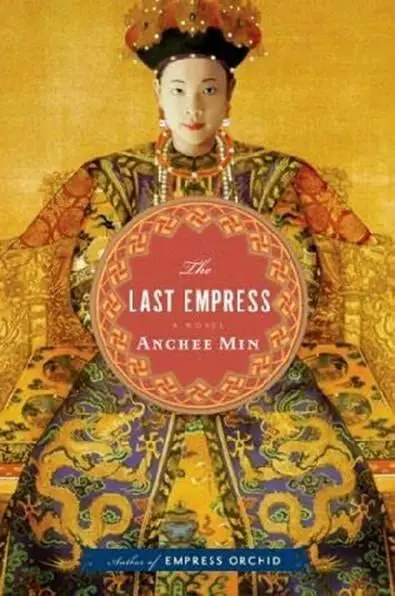
- Название:The Last Empress
- Автор:
- Жанр:
- Год:неизвестен
- ISBN:нет данных
- Рейтинг книги:4 / 5. Голосов: 1
-
Избранное:Добавить в избранное
- Отзывы:
-
Ваша оценка:
The Last Empress: краткое содержание, описание и аннотация
Предлагаем к чтению аннотацию, описание, краткое содержание или предисловие (зависит от того, что написал сам автор книги «The Last Empress»). Если вы не нашли необходимую информацию о книге — напишите в комментариях, мы постараемся отыскать её.
The Last Empress is the story of Orchid"s dramatic transition from a strong-willed, instinctive young woman to a wise and politically savvy leader. Moving from the intimacy of the concubine quarters into the spotlight of the world stage, Orchid must not only face the perilous condition of her empire but also a series of devastating personal losses, as first her son and then her adopted son succumb to early death. Yearning only to step aside, and yet growing constantly into her role, only she-allied with the progressives, but loyal to the conservative Manchu clan of her dynasty-can hold the nation"s rival
factions together.
Anchee Min offers a powerful revisionist portrait based on extensive research of one of the most important figures in Chinese history. Viciously maligned by the western press of the time as the "Dragon Lady," a manipulative, blood-thirsty woman who held onto power at all costs, the woman Min gives us is a compelling, very human leader who assumed power reluctantly, and who sacrificed all she had to protect those she loved and an empire that was doomed to die.
The Last Empress — читать онлайн бесплатно полную книгу (весь текст) целиком
Ниже представлен текст книги, разбитый по страницам. Система сохранения места последней прочитанной страницы, позволяет с удобством читать онлайн бесплатно книгу «The Last Empress», без необходимости каждый раз заново искать на чём Вы остановились. Поставьте закладку, и сможете в любой момент перейти на страницу, на которой закончили чтение.
Интервал:
Закладка:
The auspicious occasion of my sixtieth birthday was to have been a joyful event, and I understand that officials and many citizens have subscribed funds wherewith to raise triumphal arches-twenty-five percent of your yearly income, I was told-to honor me by decorating the Imperial Waterway along its entire length from Peking to my home… I was not disposed to be unduly obstinate and to insist on refusing these honors, but I feel that I owe you, above everything else, my true feelings. Since the beginning of the last summer our tributary states have been taken, our fleets destroyed, and we have been forced into hostilities causing great despair. How could I have the heart to delight my senses? Therefore, I decree that the public ceremonies and all preparations be abandoned forthwith.
I sent my draft directly to the printer without going through a grand councilor. I was afraid that my words would be violated, just as had my wish to cancel my birthday banquets.
I would have also liked to share with the nation my regret that our neglect of Li's advice had only stiffened the penalties China had to pay. I could not begin to express my anger that Li Hung-chang, at the age of seventy-two, returned home from Japan only to be called a traitor. People in the streets spat at his palanquin as it passed.
As a way to show support for Li, I persuaded the court to send him to St. Petersburg not long after the coronation of Tsar Nicholas II.
Li requested that an empty coffin accompany him on the trip-he wanted to be prepared. He asked me to inscribe his name on the lid, which I did.
As a result of Li Hung-chang's visit, a secret agreement between Russia and China was negotiated and then signed. Each country agreed to defend the other against aggression from Japan. The price we paid was to accept a clause allowing Russia to extend its Trans-Siberian Railway across Manchuria to Vladivostok. We would also allow the Russians to use the railway to transport troops and war materiel through Chinese territory.
It was the best Li Hung-chang could achieve under the circumstances. He and I had a gut feeling that Russia could not be trusted. As it turned out, once we gave the Russians the right to harbor their fleet in our ice-free Port Arthur, they refused to leave, even after Japan was expelled.
Around this time, as Guang-hsu and I were working out the practicalities of a land-leasing program to generate payments for our foreign loans, his wife, my niece Lan, arrived unexpectedly.
The moment Guang-hsu saw Lan entering, he excused himself and left the room.
Lan was dressed in a robe embroidered with patterns of roses. Matching ornaments of tiny roses made of ribbon were in her hair. The high collar of her robe forced her chin up and out, making her discomfort palpable. It seemed that she had quit caking her cheeks with white powder; her heartache was visible in her expression. The corners of her mouth drew downward. Tears fell before she could speak.
Witnessing their troubled marriage was worse than living with the deaths of my husband and son. The deaths of Hsien Feng and Tung Chih cured nothing, but they set the stage for healing. Memory was selective and altered itself over time. I no longer remembered the hard feelings. In my dreams my son loved me, and Hsien Feng was always adoring.
With Guang-hsu and Lan, misery was like mold growing in a wet season: it started in the corner of an eave and slowly took over the entire palace.
"I came from the bedside of my mother-in-law." Lan was speaking, of course, about my sister. "Rong is doing poorly."
My sister had been bedridden and had refused my visits. Rong had insisted that I was the cause of her illness, so I had sent Lan in my place.
"I know you are not here to talk about my sister," I said to Lan. "All I can tell you is that Guang-hsu is under great pressure."
Lan shook her head, setting the ornaments in her hair fluttering. "He needs to spend time with me."
"I can't force him, Lan."
"Yes, you can, Aunt, if you truly care about me."
I felt guilty and promised her that I would try again. I moved Lan and her household to a compound right behind Guang-hsu's, using the termite problem as a pretext. My thinking was that the couple could visit each other through a connected archway door. But the very next day, Guang-hsu blocked the passage with furniture. When Lan had the furniture removed, Guang-hsu issued an order for the doorway to be permanently sealed with bricks.
In the meantime, I could see that Guang-hsu was falling in love with his Pearl Concubine, who had just turned nineteen and was a stunning beauty. Her curiosity and intelligence reminded me of my own youth. I was fond of her because she inspired Guang-hsu to live up to the nation's expectations.
I felt sorry for Lan when she tried to compete with Pearl. Lan carried too much of my brother's blood. She had ambition but not the will to realize it. When she threatened to commit suicide, Guang-hsu only became more disgusted with her.
I called Kuei Hsiang for help, but he said, "You are the matchmaker, sister Orchid. You have to fix it."
I arranged a tea party for just the three of us. When Lan insisted that Guang-hsu taste the peach cake she had made for him, he became fretful and got up to leave. I touched his elbow and said, "Let's take a walk in the garden." I fell in behind them, hoping that they would start a conversation. But Guang-hsu kept his distance, as if his wife carried a disease. Lan held on to her pride and kept silent.
"You have to make a choice, Lan," I said after Guang-hsu had left to attend a court function. "You were aware that things might not go as you wished. I did warn you."
"Yes, you did." My niece wiped her face with a handkerchief. "I believed that my love would change him."
"Well, he hasn't changed. You must accept that."
"What am I going to do?"
"Get busy with your duties as Empress. Conduct ceremonies and pay homage to the ancestors. You can also do what I do: learn about the world and try to be helpful."
"Will that lead me to the affection of Guang-hsu?"
"I don't know," I replied. "But you should never deprive yourself of the possibility."
Lan began her apprenticeship with me. First, I assigned her to read a recent report on the death of Queen Min of Korea.
"'Led by informers, the Japanese agents forced their way into the palace of the Queen.'" Lan gasped, covering her mouth with her handkerchief.
"Keep going, Lan," I instructed.
"'After… after murdering two of her ladies in waiting, they cornered Queen Min. The minister of the royal household came to her rescue, but the intruders lopped off both his hands with a sword…'" Lan was horrified. "What… what about her bodyguards? Where were they?"
"They must have been killed or trapped or bought off," I replied. "Go on and finish, Lan."
"'Queen Min was stabbed repeatedly and was carried outside…'" Lan went on reading, but her voice was no longer audible. She turned toward me with her head leaning to one side, like a puppet with a broken string.
"What happened?" I asked.
"The Japanese set a pile of firewood doused with kerosene outside her courtyard."
"And then?"
"They threw her on top of it and lit the torch." Lan's lips trembled.
I took the report back from her and placed it on my desk.
Lan sat silently, as if frozen. After a while she rose and walked out like a ghost.
Lan never again threatened suicide, although she continued to complain about her husband. She believed that she didn't have to learn the court's business, but that did not stop her fantasies of being worshiped by the nation. She never shared the bed of the Emperor or made friends with Pearl. She pursued longevity, cosseted herself and spent time with Pearl's sister, Lustrous Concubine, who was the opposite of Pearl. Lustrous had little interest in much of anything. She loved food and could sit around daintily nibbling all day.
Читать дальшеИнтервал:
Закладка:
Похожие книги на «The Last Empress»
Представляем Вашему вниманию похожие книги на «The Last Empress» списком для выбора. Мы отобрали схожую по названию и смыслу литературу в надежде предоставить читателям больше вариантов отыскать новые, интересные, ещё непрочитанные произведения.







Обсуждение, отзывы о книге «The Last Empress» и просто собственные мнения читателей. Оставьте ваши комментарии, напишите, что Вы думаете о произведении, его смысле или главных героях. Укажите что конкретно понравилось, а что нет, и почему Вы так считаете.