Anchee Min - The Last Empress
Здесь есть возможность читать онлайн «Anchee Min - The Last Empress» весь текст электронной книги совершенно бесплатно (целиком полную версию без сокращений). В некоторых случаях можно слушать аудио, скачать через торрент в формате fb2 и присутствует краткое содержание. Жанр: Историческая проза, на английском языке. Описание произведения, (предисловие) а так же отзывы посетителей доступны на портале библиотеки ЛибКат.
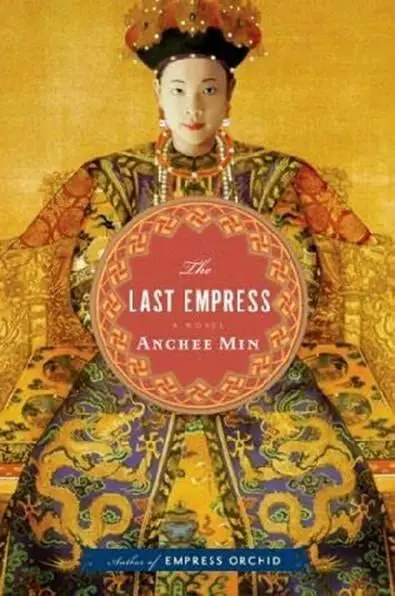
- Название:The Last Empress
- Автор:
- Жанр:
- Год:неизвестен
- ISBN:нет данных
- Рейтинг книги:4 / 5. Голосов: 1
-
Избранное:Добавить в избранное
- Отзывы:
-
Ваша оценка:
The Last Empress: краткое содержание, описание и аннотация
Предлагаем к чтению аннотацию, описание, краткое содержание или предисловие (зависит от того, что написал сам автор книги «The Last Empress»). Если вы не нашли необходимую информацию о книге — напишите в комментариях, мы постараемся отыскать её.
The Last Empress is the story of Orchid"s dramatic transition from a strong-willed, instinctive young woman to a wise and politically savvy leader. Moving from the intimacy of the concubine quarters into the spotlight of the world stage, Orchid must not only face the perilous condition of her empire but also a series of devastating personal losses, as first her son and then her adopted son succumb to early death. Yearning only to step aside, and yet growing constantly into her role, only she-allied with the progressives, but loyal to the conservative Manchu clan of her dynasty-can hold the nation"s rival
factions together.
Anchee Min offers a powerful revisionist portrait based on extensive research of one of the most important figures in Chinese history. Viciously maligned by the western press of the time as the "Dragon Lady," a manipulative, blood-thirsty woman who held onto power at all costs, the woman Min gives us is a compelling, very human leader who assumed power reluctantly, and who sacrificed all she had to protect those she loved and an empire that was doomed to die.
The Last Empress — читать онлайн бесплатно полную книгу (весь текст) целиком
Ниже представлен текст книги, разбитый по страницам. Система сохранения места последней прочитанной страницы, позволяет с удобством читать онлайн бесплатно книгу «The Last Empress», без необходимости каждый раз заново искать на чём Вы остановились. Поставьте закладку, и сможете в любой момент перейти на страницу, на которой закончили чтение.
Интервал:
Закладка:
Rong and I had grown so far apart that even seeing each other became unbearable. It worried me that Prince Ch'un Junior could be next in line if something should happen to Guang-hsu. Ch'un Junior had the physical stature but little in the way of a mind. Although I had been encouraging the young Manchus to pursue the path of their ancestors and had been rewarding them with promotions, I was disappointed in my nephew. I insisted that he take an apprenticeship under either Prince Kung or Li Hung-chang. Since the boy refused to follow my instructions, his position in court remained insignificant.
For the next few weeks, while Guang-hsu conducted audiences, I sat in one royal temple or another receiving guests who came to mourn Prince Ch'un. Surrounded by beating drums, loud music and chanting lamas, I performed rituals and gave my approval to various requests regarding the prince's funeral: the number of banquets and guests, the style and scent of candles, the color of the dead's wrapping sheets and the carvings on the dead's decorative buttons. No one seemed to care about the ongoing war. The daily death toll from the frontier didn't seem to bother Ch'un Junior or his Ironhat friends. They drank to excess and fought over prostitutes.
I was feeling my age. My bleak view of the future made me sick to my stomach.
"That's because you are not drinking scorpion soup, my lady," Li Lien-ying said.
I told him, "You look like you have a smile mask sewn on your face."
Li Lien-ying ignored me and continued with his advice. "The theory behind the scorpion soup is that it takes poison to fight poison."
On September 17, 1894, at the mouth of the Yalu River, the Japanese destroyed half of our navy in a single afternoon, and not a single ship of theirs was seriously damaged. The coast was now literally clear, and Japan could land men and arms and march on Peking.
On November 16, Li Hung-chang reported that the Manchu princes, whom he was forced to do business with, had profited from the war by supplying our troops with defective ammunition. Only one month into the fighting, Port Arthur had been captured. Rather than surrender, Li Hung-chang's field commanders led their soldiers to commit suicide.
Thanks to the dead Prince Ch'un, who had been fabricating field reports and then supplying only the good news to me, I had foolishly felt secure enough to begin preparing for my sixtieth birthday party. Thinking that it would be the moment to celebrate my retirement, I had planned to use the occasion to befriend the wives of foreign ambassadors. I hadn't been able to invite any of them until now, when I was considered officially retired. In the eyes of the court, China's pride would not be injured as much. The foreign embassies seemed to share the same ease. Being retired meant that I didn't have to be taken seriously.
Perhaps I had never been taken seriously, on or off the throne. What pride had China left to be injured? As long as I was free to help my son, I didn't care what people thought. If being retired meant having more opportunities to make friends who might be of service to the country, I would not only welcome it, I would enjoy it as well.
As it turned out, Japan's continued aggression forced me to cancel all my plans. This annoyed a great many nobles and functionaries who had been expecting lavish handouts.
I resumed my role as the Imperial arbitrator and was shocked to realize that I had become a target of the court-accused of bankrupting the country. I found out that during my short period of retirement, Tutor Weng mismanaged the already shaky royal treasury. When questioned about his responsibility, he claimed that all funds had been disbursed by the late Prince Ch'un for the restoration of the Summer Palace-my home.
I insisted the court open up all of Tutor Weng's books and records for examination, but no action followed. What I didn't realize was that Tutor Weng, who never personally profited a penny, had fattened so many pockets that he created an extensive network of supporters-a wealth greater than money could buy. Sparing Tutor Weng, the nation began to hold me responsible for its defeats. Rumors of my extravagant style of living, including my sexual appetites, soon spread.
I had trusted Tutor Weng with both of my sons. I would have shared the blame if Tutor Weng had admitted his part. After all, it was to me that the court and the Emperor came for the final word.
While the rumors continued, the conflict between Tutor Weng and me became public. I reminded myself not to lose perspective, but I was determined to pursue Weng's investigation.
Guang-hsu wasn't able to bring himself to take sides. For him, Tutor Weng had long been a moral compass, a personal god. Guang-hsu was frustrated that I refused to change my mind about investigating his mentor.
In order to prove Tutor Weng's innocence, Guang-hsu decided to conduct his own investigation. To everyone's surprise, Tutor Weng was found guilty. The Confucius scholar and the late Prince Ch'un had not only misappropriated naval funds but also used my birthday to request great sums, which soon disappeared. After Guang-hsu obtained all the accounting books and other material evidence, he came to me to apologize. I told him that I was proud of his fairness.
I decided to announce that I would accept no gifts for my birthday. My action exposed Tutor Weng: people converged from all over the country, like fleas to a blood meal, trying to get their money back.
Emperor Guang-hsu confronted his mentor. "You were my faith and my spiritual mighty pillar!" he said, and demanded an explanation. Tutor Weng admitted no wrongdoing. He continued his wise-man attitude and warned Guang-hsu about becoming crooked-minded for listening to "an old lady." In the end, the grand tutor was fired. He was given a week to pack up and leave. He would never enter the Forbidden City again.
Guang-hsu was embarrassed by the fact that he picked Tutor Weng to be the chief architect of the war against Japan. He shut himself in his room while Tutor Weng knelt outside, begging for a chance to explain. When this had no effect, the old man went on a hunger strike.
The Emperor finally opened the door and the two men spent an entire day reconciling. As in their classroom, Guang-hsu listened while Tutor Weng discussed the source of the failures. The conclusion was that Li Hung-chang should be the one to blame.
While I put up with Guang-hsu's sensitivity, I was annoyed by the tutor's ability to sway the thinking of the Emperor. In my eyes nothing would justify Weng's misconduct. And when Weng made Li Hung-chang the scapegoat, I lost all respect for him. I didn't intend to create enemies by openly taking Li's side, but I saw the necessity of speaking my mind to the Emperor.
In my silence to the court's demand for his prosecution, Li Hung-chang challenged the Emperor for the right to prosecute the Manchu princes who supplied the defective ammunition. Li also demanded the right to choose his own commissioners in the future.
At Tutor Weng's suggestion, Guang-hsu summoned Li Hung-chang for an official audit. The Manchu princes were invited to be witnesses.
Li came prepared. His detailed documentation not only advanced his case but also gained him great sympathy from the nation. Letters of support for him poured in from every provincial governor. The pressure mounted. Some began to criticize Guang-hsu himself.
The frustrated Emperor came to me for help. He was humiliated and ridiculed, and he sensed that he was losing the respect of his people. "It is obvious that Li Hung-chang is the one who fits the role of ruler of China," Guang-hsu told me.
The time came when I had to choose between Guang-hsu and Li Hung-chang. I had long sensed my fate, but it was in that moment that I saw the depth of the tragedy. My conscience told me that Li Hung-chang would be good for the people, that he alone could run China. But China was the Manchus' China-I had to go against my principles to save Guang-hsu.
Читать дальшеИнтервал:
Закладка:
Похожие книги на «The Last Empress»
Представляем Вашему вниманию похожие книги на «The Last Empress» списком для выбора. Мы отобрали схожую по названию и смыслу литературу в надежде предоставить читателям больше вариантов отыскать новые, интересные, ещё непрочитанные произведения.







Обсуждение, отзывы о книге «The Last Empress» и просто собственные мнения читателей. Оставьте ваши комментарии, напишите, что Вы думаете о произведении, его смысле или главных героях. Укажите что конкретно понравилось, а что нет, и почему Вы так считаете.