Anchee Min - The Last Empress
Здесь есть возможность читать онлайн «Anchee Min - The Last Empress» весь текст электронной книги совершенно бесплатно (целиком полную версию без сокращений). В некоторых случаях можно слушать аудио, скачать через торрент в формате fb2 и присутствует краткое содержание. Жанр: Историческая проза, на английском языке. Описание произведения, (предисловие) а так же отзывы посетителей доступны на портале библиотеки ЛибКат.
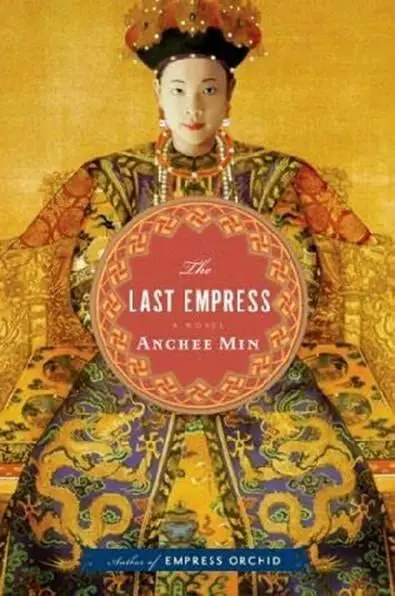
- Название:The Last Empress
- Автор:
- Жанр:
- Год:неизвестен
- ISBN:нет данных
- Рейтинг книги:4 / 5. Голосов: 1
-
Избранное:Добавить в избранное
- Отзывы:
-
Ваша оценка:
The Last Empress: краткое содержание, описание и аннотация
Предлагаем к чтению аннотацию, описание, краткое содержание или предисловие (зависит от того, что написал сам автор книги «The Last Empress»). Если вы не нашли необходимую информацию о книге — напишите в комментариях, мы постараемся отыскать её.
The Last Empress is the story of Orchid"s dramatic transition from a strong-willed, instinctive young woman to a wise and politically savvy leader. Moving from the intimacy of the concubine quarters into the spotlight of the world stage, Orchid must not only face the perilous condition of her empire but also a series of devastating personal losses, as first her son and then her adopted son succumb to early death. Yearning only to step aside, and yet growing constantly into her role, only she-allied with the progressives, but loyal to the conservative Manchu clan of her dynasty-can hold the nation"s rival
factions together.
Anchee Min offers a powerful revisionist portrait based on extensive research of one of the most important figures in Chinese history. Viciously maligned by the western press of the time as the "Dragon Lady," a manipulative, blood-thirsty woman who held onto power at all costs, the woman Min gives us is a compelling, very human leader who assumed power reluctantly, and who sacrificed all she had to protect those she loved and an empire that was doomed to die.
The Last Empress — читать онлайн бесплатно полную книгу (весь текст) целиком
Ниже представлен текст книги, разбитый по страницам. Система сохранения места последней прочитанной страницы, позволяет с удобством читать онлайн бесплатно книгу «The Last Empress», без необходимости каждый раз заново искать на чём Вы остановились. Поставьте закладку, и сможете в любой момент перейти на страницу, на которой закончили чтение.
Интервал:
Закладка:
After sleepless nights of weighing my options and gathering my courage, I did the unreasonable and unconscionable thing: I signed the edict denouncing Li Hung-chang. The man was stripped of all his honors. He was charged with mishandling naval funds and for losing the war.
I was ashamed of myself.
I thought I had done enough for Guang-hsu, but this was wishful thinking. Under the influence of his uncle Prince Ts'eng, his cousin Prince Ts'eng Junior and his brother Prince Ch'un Junior, the easily swayed Guang-hsu was persuaded that the punishment already endured by Li Hung-chang was insufficient, that he must be eliminated altogether.
When I was requested to give approval for Li's further prosecution, I could no longer contain my rage. My fierce expression must have scared the Emperor, for he started to stutter and got down on his knees.
The truth was that I was mad at myself. I had allowed Tutor Weng and Prince Ch'un to escape their responsibilities. Why would any clear-headed Chinese be willing to serve his Manchu master after seeing what happened to Li Hung-chang?
I pointed out to Guang-hsu that Li was too valuable to destroy without crippling the government. "He can strike back by seizing power for himself! It would be as easy as flipping his hand. You will find me watching an opera in the Summer Palace when that happens!"
The air in the court was dense and threatening. Suddenly I realized that I was alone and that I could be repudiated by my own clan. All it would take would be to convince Guang-hsu. To protect myself, I negotiated. In exchange for retaining Li Hung-chang's offices, including the viceroyalty of Chihli and the leadership of the Northern Army and the Chinese navy, I suggested that the throne take away Li's prized double-eyed peacock feather and the yellow silk field marshal's riding jacket. "It would cause Li extreme loss of face. However, anything more would be rash and unmerciful."
When Prince Ts'eng accused me of missing the opportunity of a lifetime for the Manchus to bring Li to his knees, I withdrew in the middle of the audience.
I could hear the creek splashing behind the palace garden in the Forbidden City. I got up before dawn and sent my eunuch to summon Li Hung-chang.
Li arrived at sunrise wearing a simple blue cotton robe, which made him look like a different man.
"You have been packing?" I began, knowing that he was leaving Peking.
"Yes," he replied. "My carriage will depart in an hour."
"Where will you go?" I asked. "Chihli? Hunan? Or your hometown, Hefei?"
Unable to answer, Li dropped to his knees.
I reminded him that etiquette allowed us only a brief meeting and I had to speak my mind.
Li nodded, but insisted on remaining on the floor.
I let him and said, "Please understand how awful I feel about what I have done to you. Though hardly a decent excuse, I had no choice."
"I understand, Your Majesty." Li's voice was calm and almost undisturbed. "You did what any mother would do."
My tears came and I broke down.
"If it helps the throne, I am honored," Li said.
"Can you at least let me offer help for your long journey south?"
"There is no need," he said. "I have enough to support my family. My wife understands that if I were charged with treason and found guilty, my life would be forfeited. She only wants me to make sure that our children escape with their lives."
"Has the matter been taken care of?" I wiped my face with a handkerchief.
"Yes, arrangements have been made."
My eunuch came and announced softly, "My lady, the Emperor is waiting."
"Farewell."
Li Hung-chang rose. He took a step back and got down on his knees and kowtowed.
Custom did not allow me to accompany him to the gate, but I decided to ignore it for once.
The door curtain was lifted and we went out to the courtyard. The eunuchs were still doing their morning cleaning. They rushed to get themselves out of sight. Those who crossed our path apologized.
The sky was beginning to brighten. The glazed wing roofs were bathed in golden light. Unlike the Summer Palace, where the air carried the scent of jasmine, Forbidden City mornings were cold and windy.
I heard the sound of my own footsteps, the wooden platform shoes hitting the stone walk. Li Hung-chang and I walked side by side. Behind us, sixteen eunuchs carried my room-sized ceremonial palanquin.
Two weeks later, Prince Kung, who was sixty-five, was called out of retirement. Emperor Guang-hsu issued the decree at my urging. Kung was reluctant at first. For ten years he had nursed grievances against those who had removed him from leadership, including his two half-brothers. I pleaded with him, saying that the death of Prince Ch'un should put the unpleasant past to rest. The twenty-four-year-old Emperor needed him.
Guang-hsu and I met with Prince Kung in his chrysanthemum garden, where the ground was covered with star-shaped purple flowers. Prince Kung picked up a leaf. He laid it flat on his palm and hit it with his other palm, creating a sound like a firecracker.
"The balance of power in Asia has been decisively altered since the Japanese took our fortified harbor at Weihaiwei." Prince Kung's voice had softened over the years, but his passion, perspective and wit remained. "Past misdeeds have bred present impotence. In the world's view, the war is essentially over and China has been defeated."
"But our spirit hasn't!" Guang-hsu's face turned red and his chest swelled. "I refuse to call it a defeat. Our admirals, officers and soldiers committed suicide to show the world that China is not surrendering!"
Prince Kung smiled bitterly. "Our admirals committed suicide to redeem themselves and save their families from death and the confiscation of their estates. You stripped their titles and ranks but allowed them to remain in the field. You told them that they would be beheaded if they lost a battle. Their deaths were not their choice but yours!"
"Your uncle is right," I said. "I am sure the Emperor has also realized that our nation's patriotism hasn't stopped Japan from occupying the Liaotung Peninsula. We understand that Japan is aiming at Port Arthur's sister fortress and taking over all of Korea."
Guang-hsu fell back into his chair. As if having difficulty breathing, he inhaled deeply.
Kung continued to pick up leaves and slap them, making annoying sounds with his palms.
I was glad that Prince Kung addressed the issue of the suicides, for I had argued with Guang-hsu many times over his death orders. I had desperately tried to convince him that devotion couldn't be forced. There would be no loyalty if mercy and kindness were not first assured. But I had to end the conversation because Guang-hsu could not comprehend this-he had been raised to take devotion and loyalty for granted. The first thing he had learned about mankind was his tutor's display of sincerity and dedication. I gave in when Guang-hsu complained that I was interfering with his autonomy.
"Mother, are you all right?" Guang-hsu said gently. I had told him that I had been feeling tired and weak.
Then he said, "I have thrown out the petitions demanding Li Hung-chang's punishment."
I knew by doing this my son meant to please me. But I didn't want to talk about it. Especially not in front of Prince Kung. So I changed the subject. "Have we tried any other option on the Japan front?"
"We have tried through various intermediaries, including the American diplomats," Prince Kung replied. "We tried to reach an accommodation with Japan, but Tokyo has been refusing."
"I don't see any point in wasting time negotiating," Guang-hsu said. As if trying to hold in his emotions, he looked away. "I don't negotiate with savages!" he said through clenched teeth.
"What do you want me to do, then?" Prince Kung was irritated.
Читать дальшеИнтервал:
Закладка:
Похожие книги на «The Last Empress»
Представляем Вашему вниманию похожие книги на «The Last Empress» списком для выбора. Мы отобрали схожую по названию и смыслу литературу в надежде предоставить читателям больше вариантов отыскать новые, интересные, ещё непрочитанные произведения.






Обсуждение, отзывы о книге «The Last Empress» и просто собственные мнения читателей. Оставьте ваши комментарии, напишите, что Вы думаете о произведении, его смысле или главных героях. Укажите что конкретно понравилось, а что нет, и почему Вы так считаете.