Anchee Min - The Last Empress
Здесь есть возможность читать онлайн «Anchee Min - The Last Empress» весь текст электронной книги совершенно бесплатно (целиком полную версию без сокращений). В некоторых случаях можно слушать аудио, скачать через торрент в формате fb2 и присутствует краткое содержание. Жанр: Историческая проза, на английском языке. Описание произведения, (предисловие) а так же отзывы посетителей доступны на портале библиотеки ЛибКат.
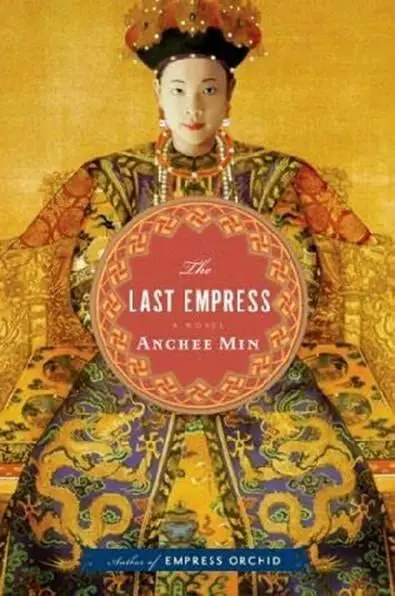
- Название:The Last Empress
- Автор:
- Жанр:
- Год:неизвестен
- ISBN:нет данных
- Рейтинг книги:4 / 5. Голосов: 1
-
Избранное:Добавить в избранное
- Отзывы:
-
Ваша оценка:
The Last Empress: краткое содержание, описание и аннотация
Предлагаем к чтению аннотацию, описание, краткое содержание или предисловие (зависит от того, что написал сам автор книги «The Last Empress»). Если вы не нашли необходимую информацию о книге — напишите в комментариях, мы постараемся отыскать её.
The Last Empress is the story of Orchid"s dramatic transition from a strong-willed, instinctive young woman to a wise and politically savvy leader. Moving from the intimacy of the concubine quarters into the spotlight of the world stage, Orchid must not only face the perilous condition of her empire but also a series of devastating personal losses, as first her son and then her adopted son succumb to early death. Yearning only to step aside, and yet growing constantly into her role, only she-allied with the progressives, but loyal to the conservative Manchu clan of her dynasty-can hold the nation"s rival
factions together.
Anchee Min offers a powerful revisionist portrait based on extensive research of one of the most important figures in Chinese history. Viciously maligned by the western press of the time as the "Dragon Lady," a manipulative, blood-thirsty woman who held onto power at all costs, the woman Min gives us is a compelling, very human leader who assumed power reluctantly, and who sacrificed all she had to protect those she loved and an empire that was doomed to die.
The Last Empress — читать онлайн бесплатно полную книгу (весь текст) целиком
Ниже представлен текст книги, разбитый по страницам. Система сохранения места последней прочитанной страницы, позволяет с удобством читать онлайн бесплатно книгу «The Last Empress», без необходимости каждый раз заново искать на чём Вы остановились. Поставьте закладку, и сможете в любой момент перейти на страницу, на которой закончили чтение.
Интервал:
Закладка:
Li was in favor of allowing time for the joint efforts of England, Russia and Germany, who, under Li's repeated pleading for support, had agreed to persuade Japan to "put out the war torch."
"His Majesty Emperor Guang-hsu is convinced that he must act," Li said. "The Japanese fired two broadsides and a torpedo, sinking the troopship Kowshing, which was sailing out of Port Arthur with our soldiers on board. Those who did not drown were machine-gunned. I understand His Majesty's rage, but we can't afford to act on emotion."
"What do you expect me to do, Li Hung-chang?"
"Please ask the Emperor to be patient, for I am waiting for England, Russia and Germany to respond. I am afraid any wrong move on our part will lose us international support."
I called Li Lien-ying.
"Yes, my lady."
"Carriage, to the Forbidden City!"
Li Hung-chang and I had no idea that Japan had obtained England's promise not to interfere and that Russia had followed suit. We blistered our lips trying to persuade the enraged Guang-hsu to allow more time before issuing a war decree.
As the weeks passed, Japan became more aggressive. China's waiting showed no promise of being rewarded. I was accused of allowing Li Hung-chang to squander the precious time needed to mount a successful defense. I continued to trust Li, but I also realized that I needed to pay attention to the pro-war faction-the War Party-now led by Emperor Guang-hsu himself.
Once again I moved back to my old palace in the Forbidden City. I needed to attend the audiences and be available to the Emperor. Although I praised the Ironhats for their patriotism, I was reluctant to commit my support, for I remembered that thirty years ago they were certain they could defeat England.
Those who were against war, the Peace Party, led by Li Hung-chang, worried that I would withdraw my support.
"Japan has been modeling itself after Western cultures and has become more civilized," Li tried to convince the court. "International laws should act as a brake to any intended violence."
"It takes an idiot to believe that a wolf would give up preying on sheep!" Tutor Weng, now the war councilor, spoke amid great applause. "China can and will defeat Japan by sheer force of numbers."
It took me a while to figure out Tutor Weng's character. On the one hand, he encouraged Guang-hsu to model China after Japan, but on the other, he despised Japanese culture. He felt superior to the Japanese and believed that "China should educate Japan, as she has throughout history." He also believed that Japan "owes China a debt for its language, art, religion and even fashion." Tutor Weng was what Yung Lu would have described as "good at commanding an army on paper." What was worse, the scholar told the nation that China's reform program would be like "sticking a bamboo in the sun-a shadow will be produced instantly."
Although he had never run a government, Tutor Weng was confident in his own ability. His liberal views inspired so many people that he was regarded as a national hero. I had trouble communicating with him, for he advocated war but avoided facing the mountain of decisions required to prosecute it. He advised me to "pay attention to the picture on an embroidery instead of the stitches." Discussing strategy was his passion. He lectured the court during audiences and would go on for hours. In the end, he would smile and say, "Let's leave the tactics to generals and officers."
The generals and officers on the frontier were confused by Tutor Weng's instructions. "'We are what we believe' is not the kind of advice we can tell our men to follow," they complained. Yung Lu, in a personal letter to me from the front, was especially contemptuous of Weng. But my hands were tied.
"Understanding the moral behind the war will win us the war," the grand tutor responded. "There is no better instruction than Confu-cius's teaching: 'The man of virtue will not seek to live at the expense of humanity.'"
When I suggested that he at least listen to Li Hung-chang, Tutor Weng simply said, "If we fail to react in a timely fashion, Japan will enter Peking and burn down the Forbidden City, the same way England burned down Yuan Ming Yuan."
The Emperor's father, Prince Ch'un, echoed, "There is no betrayal worse than forgetting what the foreigners have done to us."
I left Tutor Weng alone but insisted that a new Board of Admiralty for war be set up under Prince Ch'un, Prince Ts'eng and Li Hung-chang. Six years earlier, Li had contracted with foreign firms to build fortified harbors, including major bases at Port Arthur in Manchuria and Wei-haiwei on the Shantung Peninsula. Ships were purchased from England and Germany. By now we had twenty-five warships. No one seemed to want to hear it when Li said, "The navy is far from ready for war. The naval academy has just finished drafting its curriculum and hiring its instructors. The first generation of student officers is only in training."
"China is equipped!" Prince Ch'un convinced himself. "All we need is to put our people on board."
Li Hung-chang warned, "Modern warships are useless in the wrong hands."
I couldn't stop the court from shouting patriotic slogans in response to Li.
Emperor Guang-hsu said he was all set to go to war: "I have waited long enough."
I prayed that my son would do what his great ancestors had done, rise to the occasion and put his enemies to flight. Yet deep in my heart, fear sank in. For all Guang-hsu's admirable qualities, I knew he was incapable of playing a dominant role. He had been trying hard, but he lacked a dynamic strategy and the necessary ruthlessness. A secret I kept from the public was Guang-hsu's medical and emotional problems. I just couldn't see him controlling his ill-tempered half-brothers, the leaders of the Ironhats. And I couldn't see him winning over the Manchu Clan Council either. I wished that Guang-hsu would tell me I was wrong, that despite his shortcomings he would be lucky and win the day.
I resented myself for not ending Guang-hsu's dependence. He continued to seek my approval and support. I kept silent when the entire Clan Council suggested that I resume daily supervision of the nation. I meant to provoke my son. I wanted him to challenge me, and I wanted to see him explode in rage. I was giving him a chance to stand up and speak for himself. I told him that he could overrule the council if he felt he should take power into his own hands. That was the case with the dynasty's most successful emperors, such as Kang Hsi, Yung Cheng and his great-grandfather Chien Lung.
But it was not to be. Guang-hsu was too gentle, too timid. He would hesitate, fall into conflict with himself and in the end give up.
Maybe I already sensed Guang-hsu's tragedy. I had begun suffering his fear. I felt that I was failing him. I got angry when his half-brother and cousin, Prince Ch'un Junior and Prince Ts'eng Junior, took advantage of him. They spoke to Guang-hsu as if he were below them. Sick of hearing my own voice, I continued to tell my son to act like an emperor.
I must have confused Guang-hsu. In retrospect, I could see that the monarch was not acting himself. It was I who demanded that he be someone he was not. He wanted so much to make me happy.
I returned to the Summer Palace, tired of the endless bickering between the War Party and the Peace Party. The burden of arbitration was left solely to me, not because I had any special competence but because nobody else could do any better.
Behind my back and in the midst of the national crisis, Prince Ch'un requisitioned the funds Li Hung-chang had borrowed for the naval academy. Ch'un built motor launches for the amusement of the court at the lake palaces in Peking and on Kun Ming Lake, near where I lived.
Later on, Li Hung-chang would confess, "The Emperor's father was in a position to demand money from me at any time. I let him have his way in exchange for not interfering with my business affairs."
Читать дальшеИнтервал:
Закладка:
Похожие книги на «The Last Empress»
Представляем Вашему вниманию похожие книги на «The Last Empress» списком для выбора. Мы отобрали схожую по названию и смыслу литературу в надежде предоставить читателям больше вариантов отыскать новые, интересные, ещё непрочитанные произведения.







Обсуждение, отзывы о книге «The Last Empress» и просто собственные мнения читателей. Оставьте ваши комментарии, напишите, что Вы думаете о произведении, его смысле или главных героях. Укажите что конкретно понравилось, а что нет, и почему Вы так считаете.