Anchee Min - The Last Empress
Здесь есть возможность читать онлайн «Anchee Min - The Last Empress» весь текст электронной книги совершенно бесплатно (целиком полную версию без сокращений). В некоторых случаях можно слушать аудио, скачать через торрент в формате fb2 и присутствует краткое содержание. Жанр: Историческая проза, на английском языке. Описание произведения, (предисловие) а так же отзывы посетителей доступны на портале библиотеки ЛибКат.
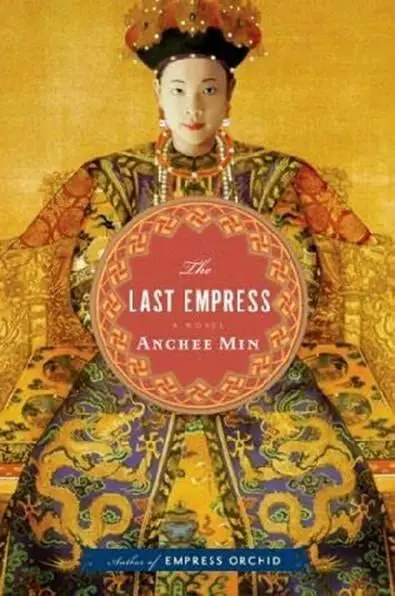
- Название:The Last Empress
- Автор:
- Жанр:
- Год:неизвестен
- ISBN:нет данных
- Рейтинг книги:4 / 5. Голосов: 1
-
Избранное:Добавить в избранное
- Отзывы:
-
Ваша оценка:
The Last Empress: краткое содержание, описание и аннотация
Предлагаем к чтению аннотацию, описание, краткое содержание или предисловие (зависит от того, что написал сам автор книги «The Last Empress»). Если вы не нашли необходимую информацию о книге — напишите в комментариях, мы постараемся отыскать её.
The Last Empress is the story of Orchid"s dramatic transition from a strong-willed, instinctive young woman to a wise and politically savvy leader. Moving from the intimacy of the concubine quarters into the spotlight of the world stage, Orchid must not only face the perilous condition of her empire but also a series of devastating personal losses, as first her son and then her adopted son succumb to early death. Yearning only to step aside, and yet growing constantly into her role, only she-allied with the progressives, but loyal to the conservative Manchu clan of her dynasty-can hold the nation"s rival
factions together.
Anchee Min offers a powerful revisionist portrait based on extensive research of one of the most important figures in Chinese history. Viciously maligned by the western press of the time as the "Dragon Lady," a manipulative, blood-thirsty woman who held onto power at all costs, the woman Min gives us is a compelling, very human leader who assumed power reluctantly, and who sacrificed all she had to protect those she loved and an empire that was doomed to die.
The Last Empress — читать онлайн бесплатно полную книгу (весь текст) целиком
Ниже представлен текст книги, разбитый по страницам. Система сохранения места последней прочитанной страницы, позволяет с удобством читать онлайн бесплатно книгу «The Last Empress», без необходимости каждый раз заново искать на чём Вы остановились. Поставьте закладку, и сможете в любой момент перейти на страницу, на которой закончили чтение.
Интервал:
Закладка:
"I need your help with defensive preparations," the Emperor said.
"I am not sure I can help," said Prince Kung. "You are wrong to think that I can do better than Li Hung-chang."
I turned to both of them. "Should we not think about walking with both legs? Continuing to seek negotiations with Japan and at the same time preparing our defense?"
Guang-hsu followed Prince Kung's advice and offered to commission foreigners to do the defensive work. A German army engineer who in 1881 had supervised the fortification of Port Arthur was named the chief of China's armies. Guang-hsu hoped that under the leadership of a Western general, he would be able to turn around the situation with Japan.
Both Prince Ts'eng and Prince Ch'un Junior insisted that hiring a past enemy was itself an act of betrayal.
Guang-hsu bore the pressure until the last minute. Then he changed his mind and canceled the commission.
"Had it been done," the disappointed Prince Kung complained later, "China would have been safe and Japan would have eventually paid us an indemnity."
I did not realize it then, but the moment the Emperor changed his mind, his uncle became disheartened. So disheartened that, over the days and weeks to come, Prince Kung would gradually withdraw. I suspected that his pride had been injured but that he would eventually get over it and continue his fight for the dynasty. But Prince Kung's heart retreated to his chrysanthemum garden and he would never come out again.
By the end of January 1895 Guang-hsu realized that he had no other option but to negotiate with Japan. To his further humiliation, Japan refused to discuss the treaty with anyone except the disgraced Li Hung-chang.
On February 13, Guang-hsu relieved Li of his duties as viceroy of Chihli and instructed him to lead the Chinese diplomatic effort. Once again, I was to receive Li Hung-chang in the name of the Emperor.
Li did not want to come to Peking. He begged to be excused from his duty. Believing that the Emperor and the Ironhats would sooner or later make him a scapegoat, he had no confidence that he would survive. He pointed out that things had changed. We had lost our bargaining chip. There was no way to bring Japan to the negotiating table.
"Any man who represents China and signs the treaty will have to sign away parts of China," Li predicted. "It will be a thankless task, and the nation will blame him no matter what the reason for the outcome."
I pleaded with him to think it over, and sent him a personal invitation to have dinner with me.
Li responded, saying in his message that he was not fit for the honor and his advanced age and ill health made travel difficult.
"I wish that I weren't the Empress of China," I wrote back to Li. "The Japanese are on their way to Peking, and I can't bear to even begin to imagine how they will violate the Imperial ancestral grounds."
Perhaps it was my urgent tone, perhaps it was his sense of noblesse oblige-whatever the reason-Li Hung-chang honored me with his presence, and he was quickly appointed as China's chief negotiator. He arrived at Shimonoseki, Japan, on March 19, 1895. About a month later, the negotiations took a startling turn: while leaving one of the sessions with Prime Minister Ito Hirobumi, Li was shot in the face by a Japanese extremist.
"I was almost glad the incident took place," Li replied when I wrote asking after his condition. "The bullet grazed my left cheek. It gained me what I could never get at the negotiating table-the world's sympathy."
The shooting resulted in an international outcry for Japan to moderate its demands on China.
I felt that I had sent Li to die and he survived only by pure luck.
Also in his message Li Hung-chang prepared Emperor Guang-hsu for the most difficult decision: to agree to the negotiated terms, including the cession to Japan in perpetuity of the island of Taiwan, the Pescadores and the Liaotung Peninsula; the opening of seven Chinese ports to Japanese trade; the payment of two hundred million taels, with permission for Japan to occupy Weihaiwei Harbor until this indemnity was cleared; and recognition of the "full and complete autonomy and independence of Korea," which meant relinquishing it to Japan.
Guang-hsu sat on the Dragon Throne and wept. When Li Hung-chang returned to Peking for consultations, he could not get a word out of the Emperor.
It was then that I told Li what I had been thinking: "Give up what China must in the form of money, but not land."
He raised his eyes. "Yes, Your Majesty."
I told him that once we had sanctioned foreign occupation inland, as we had allowed to happen with the Russians in our Ili region, China would forever be lost.
Li understood perfectly and negotiated accordingly.
The image of Li Hung-chang in the audience hall with his forehead touching the ground remained in my mind after he was gone. I sat frozen. The sound of a big clock in the hallway grated on my nerves.
"Korea and Taiwan are gone," Guang-hsu muttered to himself over and over.
He didn't know, of course, that within months we would also lose Nepal, Burma and Indochina.
Another rape. And then another.
Japan had no intention of stopping. Its agents now had spread deep into Manchuria.
The dragon carvings on the palace columns again went unpainted this year. The old paint had started to peel and the golden color turned a parched brown. The Board of the Interior had long run out of money. The danger was not only the visible dry rot, it was the invisible termites.
One morning Chief Eunuch Li Lien-ying ventured to make a formal plea to the throne: "Please, Your Majesty, do something to save the Forbidden City, for it is built with nothing but wood."
"Burn it down!" was Guang-hsu's response.
The audiences went on. In Li Hung-chang's telegrammed updates the Japanese demanded the right to build factories in the treaty ports. "Accept these terms or there will be war," Japan threatened.
Guang-hsu and I understood that if we granted Japan's demands, the same demands would be made by all the other foreign powers.
"The latest concessions also brought up the issue of mineral rights," Li's telegram continued, "and there is little we can do to resist…"
The sun's rays came through the windows of my bedroom, throwing shade like rustling leaves onto the floor and furniture. A large black spider hung on its thread by a carved panel. It swung back and forth in the gentle breeze. This was the first black spider I had seen inside the Forbidden City.
I heard the sound of someone dragging his feet. Then Guang-hsu appeared in the doorframe. His posture was that of an old man with his back hunched.
"Any news?" I asked.
"We lost our last division of Moslem cavalry." Guang-hsu entered my room and sat down on a chair. "I am forced to disband tens of thousands of soldiers because I have to pay the foreign indemnities. 'Or war,' they say. 'Or war'!"
"You haven't been eating," I said. "Let's have breakfast."
"The Japanese have been building roads connecting Manchuria to Tokyo." He stared at me, his big black eyes unblinking. "My downfall will come along with the fall of the Russian tsar."
"Guang-hsu, enough."
"The Meiji Emperor will soon be unchallenged in East Asia."
"Guang-hsu, eat first, please…"
"Mother, how can I eat? Japan has filled my stomach!"
26
The Imperial kitchens tried to find reasons not to cancel my birthday banquets. The same attitude was shared by the court, which saw my retirement as an opportunity for everyone to make money. Li Hung-chang was forced to negotiate additional loans to save the day.
I concluded that the only way out of my birthday trap would be to address the nation in a public letter:
Читать дальшеИнтервал:
Закладка:
Похожие книги на «The Last Empress»
Представляем Вашему вниманию похожие книги на «The Last Empress» списком для выбора. Мы отобрали схожую по названию и смыслу литературу в надежде предоставить читателям больше вариантов отыскать новые, интересные, ещё непрочитанные произведения.







Обсуждение, отзывы о книге «The Last Empress» и просто собственные мнения читателей. Оставьте ваши комментарии, напишите, что Вы думаете о произведении, его смысле или главных героях. Укажите что конкретно понравилось, а что нет, и почему Вы так считаете.