Anchee Min - The Last Empress
Здесь есть возможность читать онлайн «Anchee Min - The Last Empress» весь текст электронной книги совершенно бесплатно (целиком полную версию без сокращений). В некоторых случаях можно слушать аудио, скачать через торрент в формате fb2 и присутствует краткое содержание. Жанр: Историческая проза, на английском языке. Описание произведения, (предисловие) а так же отзывы посетителей доступны на портале библиотеки ЛибКат.
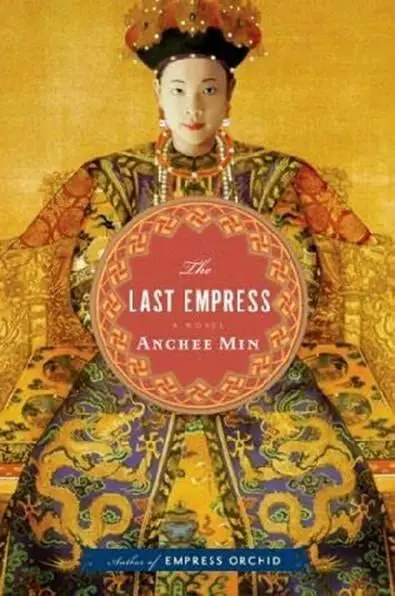
- Название:The Last Empress
- Автор:
- Жанр:
- Год:неизвестен
- ISBN:нет данных
- Рейтинг книги:4 / 5. Голосов: 1
-
Избранное:Добавить в избранное
- Отзывы:
-
Ваша оценка:
The Last Empress: краткое содержание, описание и аннотация
Предлагаем к чтению аннотацию, описание, краткое содержание или предисловие (зависит от того, что написал сам автор книги «The Last Empress»). Если вы не нашли необходимую информацию о книге — напишите в комментариях, мы постараемся отыскать её.
The Last Empress is the story of Orchid"s dramatic transition from a strong-willed, instinctive young woman to a wise and politically savvy leader. Moving from the intimacy of the concubine quarters into the spotlight of the world stage, Orchid must not only face the perilous condition of her empire but also a series of devastating personal losses, as first her son and then her adopted son succumb to early death. Yearning only to step aside, and yet growing constantly into her role, only she-allied with the progressives, but loyal to the conservative Manchu clan of her dynasty-can hold the nation"s rival
factions together.
Anchee Min offers a powerful revisionist portrait based on extensive research of one of the most important figures in Chinese history. Viciously maligned by the western press of the time as the "Dragon Lady," a manipulative, blood-thirsty woman who held onto power at all costs, the woman Min gives us is a compelling, very human leader who assumed power reluctantly, and who sacrificed all she had to protect those she loved and an empire that was doomed to die.
The Last Empress — читать онлайн бесплатно полную книгу (весь текст) целиком
Ниже представлен текст книги, разбитый по страницам. Система сохранения места последней прочитанной страницы, позволяет с удобством читать онлайн бесплатно книгу «The Last Empress», без необходимости каждый раз заново искать на чём Вы остановились. Поставьте закладку, и сможете в любой момент перейти на страницу, на которой закончили чтение.
Интервал:
Закладка:
When the stir-fried lotus roots were served, Guang-hsu had no appetite. I sat beside him but had no words to comfort him. By now I had learned that Guang-hsu most often craved to be left alone. I had been worrying about his health, but I dared not utter a question or even encourage him to pick up his chopsticks.
After finishing my meal, I quickly rinsed my mouth and went into the office to prepare for the morning audiences. Guang-hsu would follow in a few minutes. I would wait for the eunuchs to finish dressing him and we would get into our palanquins.
Withdrawing from audiences in the afternoon, Guang-hsu and I would continue to discuss the day's issues. Often we had to summon ministers and officials for detailed information. When Guang-hsu saw me begin to yawn, he would beg me to stop and relax. I would ask him for a cigarette, and he would light it for me. I would smoke and continue to work until dark.
"China has given no offense, has done no wrong, does not wish to fight, and is willing to make sacrifices," Robert Hart's article read. "She is a big 'sick' man, convalescing slowly from the sickening effects of centuries, and is being jumped on when down by this agile, healthy, well-armed Jap-will no one pull him off?"
Guang-hsu and I hoped that Hart's remarks would help China gain sympathy and support from the rest of the world. Unfortunately, things went in the opposite direction. Our defeat by Japan only encouraged the Western powers to take further advantage of us. "The worm has reduced the stout fabric of China to handfuls of dust"-the remnants were there for anybody to take.
We had lost Korea, and our new navy lay in ruins. After slavishly emulating Chinese civilization for centuries, the Japanese had nothing but supercilious scorn for the true fountainhead of Eastern wisdom. The world seemed to have forgotten that as recently as 1871, Japan had paid tribute to China as a vassal state.
Like everyone else, Guang-hsu suspected that Li Hung-chang had cut private deals with the foreigners for his own benefit. "Li could have done better with the treaties," he insisted. Guang-hsu's only evidence was that Li Hung-chang entrusted his son-in-law with the military supplies of the army.
"That's because Li's experience with your uncles, brothers and cousins was so terrible," I told him. "Li has committed no corruption-it is the way of China to rely on personal connections. Focus on what you have gained. Li has succeeded in securing the funding to rebuild the navy."
"I can't forgive him for squandering the opportunity for an early defense!" Guang-hsu's voice pierced through the hallway. "He sold us down the river!"
Guang-hsu couldn't live with the fact that we had been forced to sign the Shimonoseki Treaty, the most humiliating ever signed by an emperor in Chinese history.
"Japan provided opportunities for him to make money. Am I not right that Li Hung-chang is the wealthiest man in China?"
"I will not kick the family dog," I said quietly. "I'd rather fight the bully neighbor. Li didn't want to take part in the negotiations in the first place. He was sent," I reminded Guang-hsu, "by you and me. The Japanese rejected the representative you had sent before him. Li was the only man whose credentials the Japanese considered adequate."
"Exactly!" Guang-hsu said. "They picked him because he was a friend. Japan knew Li would cut them a good deal."
"For heaven's sake, Guang-hsu, the bullet just missed Li's eye! If it hadn't been for his near assassination, Japan would have pushed for its original demands, and we would have lost all of Manchuria plus three hundred million taels!"
"It is not I alone who accuses Li." Guang-hsu showed me a document. "The court censor has been investigating. Listen." He read, "'Li Hung-chang was heavily invested in Japanese businesses, and he did not wish to lose his dividends through protracted war. He seems to have been afraid that the large sums of money from his numerous speculations, which he had deposited in Japan, might be lost; hence his objections to the war.'"
"If you can't tell that attacking Li Hung-chang is itself an action against the throne, there is no way that I can or should work with you." I was upset.
"Mother." Guang-hsu got down on his knees. "I only share with you what I know. You rely on Li so much. What if he is not who you think he is?"
"If only we had a choice, Guang-hsu." I sighed. "We need him. If Li hadn't played on international jealousies, Japan would not have withdrawn from the Liaotung Peninsula."
"But Japan charged us another thirty million taels in compensation and indemnities," Guang-hsu said bitterly.
"We were the defeated nation, my son. It was not all up to Li Hung-chang."
Guang-hsu sat quietly biting his lips.
I begged him not to take Li for granted. "Only we can balance Li Hung-chang's graft against what he is able to bring us."
When I asked how the reception with the foreign delegation went, Guang-hsu replied flatly, "Not well." He sat down and stretched his neck. "I am sure the foreigners were equally disappointed. They spent so much time and energy trying to secure the audience, only to find out how dull I was."
I remembered my husband Hsien Feng's comments when foreigners requested an audience with him. He felt that he would only be giving them an opportunity to spit in his face.
"I couldn't stand the sight of them," Guang-hsu said. "I tried to tell myself, I am meeting with individuals, not the countries that bullied me."
"You received all the delegates?" I asked.
Guang-hsu nodded. "Russia, France, England and Germany acted like dogs. They tried to make me commit to borrowing more money. What could I do? I told them China couldn't afford it anymore. I told them that all my revenues go to pay the Japanese indemnity."
The foreign bankers were savage dealmakers, I remembered Li Hung-chang once told me. "What happened in the end?"
"In the end? I borrowed from all of them, pledging my customs revenue and transit and salt taxes as security."
The pain in his voice was unbearable. I felt helpless and tremendously sad.
"I am unprepared for what's coming." My son sighed again. "The Russians continue to transport troops and supplies by our railway across Manchuria to the sea."
"We granted them the right only in times of war, not in times of peace." I could hear the weariness in my own voice.
Guang-hsu shook his head. "The Russians are determined to keep their Trans-Siberian running in times of peace as well, Mother."
Stepping out on the terrace for fresh air, I held my son's shoulders. "Let's hope Li's scheme of using one barbarian to control another will work."
Guang-hsu was not sure. "Japan is approaching Peking," he said, "and we have lost our sea defense completely."
I stood in the wind and tried to get through the moment.
For my son, each day brought another decision, another defeat, another humiliation. He had been living in a manure pit. Tung Chih had been lucky: death had helped him to reach peace.
Darkness filled the room after Li Lien-ying retreated. I lay against soft pillows and recalled that once Li Hung-chang had advised me to deposit gold and silver in banks outside China.
"In case Japan…" I remembered that he was afraid to say more, but I got the idea: I might be forced to flee China. The image of Queen Min burned alive was never far from my thoughts.
Li Hung-chang must have assumed that I was a wealthy woman. He had no idea how penniless I was. I was too embarrassed to let anyone know that I had sold my favorite opera troupe. I owned practically nothing but my seven honorary Imperial titles. Li hadn't insisted on having me consult the English bank managers in Hong Kong and Shanghai. But when he left my palace, he was no longer confused-he understood more than ever where I stood in terms of China's survival.
Читать дальшеИнтервал:
Закладка:
Похожие книги на «The Last Empress»
Представляем Вашему вниманию похожие книги на «The Last Empress» списком для выбора. Мы отобрали схожую по названию и смыслу литературу в надежде предоставить читателям больше вариантов отыскать новые, интересные, ещё непрочитанные произведения.





Обсуждение, отзывы о книге «The Last Empress» и просто собственные мнения читателей. Оставьте ваши комментарии, напишите, что Вы думаете о произведении, его смысле или главных героях. Укажите что конкретно понравилось, а что нет, и почему Вы так считаете.