Anchee Min - The Last Empress
Здесь есть возможность читать онлайн «Anchee Min - The Last Empress» весь текст электронной книги совершенно бесплатно (целиком полную версию без сокращений). В некоторых случаях можно слушать аудио, скачать через торрент в формате fb2 и присутствует краткое содержание. Жанр: Историческая проза, на английском языке. Описание произведения, (предисловие) а так же отзывы посетителей доступны на портале библиотеки ЛибКат.
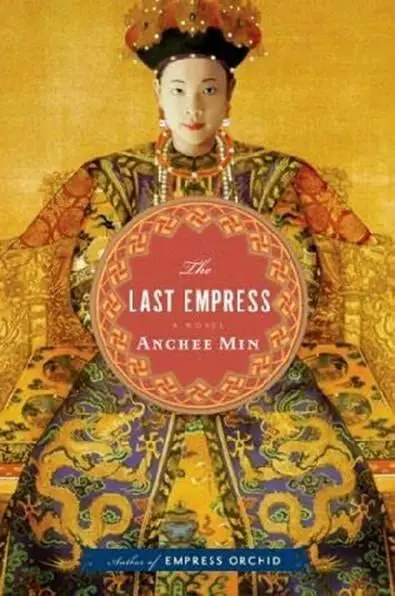
- Название:The Last Empress
- Автор:
- Жанр:
- Год:неизвестен
- ISBN:нет данных
- Рейтинг книги:4 / 5. Голосов: 1
-
Избранное:Добавить в избранное
- Отзывы:
-
Ваша оценка:
The Last Empress: краткое содержание, описание и аннотация
Предлагаем к чтению аннотацию, описание, краткое содержание или предисловие (зависит от того, что написал сам автор книги «The Last Empress»). Если вы не нашли необходимую информацию о книге — напишите в комментариях, мы постараемся отыскать её.
The Last Empress is the story of Orchid"s dramatic transition from a strong-willed, instinctive young woman to a wise and politically savvy leader. Moving from the intimacy of the concubine quarters into the spotlight of the world stage, Orchid must not only face the perilous condition of her empire but also a series of devastating personal losses, as first her son and then her adopted son succumb to early death. Yearning only to step aside, and yet growing constantly into her role, only she-allied with the progressives, but loyal to the conservative Manchu clan of her dynasty-can hold the nation"s rival
factions together.
Anchee Min offers a powerful revisionist portrait based on extensive research of one of the most important figures in Chinese history. Viciously maligned by the western press of the time as the "Dragon Lady," a manipulative, blood-thirsty woman who held onto power at all costs, the woman Min gives us is a compelling, very human leader who assumed power reluctantly, and who sacrificed all she had to protect those she loved and an empire that was doomed to die.
The Last Empress — читать онлайн бесплатно полную книгу (весь текст) целиком
Ниже представлен текст книги, разбитый по страницам. Система сохранения места последней прочитанной страницы, позволяет с удобством читать онлайн бесплатно книгу «The Last Empress», без необходимости каждый раз заново искать на чём Вы остановились. Поставьте закладку, и сможете в любой момент перейти на страницу, на которой закончили чтение.
Интервал:
Закладка:
"According to Kang Yu-wei, Japan was also a tradition-bound nation," the Emperor continued. "It was able to transform itself almost overnight from a feudal society to an industrial state."
"But when Japan began its reforms, it was not under attack," I pointed out, "nor did it carry tremendous domestic and international debts. Let me finish, Guang-hsu. People in Japan were ready to follow their Emperor when he called."
"What makes you think that my people won't follow me?"
"Guang-hsu, your own court is against you."
The Emperor screwed up his eyes. "The first thing on my reform agenda will be to get rid of that roadblock."
I felt a chill but tried not to show it.
"My edicts will bypass the Clan Council and the court." Guang-hsu sounded determined. "Kang Yu-wei believes I should speak directly to my people."
"The court will fight you, and there will be chaos."
"With your support, Mother, I shall fight back and win."
I didn't want to discourage him, although I believed that abandoning the court was a dangerous idea.
"Think again, son. The defeat by Japan has frightened our nation. Stability is everything."
"But reform can no longer wait, Mother." The gentleness in my son's voice was gone.
"I want you to be aware of the political realities."
"I am, Mother."
"There has been insurrection in the countryside. The radicals in Canton have been gaining political momentum. The latest spy report shows that the movement calling for a Chinese republic is being funded by the Japanese."
Guang-hsu grew impatient. "Nobody will stop me from moving forward. Nobody."
The standing clock in the corner struck twice. Li Lien-ying came in to remind me that lunch had already been reheated.
"May I tell the court that I have your permission to meet with Kang Yu-wei?" Guang-hsu asked.
"I'll see if I can get the court to loosen its grip."
"You have the power to dictate your will."
"It is better to make the granting of permission the court's decision."
He walked toward the door and then walked back, visibly upset. "Fear has caused China its sickness, its weakness, and soon its death!"
"Guang-hsu, may I reveal a bit of my struggle? Your uncles and senior councilors have been coming to me."
"What do they want?"
"They want you out." I opened a stack of documents I had been reviewing. "Listen to this. 'The Emperor has acted impetuously and is not to be trusted without a guiding hand.' 'Guang-hsu has not demonstrated the capability to arrive at decisions by consensus. It is necessary to remove him from the throne. We suggest that P'u-chun, Prince Ts'eng's grandson, succeed him.'"
"How dare they!" Guang-hsu was enraged. "I shall prosecute them for conspiracy!"
"Not if the entire court signed the petition." I pushed the documents aside.
Guang-hsu continued to protest, but his tone changed. He lowered his voice, seemed to pull himself back, and eventually he stopped talking, leaned against the window and folded his arms in front of his chest. He stared outside for a while and then turned toward me. "I need your support, Mother."
"Use me well, my son. When the court talks about putting the power back in my hands, it means their hands. My role has been a ceremonial one. The only time I become important is when I am needed as a figurehead. It is to lend legitimacy to the princes, grandees and high mandarins-the people who possess true power."
"But Mother…"
"I have ignored Li Hung-chang and Yung Lu, who have expressed their own doubts about you. To be honest, I have doubts myself. You have never proved yourself."
"But I am trying to do the right thing."
"That, my son, I do not doubt one bit."
When Guang-hsu begged me for the third time for a chance to meet with Kang Yu-wei, he was in tears. The redness in his eyes showed that he hadn't been sleeping well. "As you know, Mother, I'm a 'eunuch.' It is unlikely I will produce an heir, so successful reform will be my only legacy."
I was struck by his honesty and desperation. But I had to ask: "Do you mean you can't even make love to Pearl?"
Guang-hsu's voice was filled with sadness and shame when he murmured, "No, Mother, I can't. I will be despised by the nation because all believe that Heaven rewards sons only to those who behave virtuously."
"My child, I forbid you to speak like this. You are only twenty-six years old. You'll keep trying-"
"Mother, doctors have told me that it's over."
"It doesn't mean that you are finished."
He wept, and I opened my arms and embraced him. "You have to help me to help you, Guang-hsu."
"Let me meet with Kang Yu-wei, Mother. It is the only way!"
At my request, an interview of Kang Yu-wei was arranged. The interviewers I chose were Li Hung-chang, Yung Lu, Tutor Weng and Chang Yin-huan, the former ambassador to England and the United States. I wanted an evaluation of the Emperor's "like-mind."
Kang Yu-wei was summoned to the Board of Foreign Affairs on the last day of January. The interview went on for four hours. I had assumed it would be intimidating for a provincial Cantonese, but the transcript showed that the man's audacity was inborn. Kang demonstrated his ability as a dynamic speaker and was aggressive in pressing his views. I now understood why Pearl and Guang-hsu were captivated by him. A palace lad like Guang-hsu had never before met someone so brash, a man who apparently had nothing to lose.
According to Li Hung-chang, Kang Yu-wei had a moon face and was in his late thirties. Li's evaluation read that the interviewee "posed himself in a theatrical fashion" and that he "spent the whole time lecturing on subjects of reform and the advantages of a constitutional monarchy as if he were a teacher in his town's elementary classroom."
I had to credit the forbearance of the four powerful men who had to listen to Kang.
Li Hung-chang told Kang that his ideas were nothing original and that he was exploiting the work of others, which Kang denied. When Li asked Kang Yu-wei for his thoughts on generating revenue to repay foreign loans and to fund the national defense, Kang became abstract and vague. When Li pressed, Kang responded that the treaties "were signed unfairly, and therefore deserved to be dishonored." When asked how he would deal with a Japanese invasion, Kang Yu-wei gave a sage's dramatic laugh. "You can't make it my job to wipe your ass!"
In conclusion, Li Hung-chang found the man offensive and believed that he was an opportunist, a zealot and probably mentally ill.
Tutor Weng, in his report, for the most part agreed with Li Hung-chang, despite having initially claimed credit for the discovery of "a true political genius." Kang Yu-wei's arrogance offended the founding father of China's premier academic institutions. Tutor Weng took offense when Kang criticized the Ministry of Education and called the Imperial academies "dead ducks floating on a stagnant pond."
"He is resentful because of his own failures," Tutor Weng remarked in his evaluation. "I was the chief judge when he took the national examination, although I never personally graded his paper. Kang had enough tries, and he proved himself a loser each time. He didn't oppose the system until the system booted him in the gut.
"According to Kang's own description of himself," Tutor Weng continued, "he was 'destined to be a great sage like Confucius.' This is rude and unacceptable. I conclude that Kang Yu-wei is a man who craves the limelight and whose main goals are notoriety and celebrity."
Ambassador Chang Yin-huan expressed less disgust in his comments, but he didn't offer a positive evaluation either. It was his job, after all, to bring interesting people together. If the mingling produced results, he would gladly take the credit.
Yung Lu, who had returned from Tientsin especially for the interview, handed me a blank piece of paper as an evaluation. I imagined him losing interest the instant Kang began evading Li Hung-chang's questions.
Читать дальшеИнтервал:
Закладка:
Похожие книги на «The Last Empress»
Представляем Вашему вниманию похожие книги на «The Last Empress» списком для выбора. Мы отобрали схожую по названию и смыслу литературу в надежде предоставить читателям больше вариантов отыскать новые, интересные, ещё непрочитанные произведения.





Обсуждение, отзывы о книге «The Last Empress» и просто собственные мнения читателей. Оставьте ваши комментарии, напишите, что Вы думаете о произведении, его смысле или главных героях. Укажите что конкретно понравилось, а что нет, и почему Вы так считаете.