Anchee Min - The Last Empress
Здесь есть возможность читать онлайн «Anchee Min - The Last Empress» весь текст электронной книги совершенно бесплатно (целиком полную версию без сокращений). В некоторых случаях можно слушать аудио, скачать через торрент в формате fb2 и присутствует краткое содержание. Жанр: Историческая проза, на английском языке. Описание произведения, (предисловие) а так же отзывы посетителей доступны на портале библиотеки ЛибКат.
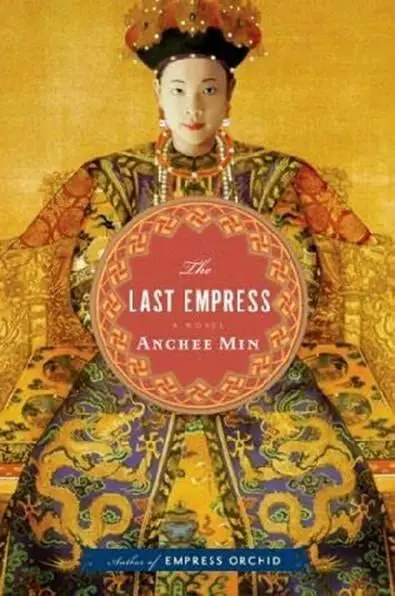
- Название:The Last Empress
- Автор:
- Жанр:
- Год:неизвестен
- ISBN:нет данных
- Рейтинг книги:4 / 5. Голосов: 1
-
Избранное:Добавить в избранное
- Отзывы:
-
Ваша оценка:
The Last Empress: краткое содержание, описание и аннотация
Предлагаем к чтению аннотацию, описание, краткое содержание или предисловие (зависит от того, что написал сам автор книги «The Last Empress»). Если вы не нашли необходимую информацию о книге — напишите в комментариях, мы постараемся отыскать её.
The Last Empress is the story of Orchid"s dramatic transition from a strong-willed, instinctive young woman to a wise and politically savvy leader. Moving from the intimacy of the concubine quarters into the spotlight of the world stage, Orchid must not only face the perilous condition of her empire but also a series of devastating personal losses, as first her son and then her adopted son succumb to early death. Yearning only to step aside, and yet growing constantly into her role, only she-allied with the progressives, but loyal to the conservative Manchu clan of her dynasty-can hold the nation"s rival
factions together.
Anchee Min offers a powerful revisionist portrait based on extensive research of one of the most important figures in Chinese history. Viciously maligned by the western press of the time as the "Dragon Lady," a manipulative, blood-thirsty woman who held onto power at all costs, the woman Min gives us is a compelling, very human leader who assumed power reluctantly, and who sacrificed all she had to protect those she loved and an empire that was doomed to die.
The Last Empress — читать онлайн бесплатно полную книгу (весь текст) целиком
Ниже представлен текст книги, разбитый по страницам. Система сохранения места последней прочитанной страницы, позволяет с удобством читать онлайн бесплатно книгу «The Last Empress», без необходимости каждый раз заново искать на чём Вы остановились. Поставьте закладку, и сможете в любой момент перейти на страницу, на которой закончили чтение.
Интервал:
Закладка:
"Why?" I asked.
"His Majesty dismissed me on September 7." Li Hung-chang spoke matter-of-factly. "I am jobless and titleless."
"Dismissed you?" I could hardly believe what I heard.
"Yes."
"But… my son didn't inform me."
"He will soon, I am sure."
"What… what are you going to do?" I didn't know what else to say. I felt terrible.
"With your permission, I would like to leave Peking. I want to move to Canton."
"Is that why you came, Li Hung-chang?" I asked. "To inform me?"
"Yes, I come to bid farewell, Your Majesty. My close associate S. S. Huan is prepared to serve you in all matters. However, it would be best to keep him away from royal politics."
I asked Li Hung-chang who would replace him on the diplomatic front. Li replied, "Prince I-kuang has been the court's choice as far as I understand."
I felt desolated.
Li nodded slightly and smiled. He looked frail and resigned to his fate.
We sat staring at the exotic cake in front of us.
After watching my friend disappear down a long corridor, I sat in my room for the rest of the afternoon.
Just before dusk I heard loud noises at my front gate. Li Lien-ying entered with a message from Yung Lu, who had joined the crowd outside begging me to stop the Emperor.
"Kang Yu-wei has talked His Majesty into issuing death warrants for the officers who refused their dismissals," Yung Lu's message read. "I have been ordered to arrest Li Hung-chang, who the reformers believe has been the major roadblock. I am sure it won't be long before I receive the order for my own execution."
Should I open the gate? Things seemed to be falling apart. How could the dynasty survive without Li Hung-chang and Yung Lu?
"The newly dismissed ministers and officers have come to kneel in front of the palace gate." Li Lien-ying looked overwhelmed.
I went out and crossed the courtyard and looked through the gate. Casting long shadows in the dying sunlight, the crowd was on its knees.
"Open it," I said to Li Lien-ying.
Two of my eunuchs pushed the gate open.
The crowd turned silent the moment I appeared on the terrace.
I was expected to speak, and I had to bite my tongue in order to swallow the words.
I remembered my promise to Guang-hsu. My son was only exercising his rights as Emperor, I told myself. He deserved complete independence.
The crowd stayed on its knees. It hurt me to see that people were filled with hope in me.
I turned around and told Li Lien-ying to shut the gate.
Behind me the crowd stirred, rising to its feet and muttering louder and louder.
Later I would learn that Yung Lu had other reasons to join the dismissed officials. While working on building the navy, he kept an eye on foreign governments to make sure they were not connected with subversive elements in China. However, intelligence showed that British and American missionaries and English adventurers with military backgrounds were secretly agitating in favor of a constitutional monarchy. Although Yung Lu's true purpose was to avoid being forced to crack down on reform, which by then had turned into a country-wide movement, he was especially alarmed by the high level of subversive activity going on at the Japanese legation. The suspected agents were members of the Genyosha Society, ultranationalists who were responsible for Queen Min's assassination in Korea.
Prince Ts'eng, his son and Prince Ch'un Junior were convinced that Kang Yu-wei was supported by the foreign powers as a cover for an armed coup.
Yung Lu said in a message to me, "The Emperor's trust in Kang Yu-wei has made my work impossible."
"I have no option but to support the throne," I wrote back to Yung Lu. "It is up to you to block any uprising."
31
Early one morning Yung Lu appeared unannounced at my palace. "Ito Hirobumi is on his way to Peking." Ito was the architect of Japan's Meiji Restoration and had served as prime minister during our recent war. He had played a leading role in the murder of Queen Min.
"Is… Ito not afraid?" I asked. "Guang-hsu could order his beheading for what Japan has done to China."
Yung Lu paused a moment and then replied, "Your Majesty, Ito comes as the Emperor's guest."
"My son invited him?"
"Ito claims that he has retired from politics and is now a private citizen."
"Does Li Hung-chang know about this?"
"Yes. In fact, he sent me. While Li feels that it is no longer his role to offer the throne advice, he didn't want you to get the news from the Ironhats."
"His enemies accuse him of being self-serving, but our friend has always embodied what is most kind and wise in the Chinese character."
Yung Lu agreed. "Li refuses to offer the Ironhats an opportunity to jeopardize the Emperor's reform plans."
According to my son, Ito's visit was initiated by Kang Yu-wei and arranged by his disciple, a twenty-three-year-old scholar-adventurer named Tan Shih-tung. I remembered Tan had written an extraordinary analytical essay on Japan, and knew his father, who was the governor of Hupeh.
Like his master Kang Yu-wei, Tan had also failed the national civil service examination. He was quoted as having called the government post his father once offered him "a beggar's livelihood." Together with Kang Yu-wei, Tan became known for publishing letters condemning the Imperial examination system. He was second in command in the Emperor's new council.
In my view, Tan's belief in Ito as China's savior was naive and dangerous. I did not doubt Ito's ability to manipulate the Emperor, so it would be pointless for me to try to persuade my son to dismiss Ito.
"You'd be a fool to invite yourself," Yung Lu offered as we discussed Guang-hsu's meeting with the Japanese. "They would just shut up and look for another opportunity to meet privately."
Over the next few days Yung Lu and I sought Li Hung-chang's advice.
"The Japanese intelligentsia have already become part of the fiber of our society, as they had done in Korea," Li warned in a letter. "Ito's move will further Japan's penetration."
I begged Li Hung-chang to travel north to help. "You must personally receive Ito so he knows that my son is not alone."
Li did not respond to this plea, so I officially summoned him. I felt I needed his advice in person. There was no telling what might happen, especially as my son had not said a word to me about his plans.
After Yung Lu left at the end of each day, my frustration would overwhelm me. Li Hung-chang still hadn't responded, and I was worn out by the mere mention of Ito's name. I understood my son's fascination with the man. But if they met, Ito would quickly discover all the shortcomings of the Emperor of China.
I feared that my son would hastily move to replace China's feudal power blocs with Japanese sympathizers. In fact, he had already begun doing so. The pro-Japan scholar Tan's appointment as emissary between Ito and Guang-hsu was but a prelude. The Emperor fancied China as a power broker among modern industrial nations-but Japan would be calling the shots. And my son would be none the wiser.
On September 11, 1898, Yung Lu welcomed Ito Hirobumi to China. The former prime minister was received in Tientsin. A few days later, on his arrival in Peking by train, Li Hung-chang met with him.
Yung Lu had few words to describe the guest. It was as if he wished to forget the experience as soon as possible. "I have received five messages from the throne asking me to bring Ito to the Forbidden City," Yung Lu said. Although he told me he was uncomfortable throughout the reception, he did his best to show hospitality.
"Ito must have sensed that our welcome was not heartfelt," Yung Lu remarked. "I don't know how he managed to maintain his poise and offer his gratitude."
It was from Li Hung-chang that I learned more details. "Ito carries himself in the style of a samurai," Li said. In his opinion, Ito was a genius. Li envied him his service to the Japanese Emperor and his success in reforming his country. Li would never forget the humiliation he had suffered before Ito at the negotiating table. "Ito was shameless, virtue-less and ruthless. He was also the hero of his country."
Читать дальшеИнтервал:
Закладка:
Похожие книги на «The Last Empress»
Представляем Вашему вниманию похожие книги на «The Last Empress» списком для выбора. Мы отобрали схожую по названию и смыслу литературу в надежде предоставить читателям больше вариантов отыскать новые, интересные, ещё непрочитанные произведения.






Обсуждение, отзывы о книге «The Last Empress» и просто собственные мнения читателей. Оставьте ваши комментарии, напишите, что Вы думаете о произведении, его смысле или главных героях. Укажите что конкретно понравилось, а что нет, и почему Вы так считаете.