Anchee Min - The Last Empress
Здесь есть возможность читать онлайн «Anchee Min - The Last Empress» весь текст электронной книги совершенно бесплатно (целиком полную версию без сокращений). В некоторых случаях можно слушать аудио, скачать через торрент в формате fb2 и присутствует краткое содержание. Жанр: Историческая проза, на английском языке. Описание произведения, (предисловие) а так же отзывы посетителей доступны на портале библиотеки ЛибКат.
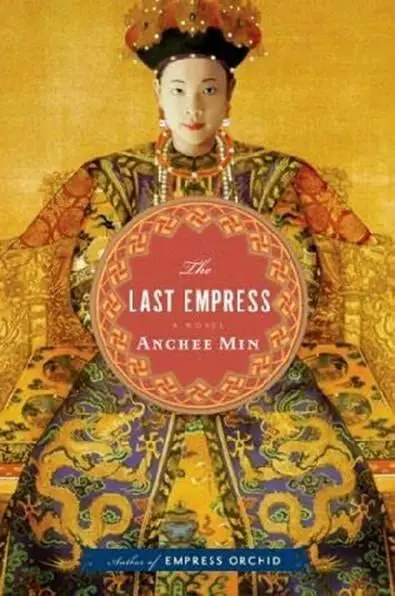
- Название:The Last Empress
- Автор:
- Жанр:
- Год:неизвестен
- ISBN:нет данных
- Рейтинг книги:4 / 5. Голосов: 1
-
Избранное:Добавить в избранное
- Отзывы:
-
Ваша оценка:
The Last Empress: краткое содержание, описание и аннотация
Предлагаем к чтению аннотацию, описание, краткое содержание или предисловие (зависит от того, что написал сам автор книги «The Last Empress»). Если вы не нашли необходимую информацию о книге — напишите в комментариях, мы постараемся отыскать её.
The Last Empress is the story of Orchid"s dramatic transition from a strong-willed, instinctive young woman to a wise and politically savvy leader. Moving from the intimacy of the concubine quarters into the spotlight of the world stage, Orchid must not only face the perilous condition of her empire but also a series of devastating personal losses, as first her son and then her adopted son succumb to early death. Yearning only to step aside, and yet growing constantly into her role, only she-allied with the progressives, but loyal to the conservative Manchu clan of her dynasty-can hold the nation"s rival
factions together.
Anchee Min offers a powerful revisionist portrait based on extensive research of one of the most important figures in Chinese history. Viciously maligned by the western press of the time as the "Dragon Lady," a manipulative, blood-thirsty woman who held onto power at all costs, the woman Min gives us is a compelling, very human leader who assumed power reluctantly, and who sacrificed all she had to protect those she loved and an empire that was doomed to die.
The Last Empress — читать онлайн бесплатно полную книгу (весь текст) целиком
Ниже представлен текст книги, разбитый по страницам. Система сохранения места последней прочитанной страницы, позволяет с удобством читать онлайн бесплатно книгу «The Last Empress», без необходимости каждый раз заново искать на чём Вы остановились. Поставьте закладку, и сможете в любой момент перейти на страницу, на которой закончили чтение.
Интервал:
Закладка:
I remembered the nights when Li negotiated the Shimonoseki Treaty. I counted every tael of war compensation paid, every hectare of land we were forced to part with. Li Hung-chang's telegrams came like a snow squall in January. My eunuch wore out his shoes shuttling messages between Li Hung-chang and me.
It had been like talking to the Great Wall when I tried to make Guang-hsu appreciate Li's negotiating efforts. "You should at least acknowledge that Li Hung-chang has been bearing the blame that should have been ours."
"Li Hung-chang deserves nothing but our loathing," Guang-hsu had responded.
Under the influence of Kang Yu-wei, my son ignored the telegrams Li sent concerning Ito's visit.
I was upset and said to my son, "You don't get tired because Li is the one carrying the heavy load."
"Well, I don't need him. I fired him long ago. You are the one who invited him back."
"I invited him because Russia and Japan won't talk peace with anybody else!"
"Mother, don't you find it suspicious?"
"What?"
"Li's foreign connections?"
When I learned that my son had again dismissed Li Hung-chang, I refused to speak to him for days. Guang-hsu had his eunuchs bring me an offering of lotus-seed soup, but he was not apologizing.
I held on to Li's telegrams until Guang-hsu couldn't bear to hear the name of Li Hung-chang anymore. My son insisted that China would be better off without him.
Instead of acknowledging Li Hung-chang's devotion, my son believed that every negative development was the result of Li's manipulation.
I began to realize that Guang-hsu lived in his own fantasy world. Like his mentor Tutor Weng, whom he had just fired, he hated yet worshiped Japan. In the future I would blame myself for believing that my son was capable of good judgment.
Guang-hsu despised me for continuing to seek help from Li Hung-chang, and I despised myself for being incapable of ending the trouble.
In responding to the throne's "Ito is no threat to China" edict, Li wrote in a memorandum: "In the world's eyes, Ito gives the impression that he is a supporter of Chinese culture. He might be a moderate, he might have opposed Japan's true political bosses like the militarist Yamagata Aritomo and other godfathers of the Genyosha, but he nevertheless conducted the Sino-Japanese War. China has fallen into a deep well because of its self-indulgence and ignorance, while Japan has proven capable of throwing heavy rocks."
I wished that I could tell my son how much I hated Ito. I wanted to yell, "Go and talk to the Emperor of Japan man to man instead of blaming Li Hung-chang!"
I had reasons not to respond to foreign and domestic attacks on me. It was to make sure that my son would not be held responsible for his possible failure. I betrayed Li Hung-chang in that sense-by purposely ignoring his warnings, I made Li a scapegoat. On my part, it was a self-betrayal before anything else.
I wondered if Li regretted his devotion.
Forgiveness was a gift I could not afford but which I fortunately received from Li Hung-chang.
There was no other way to love my son.
Guang-hsu wanted to prove to me that he and Ito could be friends. I did not know that they had scheduled to meet privately before the official meeting on September 20, to which I was invited.
It was impossible for me to concentrate on anything else. My son's words rang danger in my ears. "Mother, Ito only seeks to help me!"
I fought on the issue of trust, but my son's mind was made up.
I did not want to bring up Yung Lu's spy report, but I felt that I couldn't afford not to. "Japan's intrigues have been set in motion by Yamagata," I said to Guang-hsu. "Yamagata is the leading promoter of Japanese expansion and lord protector of the Genyosha."
"You have no proof that Ito is part of the Genyosha." My son was more than annoyed. "Yung Lu has fabricated this information to prevent me from meeting Ito!"
"But shouldn't we trust Yung Lu and Li Hung-chang more than Ito?" I pleaded.
"The only thing I can say is that Yung Lu has made himself an obstacle to reform. I should have dismissed him."
I went to sit down, weakened by what I was hearing.
"I am firing Yung Lu, Mother," Guang-hsu said in a flat voice.
I screamed, "For heaven's sake, Yung Lu is the last Manchu general who would die for you!"
My son stormed out.
Two days later I sent an apology to Guang-hsu along with Li Hung-chang's newly arrived telegram. It read, "The spy network set up by Genyosha agents has been operating under cover of a pharmaceutical syndicate with the trade name 'Halls of Pleasurable Delights.' To maintain their secrecy, the spies travel the countryside as salesmen. There is no evidence suggesting that the Japanese army, navy, diplomats and the representatives of Japan's trading houses, the zaibatsu, weren't behind Genyosha's assassinations, kidnappings and extortions."
32
The Emperor's secret meetings with Ito provoked a backlash among the court's conservatives. Led by Prince Ts'eng, the Iron-hats pressed me to replace Guang-hsu on the throne. At the same time, Ts'eng prepared his Moslem troops in the northwest to move toward Peking. I was caught in the middle, unable to decide and unable to get out.
When the minister of the royal cemetery requested my presence for an inspection, I used it as a pretext to escape the Forbidden City. Li Lien-ying hired a carpenter to make an adjustable seat for my horse carriage so I could ride in a reclining position. I bounced and dozed through the three-day journey covering 125 kilometers from Peking to Hupeh province.
By the time I arrived at the cemetery it was early morning. The sky was overcast and a fine mist fell over the blue rivers. White bridges, golden roofs, red walls and cypress trees formed breathtaking views.
The cemetery minister greeted me at the Grand Sacred Way. An elderly man who was hard of hearing, he apologized for the dirt and mud and said that Nuharoo's tomb was being repaired.
"Wild animals dug up the ground and damaged the drainage system," the minister explained. "A few of the tombs, including Empress Nuharoo's, flooded during the last storm."
I thought about how Nuharoo would have hated the flood and asked, "How soon will the repairs be completed?"
"I am embarrassed to say that I can't give you an exact date," he replied. "The work has been sporadic. Sometimes we have to stand idle for weeks while we appeal for more funds."
I was led to my own tomb, which seemed well maintained.
"It flooded too, but I gave the repair work top priority." The minister was not humble about claiming credit.
My tomb stood next to Nuharoo's like a twin sister. When Tung Chih ascended the throne in 1862, he ordered construction to begin on our tombs. It took thirteen years to complete the outer tomb and another five years to finish the interior.
Having reached the age of sixty-three, I had become familiar with the process of death. I continued to attend sacrificial ceremonies whenever I could. I honored the gods of all religions, not just Buddha. I believed in paying attention to the force of energy inside me. Not everyone would be lucky enough to achieve the Great Void, but I understood that the point was to try. I struggled to balance yin and yang, however difficult it seemed to be.
While the nation applauded Guang-hsu's dismissal of so-called corrupt officials, few of the throne's edicts had been executed, which meant no significant progress in reform had taken place. Guang-hsu expected to harvest his reforms by the end of the year, but the only thing that seemed to be coming was war with Japan.
"Young women in Japan are offering their virginity to soldiers willing to volunteer for service in China," one Peking newspaper reported.
Guang-hsu kept his door closed and worked with his reformer friends in the Hall of Spiritual Nurturing until "the wild geese flew across the dawn sky," according to the eunuchs. The country was on the brink of chaos. The ministers and officers who were fired continued to kneel at my front gate while the Ironhats trained their Moslem troops.
Читать дальшеИнтервал:
Закладка:
Похожие книги на «The Last Empress»
Представляем Вашему вниманию похожие книги на «The Last Empress» списком для выбора. Мы отобрали схожую по названию и смыслу литературу в надежде предоставить читателям больше вариантов отыскать новые, интересные, ещё непрочитанные произведения.



Обсуждение, отзывы о книге «The Last Empress» и просто собственные мнения читателей. Оставьте ваши комментарии, напишите, что Вы думаете о произведении, его смысле или главных героях. Укажите что конкретно понравилось, а что нет, и почему Вы так считаете.