Anchee Min - The Last Empress
Здесь есть возможность читать онлайн «Anchee Min - The Last Empress» весь текст электронной книги совершенно бесплатно (целиком полную версию без сокращений). В некоторых случаях можно слушать аудио, скачать через торрент в формате fb2 и присутствует краткое содержание. Жанр: Историческая проза, на английском языке. Описание произведения, (предисловие) а так же отзывы посетителей доступны на портале библиотеки ЛибКат.
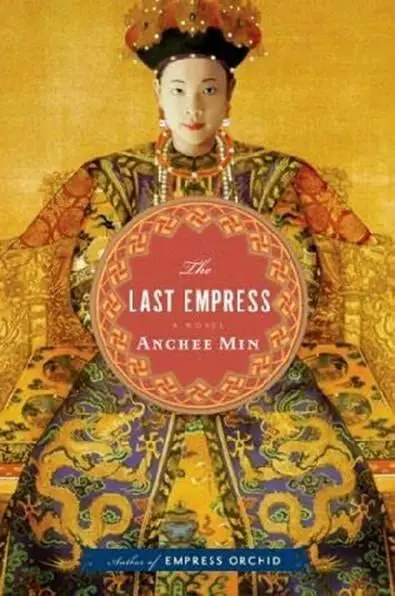
- Название:The Last Empress
- Автор:
- Жанр:
- Год:неизвестен
- ISBN:нет данных
- Рейтинг книги:4 / 5. Голосов: 1
-
Избранное:Добавить в избранное
- Отзывы:
-
Ваша оценка:
The Last Empress: краткое содержание, описание и аннотация
Предлагаем к чтению аннотацию, описание, краткое содержание или предисловие (зависит от того, что написал сам автор книги «The Last Empress»). Если вы не нашли необходимую информацию о книге — напишите в комментариях, мы постараемся отыскать её.
The Last Empress is the story of Orchid"s dramatic transition from a strong-willed, instinctive young woman to a wise and politically savvy leader. Moving from the intimacy of the concubine quarters into the spotlight of the world stage, Orchid must not only face the perilous condition of her empire but also a series of devastating personal losses, as first her son and then her adopted son succumb to early death. Yearning only to step aside, and yet growing constantly into her role, only she-allied with the progressives, but loyal to the conservative Manchu clan of her dynasty-can hold the nation"s rival
factions together.
Anchee Min offers a powerful revisionist portrait based on extensive research of one of the most important figures in Chinese history. Viciously maligned by the western press of the time as the "Dragon Lady," a manipulative, blood-thirsty woman who held onto power at all costs, the woman Min gives us is a compelling, very human leader who assumed power reluctantly, and who sacrificed all she had to protect those she loved and an empire that was doomed to die.
The Last Empress — читать онлайн бесплатно полную книгу (весь текст) целиком
Ниже представлен текст книги, разбитый по страницам. Система сохранения места последней прочитанной страницы, позволяет с удобством читать онлайн бесплатно книгу «The Last Empress», без необходимости каждый раз заново искать на чём Вы остановились. Поставьте закладку, и сможете в любой момент перейти на страницу, на которой закончили чтение.
Интервал:
Закладка:
Guang-hsu and I had expected that the Western powers would cease their aggression after the deals were executed, but in May of 1897 Germany found another excuse to attack us. The incident began when Chinese bandits robbed a village in Shantung near the port of Kiaochow, a German settlement. Houses were burned and the inhabitants were murdered, along with two Roman Catholic German missionaries.
Before our government had a chance to investigate, a German squadron proceeded to Kiaochow and seized the port. China was threatened with the severest repression unless it instantly agreed to pay compensation in gold and prosecute the bandits.
The Kaiser made sure that his protest was heard by the world: "I am fully determined to abandon henceforth the overcautious policy which had been regarded by the Chinese as weakness, and to show the Chinese, with full power and, if necessary, with brutal ruthlessness, that the German Emperor cannot be made sport of and that it is bad to have him as an enemy."
Four days later, my son came to me with the news that the Chinese garrison of Kiaochow had been routed. After its capture, Guang-hsu was forced to lease the port and the land around it, in a fifty-kilometer radius, from Germany. The ninety-nine-year lease came with exclusive mining and railway rights in the area.
Guang-hsu had trembled as he listened to Li Hung-chang describe what would happen if he refused to sign.
In the next few months, Li would bring more bad news: Russian warships sailed into fortified Port Arthur, as they were allowed to by the treaty of 1896, and announced that they had come to stay for good. By March of 1898, Port Arthur and the nearby merchant port of Talien-wan were likewise leased to Russia, for twenty-five years, with all mining and railway rights for sixty miles around.
Joining the fray, the British prime minister claimed that "the balance of power in the Gulf of Pechili has now been upset." England demanded that Weihaiwei, which was on the same spur as Kiaochow, controlled by the Germans, "be handed over to the British as soon as the Japanese indemnity had been paid and the town had been evacuated." The British also granted themselves an increase in the area of Kowloon, on the mainland opposite Hong Kong.
Not wanting to be left behind, France demanded a similar ninety-nine-year lease on the port of Kwangchowan, south of Hong Kong.
When the court pleaded for the Emperor to take control of the situation, Guang-hsu handed each minister a copy of what he had received from Li Hung-chang. It was an announcement made by the united Western powers regarding the "spheres of influence" in China. Germany and Russia had agreed that the entire Yangtze basin from Szechuan to the delta at Kiangsu was British. Britain agreed that southern Canton and southern Yunnan were French. A belt from Kausu through Shensi, Shansi, Hunan and Shantung was German. Manchuria and Chihli were Russian. The freedom-loving United States secured equal rights and opportunities for all nations in the leased areas and termed their attitude "the Open-Door Policy."
28
I had no idea that I would be meeting with Prince Kung for the last time. It was a gloomy overcast day in May 1898 when I received his invitation. Although he had been ill, he was a man of robust health and spirits, and everyone expected him to recover. When I arrived at his bedside, I was taken aback by his condition and knew instantly that his life was coming to an end.
"I hope you don't mind that the dying fish keeps making bubbles," Prince Kung said in a weak voice.
I asked if he would like me to bring the Emperor.
Prince Kung shook his head and closed his eyes to gather energy.
I looked around. There were cups, bowls, spittoons and basins arranged around the bed. The smell of herbal medicine in the room was unpleasant.
Prince Kung tried to sit up, but he no longer had the strength. "Sixth brother," I said, helping him up, "you shouldn't have hidden your condition."
"It's Heaven's will, sister-in-law," Prince Kung gasped. "I am glad I caught you in time."
He raised his right hand and stuck up two trembling fingers.
I drew closer.
"First, I am sorry for Tung Chih's death." Remorse filled Prince Kung's voice. "I know how you suffered… I apologize. My son Tsai-chen deserved his end."
"Stop it, sixth brother." Tears came to my eyes.
"I never forgave Tsai-chen, and he knew it," Prince Kung said.
But it was himself he wouldn't forgive. I never had the heart to ask how Prince Kung got through the days after his son died.
"Pity the hearts of parents," I said, passing him a towel.
"I owed much to Hsien Feng." Prince Kung wiped his face with the towel. "I failed in my duty. I let Tung Chih down, and now I have to quit on Guang-hsu."
"You didn't owe Hsien Feng anything. He wrote you out of his will. If there was any duty regarding how to raise and influence Tung Chih, Hsien Feng left the power to Su Shun and his gang."
Prince Kung had to agree with what I said, although he had chosen to believe that it was Su Shun, and not his brother, who manipulated the Imperial will.
Exhausted, he closed his eyes again as if going to sleep. Looking at the prince's sallow face, I remembered the days when he was strong, handsome and full of zest. His dreams for China were great, and so was his talent. Once I had even fantasized that I had married him instead of Emperor Hsien Feng.
I suppose I had always believed that Kung would have made a better emperor. He should have been given the throne-and would have been but for the wiles of Hsien Feng's grand tutor, who counseled his student to pretend compassion toward the animals of the autumn hunt. Prince Kung outcompeted all his brothers that day, but his father was moved by the younger son's heart. It was a misfortune for the country that the crown went to Hsien Feng. And misfortune bred misfortune.
I wondered whether Prince Kung resented living in the shadow of Hsien Feng, knowing that he had been betrayed.
"If you have a question, you'd better ask before it is too late," Prince Kung said when he opened his eyes again.
The thought of losing him was unbearable. "I don't think you want to know the question I have," I said. "I don't think it is even decent for me to ask."
"Orchid, we have been each other's best friend and worst curse." Prince Kung smiled. "What more can come between us?"
So I asked if he resented his father's unfairness and his brother's theft of the kingdom.
"If I had any resentment, my own guilt took away the sting," he replied. "Do you remember September of 1861?"
"The month Hsien Feng died?"
"Yes. Remember the deal we made? It was a good deal, wasn't it?"
Back then, when we were in our twenties, we didn't know that we were making history. Prince Kung found out that he had been written out of Hsien Feng's will. He was left helpless for Su Shun to slaughter. And I faced the possibility of being buried alive, to accompany my husband on his journey to the next life.
"Su Shun had both of us in a corner," I said.
"Was it you or I who first came up with the idea of lending each other the legitimacy?" he asked.
"I can't recall. I only remember that we had no option but to help each other."
"It was you who drafted my appointment as Su Shun's replacement," Prince Kung said.
"Did I?"
"Yes. It was audacious-and unthinkable."
"You deserved the title," I said softly. "It should have been Heaven's will in the first place."
"I am guilty because it wasn't what my father and my brother Hsien Feng intended."
"The dynasty wouldn't be where it is without you," I insisted.
"In that case, I'd like to thank you for the opportunity, Orchid."
"You are a good partner, although you can be difficult."
Читать дальшеИнтервал:
Закладка:
Похожие книги на «The Last Empress»
Представляем Вашему вниманию похожие книги на «The Last Empress» списком для выбора. Мы отобрали схожую по названию и смыслу литературу в надежде предоставить читателям больше вариантов отыскать новые, интересные, ещё непрочитанные произведения.







Обсуждение, отзывы о книге «The Last Empress» и просто собственные мнения читателей. Оставьте ваши комментарии, напишите, что Вы думаете о произведении, его смысле или главных героях. Укажите что конкретно понравилось, а что нет, и почему Вы так считаете.