Anchee Min - The Last Empress
Здесь есть возможность читать онлайн «Anchee Min - The Last Empress» весь текст электронной книги совершенно бесплатно (целиком полную версию без сокращений). В некоторых случаях можно слушать аудио, скачать через торрент в формате fb2 и присутствует краткое содержание. Жанр: Историческая проза, на английском языке. Описание произведения, (предисловие) а так же отзывы посетителей доступны на портале библиотеки ЛибКат.
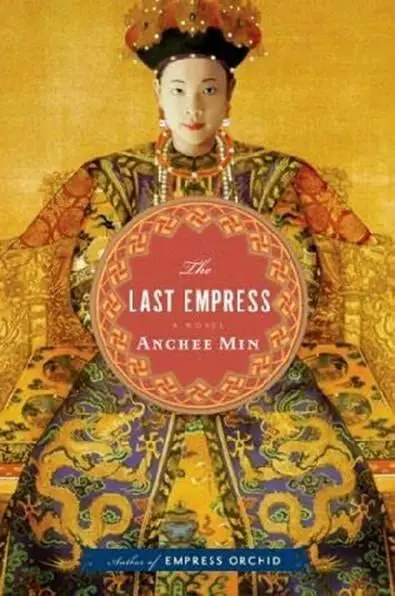
- Название:The Last Empress
- Автор:
- Жанр:
- Год:неизвестен
- ISBN:нет данных
- Рейтинг книги:4 / 5. Голосов: 1
-
Избранное:Добавить в избранное
- Отзывы:
-
Ваша оценка:
The Last Empress: краткое содержание, описание и аннотация
Предлагаем к чтению аннотацию, описание, краткое содержание или предисловие (зависит от того, что написал сам автор книги «The Last Empress»). Если вы не нашли необходимую информацию о книге — напишите в комментариях, мы постараемся отыскать её.
The Last Empress is the story of Orchid"s dramatic transition from a strong-willed, instinctive young woman to a wise and politically savvy leader. Moving from the intimacy of the concubine quarters into the spotlight of the world stage, Orchid must not only face the perilous condition of her empire but also a series of devastating personal losses, as first her son and then her adopted son succumb to early death. Yearning only to step aside, and yet growing constantly into her role, only she-allied with the progressives, but loyal to the conservative Manchu clan of her dynasty-can hold the nation"s rival
factions together.
Anchee Min offers a powerful revisionist portrait based on extensive research of one of the most important figures in Chinese history. Viciously maligned by the western press of the time as the "Dragon Lady," a manipulative, blood-thirsty woman who held onto power at all costs, the woman Min gives us is a compelling, very human leader who assumed power reluctantly, and who sacrificed all she had to protect those she loved and an empire that was doomed to die.
The Last Empress — читать онлайн бесплатно полную книгу (весь текст) целиком
Ниже представлен текст книги, разбитый по страницам. Система сохранения места последней прочитанной страницы, позволяет с удобством читать онлайн бесплатно книгу «The Last Empress», без необходимости каждый раз заново искать на чём Вы остановились. Поставьте закладку, и сможете в любой момент перейти на страницу, на которой закончили чтение.
Интервал:
Закладка:
On June 18, 1896, Rong died. It was after she accused her doctors of poisoning her. Her mental illness became known to the court, so my decision of years before to bar her from visiting Guang-hsu was now understood. The unfortunate thing was that the Emperor was now considered the son of an insane woman, and the Clan Council used this excuse to start thinking about his replacement.
I was sick of the infighting among the Manchu princes, the brothers and cousins who seemed to share nothing but greed and hatred. When I tried to explain the great affection between Emperor Hsien Feng and Prince Kung, the young Ironhats grew bored. In splendid court robes this generation of royal Manchus fought like a pack of wolves over residences, sinecures and annual stipends.
I lost my temper at a family gathering during my sister's funeral. It had to do with the fact that I didn't get a chance to say goodbye to Rong-her revenge. And the grousing among Prince Ch'un Junior and his Ironhat gang over their inheritances hit my nerves and I exploded.
"Your mother's death means that you will no longer be shielded." I spoke in a cold voice. "The next time you offend the throne, I will not hesitate to order your removal, and if you defy me, your execution."
Ch'un knew that I meant what I said-after all, I had executed Su Shun, the former grand councilor, and his powerful gang.
My harsh words put a stop to the bickering, and I was left alone.
Laying my cheek against Rong's coffin, I remembered the two walnuts she placed in my palm the day I departed home for the Forbidden City. I regretted that I hadn't tried harder to care for her. She had succumbed to her illness, but there had been moments of lucidity and affection. I wondered if she knew of the marital troubles of Guang-hsu and Lan. I would never know her feelings. How I missed talking with her when we were girls! I wished I could talk to Kuei Hsiang, commiserate together, but he was not interested. To my brother, Rong's death was a relief.
Lan and Guang-hsu looked like a harmonious couple at Rong's funeral. After bowing toward the coffin together, they tossed golden grain toward the sky. It made me think that I should not give up hope.
Throughout our recent troubles, Yung Lu had continued working alongside Li Hung-chang, strengthening the army. During this time we seldom met; he was determined not to breathe life into any rumors about us that might compromise his efforts on the throne's behalf. I had to be satisfied with reports of his whereabouts from Li.
But one morning Yung Lu came to me to request permission to leave his current position as commander in chief of the army to head up the nation's navy. I granted his wish, knowing that he must have thought through the decision, but I warned him that many would regard his transfer as a demotion.
"I never live by others' principles" was his response.
"The navy has been having great difficulty since Li Hung-chang's departure abroad," I reminded him.
"That's exactly why I want the job."
"Li had said to me, 'It takes a man of Yung Lu's stature to influence the navy.' Did he suggest your move?"
"Yes, he did."
I tried not to think that Yung Lu's new duties would take him even more often away from Peking.
"Who will be your replacement?" I asked.
"Yuan Shih-kai. He will report to me directly." I was well aware of Yuan's qualifications, of course. As a young general he had fought the Japanese and succeeded in keeping peace in Korea for ten years.
"Then you will be working two jobs."
"Yes, I will." He smiled. "So are you."
"I won't feel safe with you gone."
"I'll be in Tientsin."
"That's hundreds of miles away."
"Compared to Sinkiang, it is no distance."
We sat quietly sipping tea. I looked at him, his eyes, nose, mouth and hands.
27
Guang-hsu asked me to move with him to Ying-t'ai, the Ocean Terrace Pavilion, which stood on an island in the South Sea lake next to the Summer Palace. The seclusion, he said, would help him concentrate.
Ying-t'ai was a paradise that had long been unoccupied. Its elegant buildings, which were in need of repair, were linked to the mainland by a narrow causeway and a drawbridge. The pavilion had marble terraces dropping straight into the water, with canals spanned by pretty bridges between them.
In the summer the surrounding lakes were covered by flotillas of green lotus. By August large pink flowers would shoot up from the green mats. The views were astonishing. When the restoration work started, I was asked to rename the living quarters. I chose the names Hall of Cultivating Elegance, Chamber of Quiet Rest, Study of Reflection on Remote Matters and Chamber of Singleness of Heart.
I was beginning to realize that there could be dignity without friends. I found myself becoming more attracted to Buddhism. Its promise of peace was appealing, and it did not discriminate against women, as did Confucianism. The Buddhist pantheon included women, prominent among them the goddess of mercy, Kuan-yin, with whom I felt a special affinity. The truth was that I had nowhere else to turn.
I believed in mercy, but I was losing faith in the people around me. For example, I had thought that my fairness toward house eunuchs would assure their honesty and gain their loyalty, but with a piercing look straight in the eyes I would catch a liar.
I had asked my eunuch Chow Tee to send a honey-nut cake to Li Lien-ying, who was away on vacation for the first time in twenty-nine years. When Chow Tee reported Li Lien-ying's thanks to me, I asked, "Did you deliver the cake yourself?"
"I did, of course. I ran, so Chief Li could have the cake while it was still hot."
"It's raining outside, isn't it?" I asked.
"Yes."
"How is it that your clothes are completely dry?"
In the end, the liar suffered ten strokes of a bamboo stick.
Trying to calm myself, I looked at the blooming camellia outside my window. The trees were loaded with fat buds. It was hard to believe that Li Lien-ying had turned fifty. He was thirteen when An-te-hai first brought him to me.
I was now sixty-one and had become suspicious of others and increasingly questioned my own judgment. I repeatedly warned that I would tolerate no liars, but lying had always been a part of the life of the Forbidden City. Since our war with Japan, I had never received a single report of a military loss. The only news the court sent was of victory, for which I foolishly awarded promotions and bonuses.
On impulse, I would pick a moment to test my eunuchs and ladies in waiting. I felt sick at heart, yet I couldn't act differently. I had to be unpredictable and domineering. I made it a rule to be swift with the rod. This had become my way to survive mentally.
I tried to let go of small matters. For example, I did not pursue his punishment when Li Lien-ying poked a hole ("to let out the air") in all of my champagne bottles-Li Hung-chang's gifts from France. The eunuch believed that the popping sound would harm me.
Throughout 1896 I had worked daily with Emperor Guang-hsu and was pleased with his progress. He desperately tried to catch up on the court's business but faced tremendous obstacles, and getting things organized was our first step. I rose early and walked the stone bridges to get my mind ready for the day. I watched the lotus from their early budding to their final blooming. I caught the first flower, which opened on a summer dawn.
I felt at odds with the tranquility of the setting. As I watched my eunuchs plunging waist-deep in the mire to extract lotus roots for my breakfast, my mind struggled with whether or not I should press the Emperor to approve Li Hung-chang's recent proposal to secure additional loans. We were behind in our current payments, and the foreign banks were threatening. It was clear to us that the foreign powers were after our territories and were looking for any pretext to invade.
Читать дальшеИнтервал:
Закладка:
Похожие книги на «The Last Empress»
Представляем Вашему вниманию похожие книги на «The Last Empress» списком для выбора. Мы отобрали схожую по названию и смыслу литературу в надежде предоставить читателям больше вариантов отыскать новые, интересные, ещё непрочитанные произведения.







Обсуждение, отзывы о книге «The Last Empress» и просто собственные мнения читателей. Оставьте ваши комментарии, напишите, что Вы думаете о произведении, его смысле или главных героях. Укажите что конкретно понравилось, а что нет, и почему Вы так считаете.