Roberto Saviano - ZeroZeroZero
Здесь есть возможность читать онлайн «Roberto Saviano - ZeroZeroZero» весь текст электронной книги совершенно бесплатно (целиком полную версию без сокращений). В некоторых случаях можно слушать аудио, скачать через торрент в формате fb2 и присутствует краткое содержание. Год выпуска: 2015, Издательство: Penguin Publishing Group, Жанр: Публицистика, Криминальный детектив, на английском языке. Описание произведения, (предисловие) а так же отзывы посетителей доступны на портале библиотеки ЛибКат.
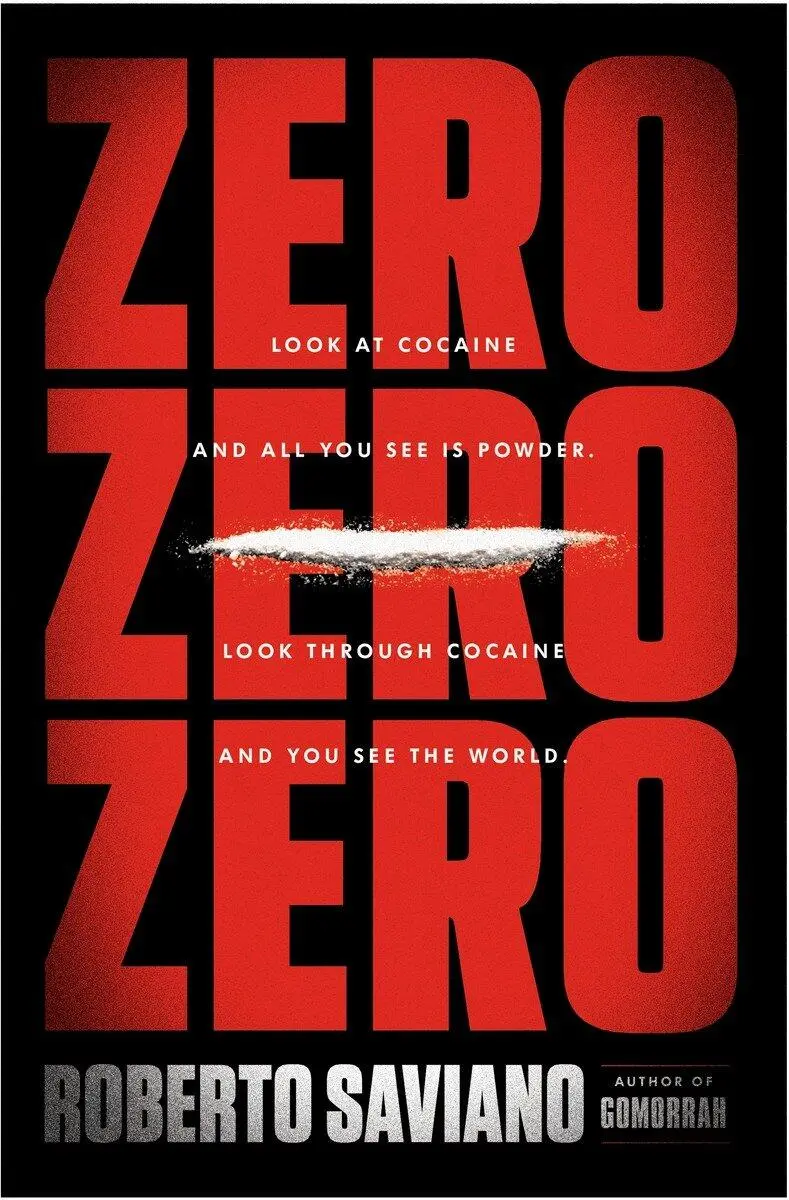
- Название:ZeroZeroZero
- Автор:
- Издательство:Penguin Publishing Group
- Жанр:
- Год:2015
- ISBN:нет данных
- Рейтинг книги:5 / 5. Голосов: 1
-
Избранное:Добавить в избранное
- Отзывы:
-
Ваша оценка:
ZeroZeroZero: краткое содержание, описание и аннотация
Предлагаем к чтению аннотацию, описание, краткое содержание или предисловие (зависит от того, что написал сам автор книги «ZeroZeroZero»). Если вы не нашли необходимую информацию о книге — напишите в комментариях, мы постараемся отыскать её.
Saviano’s
, his explosive account of the Neapolitan mob, the Camorra, was a worldwide publishing sensation. It struck such a nerve with the Camorra that Saviano has lived with twenty-four hour police protection in the shadow of death threats for more than seven years. During this time he has become intimate with law enforcement agencies around the world. Saviano has broadened his perspective to take in the entire global corporate” entity that is the drug trade in cooperation with law enforcement officials, who have fed him information and sources and used him to guide their own thinking and tactics. Saviano has used this extraordinary access to feed his own groundbreaking reportage.
The result is a truly amazing and harrowing synthesis of intimate literary narrative and geopolitical analysis of one of the most powerful dark forces in the global economy. In
, Saviano tracks the shift in the cocaine trade’s axis of power, from Colombia to Mexico, and relates how the Latin American cartels and gangs have forged alliances, first with the Italian crime syndicates, then with the Russians, Africans, and others. On the one hand, he charts an astonishing increase in sophistication and diversification as these criminal entities diversify into many other products and markets. On the other, he reveals the threat of violence to protect and extend power and how the nature of the violence has grown steadily more appalling.
Saviano is a journalist of rare courage and a thinker of impressive intellectual depth and moral imagination, able to see the connections between far-flung phenomena and bind them into a single epic story. Most drug-war narratives feel safely removed from our own lives; Saviano offers no such comfort. As heart racing as it is heady,
is a fusion of a variety of disparate genres into a brilliant new form that can only be called
.
ZeroZeroZero — читать онлайн бесплатно полную книгу (весь текст) целиком
Ниже представлен текст книги, разбитый по страницам. Система сохранения места последней прочитанной страницы, позволяет с удобством читать онлайн бесплатно книгу «ZeroZeroZero», без необходимости каждый раз заново искать на чём Вы остановились. Поставьте закладку, и сможете в любой момент перейти на страницу, на которой закончили чтение.
Интервал:
Закладка:
From now on, no one is spared.
Colombia’s high circles did business and collaborated with the paramilitary organizations. Lawyers, politicians, police officers, army generals: some to profit from the cocaine market, some to insure votes and support. And that’s not all. According to Mancuso’s deposition, the oil business, the drinks industry, the wood industry, transportation companies, and multinational banana corporations also had ties to the Autodefensas. All — with no exceptions — paid huge sums of money to the paramilitaries in exchange for protection and the possibility of continuing to work in the area. For years the AUCs had a hand in every step of the process.
Mancuso appears on 60 Minutes . Then the spotlights are turned off and the prisoner is led back to his cell inside the maximum security prison in Warsaw, Virginia. Colombian as well as U.S. justice awaits him. It is highly likely that he will spend the rest of his life behind bars.
9. THE TREE IS THE WORLD
The tree is the world. The tree is the genealogy of families linked by dynastic relations and sealed in blood. The tree is knowledge.
But the tree is also real. In the story handed down in ’ndrangheta lore it is an oak tree on the island of Favignana, but the tree I encountered is in Calabria, a hearty chestnut with green leaves, though its massive gray trunk is as cracked and as concave as a grotto. At Christmastime that natural grotto often hosts a nativity scene, with the Three Kings who have arrived from the East and the Archangel Gabriel watching over all from above, perched on a surface root. For centuries, as storms raged in the mountains, this tree offered shelter to sheep and dogs and donkeys, who could at least stick their front paws and big heads in, and even to humans: shepherds, hunters, and brigands. That’s what I was thinking as I crouched in its hollow, breathing in the smell of musk and earth, of resin and stagnant water. This tree has always been here, in this gorge near the crest of Aspromonte. Men came later, and they took on the tree’s form and its meanings.
The ’ndrangheta tree covers nearly the whole world. Though not as mythologized as Sicily’s Cosa Nostra, in part because it is much more discreet, the Calabrian criminal tribe is arguably the most powerful organized crime group in the world; its estimated annual revenue, €53 billion, is over 3 percent of Italy’s GDP. We are in a new era of waxing ’ndrangheta power, invoked by three dates. In 2007: the August 15 massacre at Da Bruno restaurant in Duisburg, Germany, an extension of the feud that broke out in Calabria, among San Luca families, during Carnival celebrations in 1991. In 2008: the ’ndrangheta is added to the White House’s list of foreign narcotics kingpins, drug-trafficking organizations considered to be a threat to U.S. security and whose assets are immediately blocked. In 2010: Operation Crimine-Infinito, coordinated by the DDA (Antimafia District Directorate) of Milan and Reggio Calabria. Over three hundred arrests. Circulation of two videos: one, the meeting at the Giovanni Falcone and Paolo Borsellino Club in Paderno Dugnano, in the hinterlands of Milan, which documents Calabrian dominance in northern Italy; the second, the annual summit of the major ’ndrangheta bosses at the Polsi sanctuary, in Calabria, which reveals the rigid hierarchical structure of the entire organization.
But the truth is awkward for many Italians. One day, leafing through the papers, I let out a short, scornful laugh, as when you suddenly realize you’re the butt of some awful joke, even though it somehow doesn’t surprise you. “Add your signature against Saviano, who calls northerners mafiosi.” It was mid-November 2010. A week earlier I had spoken of ’ndrangheta transplants in northern Italy in comments on material that had already been in the public domain for four months. There’s none so deaf as one who won’t hear, I thought to myself. It occurred to me that the Calabrian bosses could have found reassurance in that proverb: Everything was still the same; no problem.
The ’ndrangheta owes as much to others’ shortcomings as to its own strengths for what it has become. One of its primary merits is the way it cloaked its expansion so that only the occasional growth spurt was noticed. Never the whole picture, never the full extension of the tree’s crown, even less its deep roots. For a good decade it disappeared from sight even in Italy. The state seemed to have won on all fronts: It had defeated terrorism, weakened the Sicilian Mafia after the season of bombs, occupied manu militari (with military aid) not only Sicily but Campania, Puglia, and Calabria, which was guilty of carrying out the killing of Judge Antonino Scopelliti, who was involved in the Palermo maxi-trial, the biggest trial ever against the Cosa Nostra, held in the second half of the eighties in Sicily. That “excellent cadaver” nevertheless fueled a dangerous misunderstanding: It appeared to be further proof of Calabrian subordination to the Sicilians, founders of the Mafia, the oldest and most notorious Italian criminal organization. What’s more, in the collective imagination the ’ndrangheta still had no face, or if it did, it was still thought of as a primitive rural outfit that relied on kidnappings as the primary source of its organization’s income, like the gangs of Anonymous Sardinian shepherds who dragged their hostages up onto the Gennargentu and treated them worse than their beasts, sending back severed ears in request for ransom money. They were beasts themselves, adding yet another element of terror to a country that in the 1970s was already far too bloody and unstable, but only by controlling areas that were totally backward. That was the idea that still stuck in people’s minds, and no new one arrived to correct it.
It was an idea that proved useful to the ’ndrangheta. With the new Italian law introduced in 1982 that allowed for the freezing of mafia assets, the Sardinians were done in, and it was thought that the Calabrians were too. The mafiosi had stopped killing each other even in Reggio Calabria — peace seemed to be the right answer everywhere. But in Calabria it was a pax mafiosa. A strategic shift, a tactical withdrawal. The ’ndrangheta had decided to give up kidnapping, to stop letting Cosa Nostra get it mixed up in ineffective strategies against the state, and to keep from bleeding to death in fratricidal wars. The tree flourished in silence: Its roots continued to extend deeper into Calabrian soil through public works projects, such as the Salerno-Reggio Calabria highway, and its crown to reach into global trafficking, which now meant primarily cocaine.
The tree, which had long represented both the individual ’ndrina and the Onorata Società (the Honored Society, as the ’ndrangheta is called), also contained the answer to the growing need for cohesion and coordination. For a century more or less its symbolism had been handed down from father to son, from elderly boss to new affiliate. According to a ’ndrangheta code that came to light at Gioiosa Jonica in 1927, “the trunk represents the head of the society; the narrower part of the trunk the accountant and master of ceremonies; the branches the camorristi of blood and by crime, the twigs the rank and file; the flowers the young men of honor; the leaves the bastards and traitors who end up falling and rotting at the foot of the tree of knowledge.” Oral transmission has generated many variants, but the substance is always the same. The bosses are the base of the trunk or the trunk itself, from which the other members of the hierarchy branch out, all the way out to the smallest and most fragile twigs.
The ’ndrangheta hierarchy was not an imitation of the Cosa Nostra’s high command, as erroneously has been said; the Sicilian structure is that of a pyramid, the Calabrian tree can be simplified geometrically into its inverse: a downward pointing triangle, or a V, the sides of which can be extended and expanded into infinity.
Читать дальшеИнтервал:
Закладка:
Похожие книги на «ZeroZeroZero»
Представляем Вашему вниманию похожие книги на «ZeroZeroZero» списком для выбора. Мы отобрали схожую по названию и смыслу литературу в надежде предоставить читателям больше вариантов отыскать новые, интересные, ещё непрочитанные произведения.

Обсуждение, отзывы о книге «ZeroZeroZero» и просто собственные мнения читателей. Оставьте ваши комментарии, напишите, что Вы думаете о произведении, его смысле или главных героях. Укажите что конкретно понравилось, а что нет, и почему Вы так считаете.