Roberto Saviano - ZeroZeroZero
Здесь есть возможность читать онлайн «Roberto Saviano - ZeroZeroZero» весь текст электронной книги совершенно бесплатно (целиком полную версию без сокращений). В некоторых случаях можно слушать аудио, скачать через торрент в формате fb2 и присутствует краткое содержание. Год выпуска: 2015, Издательство: Penguin Publishing Group, Жанр: Публицистика, Криминальный детектив, на английском языке. Описание произведения, (предисловие) а так же отзывы посетителей доступны на портале библиотеки ЛибКат.
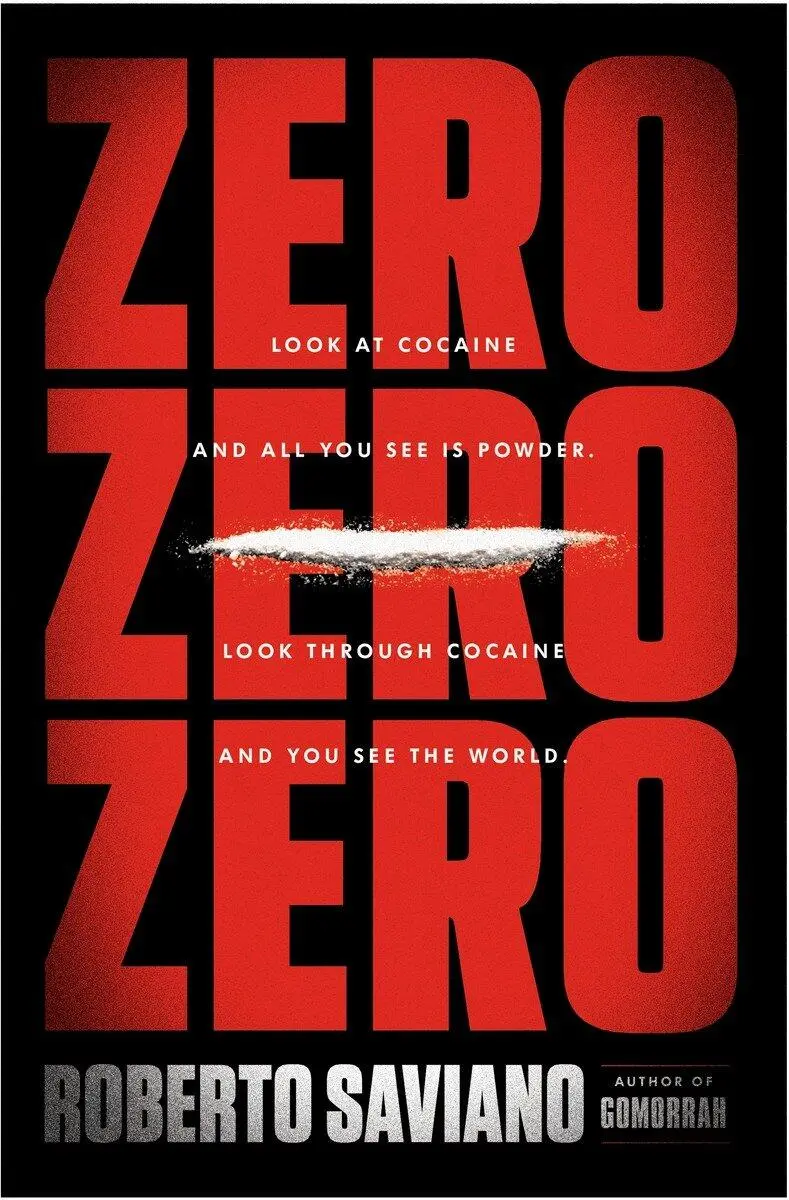
- Название:ZeroZeroZero
- Автор:
- Издательство:Penguin Publishing Group
- Жанр:
- Год:2015
- ISBN:нет данных
- Рейтинг книги:5 / 5. Голосов: 1
-
Избранное:Добавить в избранное
- Отзывы:
-
Ваша оценка:
ZeroZeroZero: краткое содержание, описание и аннотация
Предлагаем к чтению аннотацию, описание, краткое содержание или предисловие (зависит от того, что написал сам автор книги «ZeroZeroZero»). Если вы не нашли необходимую информацию о книге — напишите в комментариях, мы постараемся отыскать её.
Saviano’s
, his explosive account of the Neapolitan mob, the Camorra, was a worldwide publishing sensation. It struck such a nerve with the Camorra that Saviano has lived with twenty-four hour police protection in the shadow of death threats for more than seven years. During this time he has become intimate with law enforcement agencies around the world. Saviano has broadened his perspective to take in the entire global corporate” entity that is the drug trade in cooperation with law enforcement officials, who have fed him information and sources and used him to guide their own thinking and tactics. Saviano has used this extraordinary access to feed his own groundbreaking reportage.
The result is a truly amazing and harrowing synthesis of intimate literary narrative and geopolitical analysis of one of the most powerful dark forces in the global economy. In
, Saviano tracks the shift in the cocaine trade’s axis of power, from Colombia to Mexico, and relates how the Latin American cartels and gangs have forged alliances, first with the Italian crime syndicates, then with the Russians, Africans, and others. On the one hand, he charts an astonishing increase in sophistication and diversification as these criminal entities diversify into many other products and markets. On the other, he reveals the threat of violence to protect and extend power and how the nature of the violence has grown steadily more appalling.
Saviano is a journalist of rare courage and a thinker of impressive intellectual depth and moral imagination, able to see the connections between far-flung phenomena and bind them into a single epic story. Most drug-war narratives feel safely removed from our own lives; Saviano offers no such comfort. As heart racing as it is heady,
is a fusion of a variety of disparate genres into a brilliant new form that can only be called
.
ZeroZeroZero — читать онлайн бесплатно полную книгу (весь текст) целиком
Ниже представлен текст книги, разбитый по страницам. Система сохранения места последней прочитанной страницы, позволяет с удобством читать онлайн бесплатно книгу «ZeroZeroZero», без необходимости каждый раз заново искать на чём Вы остановились. Поставьте закладку, и сможете в любой момент перейти на страницу, на которой закончили чтение.
Интервал:
Закладка:
And that was more or less what was happening. In Italy the Socialist and the Christian Democratic parties had crumbled, new governments came and went, rightist and leftist governments, and emergency governments, awkward coalitions of the two. There was Berlusconi and the Olive Tree Party, which was much more fragile than the ’ndrangheta tree. In Colombia, in the meantime, Pablo Escobar had been killed, and the Calabrians had redirected their middlemen toward Cali. Then the Cali cartel crumbled as well, and the ’ndrangheta had to do business with whoever was left, or whoever was starting to step in, secure in the knowledge that nothing was as immutable as their honored society, their tree.
Italy was forced to remember the existence of the ’ndrangheta in 2005, when Francesco Fortugno, vice president of the regional council of Calabria, was killed in the Calabrian town of Locri, and for the first time the area youth let out a collective cry: “Kill us all!” The shock didn’t last long, though, as is always the case with news stories from southern Italy, which are considered manifestations of an endemic problem that is confined to those lands without hope and have nothing to do with the rest of the country.
The tree had become enormous. It wouldn’t have been hard to notice it. It would have been enough to follow the news more regularly. It would even have been enough simply to reflect on a single story that made the national headlines. A story in which the tree reveals itself in its entirety. A leaf of the tree had fallen off and was gathered up by investigators before it could reach the ground. In and of itself the fallen leaf would not have constituted any risk. To date, the ’ndranghetisti who have decided to turn informers number less than one hundred, and you can count the bosses on two hands. It’s tremendously difficult to turn your back on an organization that coincides with the family into which you were born or to which you’re joined through marriage or baptism, and which almost everyone you have spent time with since you were a child belongs to. It’s almost impossible to break away from a tree once you’ve become a branch. But this wasn’t a branch, or even a twig. It was just a leaf, never anything more, what in the more elaborate versions of the myth are “contrasti onorati,” those who support the organization without being members.
• • •
The leaf was named Bruno Fuduli.
Bruno was still a kid when he collected his inheritance and became the head of his family. The fate of the first born. In the ’ndrine dynastic succession based on seniority is one of those hard-and-fast laws that prevent a power struggle if a chief dies or ends up in jail. In a family business it’s a widespread practice, and not only in Calabria or the South. The oldest son is the first to be brought into the business, to help out and to learn, and often to introduce new ideas, which younger generations can grasp more easily.
Bruno was just over twenty when his father died, leaving him his stone masonry business, the Filiberto Fuduli company in Nicotera, an ancient village that looks over the Tyrrhenian Sea and a famous stretch of long, white beach that fills with tourists in the summer. He also inherited half a billion lire of debt, but he was sure he’d be able to manage things if he revitalized the company, made it competitive.
Marble, granite, and all the other stones that his craftsman father had worked with were coming back in style. There was a demand for large stone surfaces in private homes, in addition to their timeless use in cemeteries. So Bruno throws himself into the fray: He updates his range of products, changes the name of the company and the corporation, and then opens two more companies, in partnership with his brother-in-law. But there are other obstacles Bruno has to face. Along with his father’s debts, Bruno also inherited another aspect of his business: theft, vandalism, malice. An elastic response to such obstacles is usually what is expected in southern Italy, but Bruno stays true to the old Filiberto stubbornness. Instead of going to the right people to set things right, he goes to the police.
For the family who rules the entire province of Vibo Valentia, this sort of thing is a mild annoyance, like a fly that disturbs your postprandial nap on a muggy summer afternoon. The Mancuso family has been there forever. They can boast of a 1903 court sentence, when their great-grandfather Vincenzo was condemned for criminal conspiracy. By now they’ve got their hands in every sort of illegal activity and are on friendly terms with the ’ndrangheta families in the Gioia Tauro plain. The Piromalli family gang controls the territory where the port and the steel plant are being built, and the Mancuso family gang controls the quarries in Limbadi and environs, which supplied the building materials. The amount the young Fuduli refuses to cough up is nothing to them, small change. But he’s setting a bad example with his arrogance. It’s routine, standard practice, to repeat their requests for payment, something they do on principle, till the stubborn kid learns to lower his head. It’s merely a question of time. Time is not only the best healer, it’s also the best fee collector.
Debts. Bruno manages to keep them under control for years, even with all the expenses and additional losses inflicted on him by the forces he refuses to give in to. He practically works himself to death to pay the interest, but the sword of Damocles still hangs over his companies. It wouldn’t take much to upset his precarious balance. All it would take is one more problem, a few more customers whose checks bounce, or who don’t pay at all. Which is exactly what happens toward the end of the 1980s, a moment in which the entire country’s economy starts slowing down, nudging Italy toward the financial crisis that will explode in 1992. So one day the bank tells Fuduli that, for want of guaranties, it is forced to close his credit line. Either he declares bankruptcy, or he finds some other way to survive. Those are his only options.
The people he contacts don’t have a problem lending him money, but they charge 200 percent interest, even more. Loan sharks. The Mancuso family usurers are becoming more and more threatening. But suddenly a man with unlimited resources holds out a helping hand to him: Natale Scali, boss of the town of Marina di Gioiosa Jonica, an experienced drug trafficker. He needs a guy like Bruno: a young businessman toughened by years of training, during which he used every possible resource to defend his companies. Intelligent, dynamic, determined. Someone who knows how to behave, and who speaks Spanish well. His record is spotless; in fact, it’s even adorned with repeated reports of extortion threats. Scali tells him so, quite openly. He doesn’t push, doesn’t rush. He flatters him, telling him each time they meet that he needs someone like him, someone clean. And for a sum that no bank would ever lend him—1.7 billion lire — Scali asks him for a favor, in the form of a plane trip. An arrest warrant has forced Scali to hole up in his bunker house in his hometown, but before, when he used to go to Bogotá himself, to take care of business, he’d live like a fat cat, the guest of a governor’s brother. All Bruno has to do is go and renew Scali’s old contacts. He can think of it as a vacation.
Natale Scali was a far-sighted businessman with lots of experience. The Aquino-Scali-Ursino ’ndrangheta families, like the other ’ndrangheta families on the Ionian coast, had become so specialized in importing cocaine from Colombia that they were allowed to have their own representative in loco: a man named Santo Scipione, who goes by the name of Papi, and who was sent directly from the town of San Luca, the ’ndrangheta stronghold, known as mamma, from whom all things come. She’s the one who makes the rules, the one who slaps you, punishes you, caresses you, rewards you, the one with whom all problems must be discussed. If problems arise among ’ndrangheta sons anywhere in the world, mamma San Luca resolves them. Santo Scipione is in regular contact with Natale Scali, but his supply channel does not cover all of Scali’s demand. He has settled in Montería, appealing because of its sizable Italian community, and because Salvatore Mancuso, El Mono, is there. Even though Mancuso is now officially a commander in hiding, he is becoming more and more crucial for Italo-Colombian relations. For every fugitive, home is home: the place where your family is; your people; the place you belong to and that belongs to you. The Calabrians have worked with the AUC since they were founded. So their decision to settle their representative right in the middle of AUC territory is a much appreciated gesture of respect, and good for business.
Читать дальшеИнтервал:
Закладка:
Похожие книги на «ZeroZeroZero»
Представляем Вашему вниманию похожие книги на «ZeroZeroZero» списком для выбора. Мы отобрали схожую по названию и смыслу литературу в надежде предоставить читателям больше вариантов отыскать новые, интересные, ещё непрочитанные произведения.


Обсуждение, отзывы о книге «ZeroZeroZero» и просто собственные мнения читателей. Оставьте ваши комментарии, напишите, что Вы думаете о произведении, его смысле или главных героях. Укажите что конкретно понравилось, а что нет, и почему Вы так считаете.