Roberto Saviano - ZeroZeroZero
Здесь есть возможность читать онлайн «Roberto Saviano - ZeroZeroZero» весь текст электронной книги совершенно бесплатно (целиком полную версию без сокращений). В некоторых случаях можно слушать аудио, скачать через торрент в формате fb2 и присутствует краткое содержание. Год выпуска: 2015, Издательство: Penguin Publishing Group, Жанр: Публицистика, Криминальный детектив, на английском языке. Описание произведения, (предисловие) а так же отзывы посетителей доступны на портале библиотеки ЛибКат.
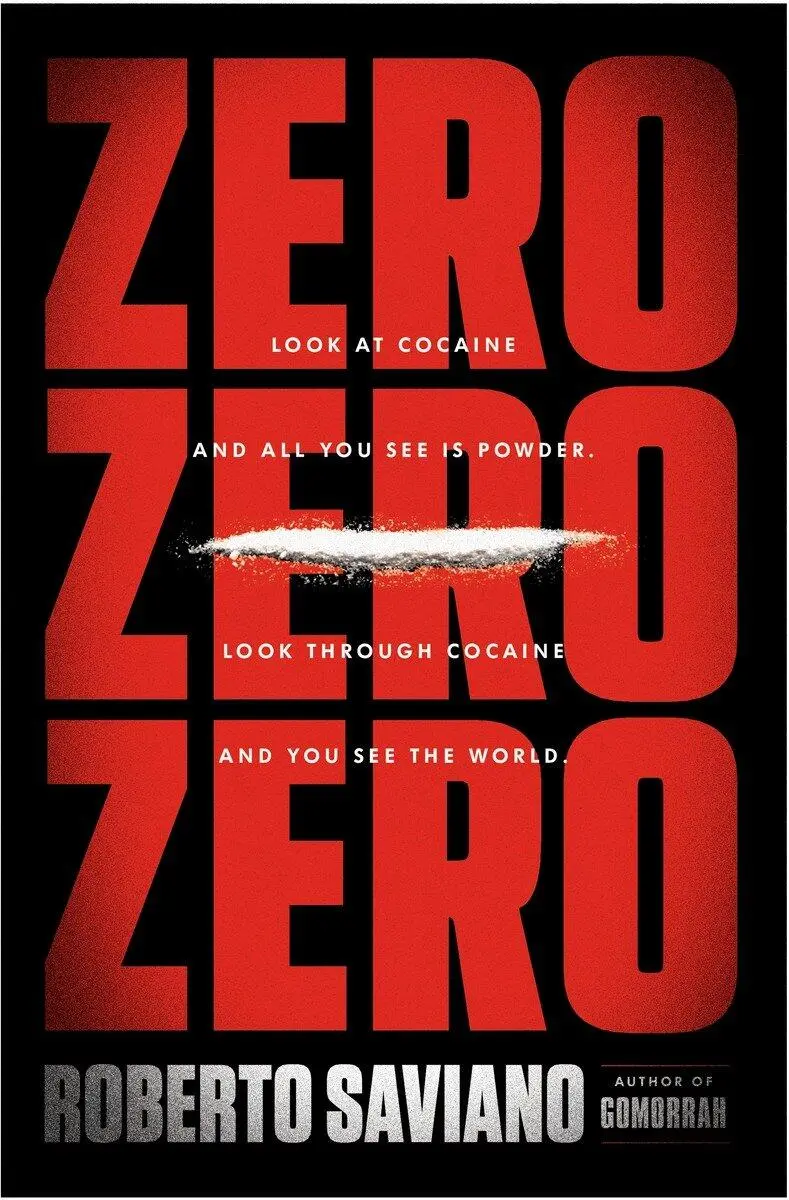
- Название:ZeroZeroZero
- Автор:
- Издательство:Penguin Publishing Group
- Жанр:
- Год:2015
- ISBN:нет данных
- Рейтинг книги:5 / 5. Голосов: 1
-
Избранное:Добавить в избранное
- Отзывы:
-
Ваша оценка:
ZeroZeroZero: краткое содержание, описание и аннотация
Предлагаем к чтению аннотацию, описание, краткое содержание или предисловие (зависит от того, что написал сам автор книги «ZeroZeroZero»). Если вы не нашли необходимую информацию о книге — напишите в комментариях, мы постараемся отыскать её.
Saviano’s
, his explosive account of the Neapolitan mob, the Camorra, was a worldwide publishing sensation. It struck such a nerve with the Camorra that Saviano has lived with twenty-four hour police protection in the shadow of death threats for more than seven years. During this time he has become intimate with law enforcement agencies around the world. Saviano has broadened his perspective to take in the entire global corporate” entity that is the drug trade in cooperation with law enforcement officials, who have fed him information and sources and used him to guide their own thinking and tactics. Saviano has used this extraordinary access to feed his own groundbreaking reportage.
The result is a truly amazing and harrowing synthesis of intimate literary narrative and geopolitical analysis of one of the most powerful dark forces in the global economy. In
, Saviano tracks the shift in the cocaine trade’s axis of power, from Colombia to Mexico, and relates how the Latin American cartels and gangs have forged alliances, first with the Italian crime syndicates, then with the Russians, Africans, and others. On the one hand, he charts an astonishing increase in sophistication and diversification as these criminal entities diversify into many other products and markets. On the other, he reveals the threat of violence to protect and extend power and how the nature of the violence has grown steadily more appalling.
Saviano is a journalist of rare courage and a thinker of impressive intellectual depth and moral imagination, able to see the connections between far-flung phenomena and bind them into a single epic story. Most drug-war narratives feel safely removed from our own lives; Saviano offers no such comfort. As heart racing as it is heady,
is a fusion of a variety of disparate genres into a brilliant new form that can only be called
.
ZeroZeroZero — читать онлайн бесплатно полную книгу (весь текст) целиком
Ниже представлен текст книги, разбитый по страницам. Система сохранения места последней прочитанной страницы, позволяет с удобством читать онлайн бесплатно книгу «ZeroZeroZero», без необходимости каждый раз заново искать на чём Вы остановились. Поставьте закладку, и сможете в любой момент перейти на страницу, на которой закончили чтение.
Интервал:
Закладка:
When he returns from Bogotá Bruno discovers that Scali has charged him 600 million lire in interest, to be paid with another trip, and then another. It’s no longer a matter of calling on people on Scali’s behalf. Now Bruno has to contact new suppliers. The deals he helps launch result in tons of cocaine being shipped to Calabria. Natale Scali had been right about Bruno. So when he offers to put an end to Bruno’s debt problems by taking over his company and gets a “no, thank you” in response, each serenely goes his own way. It’s not a problem for Scali, but it is for Bruno. This boss from Marina di Gioiosa Jonica has now joined the Mancuso family orbit of usurers, and has taken a personal interest.
Towns in Calabria are small, and the ’ndrangheta’s branches are intertwined. There’s a small branch on the big tree that needs to be tended to. Mancuso narco Vincenzo Barbieri has just been released from prison and has to serve the rest of his time under house arrest. In order to leave the house he needs to find a job that the police will find credible. The solution is so simple, and so near at hand. Diego Mancuso, a Vibo Valentia ’ndrina boss, steps in. He merely asks a favor, that Barbieri be given a job — to help with his rehabilitation — at Fuduli’s company Lavormarmi. Maybe Bruno fools himself into thinking that he can keep up the facade with Barbieri and his partner, Francesco Ventrici, a guy with a clean record whom Barbieri brought along. Perhaps Bruno believes them when they insist they’d prefer not to have anything to do with the Mancuso family. Everything unfolds from there: Bruno ends up being outmaneuvered, and his companies, increasingly in the red, fall into the hands of the ’ndrangheta.
They make a strange couple, Vincenzo Barbieri and Francesco Ventrici, not exactly blood brothers loyal to the Onorata Società or ’ndrangheta, but something akin to that, anyway. Ventrici, the younger of the two, may not even be ritually affiliated with the organization but merely close to it, in part because he’s always close — very close — to Barbieri. They’re like one of those inseparable couples that sometimes form in small villages in southern Italy. Villages like San Calogero, buried in boredom, where all the men hang out at the bars, and where permission to enter them is already a rite of passage of sorts. Where certain kids cling to the most admired character, so that when they grow up, their untiring reverence and emulation is cemented into a real bond. Ventrici marries one of Barbieri’s cousins, and then they become family for real — they’re godfathers to each other’s children. Which is how Fuduli’s unrequested partners introduce themselves when they’re in San Calogero. Barbieri is the official owner of a company that makes living room furniture, and his well-kept, bourgeois look earns him the nickname U Ragioniere or Accountant. Ventrici is a big kid with narrow eyes and a double chin, whose usual nickname, El Gordo — Fatty — must have been pinned on him by one of Barbieri’s Colombian friends. The trafficking they engage in through Fuduli’s companies and the service their owner provides make theirs a most productive friendship.
Bruno is still the pivot on which everything turns. Bruno, who now finds himself the servant of two masters and prey to many more. Bruno, who continues to fly across the ocean, to negotiate or mediate for Scali and the Vibo Valentia ’ndrina, to consider new contacts, new routes, new transportation methods, all the while winning more of his South American interlocutors’ trust. He meets them in Cuba, Panama, Venezuela, and Ecuador, but also in Italy and Spain. He’s growing more sure of himself, more confident, precise, and organized. A friendly partner, a pleasure to work with. If they talk on the phone about parties and the number of guests as codes for shipments and quantities of cocaine, it doesn’t mean they don’t invite him to parties for real.
All those business trips are exhausting, though. If you are in a certain line of work, Colombia can be a deadly forest, even when you stay in the best hotels in the capital or are a guest in the most luxurious villas. And after the collapse of the Cali and Medellín cartels, those that offer the best prices are also the most dangerous: AUC, FARC. Bitter enemies united by the production and wholesale marketing of cocaine, but also by the fact that they can nab you and make you disappear whenever they feel like it. At that point the only thing you can do is pray to the Maronna ‘ra Muntagna — the Madonna of the Mountain — and ask her to make sure your guys over in Calabria get the overdue payments there in time. But Bruno learns on his own how proud his compatriots are to be the only customers the Colombians don’t ask a percentage from in advance. They are men of honor, men of their word. Their word, sure, but there has to be a down payment in flesh and blood, withheld until the last drug dollar is credited. His turn could be next.
Bruno has been living this life for years now. Negotiate, oversee the process by which the blocks of marble, of piedra muñeca, are turned into something that looks like Swiss cheese, except they’re square: pierced with cylindrical holes that are then filled with plastic tubes stuffed with cocaine and sealed with a paste made of marble dust. Then contact the Colombian exporters — front businesses — to pick up the goods, which are to be shipped to one of his companies. And finally, go back to Calabria, take delivery of the shipment once it has cleared customs at Gioia Tauro, and get it transported to a quarry near San Calogero. That’s probably the critical moment. The moment when he stands before those blocks of marble weighing twenty tons, which, had they been left untouched, once they’d been cut and polished, would have revealed all their splendor: golden in color, rich with veins, so similar to travertine. Instead, Bruno, the former owner of Lavormarmi and now the owner on paper of Marmo Imeffe, he who accepts delivery of those marble blocks, now must teach complicit workers how to remove the cylinders without even scratching them. Salvage the cocaine. Reuse merely the scraps of those earthly treasures that take geologic eras to form and now are worth the same as an empty tin can. He prefers it when the cocaine ends up in flowers, or stinking leather skins, or cans of tuna fish. But when that’s the case, the coke isn’t unloaded in Italy, not right before his eyes anyway.
When Barbieri or Ventrici tells him he can leave because nothing that happens afterward has anything to do with him, Bruno, driving home, tumbles into darkness. This is not the life he wants. Not the life he’s willing to land in jail or be killed for. He feels old. He’s almost forty and doesn’t feel all that different from those blocks of marble filled with holes: a failed marriage, one business already lost, and the others he can’t seem to salvage. If he thinks back on how he was able to stand his ground with the Mancuso family: he was just a kid with a small business then, his turnover ridiculously small. Yet he had resisted the Mancusos for years. Then they crushed him for no reason, just for the sake of trying to squeeze him like an orange picked on the Rosarno plain. And now he’s letting himself be squeezed, like the lowliest illegal immigrant.
But he’s not a lowly illegal immigrant. This is not who he is. If he wasn’t afraid as a kid, he shouldn’t be afraid now either, now that he has learned that everyone, whether in Calabria or Colombia, has a hand on his head that can crush him at any time, either in punishment, by mistake, of just for the heck of it. Who knows how long he would have harbored such thoughts, brooding over them ad nauseam. The fact is, one day Bruno makes up his mind. He goes to the Carabinieri again, this time not to report a threat but to turn himself in: his role, his trips, his marble shipments, and what they really contained. They’re incredulous at first. They need the assessment of a higher authority. But on the basis of investigations already under way, ROS, the Carabinieri’s Special Operations Group, realizes that Fuduli’s statements are true. For two years he acts as a confidential source. Then he takes a further leap: He becomes a government witness. A secret witness. An inconceivable figure in the heart of ’ndrangheta territory. An infiltrator.
Читать дальшеИнтервал:
Закладка:
Похожие книги на «ZeroZeroZero»
Представляем Вашему вниманию похожие книги на «ZeroZeroZero» списком для выбора. Мы отобрали схожую по названию и смыслу литературу в надежде предоставить читателям больше вариантов отыскать новые, интересные, ещё непрочитанные произведения.


Обсуждение, отзывы о книге «ZeroZeroZero» и просто собственные мнения читателей. Оставьте ваши комментарии, напишите, что Вы думаете о произведении, его смысле или главных героях. Укажите что конкретно понравилось, а что нет, и почему Вы так считаете.