Roberto Saviano - ZeroZeroZero
Здесь есть возможность читать онлайн «Roberto Saviano - ZeroZeroZero» весь текст электронной книги совершенно бесплатно (целиком полную версию без сокращений). В некоторых случаях можно слушать аудио, скачать через торрент в формате fb2 и присутствует краткое содержание. Год выпуска: 2015, Издательство: Penguin Publishing Group, Жанр: Публицистика, Криминальный детектив, на английском языке. Описание произведения, (предисловие) а так же отзывы посетителей доступны на портале библиотеки ЛибКат.
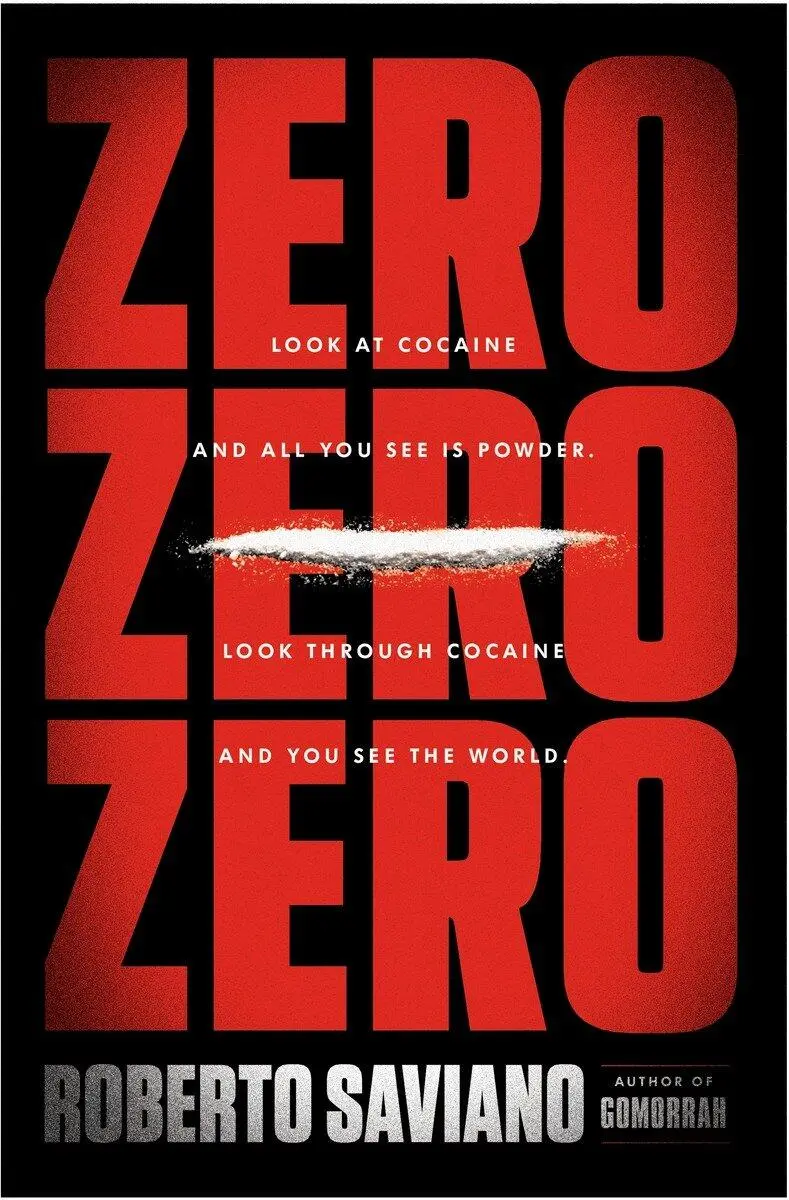
- Название:ZeroZeroZero
- Автор:
- Издательство:Penguin Publishing Group
- Жанр:
- Год:2015
- ISBN:нет данных
- Рейтинг книги:5 / 5. Голосов: 1
-
Избранное:Добавить в избранное
- Отзывы:
-
Ваша оценка:
ZeroZeroZero: краткое содержание, описание и аннотация
Предлагаем к чтению аннотацию, описание, краткое содержание или предисловие (зависит от того, что написал сам автор книги «ZeroZeroZero»). Если вы не нашли необходимую информацию о книге — напишите в комментариях, мы постараемся отыскать её.
Saviano’s
, his explosive account of the Neapolitan mob, the Camorra, was a worldwide publishing sensation. It struck such a nerve with the Camorra that Saviano has lived with twenty-four hour police protection in the shadow of death threats for more than seven years. During this time he has become intimate with law enforcement agencies around the world. Saviano has broadened his perspective to take in the entire global corporate” entity that is the drug trade in cooperation with law enforcement officials, who have fed him information and sources and used him to guide their own thinking and tactics. Saviano has used this extraordinary access to feed his own groundbreaking reportage.
The result is a truly amazing and harrowing synthesis of intimate literary narrative and geopolitical analysis of one of the most powerful dark forces in the global economy. In
, Saviano tracks the shift in the cocaine trade’s axis of power, from Colombia to Mexico, and relates how the Latin American cartels and gangs have forged alliances, first with the Italian crime syndicates, then with the Russians, Africans, and others. On the one hand, he charts an astonishing increase in sophistication and diversification as these criminal entities diversify into many other products and markets. On the other, he reveals the threat of violence to protect and extend power and how the nature of the violence has grown steadily more appalling.
Saviano is a journalist of rare courage and a thinker of impressive intellectual depth and moral imagination, able to see the connections between far-flung phenomena and bind them into a single epic story. Most drug-war narratives feel safely removed from our own lives; Saviano offers no such comfort. As heart racing as it is heady,
is a fusion of a variety of disparate genres into a brilliant new form that can only be called
.
ZeroZeroZero — читать онлайн бесплатно полную книгу (весь текст) целиком
Ниже представлен текст книги, разбитый по страницам. Система сохранения места последней прочитанной страницы, позволяет с удобством читать онлайн бесплатно книгу «ZeroZeroZero», без необходимости каждый раз заново искать на чём Вы остановились. Поставьте закладку, и сможете в любой момент перейти на страницу, на которой закончили чтение.
Интервал:
Закладка:
The silence that greets his words is not that of dumbstruck approval. The commander in chief realizes that many of them have no intention of following his path. A defeat so humiliating that he steps down from running the AUCs. Carlos Castaño is like a wounded jaguar in the Colombian jungle now. He lashes out left, right, and center; he resorts to the Internet to expose his former underlings, giving first and last names and declaring that they are “irresponsibly involved in drug-trafficking activities” and adding that “the penetration of drug trafficking in some self-defense groups is unbearable and is known to the U.S. and Colombian intelligence agencies.”
A time bomb, a deadly threat.
He declares that from now on he wants to dedicate himself to his family, but he’s lying. Or rather, he’s telling only half the truth, for the great Carlos Castaño does not stoop to lying. The Miami lawyer comes to see him more often. He’s negotiating his surrender, his betrayal.
In April 2004 Carlos Castaño disappears. Legends circulate regarding his whereabouts, the foreign destination where he took refuge in order to make a new life for himself, as well as speculations about who could have wanted to eliminate him. His remains weren’t found until two and a half years later, in the most banal of places. He was buried on the Las Tangas finca where he and his brother Fidel had launched the first paramilitary counterrevolutionary group. That finca was the beginning and the end for Carlos Castaño. His death warrant had been issued by none other than his brother Vicente.
Carlos Castaño’s exit favors the further rise of El Mono. Not only is he second in command of the Autodefensas, he’s also the most clearheaded, the most capable. He doesn’t seem rattled in the least by the extradition request that now hangs over his head too. He doesn’t let himself be infected by the poisonous rage with which, after their commander’s resignation, many other bosses spit on the name of Carlos Castaño. It’s important to stay cool headed, to remember the larger picture, the organization and his men. This means not hiding problems but resolving them in other ways.
El Mono is the one who opens negotiations with the Uribe administration. He sends his spiritual adviser, the bishop of Montería, who has known him since he was a boy, to initiate contact and to serve as ambassador. The first agreement is reached in July 2003. The AUCs will demobilize completely, cease all hostilities, and cooperate with investigations. In return, the Colombian government will offer huge legal concessions. Many pending cases are dismissed, most of the investigations of AUC members are dropped, and sentences for crimes such as drug trafficking and human rights violations, for which one normally risks life in jail, are reduced to a mere few years.
El Mono is also an excellent press officer. A few days after the agreement is reached he grants Semana , Colombia’s most important weekly, an interview, during which he explains why the AUCs agreed to negotiate only now: “For the first time a government is trying to strengthen democracy and state institutions. We have always demanded the presence of the state, called it to responsibility. We have wielded guns because the state failed in its responsibility. It was up to us to step in, to take its place in the various regions we controlled and where we acted as the de facto authorities.”
He’s also astute in handling the delicate topic of drug trafficking. He doesn’t try to deny it but insists that his men do nothing more than collect protection money on cocaine, just like everyone else. In truth, even in this he’s a much more ambitious and able leader. His Italian origins, greatly looked down upon at first, turn out to be useful to him. Mancuso oversees negotiations with the Calabrians, the biggest and most trustworthy buyers on the Colombian market since the days of Don Pablo Escobar.
So for the moment everything seems the same as before. Better, in fact. After years of living in hiding Salvatore can now return to Martha and his children, the youngest of whom don’t even recognize him. But Salvatore has trouble recognizing Gianluigi, who is all grown up and soon to make him a grandfather. He’s even received in parliament, where, dressed in a dark suit and red tie with diagonal white stripes — the picture of Italian elegance — he pleads the historic role of the Autodefensas.
El Mono chooses a place under his control on the border of Venezuela for himself and the men under his direct command to turn over their weapons. It is a solemn, moving moment and sets the tone for his speech: “My soul awash with humility, I ask forgiveness of the people of Colombia, I ask forgiveness of the countries of this world, including the United States, if I have offended them by my actions or omissions. I ask forgiveness of every mother and of all those whom I have made suffer. I take responsibility for my role as leader, for what I could have done better, for what I could have done and did not do, errors surely caused by my limitations as a human being and by my lack of a calling for war.”
Then, nearly two years later, he has his bodyguards accompany him to the police station in Montería, to turn himself in. In the meantime, some of the legal benefits of negotiating with the government are declared unconstitutional, but El Mono is not afraid of Colombia’s law or its prisons. In fact, he still leads his troops and manages his affairs from within the maximum security prison in Itagüí, almost on a par with Escobar during his years of imprisonment.
Even so, the AUCs officially disband. Some — including mere narcos who pass themselves off as military bosses — turn themselves in, still hoping to benefit from the agreements. The others, the paramilitaries and narcos feeling orphaned by the big cartel, regroup into different organizations: Águilas Negras, or Black Eagles, headed by the fratricidal Vicente Castaño; Oficina de Envigado; Ejército Revolucionario Popular Antiterrorista de Colombia (ERPAC); Rastrojos; Urabeños; Paisas. They join forces and they break apart — the only element unifying them is cocaine. A new Colombia is being born, the ferocious land of Lilliput. The days of El Mono are coming to an end.
• • •
The defendant Salvatore Mancuso Gómez shows up clean-shaven and wearing a pinstripe suit fit for a wedding or business meeting. It’s January 15, 2007. Sitting in front of a prosecutor, with a microphone and tape recorder in front of him, he takes out a laptop, places it on the table, and turns it on. He starts to read. The room fills with names, rattled off one after another, with professional detachment. When he is done, he has listed at least three hundred names, in strict chronological order: the homicides for which he takes personal responsibility, either as killer or commander, some of which he’d already been absolved for.
Bewilderment in the courtroom. Why did he do it?
Why, after getting away with so much, reveal the massacres he ordered or helped plan?
La Granja: July 1996
Pichilín: December 1996
Mapiripán: July 1997
El Aro: October 1997
La Gabarra: three raids, May — August 1999
El Salado: February 2000
Tibú: April 2000
In all these attacks, the defendant Mancuso Gómez declares, we were not alone. High-ranking members of the military provided logistical support and entire units of soldiers. And there were political representatives — such as Senator Mario Uribe Escobar — whose support never wavered.
Why is he doing this? Why him, a man of his intelligence, with his leadership skills? That’s what many of the people he named are wondering. Then he is extradited to the United States, a move that weakens his voice in Colombia but that does not silence it completely.
Читать дальшеИнтервал:
Закладка:
Похожие книги на «ZeroZeroZero»
Представляем Вашему вниманию похожие книги на «ZeroZeroZero» списком для выбора. Мы отобрали схожую по названию и смыслу литературу в надежде предоставить читателям больше вариантов отыскать новые, интересные, ещё непрочитанные произведения.

Обсуждение, отзывы о книге «ZeroZeroZero» и просто собственные мнения читателей. Оставьте ваши комментарии, напишите, что Вы думаете о произведении, его смысле или главных героях. Укажите что конкретно понравилось, а что нет, и почему Вы так считаете.