Roberto Saviano - ZeroZeroZero
Здесь есть возможность читать онлайн «Roberto Saviano - ZeroZeroZero» весь текст электронной книги совершенно бесплатно (целиком полную версию без сокращений). В некоторых случаях можно слушать аудио, скачать через торрент в формате fb2 и присутствует краткое содержание. Год выпуска: 2015, Издательство: Penguin Publishing Group, Жанр: Публицистика, Криминальный детектив, на английском языке. Описание произведения, (предисловие) а так же отзывы посетителей доступны на портале библиотеки ЛибКат.
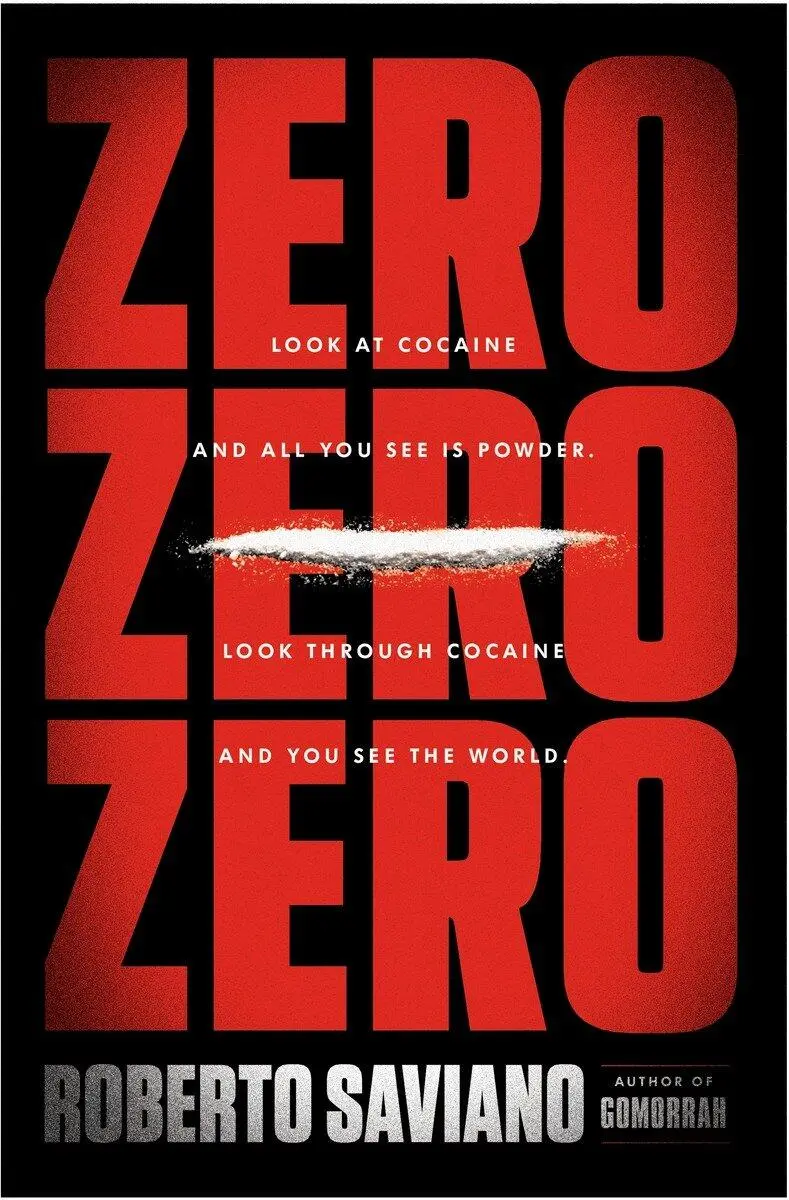
- Название:ZeroZeroZero
- Автор:
- Издательство:Penguin Publishing Group
- Жанр:
- Год:2015
- ISBN:нет данных
- Рейтинг книги:5 / 5. Голосов: 1
-
Избранное:Добавить в избранное
- Отзывы:
-
Ваша оценка:
ZeroZeroZero: краткое содержание, описание и аннотация
Предлагаем к чтению аннотацию, описание, краткое содержание или предисловие (зависит от того, что написал сам автор книги «ZeroZeroZero»). Если вы не нашли необходимую информацию о книге — напишите в комментариях, мы постараемся отыскать её.
Saviano’s
, his explosive account of the Neapolitan mob, the Camorra, was a worldwide publishing sensation. It struck such a nerve with the Camorra that Saviano has lived with twenty-four hour police protection in the shadow of death threats for more than seven years. During this time he has become intimate with law enforcement agencies around the world. Saviano has broadened his perspective to take in the entire global corporate” entity that is the drug trade in cooperation with law enforcement officials, who have fed him information and sources and used him to guide their own thinking and tactics. Saviano has used this extraordinary access to feed his own groundbreaking reportage.
The result is a truly amazing and harrowing synthesis of intimate literary narrative and geopolitical analysis of one of the most powerful dark forces in the global economy. In
, Saviano tracks the shift in the cocaine trade’s axis of power, from Colombia to Mexico, and relates how the Latin American cartels and gangs have forged alliances, first with the Italian crime syndicates, then with the Russians, Africans, and others. On the one hand, he charts an astonishing increase in sophistication and diversification as these criminal entities diversify into many other products and markets. On the other, he reveals the threat of violence to protect and extend power and how the nature of the violence has grown steadily more appalling.
Saviano is a journalist of rare courage and a thinker of impressive intellectual depth and moral imagination, able to see the connections between far-flung phenomena and bind them into a single epic story. Most drug-war narratives feel safely removed from our own lives; Saviano offers no such comfort. As heart racing as it is heady,
is a fusion of a variety of disparate genres into a brilliant new form that can only be called
.
ZeroZeroZero — читать онлайн бесплатно полную книгу (весь текст) целиком
Ниже представлен текст книги, разбитый по страницам. Система сохранения места последней прочитанной страницы, позволяет с удобством читать онлайн бесплатно книгу «ZeroZeroZero», без необходимости каждый раз заново искать на чём Вы остановились. Поставьте закладку, и сможете в любой момент перейти на страницу, на которой закончили чтение.
Интервал:
Закладка:
And yet Colombia’s ambitious plans will all fail miserably. Because it’s not only a question of men with opposing political objectives ruling illegally; those men can be eliminated in various ways. But cocaine dies hard. Pastrana’s experiment to allow the guerrillas a demilitarized zone — the so-called distension zone — twice the size of New Jersey — turns out to be an ill-considered risk from the get-go. The FARC does as it pleases in its assigned territory and doesn’t even dream of entering upon serious negotiations: It grants no truce; in fact it intensifies its military activity. Kidnappings, whether politically or financially motivated; urban raids; control of cocaine: It’s all the same as before. Disappointment beats down the president’s popularity. When in 2002 the guerrillas go so far as to hijack a plane — a regularly scheduled flight — to kidnap a senator, Pastrana realizes that the moment has come to declare an end to the peace talks. War breaks out again: The distention zone must be reclaimed immediately. Three days later FARC forces abduct Ingrid Betancourt, a presidential candidate for the Partido Verde Oxígeno in the upcoming elections. Convinced that an armed conflict should not deprive citizens of their fundamental rights, Betancourt wanted to bring her platform to the Colombians in that area. But her captivity will last until July 2, 2008—2,321 days — when she is liberated by the Colombian armed forces.
According to the new president, Álvaro Uribe, the approach to take is that of an iron fist. The state must show its muscle and take back the country. Besides, the world is no longer what it once was. In one day the Twin Towers and the world’s optimism collapsed. The only possible response now is war, it seems. In Colombia the war on terror coincides with the war on drugs. There can be no victory without a victory over drug trafficking.
And so, despite their differences, Álvaro Uribe will maintain one of his predecessor’s key efforts: Plan Colombia, the major pact with the United States to end the production and sale of cocaine. Pastrana had announced emphatically, shortly after his election in 1998, that he was negotiating a Marshall Plan for Colombia with the United States. As in postwar Europe, billions of dollars were supposed to pour in to revive the country, help Colombians free it of cocaine, and support those campesinos who agreed to convert their fields back to far less profitable but legal crops. But the actual plan, signed by Bill Clinton in 2000 and reconfirmed by George W. Bush until the end of his term, takes a different direction. A slow and costly social and economic transformation suddenly seems like a utopia. There’s not enough money, trust, or consensus. There’s not enough time. Funding depends on being able to show results. So everything rests on the quickest option, that of force.
The use of force translates, first of all, into a war on cocaine. Victory will be declared only when not a single leaf of cocaine is left growing in Colombia. Plants are uprooted, fields carpet-bombed with fumigation planes, lands made barren with aggressive weed-killer treatments. From an environmental point of view, the cost is extremely high. The ecosystem of the country’s virgin forests is compromised; the ground and aquifers are filled with toxins; Colombia’s land is burned or polluted, incapable of producing anything of value in the short term. From a societal point of view, the consequences are equally grave. The peasants, lacking alternatives, abandon the devastated areas en masse and start growing coca in more inaccessible zones. The dispersed cultivation and the displaced campesinos’ vulnerability work in the drug lords’ favor. What’s more, the narcos invest in methods to make the fields more fertile, which allows them to double the number of annual harvests.
The result is that after years of a literal scorched-earth policy, Colombian cocaine still represents more than half of all the cocaine consumed worldwide.
The other part of Plan Colombia’s use of force is directed toward individual criminals. The U.S. military bolsters the Colombian army’s actions against drug lords and narco-terrorism: logistics, arms and equipment, special forces, intelligence, training. On the eve of the attack on the Twin Towers, AUCs were included on the White House’s blacklist of terrorist organizations, but that wasn’t enough to ruin long-standing good relations with the Colombian military machine, let alone with part of the political and economic establishment. President Uribe, who is respected by the paramilitaries, negotiates the demobilization and disarmament of the Autodefensas, but the success is merely superficial. Most groups have no intention of laying down their arms, or of renouncing drug trafficking, and they continue controlling the cocaine business and spreading terror under new names.
Even though it led to significant disarmament and killed off the primary FARC leaders, one after another, the brutal war against the guerrillas was not able to get to the root of the problem either. Today FARC still has nine thousand members and ELN — Ejército de Liberación Nacional (National Liberation Army), Colombia’s second-largest guerrilla army — three thousand, but more important, they still control a conspicuous part of the cocaine production, having become increasingly involved in processing in addition to cultivation. While it’s true that Plan Colombia, with its use of military force, helped to weaken FARC, paradoxically, precisely because of the fragmentation and dislocation of cocaine cultivation, their role as one of the major players in Colombian drug trafficking was confirmed.
In short, if Colombia today is no longer the extremely dangerous country it was ten or twenty years ago, international antidrug policies in South America can take the credit only if one also accepts that, in part thanks to those policies, the conflict was shifted farther north, to Mexico.
But to better understand what exactly went wrong, you have to go back to those confusing times of transition, torn between hope and uncertainty, times in which the fates of the Beauty and the Monkey collided.
• • •
Natalia is living happily in Miami, taking care of her newborn baby girl. Her only sadness is that her mother keeps trying to convince her to leave her husband. She takes little interest in what Julio does or why; every now and then he has to leave suddenly for some trip. Now he too deals with the big fish of the drug world who are floating to the surface, in order to negotiate a surrender with the United States, especially since a coordinated DEA and Colombian police investigation resulted in the biggest roundup since the days of the narco-state — thirty or so arrests, including that of Fabio Ochoa, an important, historic member of the Medellín cartel, who was trafficking in cocaine with his new partners. The investigation’s code name, Operation Millennium, says a lot about the exemplary value assigned to it. The United States is already looking to the future, to Plan Colombia’s ratification. Encouraged by the extradition agreement and the collaboration with the new Colombian presidential administration of Andrés Pastrana, they’ve sent a signal they want everyone to hear, even the Mexican traffickers, whom the antidrug agency has begun to recognize as a growing threat. In fact, the operation also involves Mexican authorities. And it is then that the arrest warrant for Armando Valencia, alias Maradona, is issued. Maradona, who, together with Alejandro Bernal, a Colombian from Medellín who had been like a brother to Amado Carrillo Fuentes, the Lord of the Skies, was managing a new and important cocaine import alliance.
The evil must be eliminated at its source, in other words, in Colombia. This is the fundamental error at the base of the United States’ efforts. You can rip up a plant, but you can’t uproot the desire for well-being that leads to addiction, any more than you can eradicate greed. Cocaine is the fruit not of the earth but of man.
Читать дальшеИнтервал:
Закладка:
Похожие книги на «ZeroZeroZero»
Представляем Вашему вниманию похожие книги на «ZeroZeroZero» списком для выбора. Мы отобрали схожую по названию и смыслу литературу в надежде предоставить читателям больше вариантов отыскать новые, интересные, ещё непрочитанные произведения.

Обсуждение, отзывы о книге «ZeroZeroZero» и просто собственные мнения читателей. Оставьте ваши комментарии, напишите, что Вы думаете о произведении, его смысле или главных героях. Укажите что конкретно понравилось, а что нет, и почему Вы так считаете.