Roberto Saviano - ZeroZeroZero
Здесь есть возможность читать онлайн «Roberto Saviano - ZeroZeroZero» весь текст электронной книги совершенно бесплатно (целиком полную версию без сокращений). В некоторых случаях можно слушать аудио, скачать через торрент в формате fb2 и присутствует краткое содержание. Год выпуска: 2015, Издательство: Penguin Publishing Group, Жанр: Публицистика, Криминальный детектив, на английском языке. Описание произведения, (предисловие) а так же отзывы посетителей доступны на портале библиотеки ЛибКат.
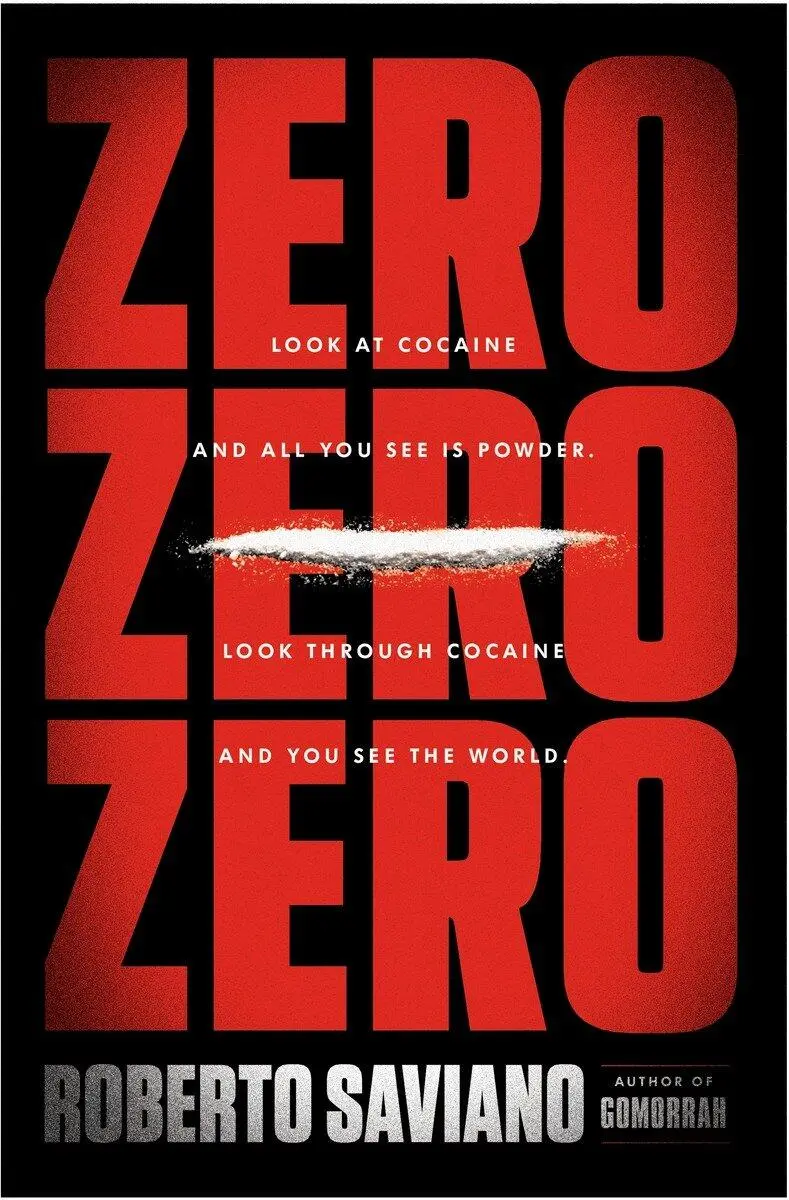
- Название:ZeroZeroZero
- Автор:
- Издательство:Penguin Publishing Group
- Жанр:
- Год:2015
- ISBN:нет данных
- Рейтинг книги:5 / 5. Голосов: 1
-
Избранное:Добавить в избранное
- Отзывы:
-
Ваша оценка:
ZeroZeroZero: краткое содержание, описание и аннотация
Предлагаем к чтению аннотацию, описание, краткое содержание или предисловие (зависит от того, что написал сам автор книги «ZeroZeroZero»). Если вы не нашли необходимую информацию о книге — напишите в комментариях, мы постараемся отыскать её.
Saviano’s
, his explosive account of the Neapolitan mob, the Camorra, was a worldwide publishing sensation. It struck such a nerve with the Camorra that Saviano has lived with twenty-four hour police protection in the shadow of death threats for more than seven years. During this time he has become intimate with law enforcement agencies around the world. Saviano has broadened his perspective to take in the entire global corporate” entity that is the drug trade in cooperation with law enforcement officials, who have fed him information and sources and used him to guide their own thinking and tactics. Saviano has used this extraordinary access to feed his own groundbreaking reportage.
The result is a truly amazing and harrowing synthesis of intimate literary narrative and geopolitical analysis of one of the most powerful dark forces in the global economy. In
, Saviano tracks the shift in the cocaine trade’s axis of power, from Colombia to Mexico, and relates how the Latin American cartels and gangs have forged alliances, first with the Italian crime syndicates, then with the Russians, Africans, and others. On the one hand, he charts an astonishing increase in sophistication and diversification as these criminal entities diversify into many other products and markets. On the other, he reveals the threat of violence to protect and extend power and how the nature of the violence has grown steadily more appalling.
Saviano is a journalist of rare courage and a thinker of impressive intellectual depth and moral imagination, able to see the connections between far-flung phenomena and bind them into a single epic story. Most drug-war narratives feel safely removed from our own lives; Saviano offers no such comfort. As heart racing as it is heady,
is a fusion of a variety of disparate genres into a brilliant new form that can only be called
.
ZeroZeroZero — читать онлайн бесплатно полную книгу (весь текст) целиком
Ниже представлен текст книги, разбитый по страницам. Система сохранения места последней прочитанной страницы, позволяет с удобством читать онлайн бесплатно книгу «ZeroZeroZero», без необходимости каждый раз заново искать на чём Вы остановились. Поставьте закладку, и сможете в любой момент перейти на страницу, на которой закончили чтение.
Интервал:
Закладка:
The years pass. Natalia’s mother is done in by the war she is fighting in vain. More and more she has long crying fits that are only in part a way of emotionally blackmailing her daughter. Julio tries to soften her up whenever possible, reassure her how deeply in love he is, swears that he will always have the utmost respect for Natalia and those dear to her. And he does seem sincere and polite, quite different from the ugly, vulgar traquetos she comes across in court. But Doña Lucia remains coldly courteous. She must resist; she must break their bond.
But her daughter is still as crazy for Julio as she was that very first day. And everything Doña Lucia does — cry, threaten, argue furiously — merely pushes her daughter further away. Further into Julio’s arms.
One morning Natalia comes into the kitchen with a frighteningly serious look on her face, her eyes puffy and red. She’s been even more nervous lately, and has been sleeping poorly. She doesn’t open her mouth until her stepfather, Doña Lucia’s companion who has acted as Natalia’s father since she was little, arrives.
“Natalia wants to tell you something.”
“I’m pregnant, Mami. I’m in my fourth month.”
It’s a catastrophe, and Lucia Gaviria is the last in the family to know. She doesn’t speak to her daughter for a week.
But she doesn’t hold out for long. She senses that for the first time in all these years Natalia is frightened as well. She no longer lives in a fairyland. Fairy tales don’t exist in Medellín, and Doña Lucia can’t abandon her now. So one day she buys her a pair of sneakers, so she’ll be more comfortable in the months to come, when the baby in her womb starts to weigh on her. She leaves the box on Natalia’s bed with a note that says “God bless you.” They both weep that evening, Natalia in her bedroom, her mother in the living room. But the door is too thin for them not to hear each other’s sobs.
Natalia is under contract with Cristal Oro for their new ad campaign, but she’ll be in her seventh month by the time the shooting starts. Is Lucia Gaviria supposed to cancel? What excuse can she give them?
She is more furious with Julio than ever, even though he does everything one could expect from a Colombian man. He says he wants to marry Natalia, that having a baby with her is the most wonderful thing that has ever happened to him, that everything will be fine. And her daughter goes along with everything he says. But at a certain point, Natalia’s happiness no longer seems like the other side of fear. She starts sleeping better, and gradually looks more radiant. Doña Lucia attributes the difference to hormonal changes related to her condition, until her daughter talks with her again.
“It’s all resolved, Mami. We’re going to go live in the United States soon; we’re going to start a new life there!”
A new life? In the United States?
The United States is every drug trafficker’s nightmare, so much so that in the 1980s a popular saying among the Colombian narcos was: “Better a tomb in Colombia than a prison cell in the United States.” What’s more, in 1997 Colombia, backed into a tight corner by the United States, altered its constitution so as to reintroduce extradition. Sometimes her daughter is so naïve she seems stupid.
And yet everything Natalia told her turns out to be true.
Not even a month goes by before Natalia leaves for Florida. All she had to do was pack her suitcase. Julio took care of everything else: the villa on the beach, their visas, all the other paperwork necessary for settling in the United States. Or rather, his new Yankee contacts took care of most of it. They’re not cocaine importers, though. In fact, they’re the cocaine importers’ antagonists par excellence: the Miami DEA.
Julio César Correa is one of the first Colombian narcos to negotiate something that officially never existed. Precisely because his case is intended to motivate others, he’s one of the luckiest ones: not a single day in jail; no more trials hanging over his head for having flooded the streets of North America with cocaine. In exchange for millions of narco-dollars deposited in U.S. coffers and — more important — precious information.
The Miami DEA’s undertaking seems like a wild shot. How can the “world’s policeman” allow someone guilty of serious crimes under its own jurisdiction have his sentence eliminated?
Beyond that, how would it make contact with a drug lord and propose something of the sort to him? He would be the first to suspect he was being screwed. The contact person might never come back. The DEA’s office needs a more sophisticated intermediary.
• • •
Baruch Vega is a Colombian fashion photographer living in Miami. He has worked for Armani, Gucci, Valentino, Chanel, Hermès, all the major fashion houses and cosmetics companies. The second of eleven children of a trumpet player from Bogotá who relocated to Bucaramanga, a plateau in the middle of the mountains in northeast Colombia, Baruch won a Kodak competition when he was fifteen. He immortalized a bird as it emerged from a lake with a fish in its beak. But his parents make him study engineering. At the University of Santander he is recruited by the CIA and sent to Chile: Salvador Allende’s government is about to fall.
Baruch Vega hates his job. To make his escape he dusts off his skill as a photographer. He arrives in New York in the 1970s and photographs the very first top models, the likes of Lauren Hutton and Christie Brinkley. He manages to get what matters most where he comes from: success, money, and women. Earning them in the United States increases his prestige. Every time Vega goes back to Colombia he shows up with a slew of cover girls. They’re his business card. And that’s how, in the course of his double career as photographer and undercover agent, he got to know many of the big Colombian cartel bosses and frequented the homes of important drug lords, such as the Ochoa brothers, Escobar’s associates in the Medellín cartel.
His first encounter with Julio Fierro is in a hotel in Cartagena, during the Miss Colombia pageant, not coincidentally. Vega plays his part. He says he knows some DEA agents you could make a deal with. All you have to do is pay: the gringo cops’ assistance, plus a percentage for his services.
For a drug lord, if you don’t have to pay, it’s not credible. The higher the price, the more trustworthy it seems. Baruch Vega is the best guarantee on the bargaining table. What could a man like him, who makes money in an enviable profession, want? More money. A man who risks his life for more money is a man who deserves respect. Respect and trust. As proof of his reliability, Vega organizes trips to Miami with his “private plane,” which will later turn out to be paid for by the DEA. The presence onboard of an antidrug agent guarantees that there will be other friendly cops at the airport ready to walk the drug traffickers — several of them on the top of the DEA’s most wanted list — through passport control without a visa. Just a little outing — to take their girlfriends to the hottest restaurants, shower them with gifts, and then back home. Next time, their farewell to Colombia and drug trafficking will be final.
Julio Fierro proves to be very useful to Vega and his friends at the DEA, whose initiative makes a qualitative leap. In Panama they organize the first of many big meetings between drug traffickers and antidrug agents. A summit of sorts, or a convention. In fact, that’s exactly what they call them. Julio arrives from Florida with Baruch Vega and the men from the DEA. Vega has taken care of everything, down to the last detail. He has filled the plane with the usual bevy of beauties, booked suites at the Intercontinental Hotel; he even makes sure that, after their trying day, they can catch some R&R at just the right club, with agents and drug traffickers emptying champagne bottles together, surrounded by willing women.
Читать дальшеИнтервал:
Закладка:
Похожие книги на «ZeroZeroZero»
Представляем Вашему вниманию похожие книги на «ZeroZeroZero» списком для выбора. Мы отобрали схожую по названию и смыслу литературу в надежде предоставить читателям больше вариантов отыскать новые, интересные, ещё непрочитанные произведения.

Обсуждение, отзывы о книге «ZeroZeroZero» и просто собственные мнения читателей. Оставьте ваши комментарии, напишите, что Вы думаете о произведении, его смысле или главных героях. Укажите что конкретно понравилось, а что нет, и почему Вы так считаете.