Roberto Saviano - ZeroZeroZero
Здесь есть возможность читать онлайн «Roberto Saviano - ZeroZeroZero» весь текст электронной книги совершенно бесплатно (целиком полную версию без сокращений). В некоторых случаях можно слушать аудио, скачать через торрент в формате fb2 и присутствует краткое содержание. Год выпуска: 2015, Издательство: Penguin Publishing Group, Жанр: Публицистика, Криминальный детектив, на английском языке. Описание произведения, (предисловие) а так же отзывы посетителей доступны на портале библиотеки ЛибКат.
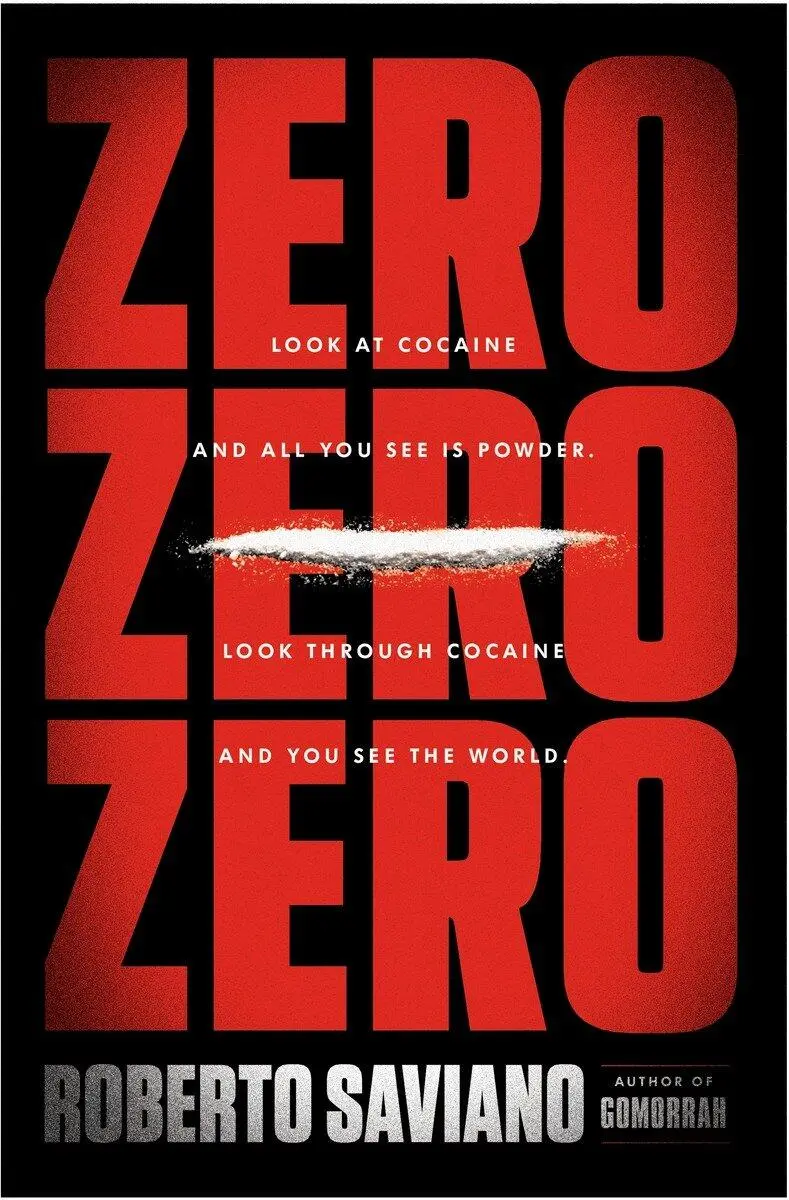
- Название:ZeroZeroZero
- Автор:
- Издательство:Penguin Publishing Group
- Жанр:
- Год:2015
- ISBN:нет данных
- Рейтинг книги:5 / 5. Голосов: 1
-
Избранное:Добавить в избранное
- Отзывы:
-
Ваша оценка:
ZeroZeroZero: краткое содержание, описание и аннотация
Предлагаем к чтению аннотацию, описание, краткое содержание или предисловие (зависит от того, что написал сам автор книги «ZeroZeroZero»). Если вы не нашли необходимую информацию о книге — напишите в комментариях, мы постараемся отыскать её.
Saviano’s
, his explosive account of the Neapolitan mob, the Camorra, was a worldwide publishing sensation. It struck such a nerve with the Camorra that Saviano has lived with twenty-four hour police protection in the shadow of death threats for more than seven years. During this time he has become intimate with law enforcement agencies around the world. Saviano has broadened his perspective to take in the entire global corporate” entity that is the drug trade in cooperation with law enforcement officials, who have fed him information and sources and used him to guide their own thinking and tactics. Saviano has used this extraordinary access to feed his own groundbreaking reportage.
The result is a truly amazing and harrowing synthesis of intimate literary narrative and geopolitical analysis of one of the most powerful dark forces in the global economy. In
, Saviano tracks the shift in the cocaine trade’s axis of power, from Colombia to Mexico, and relates how the Latin American cartels and gangs have forged alliances, first with the Italian crime syndicates, then with the Russians, Africans, and others. On the one hand, he charts an astonishing increase in sophistication and diversification as these criminal entities diversify into many other products and markets. On the other, he reveals the threat of violence to protect and extend power and how the nature of the violence has grown steadily more appalling.
Saviano is a journalist of rare courage and a thinker of impressive intellectual depth and moral imagination, able to see the connections between far-flung phenomena and bind them into a single epic story. Most drug-war narratives feel safely removed from our own lives; Saviano offers no such comfort. As heart racing as it is heady,
is a fusion of a variety of disparate genres into a brilliant new form that can only be called
.
ZeroZeroZero — читать онлайн бесплатно полную книгу (весь текст) целиком
Ниже представлен текст книги, разбитый по страницам. Система сохранения места последней прочитанной страницы, позволяет с удобством читать онлайн бесплатно книгу «ZeroZeroZero», без необходимости каждый раз заново искать на чём Вы остановились. Поставьте закладку, и сможете в любой момент перейти на страницу, на которой закончили чтение.
Интервал:
Закладка:
But the United States, convinced that the war on cocaine is the same as the war on Colombian cartels, waves an initial victory flag. Fabio Ochoa is the big trophy, flaunted on the front page, but there were other bosses in their sights too who’d escaped capture by a hair’s breadth. How was that possible? The DEA’s office that coordinated Operation Millennium is not in touch with the group in Miami. Nevertheless, Baruch Vega is contacted to find out if there are any moles working for the drug lords. The ubiquitous photographer sets up a meeting on neutral ground in Central America with his new informers: one is Julio Fierro and the other an AUC member who trafficked for Carlos Castaño.
The official policy of the stick is complemented by the unofficial policy of the carrot. There’s a line of people interested in understanding how the Narcotics Traffickers Rehabilitation Program, as the Miami DEA agents called it, not without some bureaucratic irony, works. At the same time, the certainty that more and more prominent figures are turning traitors sows discord among the traffickers, in particular within the Norte del Valle cartel and in the tight ranks of the Autodefensas.
Right at the peak of this feverish, underground agitation, Natalia Paris receives a fabulous offer. She’s invited to be a special guest on Colombiamoda, the most important fashion event in the country. She dons a little white number that could be a wedding dress if not for the enormous silk wings on the back. A crown of flowers graces her flowing hair. She’s twenty-eight and has a daughter who is learning to walk, but she still looks like a young girl. Her hazel eyes roam the audience as if to embrace these Colombians who had welcomed her back so warmly, but in truth she’s searching for one person in particular. Julio had promised to join her there so she wouldn’t have to endure other men’s longing gazes on her own. They also planned on taking advantage of his clandestine return to have Mariana baptized. But Julio Correa, aka Fierro, has vanished into thin air.
Natalia spends months at the public prosecutor’s, between interrogations and attempts to identify her husband in the photos of dead bodies, sometimes mere masses of butchered flesh, that they place before her. But in vain. Each time it’s not him she feels a moment of relief, an absurd, stabbing hope. It’s obvious by now that he’s been kidnapped, but he might still be alive. She has to keep hoping, praying, hugging her child, casting out every negative thought about what the child’s father may have suffered.
Julio César Correa’s properties in Colombia are sequestered. Natalia Paris’s U.S. visa is revoked. Her ad contracts are canceled. It’s the end. Her mother had warned her, she who knows all too well what it means to end up alone with an eight-month-old baby girl. Doña Lucia was right after all.
It’s at that point that Natalia discovers her own maternal instinct. She has to act; she can’t lose heart. Shortly before her world collapsed she had launched her own suntan lotion. Now she travels the country promoting it, signing autographs, making deals to get it on supermarket shelves. It’s the first step in her comeback. Little by little she reclaims her position, which she still holds to this day: an icon in Colombia and a sex symbol throughout Latin America. But starting with that moment, she also became her own person. A businesswoman who knows she must manage the passing of time. She has a fit if someone draws attention to her age, and the older she gets the younger she claims to be. Her body is her business, and she can’t risk obsolescence.
• • •
Julio Fierro’s body has never been found.
The mystery of his disappearance gave rise to a sea of inferences about who could have eliminated him. Suspicion fell primarily on the Norte del Valle cartel because it had a terrible reputation and because it was one of the United States’ main targets, with whom Julio was collaborating. Only very recently has the truth regarding his death surfaced.
According to the revelations of various AUC collaborators, once it was learned that Fierro was in Colombia, Carlos Castaño, El Mono, and a boss named Daniel Mejía, known as Danielito, decided to get together. At the end of their meeting Castaño gave orders to abduct the traitor from his hiding place near Medellín and take him by helicopter to somewhere in the department of Córdoba. There he was tortured, for various purposes, including to get him to hand over some of his property to his kidnappers. When he was finally killed (some say with a chain saw, after having been brought back to Medellín), Danielito had the job of dealing with the body. Danielito was not a casual choice.
Daniel Mejía belonged to the military bloc in the area. More important, however, he was also charged with putting into effect the Autodefensas’ new method of concealing the number of murders that could be ascribed to them. Despite the ceaseless killings, the AUCs still had a reputation as authentic Colombian patriots rather than simple criminals devoid of any scruples. The spokesman for the Autodefensas’ honor was Carlos Castaño. Every time someone branded his men narcos, he would fly into a rage and respond with indignant denials. Obviously he denied all the rest too. “We have never killed innocent people. We are only out to get the guerrillas, not people whose ideas are different than ours. We do not use chain saws.”
This was not just cynical hypocrisy. As often happens with authoritarian individuals, Carlos Castaño lived in a parallel universe manipulated to satisfy his whims, and he did his best to defend it from anything that contradicted it. What rankled him most was to be accused of conniving with narco-trafficking. That may seem strange, because his brothers had almost always rounded out their earnings with cocaine. But that was precisely what provided the foundation for his house of lies: Coke was merely the means, not the end — the same justification the insurgents used.
And yet the increasing force of his organization blew like a gale-force wind against that unrealistic construction. In some regions it was becoming impossible to distinguish between narcos and paramilitaries. The area around Medellín was one such region. Daniel Mejía was now the right-hand man of the bloodthirsty Don Berna, who, in grabbing up the remains of Escobar’s empire, had joined with the AUCs, to his clear advantage. Danielito was slotted to take over as boss of the new cartel Oficina de Envigado, or Office of Envigado. Together they killed, as in any drug war, in order to subjugate people by terror and to eliminate competition.
It was urgent that all be kept hidden, so a new method was devised. Danielito set to work building crematoriums. Up to twenty bodies a week would be burned in them. According to some former AUC soldiers, even Julio Fierro was incinerated in one of those ovens. And, a fitting twist, Daniel Mejía himself ended up in one, after being killed by the other ex-paramilitary with whom he had assumed command of the Office of Envigado.
At any rate, it’s around the time of Julio’s abduction and murder that Carlos Castaño’s unease begins to wear away at him. Without ever attending any of the meetings Baruch Vega organized, those circlings of the wagons, he contacted the Miami lawyer involved in the DEA negotiations, the same lawyer who later will defend El Mono. He too now has a young wife and a baby girl, born with a rare genetic disease. The only hope for treatment is in the United States.
Carlos Castaño wants to save his family, but at what cost? On September 10, 2001, he bore the shame of being identified as the head of a terroristic organization by a country he had always greatly admired. Terrorist and drug trafficker. He must remove that unbearable blot, from himself and his Autodefensas. So, in early 2002, he summons a hundred or so commanders from every corner of the country. He prepares his remarks carefully and is counting on his prestige and charisma. After what happened in New York and Washington, the Yankees will hunt us down like rats. We can’t keep on killing. We can’t keep on trafficking cocaine. It’s the only way to safeguard our association’s honor and survival.
Читать дальшеИнтервал:
Закладка:
Похожие книги на «ZeroZeroZero»
Представляем Вашему вниманию похожие книги на «ZeroZeroZero» списком для выбора. Мы отобрали схожую по названию и смыслу литературу в надежде предоставить читателям больше вариантов отыскать новые, интересные, ещё непрочитанные произведения.

Обсуждение, отзывы о книге «ZeroZeroZero» и просто собственные мнения читателей. Оставьте ваши комментарии, напишите, что Вы думаете о произведении, его смысле или главных героях. Укажите что конкретно понравилось, а что нет, и почему Вы так считаете.