Roberto Saviano - ZeroZeroZero
Здесь есть возможность читать онлайн «Roberto Saviano - ZeroZeroZero» весь текст электронной книги совершенно бесплатно (целиком полную версию без сокращений). В некоторых случаях можно слушать аудио, скачать через торрент в формате fb2 и присутствует краткое содержание. Год выпуска: 2015, Издательство: Penguin Publishing Group, Жанр: Публицистика, Криминальный детектив, на английском языке. Описание произведения, (предисловие) а так же отзывы посетителей доступны на портале библиотеки ЛибКат.
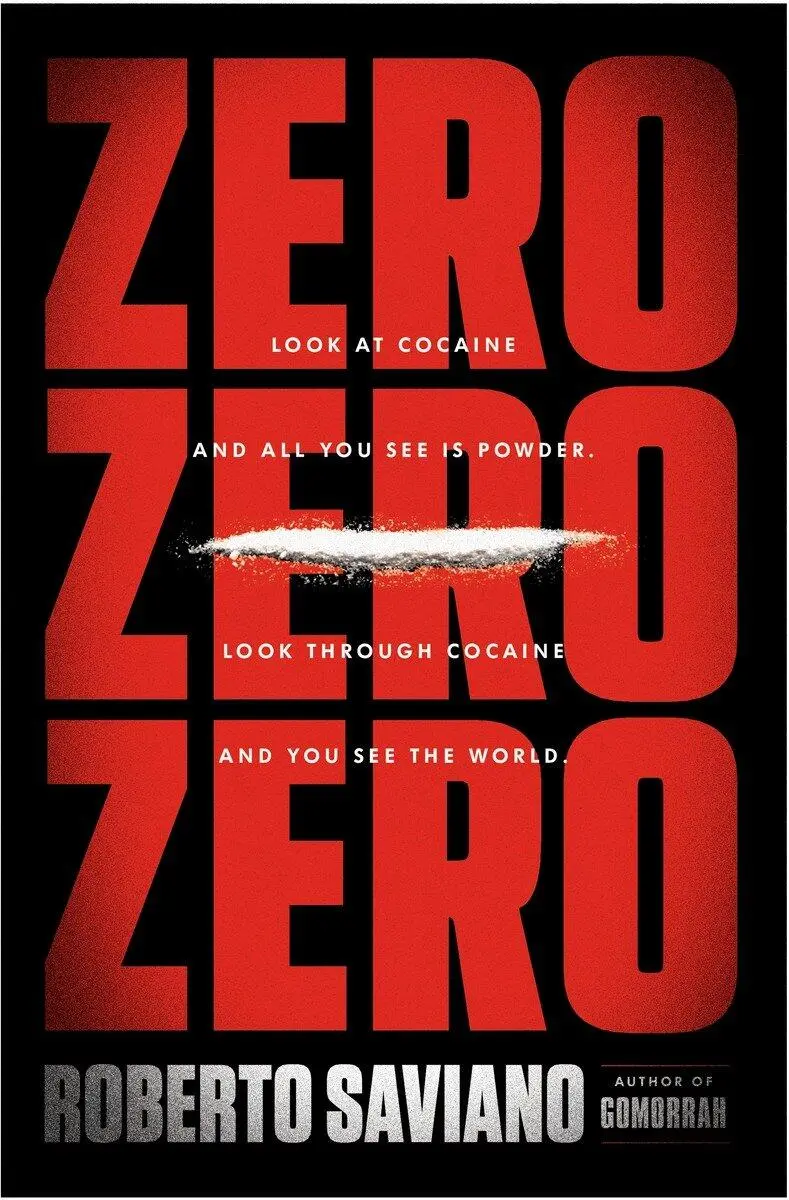
- Название:ZeroZeroZero
- Автор:
- Издательство:Penguin Publishing Group
- Жанр:
- Год:2015
- ISBN:нет данных
- Рейтинг книги:5 / 5. Голосов: 1
-
Избранное:Добавить в избранное
- Отзывы:
-
Ваша оценка:
ZeroZeroZero: краткое содержание, описание и аннотация
Предлагаем к чтению аннотацию, описание, краткое содержание или предисловие (зависит от того, что написал сам автор книги «ZeroZeroZero»). Если вы не нашли необходимую информацию о книге — напишите в комментариях, мы постараемся отыскать её.
Saviano’s
, his explosive account of the Neapolitan mob, the Camorra, was a worldwide publishing sensation. It struck such a nerve with the Camorra that Saviano has lived with twenty-four hour police protection in the shadow of death threats for more than seven years. During this time he has become intimate with law enforcement agencies around the world. Saviano has broadened his perspective to take in the entire global corporate” entity that is the drug trade in cooperation with law enforcement officials, who have fed him information and sources and used him to guide their own thinking and tactics. Saviano has used this extraordinary access to feed his own groundbreaking reportage.
The result is a truly amazing and harrowing synthesis of intimate literary narrative and geopolitical analysis of one of the most powerful dark forces in the global economy. In
, Saviano tracks the shift in the cocaine trade’s axis of power, from Colombia to Mexico, and relates how the Latin American cartels and gangs have forged alliances, first with the Italian crime syndicates, then with the Russians, Africans, and others. On the one hand, he charts an astonishing increase in sophistication and diversification as these criminal entities diversify into many other products and markets. On the other, he reveals the threat of violence to protect and extend power and how the nature of the violence has grown steadily more appalling.
Saviano is a journalist of rare courage and a thinker of impressive intellectual depth and moral imagination, able to see the connections between far-flung phenomena and bind them into a single epic story. Most drug-war narratives feel safely removed from our own lives; Saviano offers no such comfort. As heart racing as it is heady,
is a fusion of a variety of disparate genres into a brilliant new form that can only be called
.
ZeroZeroZero — читать онлайн бесплатно полную книгу (весь текст) целиком
Ниже представлен текст книги, разбитый по страницам. Система сохранения места последней прочитанной страницы, позволяет с удобством читать онлайн бесплатно книгу «ZeroZeroZero», без необходимости каждый раз заново искать на чём Вы остановились. Поставьте закладку, и сможете в любой момент перейти на страницу, на которой закончили чтение.
Интервал:
Закладка:
Then he winks at me. “I know it’s true, but I hope it’s not exactly completely true.”
He gives me a phone number. I say good-bye to the journalist-servant and dial the number. The voice that answers is cold but flattered by my interest. We arrange to meet, in a public place. Ángel Miguel arrives. Short, Mayan eyes, elegantly dressed, as if for the cameras. All I have is a notebook, which he doesn’t like, but he decides to stay anyway. His cold telephone voice has given way to a studied manner of speaking. The whole time we talk, he never lowers his gaze and never makes a gesture that is not strictly necessary.
“I’m glad you’re a fag,” he starts out.
“I’m not a fag.”
“Impossible, I can prove it. You’re a fag, no need to be ashamed.”
“If I were gay I wouldn’t be ashamed, that’s for sure. But what are we talking about?”
“You’re a fag, because you didn’t even notice all this.”
Without ever taking his eyes off mine he rotates his neck a few degrees to the left, and that instant, as if in response to some call, a girl steps forward. It’s true; I hadn’t noticed her. I was concentrating on the Kaibil.
“If you don’t notice even her, you’re a fag.”
Very blond, her dress like a second skin, vertiginous heels. Despite her outfit, not even a hint of makeup, maybe she decided that her fair eyes, with their golden specks, light up her face enough. His girlfriend. She introduces herself; she’s Italian and happy to be there with this man whom she probably thinks is some sort of war hero.
“You have to become cuas . If you’re not cuas , you don’t know what brotherhood in battle means.”
Ángel Miguel, I realize, doesn’t like to waste time. He’s declared me a homosexual and introduced me to his girlfriend. For him that’s enough; now he can begin his story. I read somewhere that in Q’eqchi’ cuas means brother. But now I realize that it’s not a biological relationship. Cuas is not the brother you meet when you’re born; cuas is the brother who is chosen for you.
“Once, during training, I asked some Kaibiles to leave me a bit of food. My cuas went white, like a dead man. The Kaibiles threw their food on the ground and started stomping on it. Then they tied us up and said, ‘Start pecking, hens.’ If we stretched out our tongues too far, they’d kick and shout: ‘Don’t graze, chickens, peck!’
“If either cuas makes a mistake during training, both are punished; if one of them does well, they both get plenty to eat and both get a bed. You’re practically engaged to your cuas . Once my cuas and I were in our tent, and at nighttime my hermano started touching my dick. It bothered me at first, but then I realized we had to share everything… solitude and pleasure… but we never fucked… just touched….”
He barely breathes as he talks, as if he had to deliver his speech, prepared in advance, in the shortest time possible. His girlfriend nods proudly. The gold specks in her eyes shine more brightly now. I would like to interrupt and point out that just a few minutes before he’d been calling me a fag, but I decide it’s best not to interfere with his thought process.
“You learn what a combat brother is there. You share rations, you huddle close when it’s cold, you beat each other bloody to keep your nerve up.”
To stop being a man, with all his honeyed qualities and imperfect defects. To become a Kaibil. To move through the world hating.
“There’s an inscription at the entrance to the Kaibil training camp in Poptún, in the department of Petén: ‘Welcome to hell.’ But I bet only a few people read the second inscription there: ‘If I advance, follow me. If I stop, urge me on. If I retreat, kill me.’”
My contact rattles off the foreigners who have helped train young Kaibiles since the 1980s: Green Berets, Vietnam Rangers, Peruvian and Chilean commandos. During the civil war in Guatemala it was said that the Kaibiles’ distinguishing signature was decapitation, even though some people were convinced it was only a legend, like their war song: “ Kaibil, Kaibil, Kaibil! Mata, mata, mata! Qué mata Kaibil? Guerrillero subversivo! Qué come Kaibil? Guerrillero subversivo! ” “Kaibil, Kaibil, Kaibil! Kill, kill, kill! What does a Kaibil kill? Guerrilla insurgents! What does a Kaibil eat? Guerrilla insurgents!”
“The first training phase lasts twenty-one days,” Ángel Miguel says, “followed by the second, twenty-eight days. In the jungle. Rivers, swamps, minefields. This is the Kaibil’s home. And just like you love your home, the Kaibil loves his. The last week finally arrives. The last step in becoming a real Kaibil. You learn to eat whatever there is, whatever you can find. Cockroaches, snakes. You learn to conquer enemy terrain, annihilate it, take possession of it.
“To complete the training you have to go without sleep for two days, in a river up to your neck. They’d given my cuas and me a puppy, a mongrel with watery eyes. They told us to take care of it, it was part of our brotherhood. We had to take it with us everywhere, and feed it. We gave it a name and were starting to grow fond of it when our chief told us we had to kill it. A knife to its belly, one blow from each of us. By that point we were nearing the end of our training and didn’t ask a lot of questions. Then the chief told us we had to eat it and drink its blood. To show him how brave we were. Even this order we carried out, it was all so natural by then.
“The Kaibil knows that you don’t need to drink or eat or sleep in order to survive. What you need is a good rifle and ammunition. We were soldiers, we were perfect. We didn’t fight because we were ordered to, that wouldn’t have been enough. We had a sense of belonging, which is stronger than any command. Only a third of us made it to the end. The others either ran off or were thrown out. Some others got sick, and some died.”
The Kaibiles’ world is above all a symbolic world. Fear, terror, brotherhood, solidarity with your cuas . It all can and must be flaunted through a clever game of codes and cross-references, through the invention of acrostics. Starting with the word cuas : C = comradeship, U = unity, A = adherence, S = safety. Or through the Kaibil motto, which expresses their philosophy: “The Kaibil is a killing machine for when extraneous powers or doctrines attack the country or the army.” The Kaibil must never — not for any reason in the world — be parted from his maroon beret, which bears their coat of arms: a mountaineering carabiner, which represents unity and strength; a dagger, symbolizing honor, with five notches in the handle, which represent the five senses; and the word “Kaibil” in capital yellow letters. “Kaibil” in the Mam language means “he who has the strength and cunning of two tigers.” The name comes from the great Kaibil Balam, the Mam king who in the sixteenth century courageously held out against the Spanish conquistadors, against Gonzalo de Alvarado’s men. Yet the very troops who bear the symbolic name of the Mayan king and his fierce resistance against the conquistadors became a tool for exterminating their own people. The legend has been so distorted that now the word connotes terror.
“At the end of the eight weeks there’s a dinner. Huge, smoking grills, the fire fed constantly, and alligator, iguana, and deer steaks thrown on it all night long. There’s also a tradition of grabbing the Guatemalan minister of defense and throwing him in a pond with crocodiles (they’re far away, but those government guys are real wimps!). After the dinner, you can finally wear the Kaibiles’ emblem: the dagger on a blue and black background. Blue for day: The Kaibil operates in the sea and sky. Black for silence in nighttime operations. Running diagonal is a rope, for terrestrial missions. And rising up from the dagger is a flame that burns eternally. Liberty.”
Читать дальшеИнтервал:
Закладка:
Похожие книги на «ZeroZeroZero»
Представляем Вашему вниманию похожие книги на «ZeroZeroZero» списком для выбора. Мы отобрали схожую по названию и смыслу литературу в надежде предоставить читателям больше вариантов отыскать новые, интересные, ещё непрочитанные произведения.






Обсуждение, отзывы о книге «ZeroZeroZero» и просто собственные мнения читателей. Оставьте ваши комментарии, напишите, что Вы думаете о произведении, его смысле или главных героях. Укажите что конкретно понравилось, а что нет, и почему Вы так считаете.