Roberto Saviano - ZeroZeroZero
Здесь есть возможность читать онлайн «Roberto Saviano - ZeroZeroZero» весь текст электронной книги совершенно бесплатно (целиком полную версию без сокращений). В некоторых случаях можно слушать аудио, скачать через торрент в формате fb2 и присутствует краткое содержание. Год выпуска: 2015, Издательство: Penguin Publishing Group, Жанр: Публицистика, Криминальный детектив, на английском языке. Описание произведения, (предисловие) а так же отзывы посетителей доступны на портале библиотеки ЛибКат.
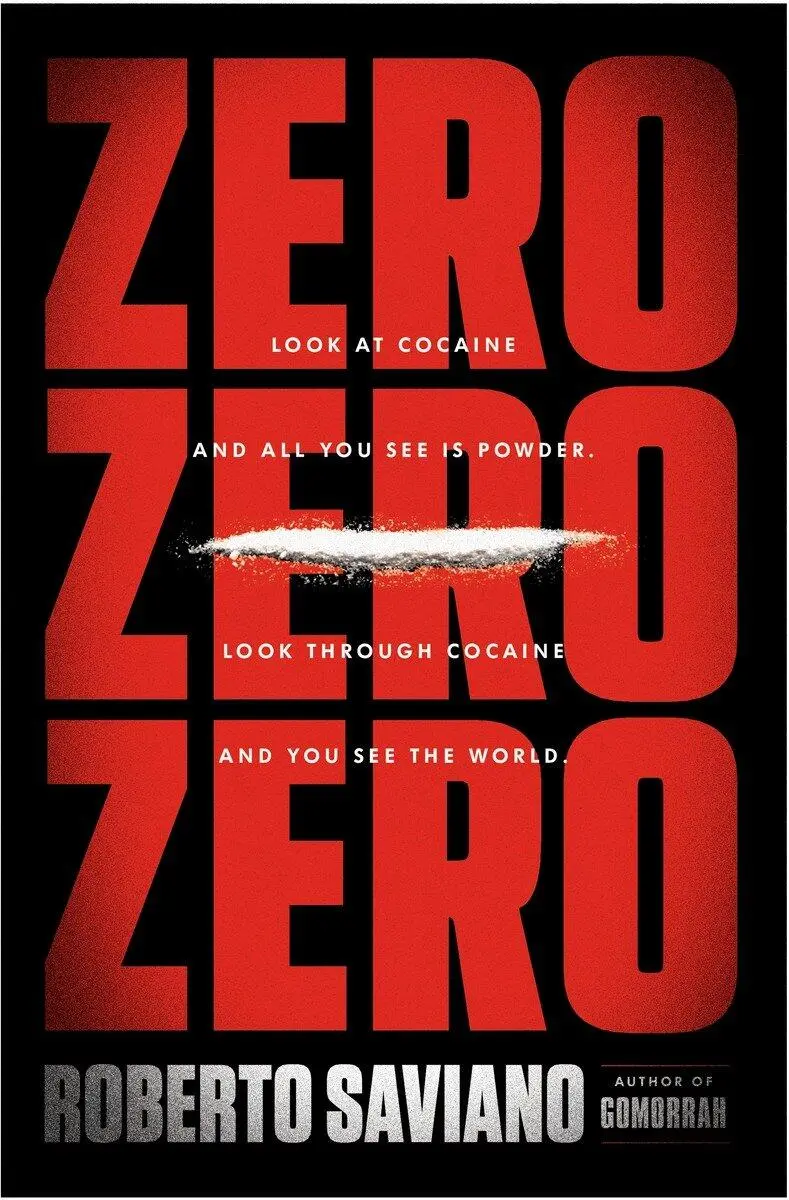
- Название:ZeroZeroZero
- Автор:
- Издательство:Penguin Publishing Group
- Жанр:
- Год:2015
- ISBN:нет данных
- Рейтинг книги:5 / 5. Голосов: 1
-
Избранное:Добавить в избранное
- Отзывы:
-
Ваша оценка:
ZeroZeroZero: краткое содержание, описание и аннотация
Предлагаем к чтению аннотацию, описание, краткое содержание или предисловие (зависит от того, что написал сам автор книги «ZeroZeroZero»). Если вы не нашли необходимую информацию о книге — напишите в комментариях, мы постараемся отыскать её.
Saviano’s
, his explosive account of the Neapolitan mob, the Camorra, was a worldwide publishing sensation. It struck such a nerve with the Camorra that Saviano has lived with twenty-four hour police protection in the shadow of death threats for more than seven years. During this time he has become intimate with law enforcement agencies around the world. Saviano has broadened his perspective to take in the entire global corporate” entity that is the drug trade in cooperation with law enforcement officials, who have fed him information and sources and used him to guide their own thinking and tactics. Saviano has used this extraordinary access to feed his own groundbreaking reportage.
The result is a truly amazing and harrowing synthesis of intimate literary narrative and geopolitical analysis of one of the most powerful dark forces in the global economy. In
, Saviano tracks the shift in the cocaine trade’s axis of power, from Colombia to Mexico, and relates how the Latin American cartels and gangs have forged alliances, first with the Italian crime syndicates, then with the Russians, Africans, and others. On the one hand, he charts an astonishing increase in sophistication and diversification as these criminal entities diversify into many other products and markets. On the other, he reveals the threat of violence to protect and extend power and how the nature of the violence has grown steadily more appalling.
Saviano is a journalist of rare courage and a thinker of impressive intellectual depth and moral imagination, able to see the connections between far-flung phenomena and bind them into a single epic story. Most drug-war narratives feel safely removed from our own lives; Saviano offers no such comfort. As heart racing as it is heady,
is a fusion of a variety of disparate genres into a brilliant new form that can only be called
.
ZeroZeroZero — читать онлайн бесплатно полную книгу (весь текст) целиком
Ниже представлен текст книги, разбитый по страницам. Система сохранения места последней прочитанной страницы, позволяет с удобством читать онлайн бесплатно книгу «ZeroZeroZero», без необходимости каждый раз заново искать на чём Вы остановились. Поставьте закладку, и сможете в любой момент перейти на страницу, на которой закончили чтение.
Интервал:
Закладка:
• • •
In 2002, a year before Osiel’s imprisonment, Arturo Guzmán Decena, El Z1, was killed in a restaurant in Matamoros. A crown of flowers was placed on his tomb with the message: “You will always be in our hearts. From your family: Los Zetas.” After his death Heriberto Lazcano Lazcano took over. Lazcano, alias El Lazca, born on Christmas Day 1974, was also from the army special forces and was wanted by the federal authorities in the United States and Mexico for drug trafficking and multiple homicides. Mexico offered a reward of 30 million pesos for anyone who could provide information leading to his arrest. The U.S. Department of State offered $5 million.
El Lazca was famous for his favorite method of killing: He’d lock his victim in a cell and then watch him starve to death. Death is patient, and so was El Lazca. Following in Guzmán Decena’s footsteps, he reinforced and expanded the group, setting up training camps for fifteen- to eighteen-year-olds and for former local, state, and federal police, and he recruited former Kaibiles.
Under El Lazca’s leadership Los Zetas gradually went from being merely the armed branch of the Gulf cartel to more independent roles. Los Zetas were feeling strong; they wanted their independence. And in February 2010, after a series of shoot-outs and murders, their break from the Gulf cartel was decisive. Los Zetas, now an independent cartel, sided against the Gulf cartel, their former employers, and aligned themselves with the Beltrán Leyva brothers and the Tijuana and Juárez cartels.
El Lazca was a young boss, but he was already a myth, and his legend was amplified by his death. In October 2012 an anonymous tip arrived at the Mexican navy: El Lazca was watching a baseball game in a stadium in Progreso, in the state of Coahuila, right this minute. An unexpected gift. El Lazca, the most wanted drug trafficker after El Chapo, was killed during the police siege. It was a great coup.
Less than twenty-four hours later the triumph was soured when a group of Los Zetas commandos stole their boss’s body from the morgue before forensics had finished with it. Fingerprints were a match, but they still had other tests to run, including the decisive one: DNA. But now the body had disappeared. Los Zetas had another incredible story to tell, at any rate.
Miguel Ángel Treviño Morales, alias El Z40, became the next Los Zetas leader. He had been rising through the ranks since the group’s founding, and was known for his “stewing” technique: He’d stuff his adversary in an oil barrel and then set it on fire. But Miguel Ángel Treviño Morales’s rule didn’t last long. He was arrested in Nuevo Laredo on July 15, 2013. The baton passed to his younger brother Omar, close to him because of his nickname; El Z42. However, Miguel Ángel’s subordinates apparently did not trust Omar Treviño Morales, who was wanted in Mexico and the United States on charges of drug and arms trafficking, murder and kidnap. The Mexican government offered a 30 million peso reward and the United States up to $5 million for information leading to his arrest. On March, 4, 2015, Omar was arrested in a luxury home in San Pedro Garza García, Nuevo León. His neighbors, who were interviewed by Mexican newspapers, said the house had been bought about six months earlier by a quiet family, which did not mingle with other residents. Omar’s capture was possible thanks to a joint operation by the federal police and the army. They seized the Zetas’ chief without a shot being fired, but there was little time to celebrate: The hunt for a new boss was on.
• • •
Los Zetas’ epicenter of economic power is the border city of Nuevo Laredo. But they’ve spread throughout the country, into the states of Oaxaca, Guerrero, and Michoacán on the Pacific coast, in Mexico City, in Chiapas, and in the states of Yucatán, Quintana Roo, and Tabasco along the Gulf coast. In Nuevo Laredo they have total control, with sentries posted all along the main traffic routes in the city and roadblocks near the area bus stations and airports, the better to know who is leaving, but what is more important, who and what is arriving.
Los Zetas is a criminal dictatorship whose laws are based on extortion, whose decrees are kidnappings and torture, and whose constitution is founded on decapitations and dismemberments. Its targets are often politicians and police, with the aim of intimidating the government and dissuading people from accepting institutional roles in opposition to Los Zetas’ interests.
It was two in the afternoon on June 8, 2005, when Alejandro Domínguez Coello, a former typographer, fifty-six years old, took over as chief of police in the city of Nuevo Laredo. “I’m not tied to anyone,” he declared. “My only obligation is to the citizens of this city.” Six hours later, as he was getting into his pickup, a Los Zetas commando unloaded thirty large-caliber bullets into him. His body wasn’t identified right away because his face had been completely obliterated.
On July 29, 2009, at five in the morning, two cars stopped in front of Veracruz and Boca del Río deputy police chief Jesús Antonio Romero Vázquez’s home: About ten Zetas men, armed with AK-47s and grenade launchers, got out and stormed the house. It took them a few minutes to kill Romero Vázquez, his wife (also a police officer), and their seven-year-old son. Then they set the house on fire, killing his three daughters as well, the oldest of whom was fifteen.
Rodolfo Torre Cantú, a gubernatorial candidate in the state of Tamaulipas with the Partido Revolucionario Institucional, or PRI (Institutional Revolutionary Party), was killed on June 28, 2010, six days before the election. His killers, armed with AK-47s, attacked his car on the way to the airport in Ciudad Victoria, the capital of Tamaulipas. He had been planning on going to Matamoros to wind up his campaign. Four people traveling with him were also killed, and four others wounded. According to witnesses, the killers’ vehicle — a 4 x 4—had an unmistakable Z painted on the windows. But after their statements appeared in the papers, a man who identified himself as the “Los Zetas press officer” contacted several local papers to say that Los Zetas were not responsible for Torre Cantú’s murder. Investigations are still under way, but Los Zetas are among the primary suspects.
When they carry out operations, Los Zetas wear dark clothes, paint their faces black, drive stolen SUVs, and often put on federal police uniforms. In Acapulco in early 2007 they disguised themselves as soldiers and killed five police officers and two administrative assistants. On April 16, 2007, in Reynosa, six men dressed as Tamaulipas ministerial police — maybe Zetas men in disguise or maybe corrupt police officers in the pay of the cartel — aboard five SUVs and carrying R-15 rifles, which are used exclusively by the armed forces, stopped four AFI agents (Agencia Federal de Investigación, the Mexican equivalent of FBI agents until July 2012, when they were replaced by the new PFM, Policía Federal Ministerial) whom the Los Zetas cartel accused of having ties to a “rival gang.” In fact, a few days earlier the agents had burst into the El Cincuenta y Siete discotheque in Reynosa, right before the singer Gloria Trevi’s show was to begin, and handcuffed and removed seven hit men who were in the service of the Zetas. The fake ministerial police made the AFI agents get into an SUV. They beat them and took them to China, a small town in the state of Nuevo León, a known Zetas stronghold, intending to kill them. They didn’t realize that one of the agents, Luis Solís, had a cell phone in his pocket. While his kidnappers were momentarily distracted, Solís took out his cell and dialed Commander Puma at AFI headquarters: “We’ve been kidnapped by Los Zetas, they’re taking us to China, they’re going to kill us.” The message was received. Meanwhile, the four agents were transferred to a casa de seguridad , one of the places the Zetas use to torture their victims before finishing them off. Here the agents were kicked and beaten, including by the illustrious El Hummer, head of the Zetas in the Reynosa area. The kidnappers were convinced that the agents were in the service of a rival cartel and wanted to make them confess. But the agents didn’t talk, so they were drugged and taken to another safe house — for electric shock treatment. But when Los Zetas got wind of the fact that federal agents were searching everywhere for their men, they decided to rid themselves of the agents, and let them go. “We survived by the hand of God,” the agents allegedly said after they were freed.
Читать дальшеИнтервал:
Закладка:
Похожие книги на «ZeroZeroZero»
Представляем Вашему вниманию похожие книги на «ZeroZeroZero» списком для выбора. Мы отобрали схожую по названию и смыслу литературу в надежде предоставить читателям больше вариантов отыскать новые, интересные, ещё непрочитанные произведения.



Обсуждение, отзывы о книге «ZeroZeroZero» и просто собственные мнения читателей. Оставьте ваши комментарии, напишите, что Вы думаете о произведении, его смысле или главных героях. Укажите что конкретно понравилось, а что нет, и почему Вы так считаете.