Roberto Saviano - ZeroZeroZero
Здесь есть возможность читать онлайн «Roberto Saviano - ZeroZeroZero» весь текст электронной книги совершенно бесплатно (целиком полную версию без сокращений). В некоторых случаях можно слушать аудио, скачать через торрент в формате fb2 и присутствует краткое содержание. Год выпуска: 2015, Издательство: Penguin Publishing Group, Жанр: Публицистика, Криминальный детектив, на английском языке. Описание произведения, (предисловие) а так же отзывы посетителей доступны на портале библиотеки ЛибКат.
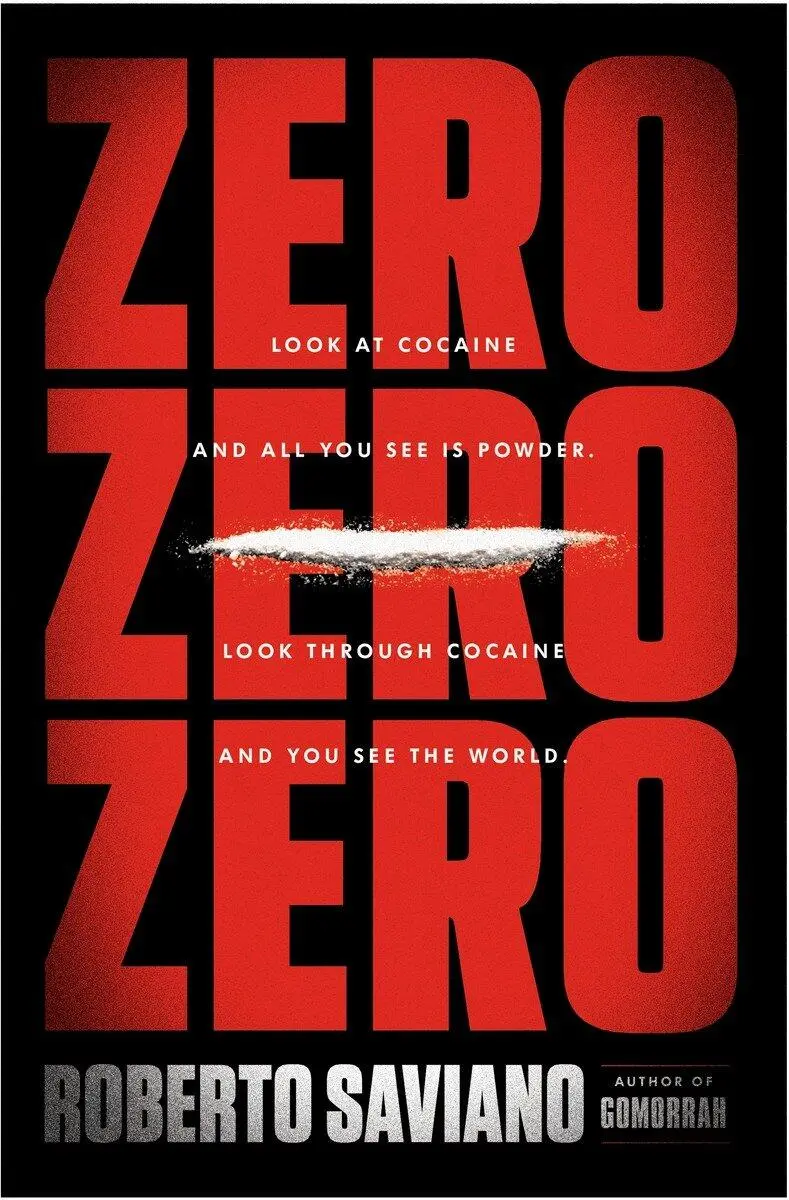
- Название:ZeroZeroZero
- Автор:
- Издательство:Penguin Publishing Group
- Жанр:
- Год:2015
- ISBN:нет данных
- Рейтинг книги:5 / 5. Голосов: 1
-
Избранное:Добавить в избранное
- Отзывы:
-
Ваша оценка:
ZeroZeroZero: краткое содержание, описание и аннотация
Предлагаем к чтению аннотацию, описание, краткое содержание или предисловие (зависит от того, что написал сам автор книги «ZeroZeroZero»). Если вы не нашли необходимую информацию о книге — напишите в комментариях, мы постараемся отыскать её.
Saviano’s
, his explosive account of the Neapolitan mob, the Camorra, was a worldwide publishing sensation. It struck such a nerve with the Camorra that Saviano has lived with twenty-four hour police protection in the shadow of death threats for more than seven years. During this time he has become intimate with law enforcement agencies around the world. Saviano has broadened his perspective to take in the entire global corporate” entity that is the drug trade in cooperation with law enforcement officials, who have fed him information and sources and used him to guide their own thinking and tactics. Saviano has used this extraordinary access to feed his own groundbreaking reportage.
The result is a truly amazing and harrowing synthesis of intimate literary narrative and geopolitical analysis of one of the most powerful dark forces in the global economy. In
, Saviano tracks the shift in the cocaine trade’s axis of power, from Colombia to Mexico, and relates how the Latin American cartels and gangs have forged alliances, first with the Italian crime syndicates, then with the Russians, Africans, and others. On the one hand, he charts an astonishing increase in sophistication and diversification as these criminal entities diversify into many other products and markets. On the other, he reveals the threat of violence to protect and extend power and how the nature of the violence has grown steadily more appalling.
Saviano is a journalist of rare courage and a thinker of impressive intellectual depth and moral imagination, able to see the connections between far-flung phenomena and bind them into a single epic story. Most drug-war narratives feel safely removed from our own lives; Saviano offers no such comfort. As heart racing as it is heady,
is a fusion of a variety of disparate genres into a brilliant new form that can only be called
.
ZeroZeroZero — читать онлайн бесплатно полную книгу (весь текст) целиком
Ниже представлен текст книги, разбитый по страницам. Система сохранения места последней прочитанной страницы, позволяет с удобством читать онлайн бесплатно книгу «ZeroZeroZero», без необходимости каждый раз заново искать на чём Вы остановились. Поставьте закладку, и сможете в любой момент перейти на страницу, на которой закончили чтение.
Интервал:
Закладка:
but it can turn to Ice , and make your veins run cold.
She is Snow White , the fairest of them all—
but you don’t envy her because you lay her down
on the mirror of your desires.
Or simply Bianca
Blanca
Blanche ,
Branca and Branquinha in Brazil
Beyaz Ten , white skin in Turkey
in Russia  —Belaja loshadj, white horse
White Girl, White Tornado, White Lady ,
White Dragon, White Ghost, White Boy, White Powder
Polvere Bianca, Polvo Blanca, Poudre, Pudra in Turkish
Whatever looks like Sugar
Azúcar, Toz seker , that powder Turkish Delight is coated in.
But she looks like flour too,
MуKа, Mukà, in Russian or  —Bai fen in China.
And whatever sounds like her,
Cocco, Coconut, Coco in French, KOKOC — kokos
or KeKC — Keks, the Russian tea cake, but above all KOKC—
Koks in German and Swedish as well.
That ancient name means nothing now
though she’s still there to warm you,
those old coal stoves no longer exist
so now when you say Coke (in English or French)
you no longer think of fuel for the poor.
Now she’s Coke like Coca-Cola,
though it’s Coca-Cola that took her name.
So she adopted all sorts of ways of referring
to that famous pop: Cola in Danish,
Kola in Swedish and Turkish,
Кока in Serbia and Russia.
And then, sometimes, I don’t know why, she turns into an animal.
You can call her Coniglio , maybe because she’s magic
like the rabbit that gets pulled out of the hat, or Krava , cow, in Croatian,
in Spanish Perico or Perica , parrot,
maybe because she makes you more loquacious,
or the Gato who makes you purr.
Farlopa —her most common slang—
or Calcetin , sock, or Cama , bed,
because she makes you dream, or Tierra , the ground under your feet.
If you blow the cheapest stuff
she’ll be your old friend Paco , in Italy Fefè ,
while in Russia you can call her  , Kolja,
in the United States she’s Bernie , but also Cecil ,
a more haughty name, or you can call her Henry VIII
the great English king.
You can make a fuss over her,
call her Baby or Bebé .
But more than any other drug,
it’s a Love Affair with a beautiful lady,
Fast White Lady, Lady, Lady C,
Lady Caine, Lady Snow, Peruvian Lady ,
she’s the Dama Blanca , the Mujer ,
the woman par excellence,
she’s Girl and Girlfriend ,
your Novia , your fiancée.
There’s no one like her,
so you can even call her Mama Coca ;
or simply say She or Her ,
she’s pure, purely herself.
She consumes her names like she consumes her lovers
So this list is nothing but a taste,
so call her any way you want,
No matter what name you choose, she’ll come when you call.
7. THE PUSHER
“It’s bitter on the tongue, and you’ll feel like you’ve just been given novacaine.”
It’s the most common way of consuming coke in the Andes. Strip the central veins from a few leaves, put them in your mouth, and chew them slowly, wetting them with saliva and mashing them into a ball. Then add a pinch of ash — slightly alkaline — from the burned plants. It goes by various names, tocra and llipta being the most common.
“If you do basuco it means you’re really in a bad way, because basuco ’s the waste product from the extraction process, and it’s made with harmful chemical substances.”
Basuco is what prison inmates use, because it’s really cheap. It often makes its way behind bars on the wings of a homing pigeon. Somebody on the outside paper clips a little bag under the bird’s wings and trains the bird to fly to a window, where a prisoner will be delighted to receive it, either for himself or to sell. Sometimes the pigeon’s wings are so loaded with the stuff that it crashes into the prison wall. Basuco is made with the worst quality ingredients: brick dust, acetone, insecticide, lead, amphetamine, and red gas. It’s an intermediate product. The leaves are cut, then the paste is extracted from them. Basuco’s the by-product of the second phase of production, the crude product, but some people don’t seem to mind.
“If you do snow, you have to add hydrochloric acid to the paste and treat it with acetone or ethanol.”
Snow is cocaine hydrochloride. Whitish, bitter-tasting flakes that are ground into white powder. You snort it, or at most shoot it up, usually twenty, thirty, even fifty milligrams, though regulars might get up to a hundred milligrams a hit.
“If you do crack you have to add to snow a watery solution, made up of ammonia and sodium hydroxide or sodium bicarbonate, basic substances in other words, and then you filter the whole thing.”
Crack is smoked in a special pipe, usually made of glass; it heats up and then you inhale the vapors. Or, more often, it’s smoked together with other substances, such as marijuana, tobacco, or phencyclidine — angel dust — but you have to mix it really well first. It works fast, in just a few seconds, and it’s highly addictive: The drug dealer’s dream and the drug addict’s nightmare, is what they say about crack.
“To freebase, you have to dissolve the mixture with ether or other volatile solvents, but then you have to wait till the solvent evaporates.”
As with crack, you need a special pipe, a water pipe or narguile (hookah). Freebase, which is also called “rock,” takes effect immediately; you start feeling euphoric as soon as it reaches your brain, but a little later you become irritable, partly because the effect wears off in a few minutes, making you want to get high again.
“Erythroxylaceae . That’s what the primary material is called. I’ll give you fifty euros if you can say it without stuttering.”
The unpronounceable Latin name of this family of plants is the common denominator for all forms of cocaine consumption. This plant family has more than 250 species, but two in particular interest me, because they’re where cocaine comes from: Erythroxylum coca and Erythroxylum novogranatense . The leaves of these plants contain from 0.3 percent to 1.4 percent alkaloids, including the tropane alkaloids that produce the effects of cocaine on your brain. Erythroxylum coca is native to the Peruvian Andes, but it now flourishes even in the tropical zones of eastern Peru, Ecuador, and Bolivia. Its main variety — which is also the most common one — is Huánuco, Bolivian coca. It’s also the most prized: Its leaves are big and firm, dark green with yellowish tips. The second species, Erythroxylum novogranatense, comes from the mountainous regions of Colombia, the Caribbean, and northern Peru, areas that are drier, more arid. Erythroxylum novogranatense has two principal varieties: Colombian coca and Peruvian coca, the latter is called Truxillo ; its leaves are smaller and more tapering than Huánuco’s , light green with grayish tips. But you don’t need fancy lab tests to identify these two species. Just put a bit in your mouth and chew: If you feel a slight numbing effect, you’ve got a good one, one that contains alkaloid. Huánuco and Truxillo , the protagonists of global commerce.
Читать дальшеИнтервал:
Закладка:
Похожие книги на «ZeroZeroZero»
Представляем Вашему вниманию похожие книги на «ZeroZeroZero» списком для выбора. Мы отобрали схожую по названию и смыслу литературу в надежде предоставить читателям больше вариантов отыскать новые, интересные, ещё непрочитанные произведения.

Обсуждение, отзывы о книге «ZeroZeroZero» и просто собственные мнения читателей. Оставьте ваши комментарии, напишите, что Вы думаете о произведении, его смысле или главных героях. Укажите что конкретно понравилось, а что нет, и почему Вы так считаете.