Roberto Saviano - ZeroZeroZero
Здесь есть возможность читать онлайн «Roberto Saviano - ZeroZeroZero» весь текст электронной книги совершенно бесплатно (целиком полную версию без сокращений). В некоторых случаях можно слушать аудио, скачать через торрент в формате fb2 и присутствует краткое содержание. Год выпуска: 2015, Издательство: Penguin Publishing Group, Жанр: Публицистика, Криминальный детектив, на английском языке. Описание произведения, (предисловие) а так же отзывы посетителей доступны на портале библиотеки ЛибКат.
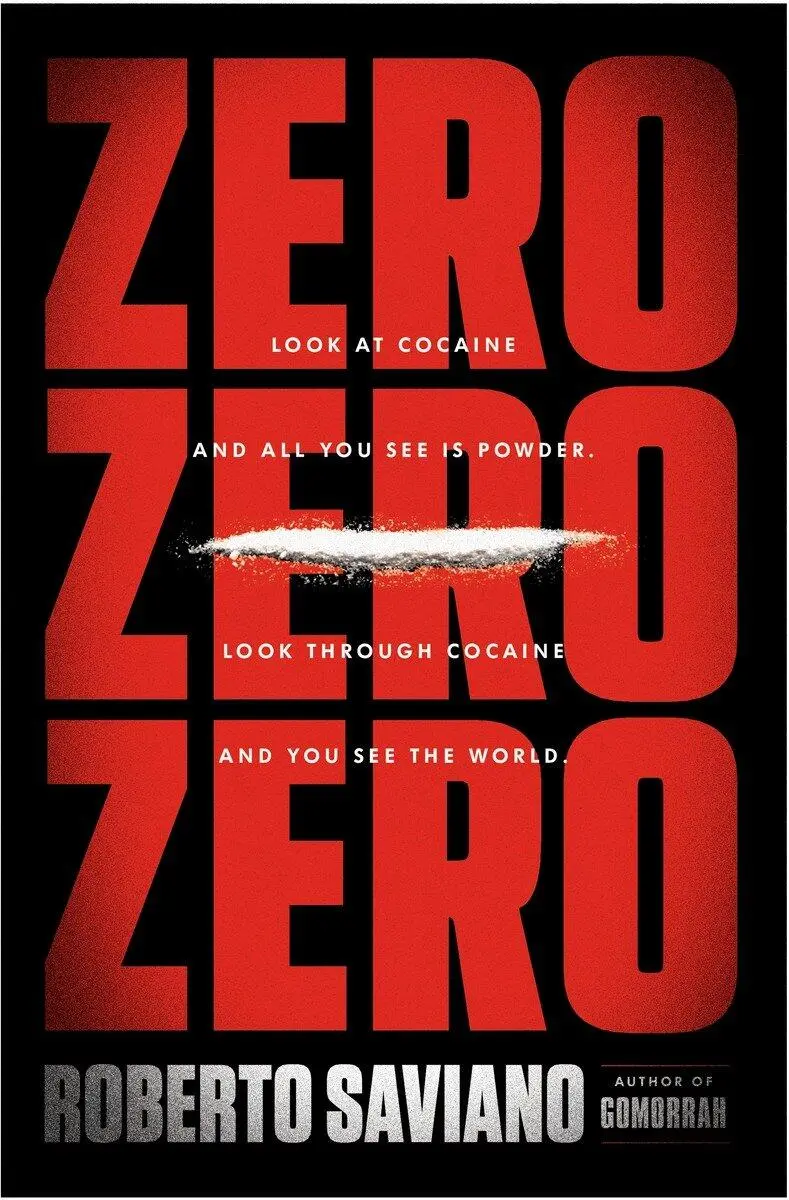
- Название:ZeroZeroZero
- Автор:
- Издательство:Penguin Publishing Group
- Жанр:
- Год:2015
- ISBN:нет данных
- Рейтинг книги:5 / 5. Голосов: 1
-
Избранное:Добавить в избранное
- Отзывы:
-
Ваша оценка:
ZeroZeroZero: краткое содержание, описание и аннотация
Предлагаем к чтению аннотацию, описание, краткое содержание или предисловие (зависит от того, что написал сам автор книги «ZeroZeroZero»). Если вы не нашли необходимую информацию о книге — напишите в комментариях, мы постараемся отыскать её.
Saviano’s
, his explosive account of the Neapolitan mob, the Camorra, was a worldwide publishing sensation. It struck such a nerve with the Camorra that Saviano has lived with twenty-four hour police protection in the shadow of death threats for more than seven years. During this time he has become intimate with law enforcement agencies around the world. Saviano has broadened his perspective to take in the entire global corporate” entity that is the drug trade in cooperation with law enforcement officials, who have fed him information and sources and used him to guide their own thinking and tactics. Saviano has used this extraordinary access to feed his own groundbreaking reportage.
The result is a truly amazing and harrowing synthesis of intimate literary narrative and geopolitical analysis of one of the most powerful dark forces in the global economy. In
, Saviano tracks the shift in the cocaine trade’s axis of power, from Colombia to Mexico, and relates how the Latin American cartels and gangs have forged alliances, first with the Italian crime syndicates, then with the Russians, Africans, and others. On the one hand, he charts an astonishing increase in sophistication and diversification as these criminal entities diversify into many other products and markets. On the other, he reveals the threat of violence to protect and extend power and how the nature of the violence has grown steadily more appalling.
Saviano is a journalist of rare courage and a thinker of impressive intellectual depth and moral imagination, able to see the connections between far-flung phenomena and bind them into a single epic story. Most drug-war narratives feel safely removed from our own lives; Saviano offers no such comfort. As heart racing as it is heady,
is a fusion of a variety of disparate genres into a brilliant new form that can only be called
.
ZeroZeroZero — читать онлайн бесплатно полную книгу (весь текст) целиком
Ниже представлен текст книги, разбитый по страницам. Система сохранения места последней прочитанной страницы, позволяет с удобством читать онлайн бесплатно книгу «ZeroZeroZero», без необходимости каждый раз заново искать на чём Вы остановились. Поставьте закладку, и сможете в любой момент перейти на страницу, на которой закончили чтение.
Интервал:
Закладка:
“I didn’t stop walking, elbowing my way among those men dressed according to the latest dictates of business fashion, and I didn’t stop my targets from coming to see me, but I didn’t stop learning what’s behind my product either; I see new faces, and the old ones fade away and get lost, who knows where. It’s a shitty job.”
A shitty job that he knows how to do. He talks about it as if he has already weighed the pros and cons of his profession in his head and has decided to keep the cons to himself. Paranoia, for instance. There are pushers who change cell phones and SIM cards once a week. All it takes is one customer to be a little careless and you’re screwed. There are pushers who live like cloistered nuns: no contact with the outside world except when absolutely necessary, and a drastic reduction of one’s private life. Girlfriends are particularly dangerous; they can easily guess what your day job is and can easily take revenge by telling someone about it. Some pushers are even more angsted: They spend their free time erasing all traces of themselves — no credit cards or bank accounts, no ATM cards, and never a signature on a piece of paper. Angst and paranoia. Some pushers, in order to quell the anxiety, do the same blow they push, but only end up feeding their angst. And there are pushers, like the one I’m sitting with, who sound like stockbrokers: “I sell Ferraris, not economy cars. You crash sooner in an economy car; in a Ferrari you last a little longer.”
There are street pushers who can earn $5,000 a month, and even get a bonus if they sell well. But bourgeois pushers can earn up to $25,000, $40,000 a month.
“The problem’s not the amount of money you earn, though; it’s that any other job seems impossible, because it would feel like a waste of time. You earn more just by brushing someone’s hands than you would working for months and months, no matter what sort of job it is. And knowing that you’ll be arrested isn’t enough to make you change professions. Even if I were offered a job where I could earn as much as I do now, I don’t think I’d take it, because it would undoubtedly take up more of my time. The same is true for those poor souls who deal on the streets. They’d have to put in a lot more time to earn the same amount of money.”
I looked at him and asked if he could confirm a sensation I had while listening to his stories, which was that he despises his clients.
“Yes. I liked them at first, because they gave me what I needed. But over time you look at them and you begin to understand. You realize that you could be one of them. You see yourself from the outside, and you’re repulsed. I dislike my clients because they remind me too much of myself, or what I would become if I decided to enjoy myself more. And not only does the idea repulse me, it scares me.”
8. BEAUTY AND THE MONKEY
Evolutionary transformation is fueled by vacuums. The story of drug trafficking in Colombia is one of vacuums, transformations, and capitalism.
Today what was once a vacuum is swarming, like a plot of ground under the entomologist’s lens. Swarming with hundreds of microcartels. Armed organizations that give themselves names that sound like local sports teams. Communist guerrillas who increasingly play the paradoxical role of large landowners, of plantation and production managers. Each one develops his own specialty, carves out his own slice of the action: production, distribution, transportation. Each one defends his own little corner of jungle, mountain, coast, or border. It’s all disconnected, parceled out, ground up. Today the doses of territory, and the spread of power and alliances, for which blood still flows, seem infinitesimal compared to the heyday of the big cartels.
But if the Colombia of drug trafficking today seems like the land of the Lilliputians to Gulliver, the problem is partly in the eye of the beholder. Or in his mind, rather; in his memory. Eyes see what they expect to see, or they gather in the remains. What they see is based on what they no longer see. So if there aren’t any more big showdowns or massacres, if cartels no longer carry out attacks on presidential candidates or no longer finance presidential elections, if Colombia is no longer a narco-state, and if the big players are all dead or sentenced to life in the United States, you might think the war has been won. Well, maybe not completely won, but at least well on the way to victory.
Or your gaze might get stuck in the past: Since “cocaine” and “Colombia” are still synonymous — a denomination of origin as inherent as Scotch whiskey or Russian caviar — the imagination continues to picture Colombian drug lords as the most powerful, the richest, the most terrifying in the world. But no regular person knows the names of the big traffickers anymore, or of the major organizations operating in Colombia. And yet, despite decades spent battling the Colombian narcos, the market share the country has lost is much less than one might expect in this era of global commerce. This apparent paradox makes it extremely difficult to grasp the current reality, to see its actual dimensions.
The alleged Lilliputians are no longer the absolute lords of cocaine, but it’s calculated that Colombia continues to produce around 60 percent of the cocaine consumed worldwide. And coca plants continue to take root in every cultivatable clod of Colombian soil.
How can this be? What does it mean?
The first answer is elementary, the basic principle of capitalism. If demand holds, if, in fact, it continues to grow, it would be absurd to cut off the supply, or even to reduce it significantly.
The second answer is that the decline of the Colombian cartels corresponded to the rise of the Mexican cartels and of all the new, powerful players in the criminal economy. Today the Sinaloa cartel directs the cultivation and production of coca plants, cocaine paste, and cocaine in Colombia just as multinational corporations direct the cultivation and processing of fruit.
But all this does not fully explain what happened in Colombia. It’s important to understand, though. Important because Colombia represents a matrix of the criminal economy, and its transformations reveal the full adaptive capacity of a system that has one fixed constant: white powder. Men die, armies disintegrate, but coke remains. This, in short, is the story of Colombia.
• • •
In the beginning there was Pablo, Pablo Escobar. Before Pablo, the drug trade was on the rise in Colombia, with its ideal conditions for producing, storing, and transporting cocaine. But it was in the hands of “coke cowboys,” who were too weak to impose their own rules and too scattered geographically to impose the law of the strongest. There was a vacuum, and Pablo filled it right away. The first evolutionary step in Colombian drug trafficking began with this ambitious young man, who was determined to become so rich that he’d have more influence than the president. Starting from nothing he accumulated wealth, gained respect, and conceived of the first cocaine distribution network, using small boats and single-engine planes. To safeguard his operation he relied on an old Colombian saying: plata o plomo , money or lead. If you were a police officer or a politician, you either accepted his bribe or you were dead. For Pablo, who became Medellín’s godfather, the cocaine business was simple: All you had to do was take a walk in the poor barrios and enlist the kids, who were ready to do anything — bribe people here and there, or pay off a friendly banker to help you bring the money you laundered back in. He said as much himself: “Everybody has a price. The important thing is to figure out what it is.” The vacuum filled quickly, and the Colombian system became a monopoly, its distribution network extending to the most important points on the American continent. Everything was done in high style: intercontinental flights crammed with cocaine; affable customs officers who let in thousands of containers of flowers full of white powder; submarines for really big shipments; even an ultramodern tunnel that ran from Ciudad Juárez to El Paso, Texas, the private property of a millionaire who lived more than twenty-five hundred miles away. Colombia ruled; Pablo Escobar ruled. And the godfather of Medellín reached an agreement with the godfather of Guadalajara. Mexico looked, learned, pocketed its percentage, and waited its turn.
Читать дальшеИнтервал:
Закладка:
Похожие книги на «ZeroZeroZero»
Представляем Вашему вниманию похожие книги на «ZeroZeroZero» списком для выбора. Мы отобрали схожую по названию и смыслу литературу в надежде предоставить читателям больше вариантов отыскать новые, интересные, ещё непрочитанные произведения.




Обсуждение, отзывы о книге «ZeroZeroZero» и просто собственные мнения читателей. Оставьте ваши комментарии, напишите, что Вы думаете о произведении, его смысле или главных героях. Укажите что конкретно понравилось, а что нет, и почему Вы так считаете.