Roberto Saviano - ZeroZeroZero
Здесь есть возможность читать онлайн «Roberto Saviano - ZeroZeroZero» весь текст электронной книги совершенно бесплатно (целиком полную версию без сокращений). В некоторых случаях можно слушать аудио, скачать через торрент в формате fb2 и присутствует краткое содержание. Год выпуска: 2015, Издательство: Penguin Publishing Group, Жанр: Публицистика, Криминальный детектив, на английском языке. Описание произведения, (предисловие) а так же отзывы посетителей доступны на портале библиотеки ЛибКат.
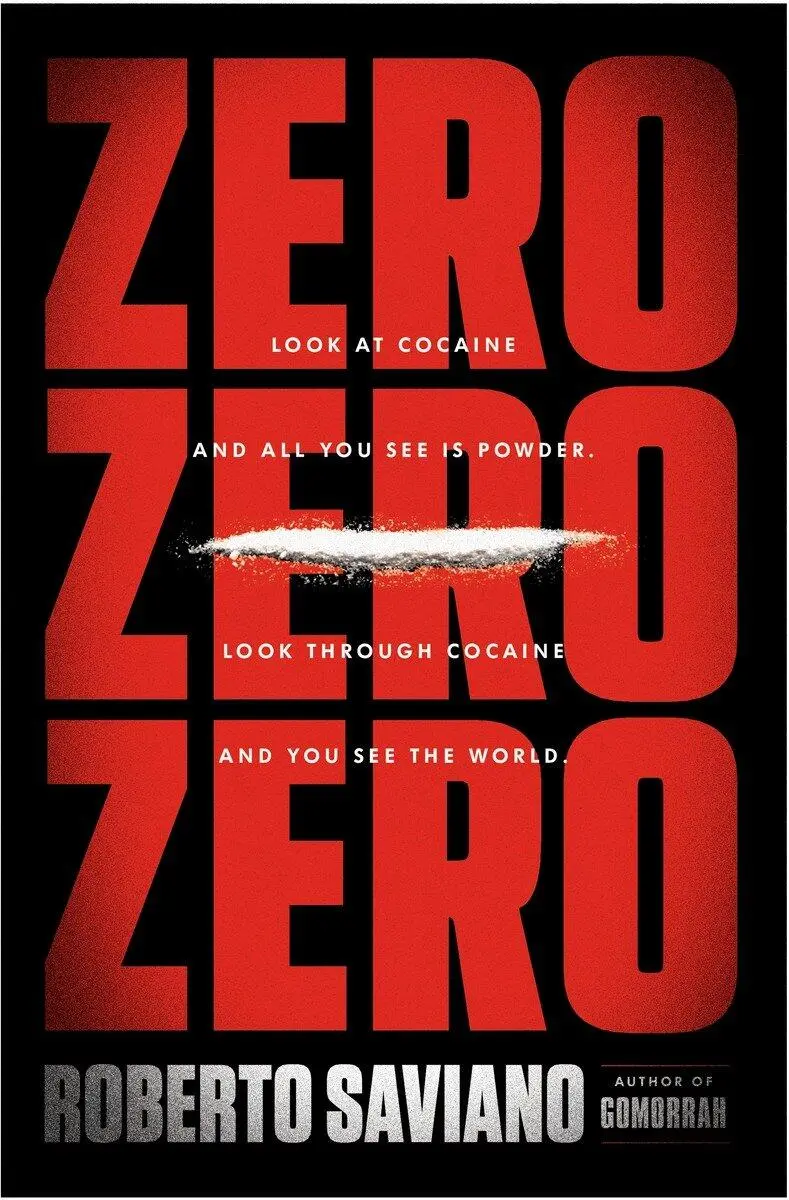
- Название:ZeroZeroZero
- Автор:
- Издательство:Penguin Publishing Group
- Жанр:
- Год:2015
- ISBN:нет данных
- Рейтинг книги:5 / 5. Голосов: 1
-
Избранное:Добавить в избранное
- Отзывы:
-
Ваша оценка:
ZeroZeroZero: краткое содержание, описание и аннотация
Предлагаем к чтению аннотацию, описание, краткое содержание или предисловие (зависит от того, что написал сам автор книги «ZeroZeroZero»). Если вы не нашли необходимую информацию о книге — напишите в комментариях, мы постараемся отыскать её.
Saviano’s
, his explosive account of the Neapolitan mob, the Camorra, was a worldwide publishing sensation. It struck such a nerve with the Camorra that Saviano has lived with twenty-four hour police protection in the shadow of death threats for more than seven years. During this time he has become intimate with law enforcement agencies around the world. Saviano has broadened his perspective to take in the entire global corporate” entity that is the drug trade in cooperation with law enforcement officials, who have fed him information and sources and used him to guide their own thinking and tactics. Saviano has used this extraordinary access to feed his own groundbreaking reportage.
The result is a truly amazing and harrowing synthesis of intimate literary narrative and geopolitical analysis of one of the most powerful dark forces in the global economy. In
, Saviano tracks the shift in the cocaine trade’s axis of power, from Colombia to Mexico, and relates how the Latin American cartels and gangs have forged alliances, first with the Italian crime syndicates, then with the Russians, Africans, and others. On the one hand, he charts an astonishing increase in sophistication and diversification as these criminal entities diversify into many other products and markets. On the other, he reveals the threat of violence to protect and extend power and how the nature of the violence has grown steadily more appalling.
Saviano is a journalist of rare courage and a thinker of impressive intellectual depth and moral imagination, able to see the connections between far-flung phenomena and bind them into a single epic story. Most drug-war narratives feel safely removed from our own lives; Saviano offers no such comfort. As heart racing as it is heady,
is a fusion of a variety of disparate genres into a brilliant new form that can only be called
.
ZeroZeroZero — читать онлайн бесплатно полную книгу (весь текст) целиком
Ниже представлен текст книги, разбитый по страницам. Система сохранения места последней прочитанной страницы, позволяет с удобством читать онлайн бесплатно книгу «ZeroZeroZero», без необходимости каждый раз заново искать на чём Вы остановились. Поставьте закладку, и сможете в любой момент перейти на страницу, на которой закончили чтение.
Интервал:
Закладка:
The rest of the world was optimistic, euphoric even. It was heading toward the new millennium convinced that peace, democracy, and liberty were destined to conquer the globe. President Bill Clinton was reelected in November 1996, and a few months later Labour Party leader Tony Blair — who was convinced that a social democratic agenda must be coupled with greater free markets in order to keep step with modernity — was elected prime minister in the UK. On Wall Street, until early 1997, the Dow Jones Index climbed to levels never seen before, and the NASDAQ — the world’s first electronic stock market, which is dedicated to tech stocks such as Microsoft, Yahoo! Apple, and Google — was up big. What’s more, Steve Jobs had just returned to the helm at Apple, confident he would be able to lead the company out of crisis, and, as we all know, he succeeded brilliantly.
In keeping with the spirit of the times, the euphoric West asked for more and more cocaine. Coke was a white stain on all the optimism. And coke was identified with Colombia. It was unacceptable that in this era of creative capitalism and commerce without borders, a nation could be so rich in resources but so oppressed by a criminal monoculture. The Cali cartel had been taken down, the narco-state had been crushed. Marxist guerrillas holed up with their hostages in the jungle or mountains were an anachronism; they no longer had any reason to exist. The superpower that defeated the world communist bloc thought that all it would take to return Colombia to the free world was a concentrated effort.
The United States didn’t attach enough importance to what Mexico had become, right under their noses. Or rather, they realized it only in spurts, in individual daily reports that ended up on this or that desk, disjointed alarms about stability and public safety. Blinded by optimism, they couldn’t or didn’t want to see that what was emerging in Mexico was nothing other than the dark side of that same global capitalism they were proud to have opened every door to, to have loosened every restriction. Their gaze, also, was imprisoned in the past. Working off a borrowed plot, they wanted to write a happy ending for Colombia’s story.
• • •
Latin American stories are complicated. They’re not like those Hollywood tales where the good are good and the bad are bad. Where if you’re successful it’s because you deserve it, because you earned it with your talent and your skill that, in the end, are nothing more than the fruit of your moral virtue. So it’s easier to understand the transition that takes place in Colombia by tracing two success stories.
The first is the story of a woman. The prettiest and most popular girl in the whole country. The girl who all the men dream of having, the girl who all other girls dream of being. The exclusive model for a lingerie brand and for Colombia’s most popular beer. A line of beauty products known all over Latin America named after her. Natalia Paris. A sweet face, golden locks, honey-colored skin. Girlishly petite but with explosive breasts and glutes. Feminine perfection in miniature. Natalia is the one who created a new model of beauty, that same mix of playful naïveté and supersexy seduction that Shakira — also short, blond, and Colombian — established all around the world, thanks to her powerful voice and wild wiggles, but Natalia’s star rose first. The other story is about a man who as a boy was saddled with a nickname that doesn’t do him justice: El Mono, the Monkey. He doesn’t have the grotesque features of a howler or a spider monkey, the most common species in Colombia; at most, his slightly sunken eyes might make you think of a gorilla: There’s something frightening in his fixed gaze. His mother is Colombian, his father an Italian who left the town of Sapri to make a better life for himself in the New World. El Mono is named after his father, Salvatore Mancuso, and he fulfilled his father’s immigrant dream of integration and success, in his own way.
Both the Beauty and the Monkey were born in cities in the north, the most densely populated and developed part of the country, to families that work hard to achieve the relative ease of the middle class. Natalia’s father is a pilot who dies when she was only eight months old, but her mother is a woman of vigorous temperament and principles, and she’s a lawyer, a career that has given her financial autonomy. Salvatore is the second of six children, his father an electrician who, after years of hard work, manages to open first an appliance repair shop, and then an auto repair shop.
Their parents save in order to send them to good schools, which is also a way of keeping them, as much as possible, away from bad company and street violence. Natalia attends a Catholic boarding school, goes to Boston to study, and enrolls in college with the idea of becoming an advertising agent. But in the meantime, her modeling career takes off. While still a teenager she lands her first important contract: Her radiant smile promotes a toothpaste made in the United States. Then she becomes the poster girl for Cristal Oro beer, a sunny presence in a tiny bikini who winks from the walls of houses, in magazines passed from one person to the next at the hairdresser’s, on huge billboards along the highway. She is everywhere, admired and recognized in a way that had never happened to a Colombian model before. The most common dream of every attractive girl in Colombia was — and still is — to become a beauty queen. The long lead-up to the Miss Colombia pageant is sheer madness. A circus of glossy magazines lands on the Cartagena de Indias beach, and schoolchildren in Cartagena are given two weeks’ vacation. A 24-carat, gold-plated crown with an emerald — the national gem — in the center is placed on the winner’s head, and during her year as Miss Colombia she is received by the president of the republic.
But there are also hundreds of minor beauty pageants. Wherever they’re held, the aspiring beauty queens are eagerly awaited. The hearts of the people of Colombia swell with the desire to make up for their tough daily lives, to forget the violence, the injustice, and the political scandals that seem as if they will never end. Colombians are a happy people, that vibrant happiness that develops as an antidote to fatalism.
But that’s not enough to explain the proliferation of the phenomenon. In Latin America, and in particular in drug-trafficking countries, beauty pageants are also fairs where thoroughbreds already belonging to a particular stable are paraded. The contest is often fixed from the start: The girl who belongs to the most powerful owner wins. The best present you can give a woman is to buy her a beauty queen’s crown, a gift that also makes the prestige of the man who chose her shine. That’s how it went for Yovanna Guzmán, who was elected Chica Med when she was with Wílber “Soap” Varela, one of the leaders of the Norte del Valle cartel. But even when that’s how it goes, the less fortunate girls can still hope to be noticed by other drug lords who flock to the pageant to choose a new lover, or try their luck in the next pageant.
But Natalia, who did not have to go through anything of the sort in her rise to stardom, suddenly finds herself more envied than Miss Colombia. Her mother would never have allowed her to exhibit herself in a setting where every courteous display of attention is tantamount to a risk. The people who hang around a set are easier to keep an eye on. She goes with Natalia to every appointment, and is her manager and guardian. And she gives her a breast enlargement — two sizes — for her eighteenth birthday, though she never imagines that this further investment in her daughter’s already winning image will make her the forerunner of an epidemic that will soon become all the rage. Even girls from the poorest countryside and the most derelict barrios start prostituting themselves in order to scrape together enough money for breast implants — the prerequisite for getting into the good graces of some boss, which is the only chance they have to better themselves. This is the story the Colombian TV series Sin tetas no hay paraíso ( Without Breasts There Is No Paradise ) tells. Shown all over the world in toned-down versions, the original was based on Gustavo Bolívar Moreno’s rigorous reportage about the southwestern department of Putumayo, a traditional coca-growing area.
Читать дальшеИнтервал:
Закладка:
Похожие книги на «ZeroZeroZero»
Представляем Вашему вниманию похожие книги на «ZeroZeroZero» списком для выбора. Мы отобрали схожую по названию и смыслу литературу в надежде предоставить читателям больше вариантов отыскать новые, интересные, ещё непрочитанные произведения.



Обсуждение, отзывы о книге «ZeroZeroZero» и просто собственные мнения читателей. Оставьте ваши комментарии, напишите, что Вы думаете о произведении, его смысле или главных героях. Укажите что конкретно понравилось, а что нет, и почему Вы так считаете.