Roberto Saviano - ZeroZeroZero
Здесь есть возможность читать онлайн «Roberto Saviano - ZeroZeroZero» весь текст электронной книги совершенно бесплатно (целиком полную версию без сокращений). В некоторых случаях можно слушать аудио, скачать через торрент в формате fb2 и присутствует краткое содержание. Год выпуска: 2015, Издательство: Penguin Publishing Group, Жанр: Публицистика, Криминальный детектив, на английском языке. Описание произведения, (предисловие) а так же отзывы посетителей доступны на портале библиотеки ЛибКат.
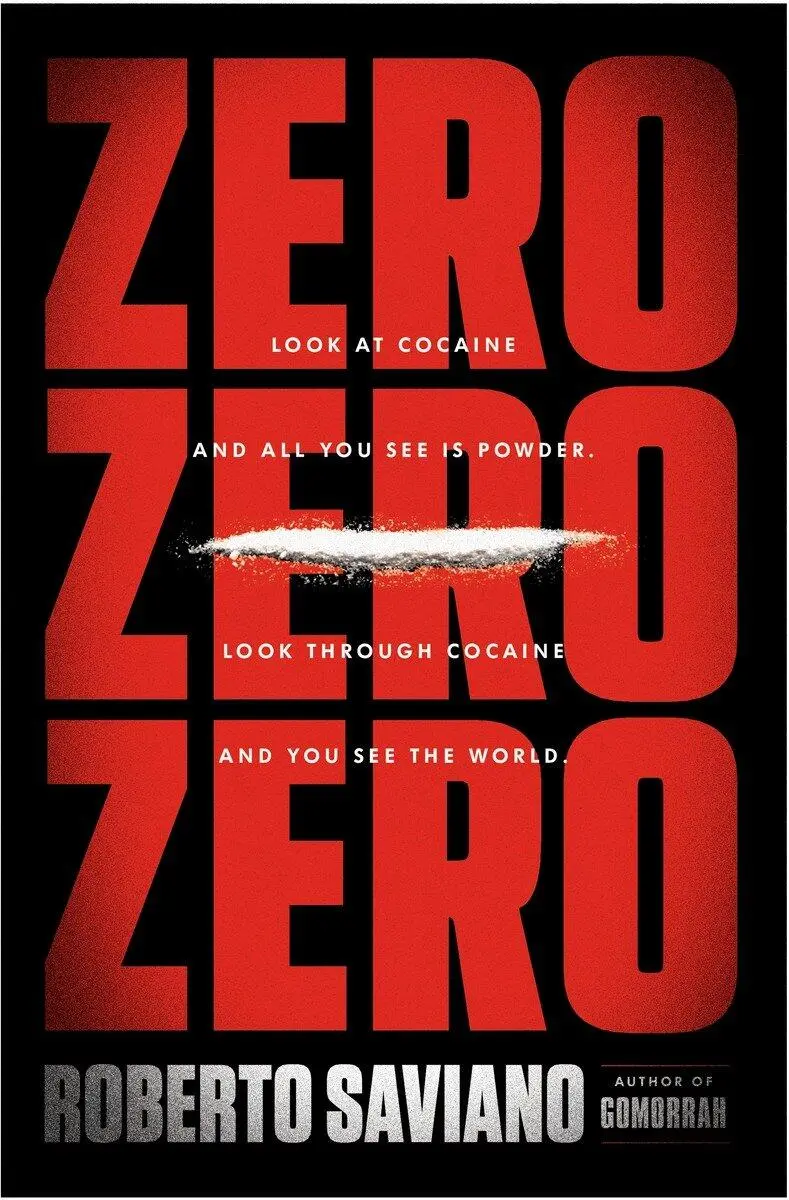
- Название:ZeroZeroZero
- Автор:
- Издательство:Penguin Publishing Group
- Жанр:
- Год:2015
- ISBN:нет данных
- Рейтинг книги:5 / 5. Голосов: 1
-
Избранное:Добавить в избранное
- Отзывы:
-
Ваша оценка:
ZeroZeroZero: краткое содержание, описание и аннотация
Предлагаем к чтению аннотацию, описание, краткое содержание или предисловие (зависит от того, что написал сам автор книги «ZeroZeroZero»). Если вы не нашли необходимую информацию о книге — напишите в комментариях, мы постараемся отыскать её.
Saviano’s
, his explosive account of the Neapolitan mob, the Camorra, was a worldwide publishing sensation. It struck such a nerve with the Camorra that Saviano has lived with twenty-four hour police protection in the shadow of death threats for more than seven years. During this time he has become intimate with law enforcement agencies around the world. Saviano has broadened his perspective to take in the entire global corporate” entity that is the drug trade in cooperation with law enforcement officials, who have fed him information and sources and used him to guide their own thinking and tactics. Saviano has used this extraordinary access to feed his own groundbreaking reportage.
The result is a truly amazing and harrowing synthesis of intimate literary narrative and geopolitical analysis of one of the most powerful dark forces in the global economy. In
, Saviano tracks the shift in the cocaine trade’s axis of power, from Colombia to Mexico, and relates how the Latin American cartels and gangs have forged alliances, first with the Italian crime syndicates, then with the Russians, Africans, and others. On the one hand, he charts an astonishing increase in sophistication and diversification as these criminal entities diversify into many other products and markets. On the other, he reveals the threat of violence to protect and extend power and how the nature of the violence has grown steadily more appalling.
Saviano is a journalist of rare courage and a thinker of impressive intellectual depth and moral imagination, able to see the connections between far-flung phenomena and bind them into a single epic story. Most drug-war narratives feel safely removed from our own lives; Saviano offers no such comfort. As heart racing as it is heady,
is a fusion of a variety of disparate genres into a brilliant new form that can only be called
.
ZeroZeroZero — читать онлайн бесплатно полную книгу (весь текст) целиком
Ниже представлен текст книги, разбитый по страницам. Система сохранения места последней прочитанной страницы, позволяет с удобством читать онлайн бесплатно книгу «ZeroZeroZero», без необходимости каждый раз заново искать на чём Вы остановились. Поставьте закладку, и сможете в любой момент перейти на страницу, на которой закончили чтение.
Интервал:
Закладка:
By the early 1980s Pablo was making half a million dollars a day; he had ten accountants. The Medellín cartel was spending twenty-five hundred dollars a month just on elastic bands to bundle its rolls of cash. This was capitalism at its beginning. Large concentrations of wealthy entrepreneurs were laying down the law and penetrating every fiber of society. It was a conservative capitalism, in which the captains of industry vied with one another in flaunting their power and their wealth, without skimping on gifts for the people. Pablo had four hundred public housing units built, and he opened a spectacular public zoo right on his estate, Hacienda Nápoles. Robin Hood capitalists — unscrupulous, bloodthirsty, ruthless spendthrifts. Capitalists in their infancy, though, at the top of rigid pyramidal structures. They felt like giants and considered themselves the incarnations of a sovereign power they’d earned with money and lead — the only legitimate form of power. Pablo even offered to eliminate all of Colombia’s public debt, because the country was already his, because the government of Medellín was stronger and wealthier than that of Bogotá. So if the government caused them any trouble they felt justified in waging a head-on war: car bombs, killings, attacks on enemy politicians and judges. A presidential candidate — the front-runner — was assassinated. But Escobar and his faithful failed to realize that the very thing they believed to be a show of strength was actually their weak spot. A body rots once its head is cut off. When Pablo fell, his organization died, creating another vacuum.
The vacuum Pablo’s death created was a warning sign: Colombian drug trafficking had to take another evolutionary step. Like capitalism itself, it had to adapt to changes, incorporate social and economic mutations, free itself of tradition, and cross the threshold of modernity. A new species of narco was ready; in fact, it had already begun to proliferate, colonizing more and more territory. Flanked by powerful natural allies, it didn’t have to bleed itself dry in its battle to gain control. Pablo had been a real macho, a striking symbol of untamed sexuality. But now that dominant stereotype was broken, thanks to Hélmer “Pacho” Herrera, one of the bosses of the neohegemonic Cali cartel. Openly gay, Pacho wouldn’t have been able to take two steps under Pablo. But for the Rodríguez Orejuela brothers who founded the Cali cartel, business is business, and if a homosexual can pave the way for Mexico, can plant distribution cells right in New York City, then who cares who he sleeps with. Even women were accepted. Medellín’s old sayings fell out of use: People stopped saying that all women did was spend money and spoil business. Women knew how to do everything, and they did — from money laundering to important negotiations. “Ambition” was no longer a dirty word.
Another difference: Some of Pablo’s associates were practically illiterate; they didn’t even know who Gabriel García Márquez was, Colombia’s greatest writer then living. They were proud that their power had been born of the people, and they needed to identify with them. Cali bosses, on the other hand, recited verses by Colombian poets and knew what an MBA was worth. The new narcos were capitalists just as Pablo’s were, but they were more sophisticated. They were at home among the elite of the New World. They played at being honest businessmen, wore elegant clothes, knew how to behave in high circles, and moved about freely. No more bunkers and deluxe homes hidden away somewhere. The new narcos loved the light of day, because that’s where they did their business.
The nature of trafficking changed too. Now you had to guarantee shipments, using fake companies or exploiting those legal channels in which it was easy to pass off illegal goods. And then there were the banks. First the Banco de los Trabajadores, then the First Interamericas Bank of Panama, prestigious and respected credit institutions that the new narcos used to launder money from the United States. The more territory they gained in the legal economy, the more maneuvering room they had to grow their cocaine business. Construction companies, factories, investment firms, radio stations, soccer teams, car dealerships, shopping centers. The symbol of this new mentality was a chain of American-style drugstores called Drogas la Rebaja, Discount Drugs.
Pablo’s pyramid structure — a dinosaur that had been limping along — had been surpassed. Narco-businesses now established “production objectives,” actual multiyear plans. The Cali cartel was divided into five strategic sectors: politics, security, finance, legal support, and drug trafficking.
Violence and terror were not done away with, though: Plata o plomo was still the order of the day, but while plata still flowed freely, plomo had to be weighed more carefully, applied more professionally and with more common sense. Before the hit men were youths yanked out of poverty; now they were former or corrupt soldiers. Well-trained mercenaries. Politics became one of the many sectors of society to finance. The money injected into the political system was like an anesthetic: It paralyzed Congress, making it incapable of mounting any threats while conditioning its actions. The last, weak link that tied drug traffickers to their lands was broken as well. To do business the country must be at peace, a fictitious, papier-mâché peace that needs shaking up every now and then — a warning to remind Colombians that those in charge are always there, even if they’re unseen. Henry Loaiza Ceballos, alias the Scorpion, was a real pro in this regard. One day in April 1990 he ordered hundreds of campesinos to be chopped to pieces with chain saws: Under the leadership of Father Tiberio de Jesús Fernández Mafla, the Trujillo parish priest, they had organized a march to protest the armed conflict and call for better living conditions in the countryside. Father Tiberio’s body was found — hacked to bits — in a bend in the River Cauca. Before death took him he was forced to witness the rape and murder of his niece. Then Scorpion Loaiza had the priest’s fingers cut off and forced him to eat them, along with his toes and his genitals. Father Tiberio is buried in a park honoring the Trujillo victims. The inscription on his tomb — something he’d said during his last Easter mass — is prophetic: “If my blood can help a much-needed peace to be born and blossom in Trujillo, I will spill it gladly.”
• • •
To their Italian partners, the use of violence in the New World still seemed excessive, but nonetheless, the Italians were quite happy to form a strong connection with Colombia, to get on well with their new suppliers. The Calabrese mafiosi were as tied to their land as the men of Medellín, yet they shared with the new men of Cali the most salient feature of their success: rule and prosper, without making too much noise. Don’t challenge official power, but rather use it, drain it, manipulate it. It was as if they’d been traveling the same road together for a while.
The narco-state expanded and flexed its muscles. Rather than kill a presidential candidate it didn’t like, it preferred to buy votes to elect one it did. It contaminated every corner of the country, infecting it like a cancer, mutating it in its own image. By now everybody, including the United States and the magistrates who had not been bribed, realized that Cali had become too bloated. Its fall seemed to obey a law of physics: When more growth was no longer possible, it didn’t take much to implode, and Mexico, Colombia’s North American cousin, started getting in on the action. The narco-state, presided over by the cartel, starts to vacillate, and then unravel.
The end of the Cali cartel was the last real revolution of Colombian drug lord capitalism. And with it went the whole colossal, systemically pervasive structure. It was like a beam of bright light penetrating the dark shadows for the first time, scattering cockroaches in all directions; friends became enemies, every man for himself. Some Cali cartel deserters joined the Norte del Valle cartel, which from the beginning was merely a pale imitation of the one that preceded it. Brutal without being charismatic, greedy without any particular business skills or inventiveness, incapable of keeping internal rivalries at bay, they were so scared of extradition and the betrayal of informers that they became paranoid. But times were different now. Times had changed because capitalism had changed, and the Colombians were the first to realize it.
Читать дальшеИнтервал:
Закладка:
Похожие книги на «ZeroZeroZero»
Представляем Вашему вниманию похожие книги на «ZeroZeroZero» списком для выбора. Мы отобрали схожую по названию и смыслу литературу в надежде предоставить читателям больше вариантов отыскать новые, интересные, ещё непрочитанные произведения.

Обсуждение, отзывы о книге «ZeroZeroZero» и просто собственные мнения читателей. Оставьте ваши комментарии, напишите, что Вы думаете о произведении, его смысле или главных героях. Укажите что конкретно понравилось, а что нет, и почему Вы так считаете.