Roberto Saviano - ZeroZeroZero
Здесь есть возможность читать онлайн «Roberto Saviano - ZeroZeroZero» весь текст электронной книги совершенно бесплатно (целиком полную версию без сокращений). В некоторых случаях можно слушать аудио, скачать через торрент в формате fb2 и присутствует краткое содержание. Год выпуска: 2015, Издательство: Penguin Publishing Group, Жанр: Публицистика, Криминальный детектив, на английском языке. Описание произведения, (предисловие) а так же отзывы посетителей доступны на портале библиотеки ЛибКат.
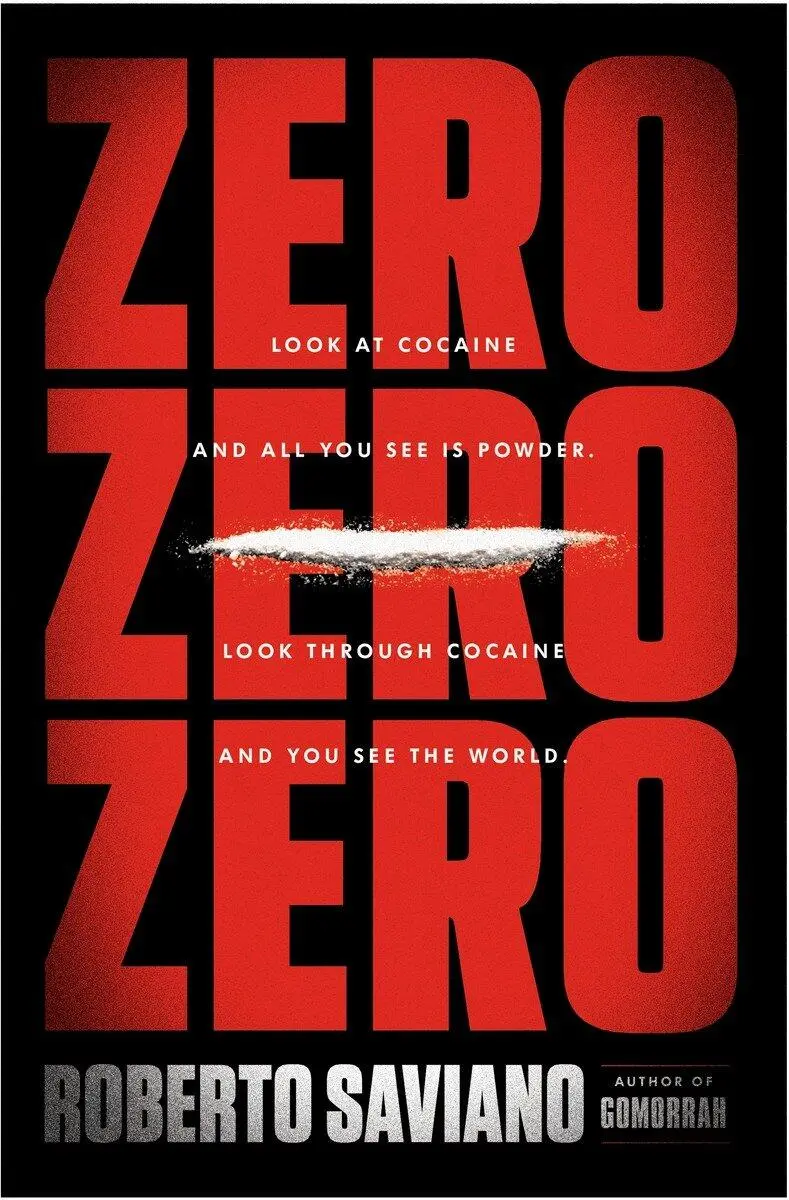
- Название:ZeroZeroZero
- Автор:
- Издательство:Penguin Publishing Group
- Жанр:
- Год:2015
- ISBN:нет данных
- Рейтинг книги:5 / 5. Голосов: 1
-
Избранное:Добавить в избранное
- Отзывы:
-
Ваша оценка:
ZeroZeroZero: краткое содержание, описание и аннотация
Предлагаем к чтению аннотацию, описание, краткое содержание или предисловие (зависит от того, что написал сам автор книги «ZeroZeroZero»). Если вы не нашли необходимую информацию о книге — напишите в комментариях, мы постараемся отыскать её.
Saviano’s
, his explosive account of the Neapolitan mob, the Camorra, was a worldwide publishing sensation. It struck such a nerve with the Camorra that Saviano has lived with twenty-four hour police protection in the shadow of death threats for more than seven years. During this time he has become intimate with law enforcement agencies around the world. Saviano has broadened his perspective to take in the entire global corporate” entity that is the drug trade in cooperation with law enforcement officials, who have fed him information and sources and used him to guide their own thinking and tactics. Saviano has used this extraordinary access to feed his own groundbreaking reportage.
The result is a truly amazing and harrowing synthesis of intimate literary narrative and geopolitical analysis of one of the most powerful dark forces in the global economy. In
, Saviano tracks the shift in the cocaine trade’s axis of power, from Colombia to Mexico, and relates how the Latin American cartels and gangs have forged alliances, first with the Italian crime syndicates, then with the Russians, Africans, and others. On the one hand, he charts an astonishing increase in sophistication and diversification as these criminal entities diversify into many other products and markets. On the other, he reveals the threat of violence to protect and extend power and how the nature of the violence has grown steadily more appalling.
Saviano is a journalist of rare courage and a thinker of impressive intellectual depth and moral imagination, able to see the connections between far-flung phenomena and bind them into a single epic story. Most drug-war narratives feel safely removed from our own lives; Saviano offers no such comfort. As heart racing as it is heady,
is a fusion of a variety of disparate genres into a brilliant new form that can only be called
.
ZeroZeroZero — читать онлайн бесплатно полную книгу (весь текст) целиком
Ниже представлен текст книги, разбитый по страницам. Система сохранения места последней прочитанной страницы, позволяет с удобством читать онлайн бесплатно книгу «ZeroZeroZero», без необходимости каждый раз заново искать на чём Вы остановились. Поставьте закладку, и сможете в любой момент перейти на страницу, на которой закончили чтение.
Интервал:
Закладка:
• • •
So many names to say the same thing: cocaine. Cocaine, which travels from producer to consumer, which goes from leaves to the white powder, which is passed deftly from hand to hand. From chemicals to street life. From the Andean farmer to a pusher who, once he’d explained his products, talked business to me:
“The target. Walk around Milan, Rome, New York, Sydney, and you have to slalom your way among men who are packaged in suits selected by fashion managers — that’s what people who know these things call them — they choose quality fabrics, how many stripes, how much space between them, their initials monogrammed on their fashionable business shirts. One hand in their pocket, the other clutching their iPhone, eyes focused six feet ahead so as not to trip, or step in dog shit. If you don’t get out of their way, they’ll run right into you, but they can’t say ‘excuse me’ or even gesture courteously, because then they’d lose the flow, and everything would go to hell. Eventually you learn to weave around them, like in those old video games where you swing your spaceship around with a touch of the joystick to avoid getting hit by the asteroids that are flying at you. Same thing: You rotate your chest and your shoulders follow, turning sideways, and you slip past, barely brushing the guy’s cashmere jacket, and your gaze lands on his sleeve; he’s missing a button, and he sees that you noticed it and thinks you think he forgot and that he’s not a true gentleman, but I know that an open buttonhole is one of the characteristics of custom-made menswear, the sign that you’re part of an elite. I dodge him and then lengthen my stride, and he keeps walking straight ahead, talking the whole time, and the word I keep hearing is ‘target.’ The target has to be identified, chosen, hit, bombarded, made to surface.”
That’s how the pusher talked to me. He’s sold a lot. And not on some street corner, either. A pusher’s almost never the way you imagine he’ll be. That’s what I keep saying, when I write or when I talk to someone about this stuff: It’s not the way you imagine. Pushers are seismographs of taste. They know how and where to sell. The better the pusher is, the easier he moves up and down the social ladder. There’s no such thing as a pusher for everyone. There’s the pusher who sells on the street, with a monthly paycheck and an assigned zone, who deals to strangers. There’s the pusher who delivers right to your door; all you have to do is text him. There are kid pushers. Nigerians, Slavs, Maghrebs, Latinos. Just as an aristocratic lady would never step foot in a discount store on the outskirts of town, there are pushers for every type of customer, pushers for gentlemen and pushers for down-and-outs, for rich students and day laborers, for wallflowers and extroverts, for space cadets and scaredy-cats.
There are pushers who get their goods from a “base,” which is usually made up of four or five people. Bases are independent cells with strong ties to organized crime, because that’s where the drugs come from. Bases are intermediaries between criminal organizations and street pushers; they’re the ones who supply the stuff already cut, ready for retail, and they’re an insurance of sorts for the organizations: If the base fails or its members get arrested, the next level up doesn’t feel the effects, because those down below don’t know enough about them. The bourgeois pusher, on the other hand, has a direct relationship with an organization affiliate, but he doesn’t get a regular paycheck. He has a sort of deposit account instead. The more he sells, the more he earns. And it’s rare that he ends up with any unsold goods. The bourgeois pusher’s strength lies in the fact that he can create his own personal workforce over time. He uses fake names with his clients, or if he’s already known, he’s selective about who he sells to. When he can he prefers to hire people who have their own circle. The circle is made up of people whose day jobs are something other than dealing: The pusher supplies them, and they use their own contacts to create a regular clientele, usually made up of friends, girlfriends, lovers. The bourgeois pusher’s workers never sell coke to someone new. It’s a layered organization in which the pusher knows only the people closest to him and can never grasp the whole chain. That way, if someone were to talk, only one person would pay. That’s the way it always is in the world of cocaine. You want to know as little as possible.
At the bottom distribution level is the retailer, the one at the train station or on the street corner. He’s like a gas station. He often keeps balls of coke in his mouth, wrapped in plastic or tinfoil. If the police arrive, he swallows them. Some dealers won’t risk having the plastic break and their stomachs becoming a painful sore, so they keep the balls in their pocket. Retailers make their fortunes on weekends, Valentine’s Day, or when the local team wins. The more there is to celebrate, the more they sell. Like wine bars and pubs.
The pusher who taught me how to choose a target thought of himself as a pharmacist rather than a cocaine dealer:
“Every business has its target; the formula for success is in finding the right one, and once you do, you have to unleash all your firepower on it, drop the napalm and swallow up needs and desires, that’s the goal of the modern man who dresses according to the canons of the fashion manager. It’s exhuasting dealing with a fragmented market, where the niches keep multiplying; they come and go in the space of a week, replaced by others that maybe last even less, and you have to anticipate them, prepare your weapons in time; if not, you risk firing your precious napalm on empty territory. I attract my target. Targets, rather — plural — because, even though there’s only one product, the needs are many. So a woman came to see me this morning, she was probably pretty cute years ago, but now she’s all skin and bones, she doesn’t look so healthy; I wouldn’t fuck her even if she paid me; the only signs of life on her are her veins, they bulge out all along her forearms, her calves, her neck, but underneath she’s all flabby; it’s like she has chicken skin. She told me her name is Laura, a fake name, obviously, but she’s got nice, high, round cheekbones that light up her face, I really like cheekbones; they’re the sentinels of the face; they either let you in or repel you, it depends. In the case of Laura, they invite familiarity, and in fact, she told me once that at her gym she heard there’s this quick, easy, and — all things considered — fairly risk-free way to lose weight. It’s true, I said; why go buying those sci-fi gadgets for your abs, or running in the evening, and then eating only protein because some French luminary decided that’s the way it has to be? Laura’s sentinel cheekbones relaxed and she smiled at me. I’ve seen her every week since then, and every time those beautiful cheekbones seem like they’ve been sanded, and now those sweet sentinels of her face are like menacing halberds.
“It was Laura who introduced me to the Connoisseur, one of those snobs with shabby clothes, his Moncler torn and full of burn marks, who when they greet you, even if it’s for the first time, they pull you close, press their right shoulder up against your left, like some kind of tribal salute of belonging, then they pat you on the back, all very cool. He never wanted to tell me his name, not even a fake one, call me ‘friend,’ he says, as if we were in some alleyway in the Bronx. I nearly laugh in his face, but I control myself, and I have to even more when he tells me he wants some Pearl. The Connoisseur’s referring to the most precious blow, 95 percent pure, maybe more: It’s silky to the touch, creamy almost, and so white it shines like a pearl. I’ve never even seen it, some people say it doesn’t exist, others that it’s super rare because it’s still made by hand by a small group of campesinos who use only two tools: time and patience. Time for the leaves to mature and patience to wait for the right moment to harvest them. But it doesn’t end there, because then you have to press everything by hand, package it in virgin oil, no impurities or noxious substances, work it with acetone, ether, and ethanol, never with hydrochloric acid or ammonia; you don’t want to risk damaging the active ingredient. If you do it right — ten days of work, sweat, and swearing — you get that pearly tone that’s so sought after. Of course I have it, I say to the Connoisseur; I don’t even try to steer him toward something more feasible, like Fish Scales; it’s not as pure as Pearl, but it has come my way, and I can say that its shine really does remind you of a freshly caught fish, and I don’t even dream of pushing him toward more crude varieties like Almond-flavored, or toward Stone — even though it is 80 percent pure — and I refuse even to take into consideration variants like Cat’s Piss or Mariposa. Guys like the Connoisseur have granite wills and — luckily — zero expertise; if not, he wouldn’t come back after I palm off some mediocre stuff cut with glass powder on him. It sparkled, he tells me every time, and I nod knowingly; I don’t even have to pretend anymore, it’s so natural now. Obviously I don’t always say yes; I can’t let word get around that you can always get everything from me. I’d risk inflation; I’d risk losing control of my targets, and then someone ends up having a heart attack.”
Читать дальшеИнтервал:
Закладка:
Похожие книги на «ZeroZeroZero»
Представляем Вашему вниманию похожие книги на «ZeroZeroZero» списком для выбора. Мы отобрали схожую по названию и смыслу литературу в надежде предоставить читателям больше вариантов отыскать новые, интересные, ещё непрочитанные произведения.



Обсуждение, отзывы о книге «ZeroZeroZero» и просто собственные мнения читателей. Оставьте ваши комментарии, напишите, что Вы думаете о произведении, его смысле или главных героях. Укажите что конкретно понравилось, а что нет, и почему Вы так считаете.