Roberto Saviano - ZeroZeroZero
Здесь есть возможность читать онлайн «Roberto Saviano - ZeroZeroZero» весь текст электронной книги совершенно бесплатно (целиком полную версию без сокращений). В некоторых случаях можно слушать аудио, скачать через торрент в формате fb2 и присутствует краткое содержание. Год выпуска: 2015, Издательство: Penguin Publishing Group, Жанр: Публицистика, Криминальный детектив, на английском языке. Описание произведения, (предисловие) а так же отзывы посетителей доступны на портале библиотеки ЛибКат.
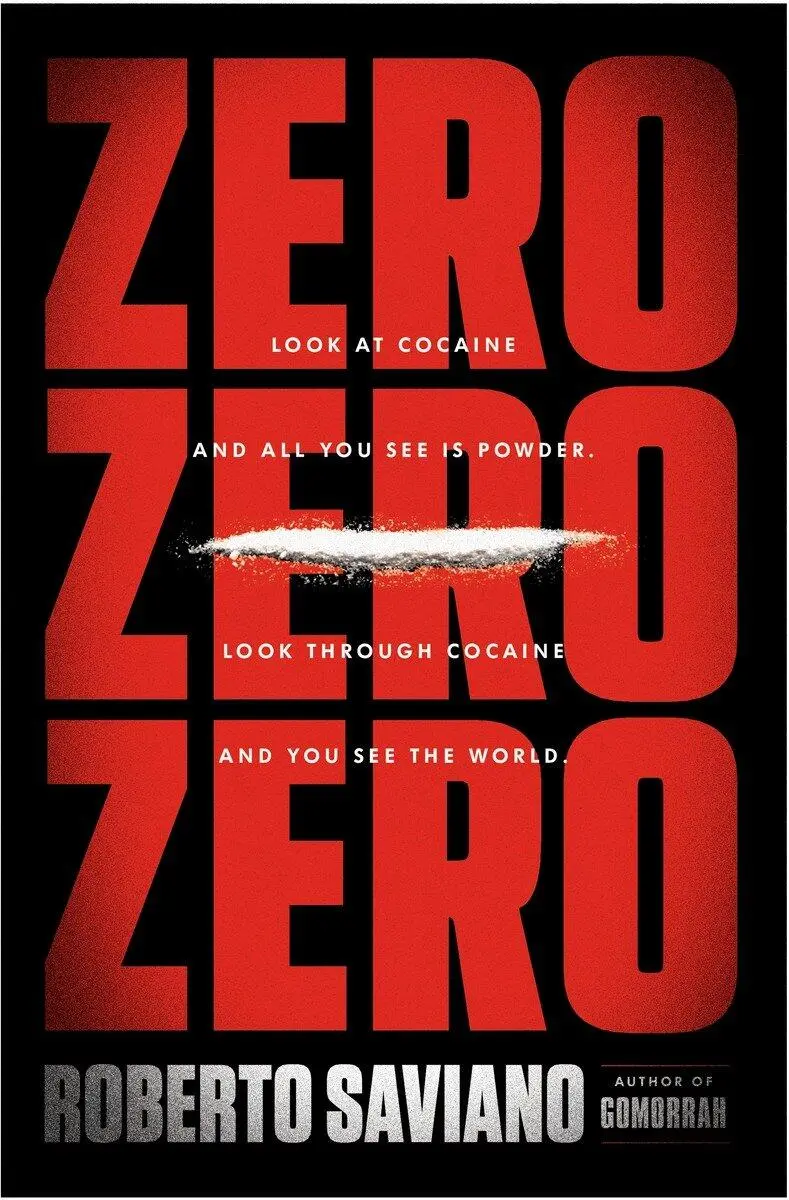
- Название:ZeroZeroZero
- Автор:
- Издательство:Penguin Publishing Group
- Жанр:
- Год:2015
- ISBN:нет данных
- Рейтинг книги:5 / 5. Голосов: 1
-
Избранное:Добавить в избранное
- Отзывы:
-
Ваша оценка:
ZeroZeroZero: краткое содержание, описание и аннотация
Предлагаем к чтению аннотацию, описание, краткое содержание или предисловие (зависит от того, что написал сам автор книги «ZeroZeroZero»). Если вы не нашли необходимую информацию о книге — напишите в комментариях, мы постараемся отыскать её.
Saviano’s
, his explosive account of the Neapolitan mob, the Camorra, was a worldwide publishing sensation. It struck such a nerve with the Camorra that Saviano has lived with twenty-four hour police protection in the shadow of death threats for more than seven years. During this time he has become intimate with law enforcement agencies around the world. Saviano has broadened his perspective to take in the entire global corporate” entity that is the drug trade in cooperation with law enforcement officials, who have fed him information and sources and used him to guide their own thinking and tactics. Saviano has used this extraordinary access to feed his own groundbreaking reportage.
The result is a truly amazing and harrowing synthesis of intimate literary narrative and geopolitical analysis of one of the most powerful dark forces in the global economy. In
, Saviano tracks the shift in the cocaine trade’s axis of power, from Colombia to Mexico, and relates how the Latin American cartels and gangs have forged alliances, first with the Italian crime syndicates, then with the Russians, Africans, and others. On the one hand, he charts an astonishing increase in sophistication and diversification as these criminal entities diversify into many other products and markets. On the other, he reveals the threat of violence to protect and extend power and how the nature of the violence has grown steadily more appalling.
Saviano is a journalist of rare courage and a thinker of impressive intellectual depth and moral imagination, able to see the connections between far-flung phenomena and bind them into a single epic story. Most drug-war narratives feel safely removed from our own lives; Saviano offers no such comfort. As heart racing as it is heady,
is a fusion of a variety of disparate genres into a brilliant new form that can only be called
.
ZeroZeroZero — читать онлайн бесплатно полную книгу (весь текст) целиком
Ниже представлен текст книги, разбитый по страницам. Система сохранения места последней прочитанной страницы, позволяет с удобством читать онлайн бесплатно книгу «ZeroZeroZero», без необходимости каждый раз заново искать на чём Вы остановились. Поставьте закладку, и сможете в любой момент перейти на страницу, на которой закончили чтение.
Интервал:
Закладка:
Cocaine traffic today is managed by a new middle class of mafiosi. They use distribution to gain control of the territory where it is sold. A game of Risk on a planetary scale. On one side are the areas where cocaine is produced, which become fiefdoms where nothing but poverty and violence grow, areas the mafias keep under control by generously doling out charity and alms, which they pass off as rights. No development, only profits. If someone wants to better himself, he demands riches, not rights. Riches that he needs to know how to grab. In this way only one model of success is perpetuated, of which violence is merely a vehicle and a tool. What is established is power. On the other side are countries where you plant your little flags to mark your presence: Italy, England, Russia, China. Everywhere. For the most powerful families coke works as easily as an ATM machine. You need to buy a shopping center? Import some coke, and after a month you’ll have enough money to close the deal. You need to sway an election? Import some coke, and you’ll be ready in a few weeks. Cocaine is the universal answer to the need for liquidity.
5. FEROCITY IS LEARNED
For years I’ve been asking myself what the point is of dealing with shootings and death. Is it really worth it? Why? Are you going to be called in as a consultant? Do a six-week teaching stint in some university, the more prestigious the better? Throw yourself into the battle against evil, believing you are the good? Wear the hero’s crown for a few months? Will you profit if people read what you write? Will they hate you, the people who said these things before you did but were ignored? And what about those who didn’t say them, or said them poorly, will they hate you too? Sometimes I think I’m obsessed. Other times I’m convinced these stories are a way of measuring the truth. Maybe that’s the secret. Not for others. Secret for me. Hidden from myself. Left out of my public pronouncements. Tracking the paths of drug trafficking and money laundering makes you feel you can measure the truth of things, understand the fate of an election, a government’s fall. It’s no longer enough to listen to the official statements. While the world is clearly heading in one direction, everything seems focused on something else, something banal even, superficial. Some government minister’s statement, some tiny, insignificant event, some piece of gossip. But everything is really being decided by something else. This intuition is at the base of every romantic choice. Every journalist, novelist, and director would like to tell things the way they are, the way they really are. To say to his reader or viewer: It’s not how you thought it was, this is how it is. I’m going to open the wound for you, so you can glimpse the ultimate truth. But no one ever succeeds completely. The danger is in believing that reality — that real, pulsating, decisive reality — is completely hidden. If you trip and fall into it, you start thinking everything’s a conspiracy — secret meetings, Masonic lodges, spies. Reporters are full of this sort of idiocy. To square the circle of the world in your own interpretations is the onset of shortsightedness in an eye that thinks it has perfect vision. But it’s not that simple. The complexity lies precisely in not believing that everything is hidden or decided in secret chambers. The world is more interesting than a conspiracy between sects and secret agents. Criminal power is a mixture of many elements.
When you do figure out how to make the story gripping, when you hit on the exact doses of style and truth, when your words finally rise from your chest and begin to resonate, you will be the first to be disgusted by them. The first to hate yourself, with your entire being. And you won’t be the only one. Those who listen will hate you too, the very people who choose to listen, without being coerced, because you make them face this abomination. Because they’ll always feel you’re holding up a mirror to them: Why didn’t I do it? Why didn’t I say it? Why didn’t I understand? It hurts. A wounded animal usually attacks: He’s the one who’s lying, he’s doing it to throw people off, because he’s corrupt, because he wants fame, or money.
Maybe you think that dealing with all this is a way of redeeming the world. Of reestablishing justice. And maybe it is, in part. But maybe you also have to accept the burden of being a tiny superhero without a shred of power. Of being, in the end, a pathetic human being who has overestimated his strength merely because he’s never run up against its limits before. The truth is that there’s really only one reason for deciding to stay inside these stories of drug traffickers, criminal entrepreneurs, massacres. To know that what you find out won’t make you feel better. Yet you keep trying. And you start to develop a disdain for things. By things I mean objects, stuff. You come to know how things are made, where they come from, how they all end up.
And even if you feel bad, you convince yourself that you can really understand this world only if you decide to stay inside these stories. You may be good at what you do, but that doesn’t necessarily mean you want your calling in life to be to stay inside these stories forever. Being inside means they consume you, compel you, corrode your daily life. Being inside means you carry city maps in your head, maps marked with construction sites, open-air drug markets, places where pacts were sealed and where “excellent” homicides were carried out. You’re not inside them just because you’re on the street or you infiltrate a clan for six years, like FBI undercover agent Joe Pistone. You’re inside because these stories are what give meaning to your being in the world. I decided to stay inside them years ago. Not only because I grew up in a place where the clans decided everything and I’d seen those opposed to their power die, not only because defamation dissolves all desire to oppose criminal power. Being inside cocaine trafficking was the only way I could fully understand things. To look at human weakness, the physiology of power, the frailty of relationships, the inconsistency of bonds, the appalling power of money and ferocity. The absolute impotence of all those teachings about beauty and justice I’d been raised on. I realized that the axis around which everything turns is cocaine. There was only one name for the wound.
• • •
“The Serbs. Precise, ruthless, meticulous torturers.”
“Bullshit. The Chechens. They have such sharp knives, you bleed to death before you even know you’ve been cut.”
“Amateurs compared to the Liberians. They rip your heart out when you’re still alive and eat it.”
It’s one of the oldest games in the world. The ranking of cruelty, the top ten of Earth’s most ferocious people.
“What about the Albanians? They’re not satisfied just eliminating you; they wipe out your future generations as well. They cancel everything out. Forever.”
“The Romanians put a bag over your head, tie your wrists to your neck, and let time do its work.”
“The Croatians nail your feet down, and all you can do is pray that death comes as soon as possible.”
The escalation of blood, terror, and sadism goes on for quite a while, eventually getting to the inevitable list of special forces: France’s Foreign Legion, Spain’s El Tercio, Brazil’s BOPE.
I’m sitting at a round table. One by one the men around me, all soldiers, share their experiences and catalog the cultural distinctions of the people they know best, having been on peacekeeping missions in various territories. It’s a ritual, this sadistic and slightly racist game, but like all rituals, it’s necessary. It’s the only way they have of saying that the worst is over, they survived, it’s real life from here on in. A better life.
Читать дальшеИнтервал:
Закладка:
Похожие книги на «ZeroZeroZero»
Представляем Вашему вниманию похожие книги на «ZeroZeroZero» списком для выбора. Мы отобрали схожую по названию и смыслу литературу в надежде предоставить читателям больше вариантов отыскать новые, интересные, ещё непрочитанные произведения.


Обсуждение, отзывы о книге «ZeroZeroZero» и просто собственные мнения читателей. Оставьте ваши комментарии, напишите, что Вы думаете о произведении, его смысле или главных героях. Укажите что конкретно понравилось, а что нет, и почему Вы так считаете.