Roberto Saviano - ZeroZeroZero
Здесь есть возможность читать онлайн «Roberto Saviano - ZeroZeroZero» весь текст электронной книги совершенно бесплатно (целиком полную версию без сокращений). В некоторых случаях можно слушать аудио, скачать через торрент в формате fb2 и присутствует краткое содержание. Год выпуска: 2015, Издательство: Penguin Publishing Group, Жанр: Публицистика, Криминальный детектив, на английском языке. Описание произведения, (предисловие) а так же отзывы посетителей доступны на портале библиотеки ЛибКат.
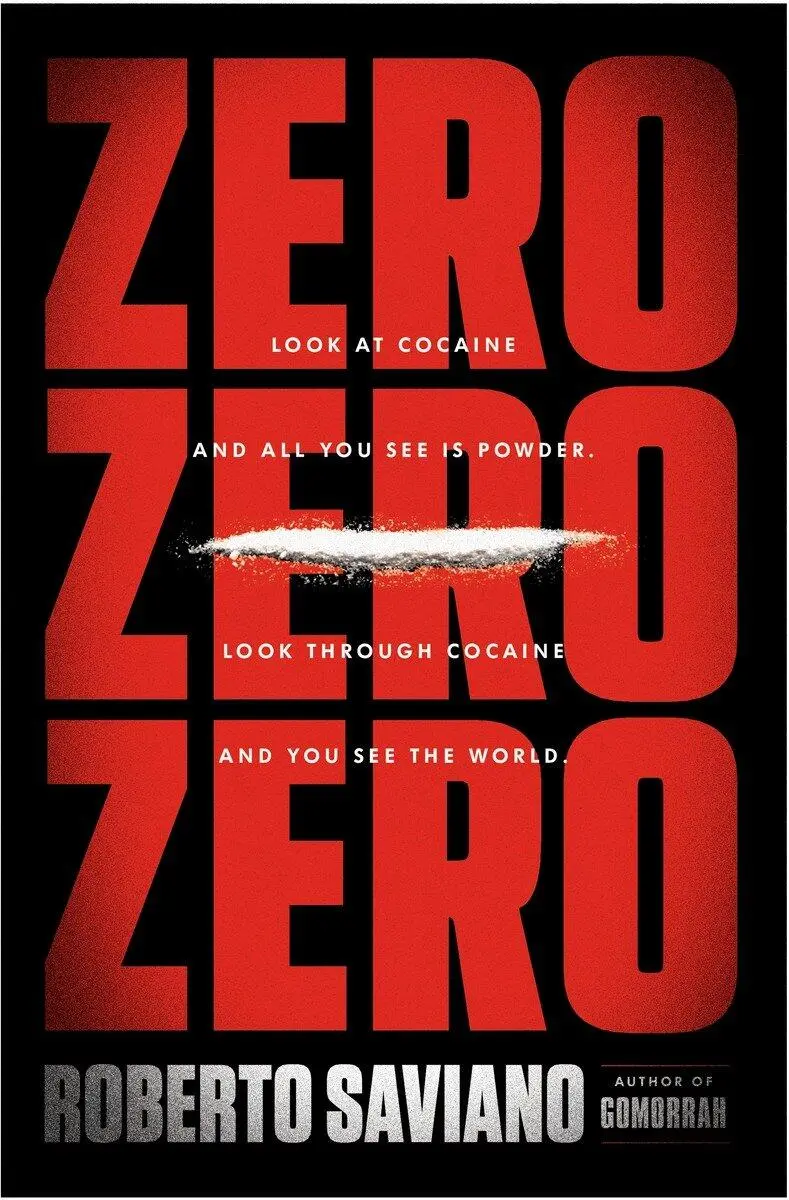
- Название:ZeroZeroZero
- Автор:
- Издательство:Penguin Publishing Group
- Жанр:
- Год:2015
- ISBN:нет данных
- Рейтинг книги:5 / 5. Голосов: 1
-
Избранное:Добавить в избранное
- Отзывы:
-
Ваша оценка:
ZeroZeroZero: краткое содержание, описание и аннотация
Предлагаем к чтению аннотацию, описание, краткое содержание или предисловие (зависит от того, что написал сам автор книги «ZeroZeroZero»). Если вы не нашли необходимую информацию о книге — напишите в комментариях, мы постараемся отыскать её.
Saviano’s
, his explosive account of the Neapolitan mob, the Camorra, was a worldwide publishing sensation. It struck such a nerve with the Camorra that Saviano has lived with twenty-four hour police protection in the shadow of death threats for more than seven years. During this time he has become intimate with law enforcement agencies around the world. Saviano has broadened his perspective to take in the entire global corporate” entity that is the drug trade in cooperation with law enforcement officials, who have fed him information and sources and used him to guide their own thinking and tactics. Saviano has used this extraordinary access to feed his own groundbreaking reportage.
The result is a truly amazing and harrowing synthesis of intimate literary narrative and geopolitical analysis of one of the most powerful dark forces in the global economy. In
, Saviano tracks the shift in the cocaine trade’s axis of power, from Colombia to Mexico, and relates how the Latin American cartels and gangs have forged alliances, first with the Italian crime syndicates, then with the Russians, Africans, and others. On the one hand, he charts an astonishing increase in sophistication and diversification as these criminal entities diversify into many other products and markets. On the other, he reveals the threat of violence to protect and extend power and how the nature of the violence has grown steadily more appalling.
Saviano is a journalist of rare courage and a thinker of impressive intellectual depth and moral imagination, able to see the connections between far-flung phenomena and bind them into a single epic story. Most drug-war narratives feel safely removed from our own lives; Saviano offers no such comfort. As heart racing as it is heady,
is a fusion of a variety of disparate genres into a brilliant new form that can only be called
.
ZeroZeroZero — читать онлайн бесплатно полную книгу (весь текст) целиком
Ниже представлен текст книги, разбитый по страницам. Система сохранения места последней прочитанной страницы, позволяет с удобством читать онлайн бесплатно книгу «ZeroZeroZero», без необходимости каждый раз заново искать на чём Вы остановились. Поставьте закладку, и сможете в любой момент перейти на страницу, на которой закончили чтение.
Интервал:
Закладка:
Blood calls for blood. It’s not just an expression. The history of Mexican cartels shows that all attempts to fight violence with violence have only led to more killings. Under President Vicente Fox, from 2000 to 2006, no decisive initiatives were taken against drug trafficking. The troops sent to the U.S. border to hinder cartel operations were insufficient and poorly equipped. The turning point came on December 11, 2006. President Felipe Calderón, who had just installed himself in Los Pinos, the Mexican White House, sent 6,500 soldiers to the state of Michoacán. It was a historic date, destined to end up in Mexican schoolbooks: a declaration of war between two opposing states, Mexico and the “narco-state.” The narco-state has an unlimited appetite, and Calderón knew it, which is why he launched the war on drugs. He couldn’t let a parasite state dictate the law. More than 45,000 soldiers have been involved in the war, in addition to the regular local and federal police forces. But blood calls for blood, and the threatened cartels have responded with worsening brutality. To judge from the numbers, Calderón’s war has not been won: The Mexican government’s official drug war bulletin of January 11, 2012, noted 47,515 people killed by violence associated with organized crime between December 11, 2006, and September 30, 2011. What’s worse is that the number of deaths increased exponentially: In 2007 there were 2,826 deaths connected to drug trafficking; in 2008 the number rose to 6,838; in 2009 it reached 9,614; in 2010, 15,273; and by the end of September 2011 it had already reached 12,903, with three months still to go before the end of the year. The new minister of the interior under Peña Nieto, Miguel Ángel Osorio Chong, declared in mid-February 2013 that Mexican drug war deaths would reach around 70,000 during Felipe Calderón’s six-year term, adding that it is impossible to provide a precise official figure because “at the end of the previous legislature they stopped keeping official accounts” of drug war victims, just as there is no register of missing persons or unidentified bodies at the morgue. But some hold that the number of deaths in this dirty war is much higher. Death accounting is an imprecise science, and a few canceled lives always slip through the cracks. How many victims were dumped in narcofosas , or mass graves? How many bodies dissolved in acid? How many cadavers burned, and thus missing forever? Politicians at every level — local, regional, and national — are victims: In the first six years of the Mexican drug war, thirty-one Mexican mayors were killed, thirteen of them in 2010 alone. Honest people are now afraid to run for office; they know that sooner or later the cartels will arrive and try to replace them with a more welcome candidate. Amnesty International published a report in May 2014 stating that the number of victims between December 2006 and November 2012 (that is, during Calderon’s six-year term) was 136,100 (and not the 70,000 official Mexican sources say). Associations such as the Movement for Peace with Justice and Dignity, founded by poet and activist Javier Sicilia after his son was killed by narcos, maintain that the total is much higher.
Numbers and figures. All I see is blood and money.
COKE #3
~ ~ ~
Take a rubber band and stretch it. At first there’s almost no resistance. You can make it longer, no problem. Until it reaches its full extension, beyond which the elastic will break. Today’s economy works like your elastic: All merchandise has to submit to the rules of the elastic. All but one. Cocaine. No market in the world brings in more revenue than the cocaine market. No financial investment in the world gives better returns than cocaine. Not even the record upward trends on the stock exchange are comparable to the “interest” coke offers. In 2012, the year the iPhone 5 and the iPad mini were launched, Apple became the most valuable company in terms of market capitalization ever listed on the New York Stock Exchange. Apple shares shot up by 67 percent in just one year. If you had invested €1,000 in Apple stock in the beginning of 2012, you would have €1,670 in a year. Not bad. But if you had invested €1,000 in cocaine at the beginning of 2012, after a year you would have €182,000.
Cocaine is a safe asset. Cocaine is an anticyclical asset. Cocaine is the asset that fears neither resource shortages nor market inflation. There are plenty of corners of the planet where people live without hospitals, without the web, without running water. But not without cocaine. According to the UN, in 2009, 21 tons of it were consumed in Africa, 14 in Asia, 2 in Oceania. More than a 101 in Latin America and the Caribbean. Everyone wants it, everyone does it, everyone who starts using it needs it. The costs are minimal; you can place it immediately, and the profit margin is extremely high. Cocaine is easier to sell than gold, and the revenue from it can exceed that of petroleum. Gold requires mediators and bargaining time; petroleum needs oil wells, refineries, pipelines. You could discover an oil well in your backyard, or inherit a coltan mine and supply all the cell phones in the world, but you wouldn’t go from nothing to villas on the Costa Smeralda on Sardinia as quickly as you would with cocaine. From the streets to the stars with a nuts-and-bolts factory? From poverty to prosperity selling cars? A hundred years ago maybe. Today even the big multinationals that produce primary assets, or the last remaining colossal car manufacturers, all they can do is hang in there. Lower costs. Beat the far reaches of the planet in an attempt to increase exports, which is proving to be less and less feasible.
The most reckless licit investment, the most forward-looking speculation, the fastest movements of vast sums of money — which affect living conditions on entire continents — none can compare with cocaine’s multiplication of value. Whoever bets on cocaine accumulates in just a few years the sort of wealth that it takes big holding companies decades to achieve through investments and financial speculation. If an entrepreneurial group manages to get its hands on coke, it holds a form of power impossible to achieve in any other way. Which is why, whenever coke is traded, there is always a violent, ferocious clash. With cocaine there’s no mediation. It’s all or nothing. And all doesn’t last long. When you traffic in cocaine, you can’t have unions and industrial plans, government assistance or rules subject to court appeal. If you’re the strongest, the cleverest, the most organized, the most armed, you win. The more you stretch the elastic, the more you assert yourself on the market — that’s true for any business. Only the law can break the elastic. But even when the law traces the criminal roots and tries to eradicate them, it probably won’t be able to track down all the legal activities, real estate investments, and bank accounts acquired thanks to the extraordinary tautness white powder allows.
Cocaine is a complicated asset. Behind cocaine’s candor hides millions of people’s work. But only those at the right point on the chain of production are getting rich. The Rockefellers of cocaine know how their product is created, every step. They know that in June you sow and in August you reap. That the sowing must be done with seeds from plants at least three years old, and that harvest is three times a year. That the harvested leaves have to be laid out to dry within twenty-four hours; otherwise they’re ruined and you can’t sell them. That the next step is to dig two holes in the ground. In the first, along with the dried leaves, you have to put in potassium carbonate and kerosene. That you have to pound this mix really well, so as to obtain a sort of greenish dishwater — cocaine carbonate — which, once filtered, is transferred to the second hole. That the next ingredient is concentrated sulfuric acid. That is how you get cocaine sulfate, the base paste, an off-white paste that then needs to be dried. That the final steps call for acetone, hydrochloric acid, and pure alcohol. That you have to filter it over and over, and then let it dry again. They know that’s how you obtain cocaine hydrochloride, commonly known as cocaine. The Rockefellers of cocaine know that to obtain more or less half a kilo of pure cocaine, you need 300 kilos of leaves and a handful of full-time workers. The cocaine entrepreneurs know all this, just as any company head would. But more than anything, they know that the majority of the peasants, dealers, and transporters who have found jobs that pay a little better than those they could hope to get somewhere else still have both feet firmly planted in poverty. It’s unskilled labor, a sea of interchangeable subjects, that perpetuates a system of exploitation of the many and enrichment of a few. Those few at the top of the heap are the ones who had the foresight to realize that, in cocaine’s long journey from the leaves of Colombia to the nostrils of the casual consumer, the real money is made through sales, resale, and price management. Because if it’s true that a kilo of cocaine in Colombia is sold for $1,500, in Mexico for $12,000 to $16,000, in the United States for $27,000, in Spain for $45,000, in Holland for $47,000, in Italy for $54,000, and in the UK for $77,000; if it’s true that the price per gram varies from $61 in Portugal to $166 in Luxembourg, going for $80 in France, $87 in Germany, $96 in Switzerland, and $97 in Ireland; if it’s true that on average 1 kilo of pure cocaine is cut to make 3 kilos that are then sold in single-gram doses; if all this is true, it’s also true that whoever controls the entire chain of production is one of the richest men in the world.
Читать дальшеИнтервал:
Закладка:
Похожие книги на «ZeroZeroZero»
Представляем Вашему вниманию похожие книги на «ZeroZeroZero» списком для выбора. Мы отобрали схожую по названию и смыслу литературу в надежде предоставить читателям больше вариантов отыскать новые, интересные, ещё непрочитанные произведения.

Обсуждение, отзывы о книге «ZeroZeroZero» и просто собственные мнения читателей. Оставьте ваши комментарии, напишите, что Вы думаете о произведении, его смысле или главных героях. Укажите что конкретно понравилось, а что нет, и почему Вы так считаете.