Roberto Saviano - ZeroZeroZero
Здесь есть возможность читать онлайн «Roberto Saviano - ZeroZeroZero» весь текст электронной книги совершенно бесплатно (целиком полную версию без сокращений). В некоторых случаях можно слушать аудио, скачать через торрент в формате fb2 и присутствует краткое содержание. Год выпуска: 2015, Издательство: Penguin Publishing Group, Жанр: Публицистика, Криминальный детектив, на английском языке. Описание произведения, (предисловие) а так же отзывы посетителей доступны на портале библиотеки ЛибКат.
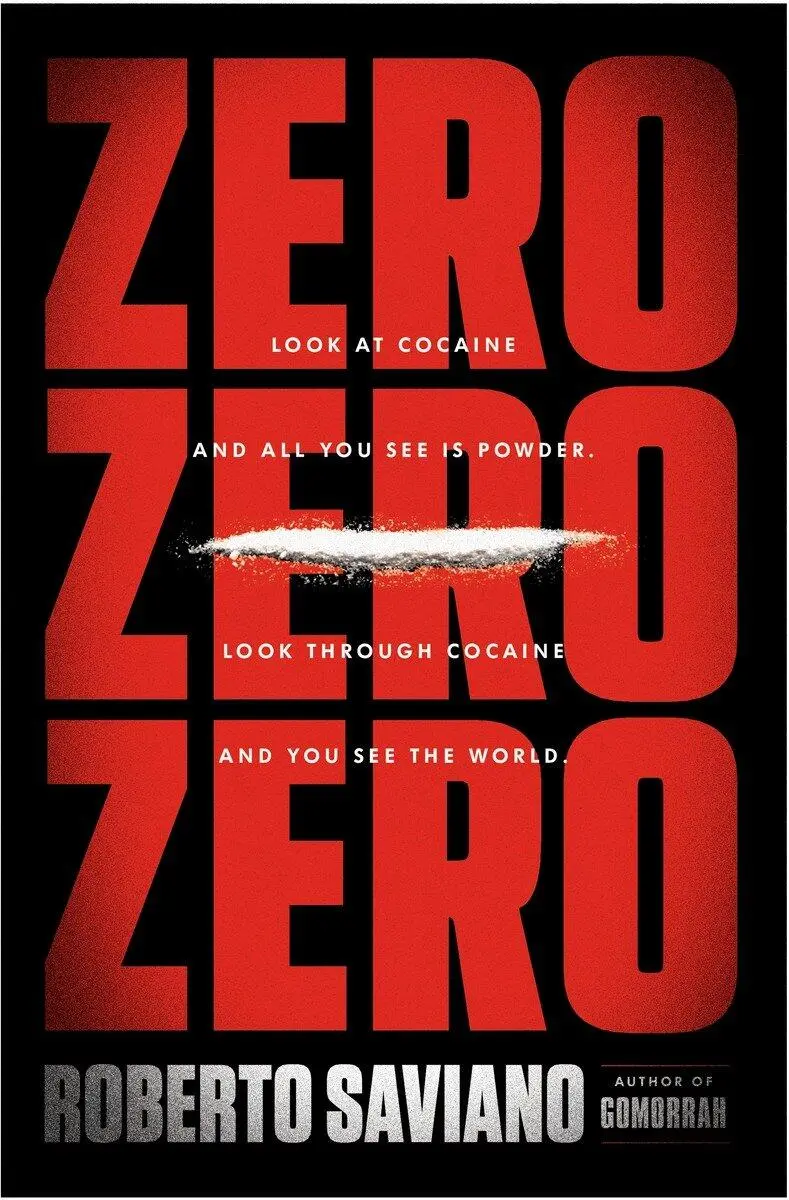
- Название:ZeroZeroZero
- Автор:
- Издательство:Penguin Publishing Group
- Жанр:
- Год:2015
- ISBN:нет данных
- Рейтинг книги:5 / 5. Голосов: 1
-
Избранное:Добавить в избранное
- Отзывы:
-
Ваша оценка:
ZeroZeroZero: краткое содержание, описание и аннотация
Предлагаем к чтению аннотацию, описание, краткое содержание или предисловие (зависит от того, что написал сам автор книги «ZeroZeroZero»). Если вы не нашли необходимую информацию о книге — напишите в комментариях, мы постараемся отыскать её.
Saviano’s
, his explosive account of the Neapolitan mob, the Camorra, was a worldwide publishing sensation. It struck such a nerve with the Camorra that Saviano has lived with twenty-four hour police protection in the shadow of death threats for more than seven years. During this time he has become intimate with law enforcement agencies around the world. Saviano has broadened his perspective to take in the entire global corporate” entity that is the drug trade in cooperation with law enforcement officials, who have fed him information and sources and used him to guide their own thinking and tactics. Saviano has used this extraordinary access to feed his own groundbreaking reportage.
The result is a truly amazing and harrowing synthesis of intimate literary narrative and geopolitical analysis of one of the most powerful dark forces in the global economy. In
, Saviano tracks the shift in the cocaine trade’s axis of power, from Colombia to Mexico, and relates how the Latin American cartels and gangs have forged alliances, first with the Italian crime syndicates, then with the Russians, Africans, and others. On the one hand, he charts an astonishing increase in sophistication and diversification as these criminal entities diversify into many other products and markets. On the other, he reveals the threat of violence to protect and extend power and how the nature of the violence has grown steadily more appalling.
Saviano is a journalist of rare courage and a thinker of impressive intellectual depth and moral imagination, able to see the connections between far-flung phenomena and bind them into a single epic story. Most drug-war narratives feel safely removed from our own lives; Saviano offers no such comfort. As heart racing as it is heady,
is a fusion of a variety of disparate genres into a brilliant new form that can only be called
.
ZeroZeroZero — читать онлайн бесплатно полную книгу (весь текст) целиком
Ниже представлен текст книги, разбитый по страницам. Система сохранения места последней прочитанной страницы, позволяет с удобством читать онлайн бесплатно книгу «ZeroZeroZero», без необходимости каждый раз заново искать на чём Вы остановились. Поставьте закладку, и сможете в любой момент перейти на страницу, на которой закончили чтение.
Интервал:
Закладка:
I keep quiet. Like an anthropologist I try to interfere as little as possible, so that the ritual will unfold without any hitches. The guys’ faces are serious. When their turn comes to talk, they all avoid looking at the guy across the table or the one who just finished talking. Each one tells his own story as if he were in an empty room talking to himself.
I’ve heard dozens of these classifications over the years, in meetings, conferences, dinners, over a plate of pasta, or in court. Usually they’re just lists of acts of increasingly inhuman brutality, but as these episodes gradually accumulated in my mind, a common denominator surfaced, a cultural element that recurred with stubborn insistence. Cruelty is awarded a place of honor in the genetic patrimony of a people. Making the mistake of equating acts of ferocity or war with an entire population, drafting lists of this sort becomes the equivalent of showing off one’s sculpted muscles after endless hours in the gym.
Ferocity is learned. You’re not born with it. As much as one may be born with certain inclinations, or have inherited rancor and violence from his family, ferocity is taught, it is learned. Ferocity is passed down from teacher to pupil. The impulse isn’t enough; it has to be channeled and trained. You teach a body to empty out its soul, even if you don’t believe in the soul, even if you think it’s religious nonsense, a flight of fancy, even if for you it’s all muscle fibers and nerves and veins and lactic acid. Yet something’s there. Otherwise, how do you explain the brake that, right at the last minute, keeps you from going all the way? Conscience. Soul. It has a lot of names, but regardless of what you call it, you can compromise it. It’s convenient to think that ferocity is inherent to the human condition, handy for anyone who wants to cleanse his conscience without first coming to terms with things.
When one soldier finishes his story, the guy next to him starts immediately. Everyone seems to agree that some populations just have that impulse, it’s in their blood, there’s no way around it, we’re born with it. A soldier to my right seems particularly eager for his turn to speak. He fidgets in his plastic chair, making it squeak slightly. He’s obviously not some undisciplined novice: His long beard suits his face, and the insignia on his uniform make it clear that he’s faced quite a few dangerous situations. He shakes his head. I think I even glimpse a scornful smile on his face. It’s distracting, so now I’m eager for his turn too. I don’t have to wait long, because halfway through a graphic description of someone’s nails being removed by some secret service in Eastern Europe, the man silences the discussion.
“You haven’t understood a damn thing. You don’t know what the fuck you’re talking about. All you do is read the tabloids, watch the eight o’clock news; you don’t know shit.”
Then he rummages in his pants pockets — military fatigues — and takes out a smartphone, scrolls his finger nervously down the screen until a map appears. He zooms in, blows it up, zooms in more, and finally shows the others a slice of Earth. “Here, these guys are the worst.” His finger points to a place in Central America. Guatemala.
“Guatemala?”
The veteran utters just one word, unfamiliar to most of them: “Kaibil.”
I’d heard that name in depositions from the 1970s, but no one remembered it anymore.
“Eight weeks,” the bearded soldier starts up again. “Eight weeks and everything human about a human being is gone. The Kaibiles have a way of annulling one’s conscience. In two months they can extract from a human’s body everything that distinguishes him from a beast, what allows him to tell good from evil, to know moderation. They could turn Saint Francis into a killer in eight weeks, capable of biting animals to death, of drinking piss to survive and eliminating masses of people without worrying how old they are. All it takes is eight weeks.”
Silence. I’ve just witnessed a heresy, the paradigm of innate savagery has been shot down. I have to meet a Kaibil. I start reading. I learn that the Kaibiles are the Guatemalan army’s elite counterinsurgency force. They were formed in 1974, when the Commando School, which would later become the Kaibil training center for special operations, was established. A civil war was raging in Guatemala at the time, and government and paramilitary forces, backed by the United States, had to face first disorganized guerrilla fighters and then the rebel group Unidad Revolucionaria Nacional Guatemalteca, or Guatemalan National Revolutionary Unity. A relentless struggle. Students, workers, professionals, opposing party politicians — anybody and everybody — were caught in the Kaibiles’ net. Mayan villages were razed to the ground, peasants slaughtered, their bodies left to rot. In 1996, after thirty-six years and over 200,000 deaths, 36,000 desaparecidos, and 626 confirmed massacres, the civil war in Guatemala finally ended. A peace treaty was signed. The first president after the war, Álvaro Arzú, decided, at the request of the United States, to transform Guatemala’s counterrevolutionary army, considered to be the best anti-insurgency force in Latin America, into an efficient weapon against drug trafficking. On October 1, 2003, a counterterrorism platoon of Kaibil special forces was officially created.
By their own definition, Kaibiles are “killing machines.” They are put through gruesome tests, their courage challenged constantly, day after day, horror after horror. Drinking the blood of an animal he has just killed and eaten raw makes a Kaibil grow stronger. Guatemala’s Historical Clarification Commission has been taking an interest in these practices and drafted a document entitled “Memory of Silence.” It states that 93 percent of documented crimes in Guatemala in the thirty-six years of civil war were committed by law enforcement or paramilitary groups, in particular the Patrullas de Autodefensa Civil and the Kaibil special forces. The report also states that Kaibiles committed acts of genocide.
One of the most brutal slaughters took place in Las Dos Erres, a village in the department of Petén, which was razed to the ground. On December 6, 1982 forty Kaibiles entered the village to take back nineteen rifles lost in a previous guerrilla ambush. No one was spared: They killed men, women, and children; raped young girls; kicked and beat pregnant women with their rifle butts, jumping on their stomachs until they aborted; threw live children into wells or beat them to death with clubs, even buried some alive. The youngest were smashed against walls or trees. The bodies were thrown into wells or left to rot in the fields. There is talk of more than 250 deaths: 201 deaths have been documented, 70 of them children less than seven years old. When they left the village the soldiers took with them two girls, ages fourteen and sixteen. They made them dress as soldiers and held them for three days, raping them repeatedly. When they got tired of them, they strangled them.
• • •
It’s not hard to meet a Kaibil, as it turns out. They are proud of who they are. After I heard that soldier talk I started asking around, looking to meet a Kaibil fighter. I was directed first to a household servant who works for a Milanese entrepreneur’s family. He’s pleasant; we arrange a time and meet on the street.
He tells me he used to be a journalist; he keeps copies of some of his articles in his wallet. He rereads them every now and then, or maybe just saves them as proof of his former life. He knows a Kaibil.
“I know him. It’s hard for a Kaibil to become an ex-Kaibil, but this one has done some not good things.”
He doesn’t want to explain what those not good things are.
“You won’t believe a word he tells you. I don’t believe him either, because if what he says is true, I wouldn’t be able to sleep….”
Читать дальшеИнтервал:
Закладка:
Похожие книги на «ZeroZeroZero»
Представляем Вашему вниманию похожие книги на «ZeroZeroZero» списком для выбора. Мы отобрали схожую по названию и смыслу литературу в надежде предоставить читателям больше вариантов отыскать новые, интересные, ещё непрочитанные произведения.








Обсуждение, отзывы о книге «ZeroZeroZero» и просто собственные мнения читателей. Оставьте ваши комментарии, напишите, что Вы думаете о произведении, его смысле или главных героях. Укажите что конкретно понравилось, а что нет, и почему Вы так считаете.