John Nichol - Tornado Down
Здесь есть возможность читать онлайн «John Nichol - Tornado Down» весь текст электронной книги совершенно бесплатно (целиком полную версию без сокращений). В некоторых случаях можно слушать аудио, скачать через торрент в формате fb2 и присутствует краткое содержание. Город: London, Год выпуска: 2008, ISBN: 2008, Издательство: Penguin Adult, Жанр: nonf_military, Биографии и Мемуары, на английском языке. Описание произведения, (предисловие) а так же отзывы посетителей доступны на портале библиотеки ЛибКат.
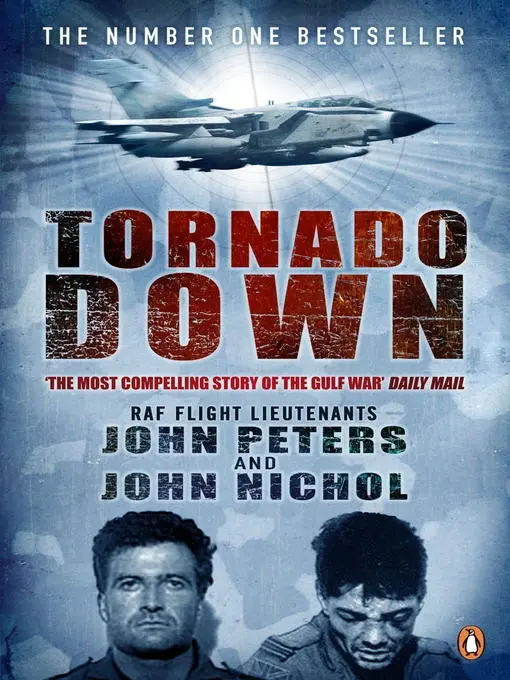
- Название:Tornado Down
- Автор:
- Издательство:Penguin Adult
- Жанр:
- Год:2008
- Город:London
- ISBN:978-0-14-193771-7
- Рейтинг книги:5 / 5. Голосов: 1
-
Избранное:Добавить в избранное
- Отзывы:
-
Ваша оценка:
Tornado Down: краткое содержание, описание и аннотация
Предлагаем к чтению аннотацию, описание, краткое содержание или предисловие (зависит от того, что написал сам автор книги «Tornado Down»). Если вы не нашли необходимую информацию о книге — напишите в комментариях, мы постараемся отыскать её.
In
, John Peters and John Nichol tell the incredible story of their part in the war against Saddam Hussien’s regime. It is a brave and shocking and totally honest story: a story about war and its effects on the hearts and minds of men.
Tornado Down — читать онлайн бесплатно полную книгу (весь текст) целиком
Ниже представлен текст книги, разбитый по страницам. Система сохранения места последней прочитанной страницы, позволяет с удобством читать онлайн бесплатно книгу «Tornado Down», без необходимости каждый раз заново искать на чём Вы остановились. Поставьте закладку, и сможете в любой момент перейти на страницу, на которой закончили чтение.
Интервал:
Закладка:
There had been a nagging fear in my mind that once they went down, they might have gone through with that suicide pact. I’d also worried that they might have got separated, or one of them been badly injured and had to be abandoned by the other: all sorts of things went through my mind. At least now I knew they had both survived the crash.
But I could see they were frightened, that was the terrible thing. John was the only one sitting down, and he was slumped right over to one side, which really upset me. It looked as if his ribs had been broken. Tom King, the British Defence Secretary, said categorically that he suspected torture and coercion had been used to make the downed flyers speak. The idea of torture was there all the time, but I’d have gone mad if I’d allowed myself to dwell on it. Once people had seen John on television, they’d say to me: ‘Well at least now you know he’s alive.’ But that was just what we didn’t know. It seemed very difficult to get over to people the idea that the Iraqis could have forced them to make that broadcast, and then simply taken the boys out and shot them.
John Nichol: When they took me back into the corridor after making the TV broadcasts, I realised I was with a whole batch of other captured flyers. There was a comforting feeling of unity. Through the bottom edge of my blindfold I could just make out a pair of standard-issue US flying-boots. Every now and then they would come along and check names. I could hear Guy Hunter, on my left; Guy turned out to be a US Marines Warrant Officer, co-pilot in an OV-10 Bronco spotter plane. He was a veteran of several combat tours in Vietnam. His pilot, Lieutenant Colonel Cliff Acree, USN, was shot down with him. Anybody who flies the unarmed little two-seater Bronco, which hangs around low over enemy lines, spotting and marking targets, has the respect of every other military flier –full stop. It has to be one of the world’s most dangerous jobs. Then I heard Jeff Zaun again, the American pilot from the USS Saratoga; I could hear Dave Wadding-ton, a Tornado pilot from 27 Squadron, JP, and other people on down the line.
We were still handcuffed, blindfolded, the rifle butts resting on our backs, with the occasional tap on the skull to keep our heads low. They brought tea along for us, hot and sweet, in a glass jam jar. This was amazing. You suddenly realised with a rush of saliva that you had not eaten or drunk anything for about forty-eight hours. They offered some to Jeff Zaun.
‘Do you want tea?’
‘No, Sir,’ he replied emphatically, in that polite tone Americans reserve for something they detest. Nonplussed, the Iraqi officer stepped back. How could this prisoner who had had no food or drink for two days refuse hot, sweet tea?
‘Why do you not want tea? It is OK, there is nothing wrong with it. Look, I will drink some.’
‘No, Sir. I cannot drink tea. It’s bad for you. It has caffeine in it.’
The Iraqis must have realised then that there was no way they were going to win.
Later that evening, Major Jeff Tice, an American F-16 pilot, was brought down to join our group. He was dumped next to me. Over and over, he was repeating ‘Fucking hell, fucking hell, fucking hell,’ his voice thick and slurred, as though his jaw was broken. They brought some bread along. They asked him if he wanted anything to eat; he refused. He just kept saying, ‘Shit, shit, my teeth, my teeth.’
‘What have they done to you?’ I asked.
‘They’ve knocked my teeth out, they’ve knocked my teeth out,’ he replied thickly. What they had done was wrap a bare electric cable round his neck and ears and plug it into a car battery. It had blown some of the fillings in his teeth out, and an eardrum in.
The guards went away. Not speaking to anybody in particular, more to himself, he kept repeating, ‘I broke too soon, I broke too soon.’
I said, ‘What’s your name?’
‘Jeff.’
I said, ‘Jeff, don’t feel bad, everybody’s done it.’
But he was aggressively pissed off with himself; he had moved right in on himself, he just kept repeating, ‘You stupid bastard, you stupid bastard,’ over and over again. He was a brave man: he had travelled further down the road to hell than the rest of us, and yet he was the one who was the most upset with himself.
John Peters: Still in the corridor, in the night, the guards returned. Having kicked me awake, one of them started fumbling with my trouser flies, tugging at the zipper. I was very quickly awake, struggling. They pinned me down to the floor. They opened my clothes up, pulled them down, exposing the genitals to full view. Panic. Sheer bloody panic. ‘Shit, shit, shit!’ Images of electric batteries clipped to my testicles, cattle prods up the anus. One of them had a red felt pen. He lifted up my penis. My mind was racing. ‘What the…? What is he doing? What’s going on here? Why is he drawing on my dick with a red felt pen? He is marking me; they are going to cut along the dotted line.’ But the guards moved away, muttering, to the next man up the corridor. Ten minutes after this, I was still shaking, quivering from head to foot, really scared half to death, worse than when they were beating me.
Finally, when I had calmed down a bit, it dawned on me. They were checking to see who was Jewish.
Helen Peters: Hype springs eternal in the tabloid press. Although I was luckily beyond direct reach of the newspapers, inside the station fence, they printed all kinds of rubbish anyway. One example of this was on the Sunday before the boys were shown on TV. The Mail on Sunday had the audacity to print in one of its columns that Helen Peters had been desperately trying to contact the newspaper, but had been prevented from doing so by the RAF, ‘in case she gave away information that would be of use to the Iraqis’. Nothing, needless to say, could have been farther from the truth. I had not spoken to the Mail on Sunday or to any other newspaper. The RAF, as it happened, took a pretty sanguine view of the whole thing – the only advice I did get was to think carefully before talking to the press, if I did. I never did, during this period. What woman would, when her husband’s life could be on the line as the result of a misplaced word? Who could predict how the Iraqis would react to an article on the boys’ plight? Headlines in some of the other newspapers like ‘The Bastards Are Torturing Our Boys’ did not seem to me particularly helpful, under the circumstances. Most of the press failed completely during this time to think through the potential consequences of their more extreme stories and statements for the captured airmen. Either that or they thought the story itself, and the subsequent sales, more important.
18
Inside the Baghdad Bungalows
John Nichol: It was the kind of place where they shoot unwanted opinions. There was a rank, putrid smell, a stench of rotting meat and corruption, a clinging stink of death. They had moved us there en masse , after the TV broadcasts, all the captured aircrew together, a long drive through the day in the trucks. Arcing my neck right back, I could just make out clay-covered walls, as we rolled to a stop. It looked exactly like a South American prison courtyard, where the only exercise a prisoner ever gets is one very short walk – to face the firing squad.
‘That smell is bodies decomposing. We’re going to be shot,’ I thought. It was very cold. I was pushed through a series of doors, each of which clanged shut behind, then into a cell. They started taking my blindfold off. As I regained my sight, I saw a guard standing in front of me, holding a sputtering, old-fashioned oil-lamp, like Florence Nightingale or something. Then I realised there were at least seven other guards in the tiny cell with me, all wearing red Military Police berets, red Military Police armbands, white webbing belts, white truncheons swinging at their hips, all silent, all watching. Except for their skin colour, they were exact copies of their British counterparts. It looked for all the world as though they had bought a job-lot of uniforms. Even the initials ‘MP’ were in English.
Читать дальшеИнтервал:
Закладка:
Похожие книги на «Tornado Down»
Представляем Вашему вниманию похожие книги на «Tornado Down» списком для выбора. Мы отобрали схожую по названию и смыслу литературу в надежде предоставить читателям больше вариантов отыскать новые, интересные, ещё непрочитанные произведения.





Обсуждение, отзывы о книге «Tornado Down» и просто собственные мнения читателей. Оставьте ваши комментарии, напишите, что Вы думаете о произведении, его смысле или главных героях. Укажите что конкретно понравилось, а что нет, и почему Вы так считаете.