John Nichol - Tornado Down
Здесь есть возможность читать онлайн «John Nichol - Tornado Down» весь текст электронной книги совершенно бесплатно (целиком полную версию без сокращений). В некоторых случаях можно слушать аудио, скачать через торрент в формате fb2 и присутствует краткое содержание. Город: London, Год выпуска: 2008, ISBN: 2008, Издательство: Penguin Adult, Жанр: nonf_military, Биографии и Мемуары, на английском языке. Описание произведения, (предисловие) а так же отзывы посетителей доступны на портале библиотеки ЛибКат.
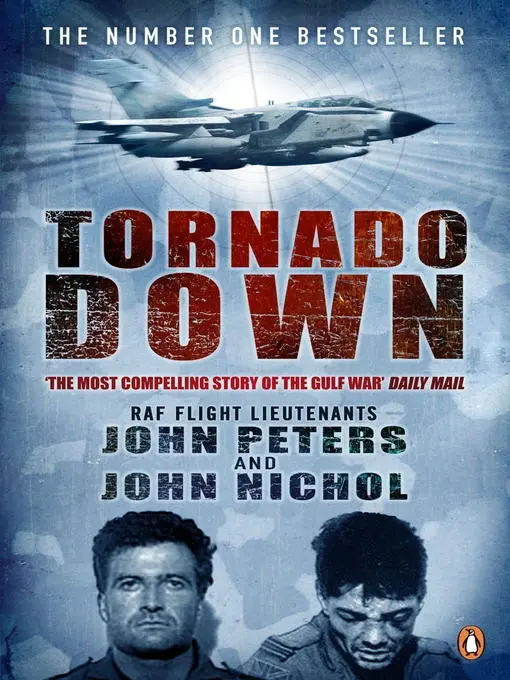
- Название:Tornado Down
- Автор:
- Издательство:Penguin Adult
- Жанр:
- Год:2008
- Город:London
- ISBN:978-0-14-193771-7
- Рейтинг книги:5 / 5. Голосов: 1
-
Избранное:Добавить в избранное
- Отзывы:
-
Ваша оценка:
Tornado Down: краткое содержание, описание и аннотация
Предлагаем к чтению аннотацию, описание, краткое содержание или предисловие (зависит от того, что написал сам автор книги «Tornado Down»). Если вы не нашли необходимую информацию о книге — напишите в комментариях, мы постараемся отыскать её.
In
, John Peters and John Nichol tell the incredible story of their part in the war against Saddam Hussien’s regime. It is a brave and shocking and totally honest story: a story about war and its effects on the hearts and minds of men.
Tornado Down — читать онлайн бесплатно полную книгу (весь текст) целиком
Ниже представлен текст книги, разбитый по страницам. Система сохранения места последней прочитанной страницы, позволяет с удобством читать онлайн бесплатно книгу «Tornado Down», без необходимости каждый раз заново искать на чём Вы остановились. Поставьте закладку, и сможете в любой момент перейти на страницу, на которой закончили чтение.
Интервал:
Закладка:
Waking up to find two-inch-long cockroaches staring into your eyeball was a horrific experience. They stared at me with intelligent expectation, as if they were waiting for me to die. They, too, were brown.
Nobody came into the cell, not ever. They were starving us, slowly and methodically. After a week or so, my bodyweight had fallen dramatically, the stomach hollowing in, the flesh falling away. Once a day, a hand appeared in the small trap that was the only aperture in the thick steel door. Usually it deposited a small piece of pitta bread and some hot greasy water –’soup’. Once, the hand left a bowl of proper lentil soup – unbelievable, it must have been Saddam’s birthday. I went for it, slurping it up in a second or two. Seconds later it came back up, into the faithful corner-hole. Rich stuff, lentil soup, on a shrunken stomach.
The saddest thing was the messages, etched by the fingers of desperation into the hard glazed brown surfaces of the unending tiles. On my ceiling was scratched the inscription ‘Patrick Trigg, British Hostage – October 1990’. This meant nothing to me at the time, but Patrick Trigg was a businessman accused by the Iraqis of spying. He has since been released. There was a lot of Arabic script, flowing elegantly across the walls; but there were two further English messages. One read simply: ‘God Help Me’; the other, ‘God bless Kurdistan’. The second inscription was accompanied by a small drawing of a Christian church. It was mute but moving evidence of the persecution heaped upon the Iraqi Kurds by Saddam’s regime. I spent two whole days carefully adding my own potted history to this sorry graffiti, scratching away with the metal splinter: ‘Flight Lieutenant John Nichol, Royal Air Force, captured British airman…’ with the date and so on. It was no surprise to find out later that this prison was the Ba’ath Party’s Regional Headquarters in Baghdad.
Even in my sleep, my brain was trying to help me escape the reality of imprisonment. I had a regular dream during these long cold nights: I would be back in the Officers’ Mess bar with all my mates, except that this time I would be wearing the yellow POW suit, while they were all in flying clothes. Everybody would be crowding around, asking me how it was, what had happened. It was great to be back, I replied, ‘but the only reason they let me out was if I agreed to go back to Iraq later.’ Sure enough, the moment ‘last orders’ was called, I would suddenly wake up, to find myself lying on a freezing floor in Baghdad.
Life narrowed down in the end to a ritual of intermittent but almost continual physical exercise, anything to circulate the blood, anything to stave off the numbing cold, the crippling, chocolate-brown boredom.
The day passes more quickly if you chew very slowly.
John Peters: I had a toilet pan in my cell. Once white china, it was now a slippery mess of green-black fungus, an encrusted nightmare. I was continually expecting something to crawl out from behind it. I hoped if it did it would be friendly, or at least talkative. The water in the bowl was an opaque inky black, with a frothy brown scum festering on the surface, bubbling gently from time to time.
I soon learned to keep back a little piece of the pitta bread that came with the soup poured every evening through the door-hatch into the plastic orange dog-bowl I ate out of. The first evening, I had had to lick this bowl clean, before turning it upside-down to use as a pillow. I became very attached to that bowl.
Normally gregarious, I now had only one form of society – myself. The enforced isolation made me think – not so much deep and meaningful abstractions on the nature of life and death, but more about what I’d done with my time, and what I wanted to do if the chance ever came again. Oddly enough, being locked up twenty-four hours a day provided an opportunity for a bit of constructive thinking.
I thought of Toni, the daughter I hardly knew, and of Helen coping on her own. I could count on her, which was comforting. Guy was just starting to talk when I went away, and I was not going to be there to help him. For the first eleven months of his life I had been doing basic and then flying training. Work was always the priority. I now bitterly regretted not having made more time for him. Would he forget who I was? Sometimes, when aircrew went away on really long exercises abroad, their children started calling every man who came through the door ‘Daddy’. Why hadn’t I even bought Guy a birthday present? The busy father. Training for war, I had left the whole thing to Helen. He will forget me, I thought. If I get back home in a few years, I will have had no influence on him. This upset me. You want to do the best by your children. I did not want him to know me only as a photograph on the mantelpiece. I must live to see him, I thought; I must live to see them all, even if it takes ten years. It strengthened my resolve.
I thought of other things, of happy times with Helen, and searched back into the past for memories to fill the boredom and emptiness. I’ve got a lousy memory for names, or for the order in which things have happened to me. So, every morning, after going through my exercises, I made myself a list of things to think about: my school life at Churcher’s College, near Petersfield; holidays; family life; university; the Squadron; flying; people I knew… I spent whole days trying to remember the names of past friends – the captain of rugby at school: Mark… A?… No… B?… No, doesn’t sound right… S?… That was it, Mark Spruce.
I exercised, not wanting my physical condition to deteriorate too much. Every morning, I walked around the cell forty times. Next I did stretching exercises, followed by as many sit-ups as I could, then by as many press-ups. Always, when not asleep, I wore the blanket poncho-style across my shoulders. The real discipline was steeling myself to take it off to get started on the physical jerks. My breath clouded in the freezing air.
I was worried about losing my teeth. I knew that in time the lack of food would make my gums shrink, loosening the teeth. With every sip of water from the small daily ration, I sluiced my mouth out, sloshing the water around and around my gums. I used one of my fingers as a toothbrush, scraping the plaque off my teeth with my fingernails.
I also elaborated projects in my head, the more complicated the better, like planning and building my own house – in the most minute detail. Attempting to formulate a demand/supply curve for my own imaginary business, working the whole thing out in my head, was an intellectual challenge. A lot of the time, I thought about food, especially sweet things that I would not normally eat much, like chocolate cakes. I made up recipes, the weirdest combinations: prawns flambéed in brandy and lemon sauce… things of that kind. All the time, I was desperately, desperately hungry. I kept coming back to the idea of food, then trying to think of something else. When I ran out of things to think about, I prayed. This surprised me: I call myself an agnostic. I very rarely go to church. But prayer gave me immense strength.
I made well-intentioned resolutions, for the time when I might be released. I would be organised, plan ahead, make concrete goals and attain them. No sooner had I made these airy-fairy plans than I discarded them. I realised, on interrogating myself more closely, that I was never going to be a wonderful new person. The Iraqis might change me, but I wouldn’t be able to change or improve myself. Not in that way. As the days went past, in isolation, I was gradually plumbing the depths of my own shallowness.
After a couple of weeks in this sensory quarantine, with just the four walls for company, the guards finally came for me. For once I was glad to see them. One of them was clutching an old metal safety razor. They led me along the corridor, past the rows of cells, to a bucket with a piece of soap beside it. Here, they began shaving me forcibly, the blade blunt and pitted, pulling and snagging. Both water and razor looked like they had been used on about five hundred other prisoners. After about twenty minutes, they got down to the bare skin. If I had to be shaved, I wanted to look different, in case of any more television appearances, so I talked them into leaving me a moustache. When the shaving was completed to their satisfaction, they took me back to the cell.
Читать дальшеИнтервал:
Закладка:
Похожие книги на «Tornado Down»
Представляем Вашему вниманию похожие книги на «Tornado Down» списком для выбора. Мы отобрали схожую по названию и смыслу литературу в надежде предоставить читателям больше вариантов отыскать новые, интересные, ещё непрочитанные произведения.





Обсуждение, отзывы о книге «Tornado Down» и просто собственные мнения читателей. Оставьте ваши комментарии, напишите, что Вы думаете о произведении, его смысле или главных героях. Укажите что конкретно понравилось, а что нет, и почему Вы так считаете.