John Nichol - Tornado Down
Здесь есть возможность читать онлайн «John Nichol - Tornado Down» весь текст электронной книги совершенно бесплатно (целиком полную версию без сокращений). В некоторых случаях можно слушать аудио, скачать через торрент в формате fb2 и присутствует краткое содержание. Город: London, Год выпуска: 2008, ISBN: 2008, Издательство: Penguin Adult, Жанр: nonf_military, Биографии и Мемуары, на английском языке. Описание произведения, (предисловие) а так же отзывы посетителей доступны на портале библиотеки ЛибКат.
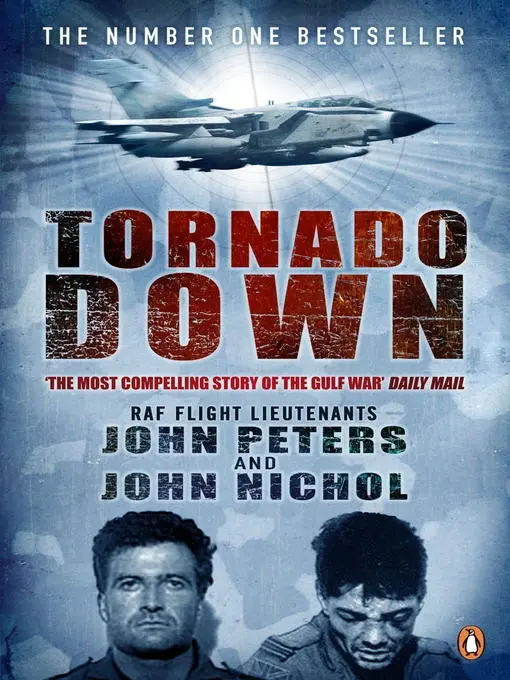
- Название:Tornado Down
- Автор:
- Издательство:Penguin Adult
- Жанр:
- Год:2008
- Город:London
- ISBN:978-0-14-193771-7
- Рейтинг книги:5 / 5. Голосов: 1
-
Избранное:Добавить в избранное
- Отзывы:
-
Ваша оценка:
Tornado Down: краткое содержание, описание и аннотация
Предлагаем к чтению аннотацию, описание, краткое содержание или предисловие (зависит от того, что написал сам автор книги «Tornado Down»). Если вы не нашли необходимую информацию о книге — напишите в комментариях, мы постараемся отыскать её.
In
, John Peters and John Nichol tell the incredible story of their part in the war against Saddam Hussien’s regime. It is a brave and shocking and totally honest story: a story about war and its effects on the hearts and minds of men.
Tornado Down — читать онлайн бесплатно полную книгу (весь текст) целиком
Ниже представлен текст книги, разбитый по страницам. Система сохранения места последней прочитанной страницы, позволяет с удобством читать онлайн бесплатно книгу «Tornado Down», без необходимости каждый раз заново искать на чём Вы остановились. Поставьте закладку, и сможете в любой момент перейти на страницу, на которой закончили чтение.
Интервал:
Закладка:
Cliff Acree shouted along the corridor: ‘I got so hungry I picked the scabs off my arms and put them in the soup. I needed something to chew…’ Everybody understood exactly how he felt.
Then we heard a fresh squad of guards picking their way towards us through the rubble of the ruined building.
John Nichol: Somebody yelled that there was a CBS news team in the prison. On cue, a voice said, ‘This is Bob Simon.’
Someone who had just been shot down called, ‘Bob Simon, the CBS reporter?’
‘Yeah,’ he said.
There was pandemonium then, complete confusion, because in their shock a lot of people jumped to the daft conclusion that there was a CBS crew visiting the prison, filming everything.
‘We’ve been set up! We’ve been bombed by the Iraqis, they did it deliberately…’ came the calls. Someone else yelled, ‘Bob, put my name on the TV, make sure my wife knows I’m OK!’
Of course, the CBS crew had been captured in the early days of the war. ‘I can’t,’ he shouted. ‘I’m in the same situation you are!’
There was a groan at this. We had all had visions of being filmed for posterity. The CBS crew sounded very scared. ‘What do we do if they interrogate us?’ shouted one of them.
‘Tell the truth!’ we yelled back.
We all fell silent when we saw torch beams bobbing along the corridor. For once, we were quite glad to see the guards. The Iraqis were talking excitedly and angrily… As they reached the landing, one of them suddenly caught sight of Jeff Zaun. Instantly, there was a stutter of weapons being cocked: seeing Jeff free, they immediately assumed he was attempting to escape. Shouts and curses punctuated the dark as they stumbled angrily towards him. In the event, they did not shoot him; they just laid into him with their rifle-butts, knocking him to the ground. When they had finished making an example of Jeff, they turned their attention to the rest of us. With the damage to the building, they had no option but to move us out. The whole place was a shambles. It was so full of holes, you would have been hard put to keep a guinea-pig in there securely, let alone a batch of flyers. They started trying to evacuate us at once, but because all the keys had gone missing in the death and destruction on the lower floors, they had to fetch crowbars to prise open the doors, most of which were jammed in their frames. They were hammering and bashing at the heavy metal and the thick concrete. Each prisoner was treated to a spot of roughening up as he was levered free. A retribution for the bombing, for their dead colleagues, or a reaction to their own shock, whatever the reason for it, these guards were in a cold rage, lashing out at the cell doors, at us lot on the inside when they got to us. You would hardly have expected them to be pleased.
Smashing down my door, one of them shone his torch into the room. The narrow beam barely penetrated the clouds of swirling dust that hung thick in the bomb-shocked air. They grabbed hold of me, gave me a cursory thumping with their boots and fists, then dragged me along the corridor. They dumped me outside another cell door, which they also smashed open, after much cursing and swearing. A guard shone his torch in: there was nothing inside, certainly no sign of any prisoner. The only objects in the cell were two green and white blankets scrunched up into a ball on the floor. The blankets were topped with a small mountain of rubble, in the form of a small pyramid. One of the walls and the whole ceiling had been blown in; the ceiling sagged down diagonally at an alarming angle. The guards poked around inside, kicking at the rubble, eventually deciding that whoever had been in there was no longer alive, and came back out again. We prepared to move off. But they kept up a voluble discussion among themselves, as if they were uncertain what to do. They were clearly bewildered at the lack of a body, or at least of any large body parts, for there certainly had been a prisoner in the room before the bombs had hit. Where had he gone? He could hardly have escaped, they would have met him coming out. One of the Iraqis shone his torch back into the cell, muttering angrily. Then we saw a very slight movement from under the pile of rubble. Something was stirring gently, like a small furry animal. A little head, shrouded in one of the blankets, popped out of the pile and said, in a strong Italian accent, ‘Hello?’
It was Gian Marco Bellini. I almost laughed out loud. He still looked as though he had no idea what had happened to him, as though he had just awoken from a long sleep. He was completely bewildered. Even the Iraqis by now had realised that Gian Marco was concussed, so he did not get the rough treatment handed out to the rest of us. They pulled him to his feet, showering small lumps of debris, like gigantic dandruff, from his head and shoulders.
As we continued along the corridor, a sea of cockroaches, smashed out of their nests by the blast, scurried and panicked ahead of us in the gloom. One of our escort stopped. Shining his torch on a particularly large specimen, he punched me hard in the face, muttered something in Arabic, and crushed the cockroach under his foot. ‘This,’ he shouted, pointing at the mess, ‘is you.’
We were taken outside, into the clean moonlight, peculiarly brilliant after the sepulchral dimness inside. A group of other prisoners was waiting. We could see very clearly where the bombs had hit, the enormous craters excavated by the near-misses, the huge lumps of reinforced concrete, some of them the size of a small house, which littered the prison carpark. The whole of the rear of the prison had simply fallen in. But in the nature of these things, the building looked almost undamaged from the other side, its gleaming white facade intact, except that one complete corner was missing. As they led us through the carpark, we could see that most of the vehicles were completely buried under debris from the devastated gaol. The general feeling, and it was almost tangible, was: ‘How the hell did I survive that?’
We had had the devil’s own luck.
They dragged and kicked us onto a bus they had waiting beyond the scattered wreckage. Having escaped blindfolding, I recognised some of the twenty-five or so POWs sitting inside. Bob Simon, the CBS reporter, was also there; I knew him not from sight, but because he was the only one who did not look at all military: it could not really have been anyone else. Then I noticed that John Peters was missing. Why had they not brought him out with the rest of us? I was sure he was alive, we had exchanged shouts. Once we were installed on the floor of the vehicle, a guard strolled up and down between the seated POWs, casually swiping each one in turn across the head with the butt of his AK-47. He stood over me: ‘Where are you from?’
‘Britain.’
‘Where did you bomb in Iraq?’
‘An airfield.’
I was spared the rifle-butt, but he punched me in the face a couple of times and walked on, to the next man up the bus.
‘Where are you from?’
‘Italy.’
‘Why do you come to my country?’
To which Gian Marco replied, a great big smile on his face, ‘Ah, you are from Italy as well. That is fantastic! Whereabouts in Italy?’ and struck up the most unlikely one-sided conversation with this unpleasant thug, who had no idea how to respond. Peering at Gian Marco, to see if he were being ridiculed, the Iraqi could make no sense of what was being said to him: there was none. In the end, he punched Gian Marco in the face anyway, and wandered off, muttering darkly to himself.
Before we set off, they dragged Mohammed Mubarak, the Kuwaiti A-4 Skyhawk pilot, onto the bus, and threw him crashing to the floor. The Iraqis hated Mohammed, because they blamed Kuwait, and therefore him personally, for everything that had happened to Iraq. Five of them stood around him in a circle, smashing down at him with their Kalashnikovs, over and over again. He was in bad shape. They turned their attention away from him, though, when Salik was brought onto the bus. Salik they really loathed, more than any Coalition pilot who had bombed their country and killed their people. They threw him to the floor in the aisle and set about beating him for his unspecified crimes. Robbie Stewart was sitting nearby. His leg had been broken in several places on ejection, and he had to walk with the aid of a crutch. When the Iraqis got tired of thumping Salik with boring old boots and rifles, one of them snatched hold of Robbie’s crutch and laid into Salik with that. After one particularly vicious whack, the crutch snapped clean in half, so we had to help Robbie walk. As we were not allowed to talk to him, nobody could help Salik.
Читать дальшеИнтервал:
Закладка:
Похожие книги на «Tornado Down»
Представляем Вашему вниманию похожие книги на «Tornado Down» списком для выбора. Мы отобрали схожую по названию и смыслу литературу в надежде предоставить читателям больше вариантов отыскать новые, интересные, ещё непрочитанные произведения.





Обсуждение, отзывы о книге «Tornado Down» и просто собственные мнения читателей. Оставьте ваши комментарии, напишите, что Вы думаете о произведении, его смысле или главных героях. Укажите что конкретно понравилось, а что нет, и почему Вы так считаете.