John Nichol - Tornado Down
Здесь есть возможность читать онлайн «John Nichol - Tornado Down» весь текст электронной книги совершенно бесплатно (целиком полную версию без сокращений). В некоторых случаях можно слушать аудио, скачать через торрент в формате fb2 и присутствует краткое содержание. Город: London, Год выпуска: 2008, ISBN: 2008, Издательство: Penguin Adult, Жанр: nonf_military, Биографии и Мемуары, на английском языке. Описание произведения, (предисловие) а так же отзывы посетителей доступны на портале библиотеки ЛибКат.
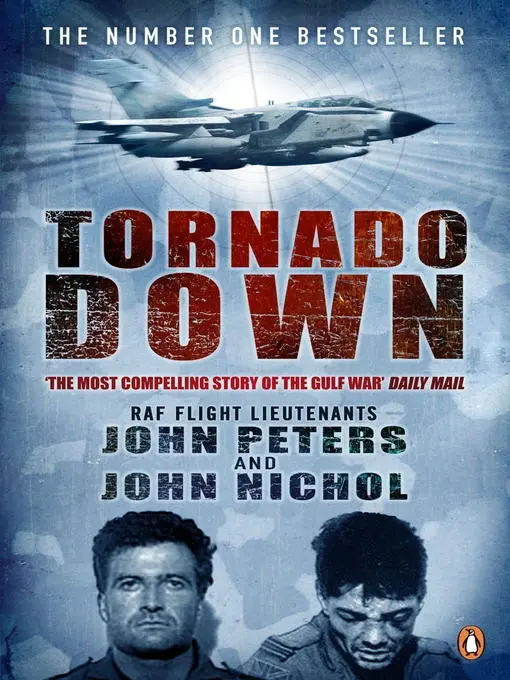
- Название:Tornado Down
- Автор:
- Издательство:Penguin Adult
- Жанр:
- Год:2008
- Город:London
- ISBN:978-0-14-193771-7
- Рейтинг книги:5 / 5. Голосов: 1
-
Избранное:Добавить в избранное
- Отзывы:
-
Ваша оценка:
Tornado Down: краткое содержание, описание и аннотация
Предлагаем к чтению аннотацию, описание, краткое содержание или предисловие (зависит от того, что написал сам автор книги «Tornado Down»). Если вы не нашли необходимую информацию о книге — напишите в комментариях, мы постараемся отыскать её.
In
, John Peters and John Nichol tell the incredible story of their part in the war against Saddam Hussien’s regime. It is a brave and shocking and totally honest story: a story about war and its effects on the hearts and minds of men.
Tornado Down — читать онлайн бесплатно полную книгу (весь текст) целиком
Ниже представлен текст книги, разбитый по страницам. Система сохранения места последней прочитанной страницы, позволяет с удобством читать онлайн бесплатно книгу «Tornado Down», без необходимости каждый раз заново искать на чём Вы остановились. Поставьте закладку, и сможете в любой момент перейти на страницу, на которой закончили чтение.
Интервал:
Закладка:
The Iraqis believed this propaganda. All the guards were very excited by the ‘news’. They claimed to have assassinated George Bush, and to have killed 250,000 Allied troops. We did not believe it, and we could not credit their naive belief that they were winning this war. But then, we did not live in a state where every single scrap of information is tightly controlled, where the official ‘truth’ is the only truth on offer.
Bombing took place with encouragingly monotonous regularity. We would lie there at night, counting the explosions, trying to work out how many aircraft were on the raid, how far away the target was. It beat counting sheep.
As the sun came up, patches of dark discolouration, like rust, appeared eerily on the bare walls. Looking more closely, I could see they were bloodstains. There were curious deep holes and chipped areas in the midst of these marks, as though long steel nails had been hammered into the cement, and then wrenched out again. Or was I looking at bullet holes? Was this an execution cell? Beside these patches on the walls there were little drawings of ships, scratched into the concrete, with messages in Arabic scrawled next to them. Talking to Mohammed at night he told me that there were similar drawings in his cell, and that they were done by the crew of a Kuwaiti oil-tanker who had been captured at the time of the Iraqi invasion, and shut up in this prison. He could not tell me what had happened to them…
The days in the Baghdad Bungalows were marked by the evening meals, which varied according to a strict weekly order, ordained by some higher authority: chicken, mutton, mutton, beans, mutton, mutton, mutton. There were no toilets, just pits at the end of the corridor, which quickly overflowed under the pressure of numbers.
Everyone was allowed out into the stinking yard every couple of days, to take exercise. When I had recovered a bit physically, the guards came in and asked if I could play football. I said yes, and was rewarded with extra time outside, which I felt a little guilty about. However, they just wanted me to stand in goal while they took pot-shots.
They would come up to me and shout, ‘Kevin Keegan!’ I would try to explain that yes, Keegan had been a very famous and successful English footballer, , but he was now retired, and they would shout, ‘Castle King!’, which I eventually deciphered as ‘Gascoigne’, as in Paul, another England soccer player who is quite well-known, and from my own little corner of the world. They took great delight in saying things to me like ‘Maggie Thatcher, how is she? Not so good, eh?’ It was useless to attempt to explain that she was no longer the British Prime Minister. For them she was a bogey-woman they loved to hate.
Ten days later, things took a turn for the worse. Mohammed Mubarak had told us we were in Baghdad, but he found out we were about to be moved somewhere closer to the centre; he had heard the guards chatting about going to Baghdad market. Sure enough, that night I started bolt upright as the metal door crashed open. I was instantly wide awake, senses alert, waiting for the shadows to arrive at the cell. What was going on? I had just settled back down into my nice comfortable rabbit-hutch. The last thing I wanted was to be moved. They came in after a minute or so, blindfolded and cuffed me, and manhandled me onto the transport. After a relatively short drive, the bus began spiralling down into what felt like an underground carpark. A fresh set of gaolers kicked, punched and rifle-butted us off the transport. They were wearing civilian clothes, one or two of them were even wearing trainers, and the horrible, brightly coloured nylon ‘shell suits’ that were fashionable then back home. There was the same atmosphere of icy hostility that had characterised our interrogation centre. We immediately realised, with a sinking feeling, that we were back in the hands of the Ba’ath Party.
John Peters: Two inches thick, the steel cell door of this new prison slammed shut on 31 January. It stayed shut until 10 February. Just before he slammed it, the guard removed the cuffs from around my wrists, and the crepe from around my eyes.
‘British or American?’ he demanded.
‘British.’
Before I realised what he was doing, he had cleared his throat and launched a great gobbet of spit into my face. Then, as an apparent afterthought, he opened the door again. 1 could almost hear the cogs of his brain turning painfully in his head: ‘Oh, I know, I’ll let my mate do it, too.’ His fellow guard stepped up and gave me another faceful of saliva, just for good measure. It was so absurd, so ridiculously, childishly spiteful, that when they had closed the door again, I burst out laughing.
19
Endless Boredom
John Nichol: Boredom is chocolate brown. I was living in a giant, chocolate-brown urinal. At some point in the past, the Ba’ath Party’s Commissioner for Prisons had amused himself as an interior decorator, fitting out the whole of this new prison with chocolate-brown tiles. Icy to the touch, the walls, ceiling, floor, everything was covered in them. It was freezing, shivering cold.
The first few days I spent in exploring the cell, every nook and cranny, tile by tedious tile. I was looking for nails, bits of string, old threads, anything that might be useful. There was no furniture in the cell, not even a strip of foam for a makeshift bed. Instead, there was a hole in one corner that had once been a squat toilet, long since broken and blocked brimful. After a few days of solitary confinement, the hole was overflowing with my own excrement, a foetid mass, a slightly different shade of brown from the surrounding tiles. Apart from the hand, which appeared once a day through the food hatch in the bottom of the door, there was no contact whatsoever with the outside world. There was no sound, the walls were muffle thick.
After a day or two I found myself sitting with my ear pressed up tightly against the door, straining for any kind of sensory input, for the slightest noise. Every morning on waking, I went through a long routine of exercise, and repeated a bucketful of prayers. When I arrived, there had been only one blanket, lying on the floor, with which to combat the intense cold. After about three days, the hand stuffed a second blanket through the hatch. One prayer answered. There were no washing facilities, the only water was delivered by the hand, but I cleaned myself up on a daily basis as much as possible without having access to soap and water. To pass the time after that, I would sit and think of the things back home, of my family, of the other people I had known and loved, of the people that I still loved. High up in one wall was a small metal grille. Too high to look out of comfortably, it was at least a means of telling night from day. And at night, every night, the multi-coloured light show of the Triple-A flickered over the city, in the small patch of sky I could see, punctuated by the brighter flashes of the exploding bombs. Counting down the interval between the bomb flash and the grumbling noise of the explosion gave a rough idea of its distance from the prison. Wherever we were, the bombing was horrendous, virtually non-stop, which most likely meant we were in central Baghdad.
Straining up to this aperture, I was able to prise away from it a thick piece of wire, about two inches long. Using this jagged sliver of metal as a needle, and threads unravelled from the blanket, I fashioned a primitive but very pleasant sleeping-bag for myself, which made all the difference in countering the all-pervasive chill. The floor was as cold as eternity. The activity of sewing took up three whole days of intensive effort: two days for the sleeping-bag, one day for the pillow I also made. They had been right on the RAF’s Combat Survival Course: never sit and do nothing. The trouble was finding things to do in an empty box. It is hard to explain how boring it was.
Читать дальшеИнтервал:
Закладка:
Похожие книги на «Tornado Down»
Представляем Вашему вниманию похожие книги на «Tornado Down» списком для выбора. Мы отобрали схожую по названию и смыслу литературу в надежде предоставить читателям больше вариантов отыскать новые, интересные, ещё непрочитанные произведения.






Обсуждение, отзывы о книге «Tornado Down» и просто собственные мнения читателей. Оставьте ваши комментарии, напишите, что Вы думаете о произведении, его смысле или главных героях. Укажите что конкретно понравилось, а что нет, и почему Вы так считаете.