John Nichol - Tornado Down
Здесь есть возможность читать онлайн «John Nichol - Tornado Down» весь текст электронной книги совершенно бесплатно (целиком полную версию без сокращений). В некоторых случаях можно слушать аудио, скачать через торрент в формате fb2 и присутствует краткое содержание. Город: London, Год выпуска: 2008, ISBN: 2008, Издательство: Penguin Adult, Жанр: nonf_military, Биографии и Мемуары, на английском языке. Описание произведения, (предисловие) а так же отзывы посетителей доступны на портале библиотеки ЛибКат.
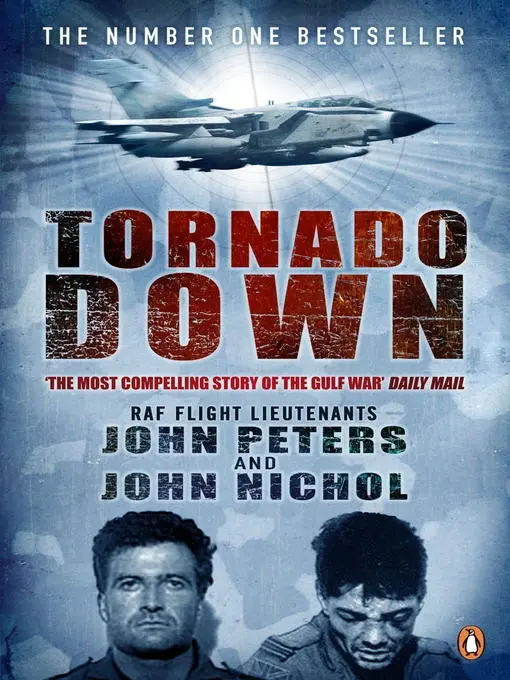
- Название:Tornado Down
- Автор:
- Издательство:Penguin Adult
- Жанр:
- Год:2008
- Город:London
- ISBN:978-0-14-193771-7
- Рейтинг книги:5 / 5. Голосов: 1
-
Избранное:Добавить в избранное
- Отзывы:
-
Ваша оценка:
Tornado Down: краткое содержание, описание и аннотация
Предлагаем к чтению аннотацию, описание, краткое содержание или предисловие (зависит от того, что написал сам автор книги «Tornado Down»). Если вы не нашли необходимую информацию о книге — напишите в комментариях, мы постараемся отыскать её.
In
, John Peters and John Nichol tell the incredible story of their part in the war against Saddam Hussien’s regime. It is a brave and shocking and totally honest story: a story about war and its effects on the hearts and minds of men.
Tornado Down — читать онлайн бесплатно полную книгу (весь текст) целиком
Ниже представлен текст книги, разбитый по страницам. Система сохранения места последней прочитанной страницы, позволяет с удобством читать онлайн бесплатно книгу «Tornado Down», без необходимости каждый раз заново искать на чём Вы остановились. Поставьте закладку, и сможете в любой момент перейти на страницу, на которой закончили чтение.
Интервал:
Закладка:
John Peters: Kicked into consciousness, which was not my favourite place to be, I found myself surrounded by a gang of guards. They pulled up my blindfold.
‘We’re going to kill you now,’ they said. ‘You are a war criminal. We are going to take you out and shoot you, you have killed people.’
‘No I haven’t,’ I replied.
‘You are going to go on television.’
‘No, I can’t do that.’
‘We are going to put you on television as a war criminal.’
‘No.’
No was not the answer they wanted to hear. They began taking turns slapping me, as hard as they could, across the face. Every sentence we spoke was punctuated by a slap.
‘You will never see your wife and children again. Is it worth it? All we are asking is to put you on television. If you do not go, you will never see your wife and children again. We will kill you now.’
‘No.’
‘You are going to go on television as a war criminal.’
‘No.’
‘Right. Take him now.’
They grabbed me, picked me up. One of them took out his pistol, cocked it, drew back the hammer, and put the barrel against my temple.
‘You are going to die now.’
I was so keyed up, with the pistol butt pressed against my ear, I could have sworn I heard the mechanism inside it creak as he began squeezing the trigger.
‘OK, OK, OK,’ I mumbled. ‘Wait.’
I had tried everything and anything not to cooperate, not to release information, that was the point; but I had reached a stage where the only way to win was to stay alive – where I could only fight them by surviving. They carried me along to the same bright room that, unknown to me, John Nichol had recently starred in. There was a video camera, a single chair in front of it, which they pushed me down into. Someone came and tidied me up a bit.
‘Right,’ I thought, ‘this is good, I look like shit and I feel like shit, and I’m going to use that; I’m going to misunderstand, I’m going to try to refuse to say what they want me to say.’
As they shouted the questions at me, then the approved answers, they kept whacking me on the head with a pistol butt, because I wasn’t speaking up to their satisfaction, because I refused to sit up straight. But I did want people to see evidence of the beatings, so I turned my ejection-damaged eye, which they had worked on, deliberately towards the camera. There should be no mistaking the physical abuse. Concerned that I was mumbling, that the message was not getting across, they got some books and propped the microphone up nearer to my face.
To some extent my dumb show succeeded. All those school drama productions were suddenly coming in handy. They obviously saw I was a bad publicity risk, because they cut short the questions we had been through in rehearsal, reducing them to name, rank and number, what I had done (bomb an airfield), how I got shot down (by a missile)…
For me, this was the worst thing of all. I hated being put on television, with every fibre of every nerve. I thought I would be revealing to the world how weak I had been, how I’d given in too easily; I thought everyone would class me as a traitor. It was the fact of cooperating that hurt. All I could think of was that I was bringing disgrace to my uniform, by conceding to their threats. As with the interrogation, I assumed I was the only one who had agreed to make a broadcast. It never occurred to me that the whole thing might backfire on them.
What did occur to me, as I addressed my family, was that I would never see them again. It brought a huge lump to my throat; I couldn’t have spoken clearly if I’d wanted to. As I was saying, ‘Helen, Toni and Guy, I love you,’ I thought, ‘I’ve done everything they wanted, I’ve talked, I’ve done my TV bit; that’s it, they don’t need anything more out of me, I can be wasted now. I will never see them again.’ I tried to continue the message, ‘Mother and Father…’ but I could not go on, it came out stilted: the moment was too much for me.
I was praying that someone else had gone on TV. I couldn’t live with the idea of being the one, the only one, to co-operate. The corridor was filling up now with captured flyers. We were not allowed to talk, but I was afraid of finding this out, anyway. This fear of failure was intensified when an officer ordered someone to give me another blanket. Was this some sort of reward for my weakness? It was a relief when he moved up the line giving blankets to the others. Ahmed brought me a piece of cardboard to lie on, with an empty, large-sized baked bean can, which I used as a pillow. I wondered how the war was going.
Helen Peters: That particular day had been horrendous. It was the Monday after the boys had been shot down, 21 January. The Ministry of Defence had confirmed that a third Tornado had been shot down. On the Sunday night there had been reports that captured aircrew, or at least tape-recordings of their voices, had been heard on the radio. I spent most of the day glued to the television, waiting for the news, trying to find out what was going on.
I rang John Nichol’s mum. The boys’ families and I kept in touch as much as we could all the time, swopping little bits of information, even tiny little things. As far as she could tell from the voice, it really was her John, she said, although the quality of the recording was very bad. But nobody had heard anything of my John.
It was quite difficult for John Nichol’s mum and dad. They didn’t know what to say to me. There wasn’t much anybody could say. They were incredibly happy to have news of their son, but they were frightened for me. None of my friends or relatives – and I tried them all – had actually heard those tapes. I could get no information, absolutely none. John’s brother and sister-in-law, Mark and Sarah, were staying with me at the time, and we got up that morning and went straight to the television. What should we hear but that seven of the POWs had been put on Iraqi TV –but the news networks kept showing only five of them! John Nichol was there, and an Italian pilot, Gian Marco Bellini, but my John was not among them, neither was the Kuwaiti flyer we knew had been shot down. It was like a nightmare. What had happened to them?
That Monday went on for ever. Every time we watched a news broadcast, there was still no sign of John. The newscasters kept referring to seven people, but they only showed five, and they never explained why. Did they not have the time? Did they think that it didn’t matter? Or was it something worse? Were they so badly beaten up that they couldn’t be shown? Had they already been killed, or what?
Eventually, on the 5.40 evening news, they showed John. Ironically, having sat in front of the set all day, I had just gone upstairs to bathe Guy. Mark and Sarah grabbed for the record button, to start the tape that was always sitting ready in the video recorder. They tried to sit me down. Mark got me a brandy. It was horrible, that rush of different kinds of emotions all at once. John looked terrible, almost unrecognisable. At least it meant he was probably alive. The first thing I had to do was get to the phone, to try to warn John’s parents, and my own, that he was on television, and that he didn’t look very pretty. But as I stood up, my legs gave way under me.
I remember that the rest of the evening I felt very light-headed. John looked so battered. We kept on playing the tape, looking at it really closely, almost morbidly. I was basically trying to convince myself that a lot of it was injuries from ejection. One good thing was that the children were too young to understand what was going on, though I was worried that Guy, who was two, might just recognise his daddy if he saw the pictures. I kept him well away from the television, just in case.
Читать дальшеИнтервал:
Закладка:
Похожие книги на «Tornado Down»
Представляем Вашему вниманию похожие книги на «Tornado Down» списком для выбора. Мы отобрали схожую по названию и смыслу литературу в надежде предоставить читателям больше вариантов отыскать новые, интересные, ещё непрочитанные произведения.





Обсуждение, отзывы о книге «Tornado Down» и просто собственные мнения читателей. Оставьте ваши комментарии, напишите, что Вы думаете о произведении, его смысле или главных героях. Укажите что конкретно понравилось, а что нет, и почему Вы так считаете.