John Nichol - Tornado Down
Здесь есть возможность читать онлайн «John Nichol - Tornado Down» весь текст электронной книги совершенно бесплатно (целиком полную версию без сокращений). В некоторых случаях можно слушать аудио, скачать через торрент в формате fb2 и присутствует краткое содержание. Город: London, Год выпуска: 2008, ISBN: 2008, Издательство: Penguin Adult, Жанр: nonf_military, Биографии и Мемуары, на английском языке. Описание произведения, (предисловие) а так же отзывы посетителей доступны на портале библиотеки ЛибКат.
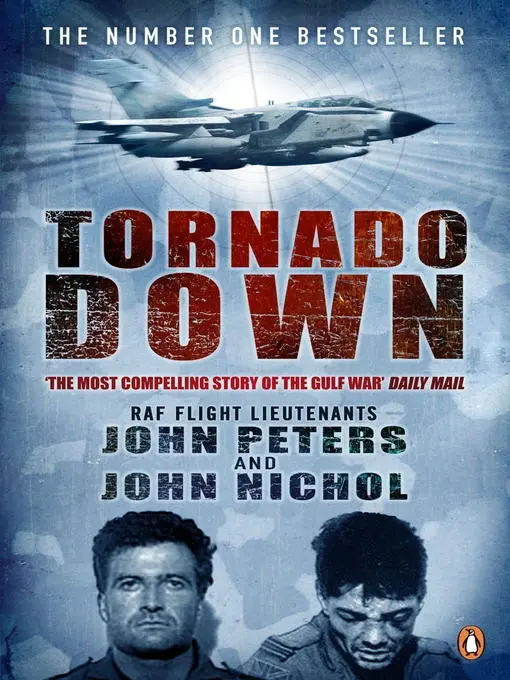
- Название:Tornado Down
- Автор:
- Издательство:Penguin Adult
- Жанр:
- Год:2008
- Город:London
- ISBN:978-0-14-193771-7
- Рейтинг книги:5 / 5. Голосов: 1
-
Избранное:Добавить в избранное
- Отзывы:
-
Ваша оценка:
Tornado Down: краткое содержание, описание и аннотация
Предлагаем к чтению аннотацию, описание, краткое содержание или предисловие (зависит от того, что написал сам автор книги «Tornado Down»). Если вы не нашли необходимую информацию о книге — напишите в комментариях, мы постараемся отыскать её.
In
, John Peters and John Nichol tell the incredible story of their part in the war against Saddam Hussien’s regime. It is a brave and shocking and totally honest story: a story about war and its effects on the hearts and minds of men.
Tornado Down — читать онлайн бесплатно полную книгу (весь текст) целиком
Ниже представлен текст книги, разбитый по страницам. Система сохранения места последней прочитанной страницы, позволяет с удобством читать онлайн бесплатно книгу «Tornado Down», без необходимости каждый раз заново искать на чём Вы остановились. Поставьте закладку, и сможете в любой момент перейти на страницу, на которой закончили чтение.
Интервал:
Закладка:
After a few minutes, JP very quietly asked me the question that was burning him up, picking open the half-healed scab in his mind: ‘Have you broken yet?’
‘I have.’
‘What did you tell them?’
‘Same as you, probably; stuff they could read in the newspapers. Is that the kind of thing they asked you?’
‘Yes. What do you think is going to happen now?’ he asked.
‘Same as you, I expect; I haven’t got a clue.’
‘Do you think they are going to shoot us?’
‘They could do, but I think it’s unlikely; they’ve got nothing to gain by it. Having said that, there’s nothing to stop them taking us round the back and shooting us if they feel like it, is there?’
After this exchange of pleasantries, we fell silent, which is completely out of character for both of us. There was enough said. And we were both exhausted. The room was probably bugged, because after a period of about ten minutes had gone by without either of us speaking, the guards came back in and returned us to the dormitory.
John Peters: They took me down the stairs again, the dreaded journey to the interrogation centre, outside, turn left, left again, do a right, stop. Not again, what on earth could they want now?
But this time it was a slightly different route, down a ramp, deep underground, down into what we realised over the next twenty-four hours was another of those friendly cigarette-end corridors. With our hands handcuffed behind our backs, they sat us against the wall, on the floor, a guard standing over each of us. We were not allowed to move. The concrete was extremely cold. I began to shiver almost immediately. As usual, the shoulders and the lower back became agony, because of the way the handcuffs were done up. After a couple of hours of this, Ahmed – improbable guardian angel; how had he not been shot already for being too nice to captured airmen? – appeared carrying water, unlocked the cuffs and re-fastened them so that our arms were to the front. I took up his offer of a visit to the toilet, which was only allowed when a couple of other guards had been called. These two supported me like a pair of human crutches: after the concentrated attention it had come in for, my leg had become completely immovable, the knee swollen, purplish, ugly, painful, stiff and otherwise totally out of action. Bits of bone and gristly things grated attractively in the knee-joint if I did try to move it. Looking at it in the dormitory, my main worry was whether I would ever fly again. There was also something seriously wrong with my back. What a state! In the toilet was a mirror: since they had released the cuffs, I was able to lift the bandage from my eyes, and catch the first sight of my face since they had captured me.
‘Good,’ I thought, ‘I look like shit, completely terrible, my left eye is a nightmare made human flesh, horrendously swollen and leaking blood; perhaps now the guards will treat me better.’ This was pretty silly, seeing as I had just been beaten up for the umpteenth time, but then you cling onto some pretty weird and wonderful hopes in a place like that. Back to the corridor. Despite the massive air-conditioning unit I was parked next to, which sounded like Niagara Falls, I must have dropped off to sleep.
John Nichol: Within a few minutes of being plonked down in this corridor, the cold began biting up through my backside, spreading through the bones until it had permeated every part of me. But soon I slept: you can sleep anywhere if you’ve had a full enough day. In my sleep I dreamed, and dreamed I fell into a rubbish tip. I was climbing through a doorway, which opened directly onto a rubbish dump, and at the moment of falling through this doorway into the mound of trash, something hit me squarely in the face, and I woke up. What had actually happened was that somebody had come along and thrown a dirty blanket over me, which was not a dream, but a godsend, because I was freezing. Still, I thought that the dream was a pretty accurate reflection of my circumstances. A little after this, an officer came along. He stood over me, and barked, ‘Another blanket for this man!’, which was strange, because he said it in English, as if for my benefit. Almost like magic, Ahmed materialised again, spreading a second filthy oblong of wonderful warming rag carefully over my prostrate form. I returned gratefully to the rubbish-dump dream.
In the morning – I assumed it was morning from the increased human traffic passing and kicking, kicking and passing – another officer came up, accompanied by a couple of uniformed soldiers. ‘Lieutenant Nichol,’ he said, ‘do you know that we are going to charge you with war crimes?’
Never at my most genial just after dawn, aching all over, stiff in the limbs, bruised flesh throbbing, etc., I was feeling a bit liverish. I stared blindly up at him: ‘Excuse me? I have committed no war crimes.’
‘Yes, you have attacked a country you did not declare war on, you have committed war crimes. We are going to execute you.’
There was a short pause while I took in this interesting information. He was talking to me as though he meant it. I thought, ‘Oh well.’
But then he spoke again. ‘Right, we can either execute you, or put you on TV.’
I thought about it for something less than a second. A stupid thought flashed into my mind: ‘Bring on the make-up girls…’ Broadcast or die! It was not really a decision, was it? Playing for a little time, I asked him, ‘What do you want me to say?’
I had half expected they might want to use us for propaganda purposes at some point, that was their style, we had seen plenty of it, even before the war, with the exploitation of the so-called ‘human shield’ hostages. Even children had been used. This kind of stunt had backfired on Saddam Hussein then, so I confidently expected it to backfire catastrophically on him again now. I was unwilling to be executed for the sake of a TV appearance, the effect of which would be at least arguable, and would most likely result in another Iraqi public relations disaster. On the other hand, I did not want to co-operate, to show the least willingness under any circumstances. These people were the enemy.
‘We will ask you a few questions,’ said the officer. ‘You will answer them, and then you can send a message home.’
‘Do what you like,’ I thought, ‘you are going to shoot yourself right in the foot.’
They picked me up and dragged me off along the corridor, sat me down in a room, removed the blindfold. A crowd of people were swarming around a camera set up in the middle of the space. They gave me a glass of water, and told me to brush back my hair. I ruffled it up, on the quiet. I wanted to look under pressure, under extreme duress.
‘OK, we’ll rehearse this first,’ said someone, and we went through the list of questions, and the responses they wanted out of me: ‘What do you think of this war?’
The answer to be given was: ‘This war should be over so we can all go home’, and so it went on. There were a couple of things in among this farce that were working for me: to begin with, the English was not wholly correct, which would tell anybody listening I was speaking words written by somebody else. Also I spoke very slowly, very deliberately, quite unlike the way I normally talk, for the same reason. When answering the prepared questions, I tried to look away from the camera, to signify disagreement. When I had reached the end of the list, they kept their word and let me send a message home, in return for broadcasting all the answers they had prepared. Now I looked directly into the camera. As I was delivering the message to my Mum and Dad, I thought, ‘What must they think of me?’, and the emotion started welling up inside me in an unstoppable wave. By the time they laid me back down in the corridor, I was crying, the tears soaking into the blinding crepe bandage. I was crying for my parents.
Читать дальшеИнтервал:
Закладка:
Похожие книги на «Tornado Down»
Представляем Вашему вниманию похожие книги на «Tornado Down» списком для выбора. Мы отобрали схожую по названию и смыслу литературу в надежде предоставить читателям больше вариантов отыскать новые, интересные, ещё непрочитанные произведения.





Обсуждение, отзывы о книге «Tornado Down» и просто собственные мнения читателей. Оставьте ваши комментарии, напишите, что Вы думаете о произведении, его смысле или главных героях. Укажите что конкретно понравилось, а что нет, и почему Вы так считаете.