John Nichol - Tornado Down
Здесь есть возможность читать онлайн «John Nichol - Tornado Down» весь текст электронной книги совершенно бесплатно (целиком полную версию без сокращений). В некоторых случаях можно слушать аудио, скачать через торрент в формате fb2 и присутствует краткое содержание. Город: London, Год выпуска: 2008, ISBN: 2008, Издательство: Penguin Adult, Жанр: nonf_military, Биографии и Мемуары, на английском языке. Описание произведения, (предисловие) а так же отзывы посетителей доступны на портале библиотеки ЛибКат.
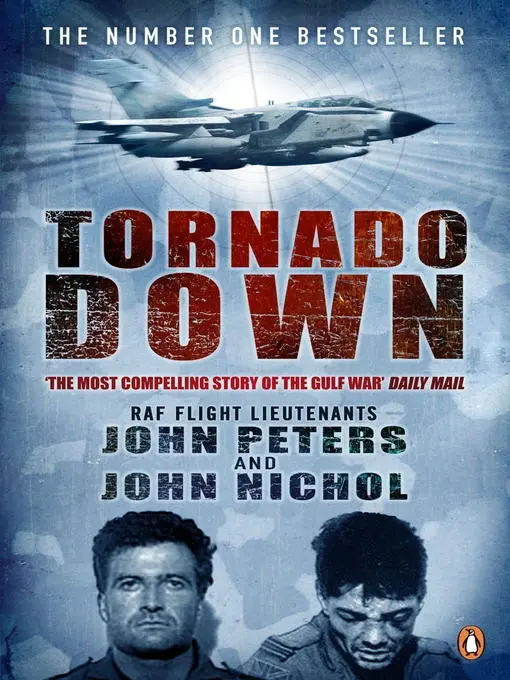
- Название:Tornado Down
- Автор:
- Издательство:Penguin Adult
- Жанр:
- Год:2008
- Город:London
- ISBN:978-0-14-193771-7
- Рейтинг книги:5 / 5. Голосов: 1
-
Избранное:Добавить в избранное
- Отзывы:
-
Ваша оценка:
Tornado Down: краткое содержание, описание и аннотация
Предлагаем к чтению аннотацию, описание, краткое содержание или предисловие (зависит от того, что написал сам автор книги «Tornado Down»). Если вы не нашли необходимую информацию о книге — напишите в комментариях, мы постараемся отыскать её.
In
, John Peters and John Nichol tell the incredible story of their part in the war against Saddam Hussien’s regime. It is a brave and shocking and totally honest story: a story about war and its effects on the hearts and minds of men.
Tornado Down — читать онлайн бесплатно полную книгу (весь текст) целиком
Ниже представлен текст книги, разбитый по страницам. Система сохранения места последней прочитанной страницы, позволяет с удобством читать онлайн бесплатно книгу «Tornado Down», без необходимости каждый раз заново искать на чём Вы остановились. Поставьте закладку, и сможете в любой момент перейти на страницу, на которой закончили чтение.
Интервал:
Закладка:
As I was led away, I glanced back at JP, my chum of the last four years, even then being re-blindfolded, surrounded by sadistic bastards. I could tell they were getting ready to start on him again. It was with mixed feelings that I was dragged from the room. What would they do next? Were they going to do it to me afterwards? Would I be able to hear him scream? How much would or could he take? How much could I take?
I was sitting in a cell on my own, thinking, when the guard came back in: ‘Do you want to go to the toilet?’
I didn’t, but I said yes anyway, just to get the handcuffs off. As soon as he touched my wrists, I jumped back in agony.
‘Wait, wait!’ he said. He went off, and came back with another guard. The pair of them stood behind me, making concerned noises over the state of my wrists. The cuffs had clamped down onto the protruding knuckles of my wrist bones, working their way gradually down through the flesh. They left large scabs that tore off each time the cuffs were removed or replaced.
‘Wait,’ he said, ‘we’re trying to find a key.’
Eventually they found a key that fitted. As soon as he inserted it into the lock, the cuffs sprang off under the pressure. My muscles had seized up, but I managed to drag my arms forward. It was the familiar blissful agony as the blood coursed back into the swollen flesh. They led me along the corridor to the toilet. In broken English, one of the guards asked me how I wanted to go. I pointed to my front.
‘OK,’ he said, and left me. I leaned my head up against the wall.
When I got back to the room, they did not put the handcuffs back on, but allowed me to sit with my hands on my lap. They showed a touching concern at my pain, which seemed absurd in the context.
John Peters: A fist splitting your lip open is like a stone coming out of a date.
It was a low-tech beating, but the Iraqis had thought about it. They varied between inflicting a sharp, superficial, stinging pain and trying to induce a deeper kind of pain, a pain that was more in the body. When they grabbed me by the hair and threw my head against the wall for a few minutes, it felt terribly flat and cold, my features tried to mould themselves to the flat surface.
All the time I was thinking how to protect myself, how not to give in. When they pulled me up from the floor I doubled over, twisting away from the direction of the blows, arthritic. Hands cuffed behind my back, my front was wide open, intensely vulnerable. One knee came up over the opposite leg, shielding the testicles they were whipping at.
My left eye, gashed on ejection, was extremely squelchy, like a wet sponge, where the face was expanding out. The more it swelled, the more they concentrated on hitting it, smashing down with some sort of pole or cane at my eyes. Absurdly, the thought came that when they hit it, they would do no damage to the eye, because the pulp around it would absorb the shock. The energy would be taken by the cushion of bruised flesh. It’s like when you hit a balloon, I thought, the waves will just ripple and roll out across the head. I could feel my face growing: as the eyes came up and the nose swelled at the top, the vision went, the light through the blindfold dimming. It was like slowly putting on a mask.
Even blindfolded, you learn very quickly to distinguish between the instruments of your torture. The thick, plaited rubber strap thwacking across the face, the ear, inflicts a harsh, bitter, penetrating sting, you writhe with it; glowing red weals form with excruciating precision around the point of its impact. A wooden stick or cosh fragments you like crazy-paving, your body resounds with it.
The jarring shock from a wooden bat goes right through to the other side of your head, knocks you flying off the chair, sprawling heavily to the floor. It is hard to believe you have not been knocked out, they seem to have it judged to a nicety. Plenty of practice. They bark and scrabble around you like frenzied dogs over a bone, jostling and pushing one another to get a good angle for the next blow. Hands grab and tear at your hair, wrenching you back up. The atmosphere in the room is intense, narrow, dedicated. The only sounds are the scuffling of boots as they manoeuvre to hit, their grunts as the blows land, the sharp thwack and thud of flesh being hit – your flesh. It is an atmosphere of concentrated, self-contained unreason, the atmosphere of the medieval torture chamber.
Whipping with a rubber hose over the whole extent of the legs and back was a favourite. Number one on their hitlist, I thought, deliriously. This was different again – a sort of matted pain. As with a fist, I could feel the image of it afterwards, the shape of it imprinted on my flesh, growing.
I became detached. My body was being thrashed and hammered, but my mind had moved in on itself, into secret caverns of its own devising. All the time, in this little core of being, I was trying to stay as calm as possible – to assess how they were doing it, how I was doing against them. It was a relief when the beating moved from one area to another – it spread the load, somehow. My nervous system was developing resistance techniques. It tried to reject the pain, to make it abstract, separate. The mind can shut off a vast proportion of the pain in these circumstances, compartmentalise it when you are disorientated, when thought is hanging desperately onto one slim thread: your place in the scheme of things.
The beatings were spaced out, with what felt like twenty minutes or so between each session.
What I feared most at this stage was letting myself and my friends down: ‘letting the side down’, that old cliché. It’s not a bloody game of cricket. But in a strange sort of way, it’s all true, the stuff about honour and integrity; I needed it to hold onto. If I did tell them anything, even the limited amount I knew, especially the limited amount I knew, it was my own friends I was dropping in it, it was my squadron mates going out on the next mission. Whatever, the game has some simple rules. You learn fast. Never scream. Grunt, by all means, as the blows land, but never cry out. Once you have cried out, they have got you.
The side of my right knee was grossly distended where it had crumpled on landing, the joint immovably stiff. Just trying to flex it was bloody agony. On the third session, one of the Iraqis noticed this, and began stamping down hard with the edge of his boot onto the swollen spot, chopping karate-style snapkicks with the heel into the meat of the bruise. A massive arch of pain surged up through me in waves, stabbing into my armpit, jabbing up into my head, welling up through the whole side of my body. Again the stamping boot, and again. One pain can submerge the rest.
It was a mistake, letting out that yelp. After that, the kicks became frenzied, hammering down relentlessly onto the football knee. Every time my leg gave way they wrenched me back up onto it, forcing my bodyweight over it, ready for the next bootheel to come smashing down onto the same spot. A question penetrated the mist, the same one I had refused to answer for the past eternity: ‘Are you pilot or navigator?’
‘Pilot,’ I gasped. They dropped me to the floor. I had broken.
Helen Peters: The first shot I fired in the Gulf War was a shot of gin, with a dash of tonic, ice and lemon.
Laarbruch’s Station Commander, Group Captain Neil Buckland, decided that with their men away, the wives were allowed to go to the station Happy Hour in the Officers’ Mess. This really was a big thing. Tradition still rules in the RAF, and ‘girlies’ are never ever allowed into the bar on a Friday evening. Happy Hour is a ritual Boy’s Own drink-up, where the topics of conversation are flying and girls, by all accounts – in that order.
Читать дальшеИнтервал:
Закладка:
Похожие книги на «Tornado Down»
Представляем Вашему вниманию похожие книги на «Tornado Down» списком для выбора. Мы отобрали схожую по названию и смыслу литературу в надежде предоставить читателям больше вариантов отыскать новые, интересные, ещё непрочитанные произведения.





Обсуждение, отзывы о книге «Tornado Down» и просто собственные мнения читателей. Оставьте ваши комментарии, напишите, что Вы думаете о произведении, его смысле или главных героях. Укажите что конкретно понравилось, а что нет, и почему Вы так считаете.