John Nichol - Tornado Down
Здесь есть возможность читать онлайн «John Nichol - Tornado Down» весь текст электронной книги совершенно бесплатно (целиком полную версию без сокращений). В некоторых случаях можно слушать аудио, скачать через торрент в формате fb2 и присутствует краткое содержание. Город: London, Год выпуска: 2008, ISBN: 2008, Издательство: Penguin Adult, Жанр: nonf_military, Биографии и Мемуары, на английском языке. Описание произведения, (предисловие) а так же отзывы посетителей доступны на портале библиотеки ЛибКат.
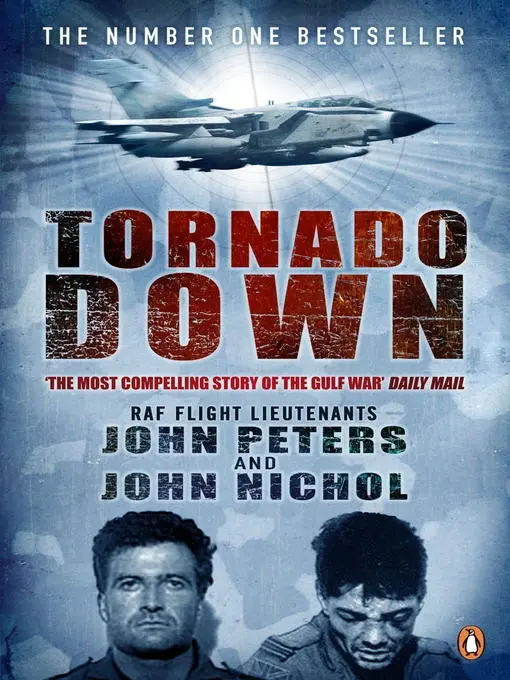
- Название:Tornado Down
- Автор:
- Издательство:Penguin Adult
- Жанр:
- Год:2008
- Город:London
- ISBN:978-0-14-193771-7
- Рейтинг книги:5 / 5. Голосов: 1
-
Избранное:Добавить в избранное
- Отзывы:
-
Ваша оценка:
Tornado Down: краткое содержание, описание и аннотация
Предлагаем к чтению аннотацию, описание, краткое содержание или предисловие (зависит от того, что написал сам автор книги «Tornado Down»). Если вы не нашли необходимую информацию о книге — напишите в комментариях, мы постараемся отыскать её.
In
, John Peters and John Nichol tell the incredible story of their part in the war against Saddam Hussien’s regime. It is a brave and shocking and totally honest story: a story about war and its effects on the hearts and minds of men.
Tornado Down — читать онлайн бесплатно полную книгу (весь текст) целиком
Ниже представлен текст книги, разбитый по страницам. Система сохранения места последней прочитанной страницы, позволяет с удобством читать онлайн бесплатно книгу «Tornado Down», без необходимости каждый раз заново искать на чём Вы остановились. Поставьте закладку, и сможете в любой момент перейти на страницу, на которой закончили чтение.
Интервал:
Закладка:
John Peters: It was clear as they led us away from the shattered bunker that the bad stuff was about to begin. This was the place the friendly guys at the first airfield had warned us about. We had to be near Baghdad.
We were taken outside. I felt the air fresh on my skin for a moment. I was sweating with fear. My mouth was dry. When you’re blindfolded you start to feel things more intensely. We were led down into yet another bunker, but with more steps, deeper than the one we had left. The corridor twisted and turned. At one point we splashed through a pool of water collecting in this new subterranean labyrinth. The atmosphere was extremely hostile by now. It was at this point they separated us, another clue about the coming punishment, if there were any need for one. I was pushed into a room, alone: a cell of some sort? I blundered around, kicking the walls, trying to work out how big it was, and trying not to think of what was going to happen to me. They left me for a bit, but then the door burst open, and a pack of guards rushed in, grabbing and dragging me into a room nearby.
A couple of seconds later, they jumped at me, using just boots and fists at this stage. It felt like about ten of them were beating me, although it couldn’t possibly have been that many. They laughed and joked about it among themselves. The helplessness was a big part of it, humiliating, sordid, degrading.
‘No,’ I thought, ‘I am not the one degraded here.’ Looking back, I realise I must quickly have become punch-drunk. I remember my head rolling uncontrollably, lolling from side to side. But I was trying very hard to stay on top of it mentally. That was the challenge. A boot caught me on my bad knee.
The main thing on my mind was: ‘Is there any way I can win? How can I win?’ They had total control over me. I would only be able to hold out for so long; therefore, physically, I could not win. ‘I must win mentally,’ I thought.
But what was there to win, under those circumstances? The answer, and it was the only answer I could come up with, was by not changing in any way, by staying the same person, mentally if not physically. There was no way I was going home a zombie or a basketcase (if I ever got home). It wasn’t quite as calculated as this, as cool as this; it was more like scrabbling for some kind of escape route, for a way out.
Some of these thoughts had been half-formed even before reaching the Gulf, some of them were a reaction to what was going on. But the main notion I held onto was: ‘Whatever happens, I’m not going to let the bastards change me. I’m going to come through this, and if I come through this, I’m going to go home to Helen and Guy and Toni, and I’m going to pick up my ordinary, reasonably happy life and my good job and get on with it, and make it as much like it was before as possible.’
It was an idea, something to hang onto. Humiliation is something that almost everyone has had to go through: try facing a power-mongering boss, or people who put you down socially. How did other people deal with that? Don’t let the bastards grind you down, that’s what everyone always says. So I decided I had to depend on my own integrity, at a very basic level: I had to believe in my own worth.
I had to think how they would try to defeat this ‘no change’ objective. What were my worst fears? Supposing they gang-raped me? Under the circumstances, it seemed only too likely. That might change me: it might well change anyone, male or female. I had to try to believe that they were the ones dragged down by this, not me. Supposing they ripped out my fingernails? My teeth? That would certainly change the way I looked, but it wasn’t going to cripple me for the rest of my life, make life unlivable. This was the notion I fixed on.
They might beat me, literally, but in my own way I could at least keep on trying to beat them. There was nothing else to do.
Helen Peters: Staying sane was my priority. Sometimes I would look at a photograph of John, and think, ‘I might never see him again…’ but then I would try and squash the thought. If I thought about it too much, it might come true. There was a suitcase in the corner of the bedroom, which John had left half unpacked, and I just left it. I thought if I moved his clothes, and hung them all back up, it might be unlucky. It seemed to me that the way to keep going was by not thinking too much about the things that might be happening to John. That would only make me feel worse. Having two small children to look after kept me fully occupied, and I tried to concentrate on that. Some of the other wives said they could not sleep until their husbands came home, that they could not do anything, that they just felt desperate. But what could that achieve? Perhaps I had one advantage: I did not really believe that John was dead. I really didn’t. I am not a very religious person, but I did believe in something then: I was sure I would feel differently if he had been killed, that somehow I would know.
This feeling, call it superstition if you like, was borne out all the more by the experience of a friend. I went to see her the day her husband had failed to return from his mission. It was awful: the first thing she said to me was, ‘I knew he was dead. I woke up at two o’clock this morning, with these awful feelings that something was wrong. I couldn’t get back to sleep.’ She lay awake, setting conditions for herself: ‘if nobody has come knocking by six o’clock, it will be all right.’ By 6.15 nobody had come, so she went downstairs and made herself a cup of tea. At seven o’clock, the Station Commander arrived.
‘It was all organised,’ she said. ‘That was the thing. Everything was organised for him not coming back. All the arrangements were taken care of for him not coming back.’
What she told me was frightening and terrible, but at the same time, it helped. It helped because when John was shot down, I had been watching the television late at night, thinking about him in danger, but I had not had any of the feelings she described. Of course I doubted my superstition; something had happened, and I had had no premonition of it. But then, I thought, maybe that is because nothing really serious has happened to him. Not yet, anyway. I could hope… I could only hope so.
John Nichol: The guards returned, dragged me back outside, collected JP from another cell, and led us down the steps and through the water. This journey was to become horrendously familiar, its end inevitable and routinely horrible. They sat us both down in a brightly lit room, and removed the blindfolds. JP looked wrecked. He looked as though they had just slapped him awake. He did not seem aware of his surroundings, did not appear to be taking much in, as though he had had a very thorough going-over indeed, worse than my own.
Seated behind a long table, an interrogator confronted us. He was flanked by two obese thugs, almost stock villains straight out of Central Casting: greasy-haired, they were wearing brown plastic shoes and brown socks on their feet. Presumably, they were Ba’ath Party interrogators. Both of them were dressed, incongruously, in British flying-suits that were much too tight. Too fat to be airmen, they had put on the flying-suits in an obvious but misguided effort to draw us in, to put us at our ease. The main interrogator stared at us, in silence, for a full minute, like the professional he undoubtedly was. Then he began the questioning, stuff about our mission and any other missions we might have knowledge of. We replied with the stock formula: name, rank and number. Finally, he said something in Arabic, whereupon one of the slugs heaved himself to his feet, and led me out of the room, into another part of the building. We were now clearly entering the classic cycle of interrogation and torture that would culminate either in our death, severe injury, or, most likely, our co-operation. The beatings we had already been through showed that the Iraqis were not likely to compromise in any way. They would escalate the violence if they had to. The continual shifting, the blindfolding and unblindfolding, were all part of the textbook interrogation technique, designed to disorientate, to confuse, and to unsettle. It worked. I had a horrible feeling in the pit of my stomach that it was about to intensify, that it was about to get much worse.
Читать дальшеИнтервал:
Закладка:
Похожие книги на «Tornado Down»
Представляем Вашему вниманию похожие книги на «Tornado Down» списком для выбора. Мы отобрали схожую по названию и смыслу литературу в надежде предоставить читателям больше вариантов отыскать новые, интересные, ещё непрочитанные произведения.






Обсуждение, отзывы о книге «Tornado Down» и просто собственные мнения читателей. Оставьте ваши комментарии, напишите, что Вы думаете о произведении, его смысле или главных героях. Укажите что конкретно понравилось, а что нет, и почему Вы так считаете.