John Nichol - Tornado Down
Здесь есть возможность читать онлайн «John Nichol - Tornado Down» весь текст электронной книги совершенно бесплатно (целиком полную версию без сокращений). В некоторых случаях можно слушать аудио, скачать через торрент в формате fb2 и присутствует краткое содержание. Город: London, Год выпуска: 2008, ISBN: 2008, Издательство: Penguin Adult, Жанр: nonf_military, Биографии и Мемуары, на английском языке. Описание произведения, (предисловие) а так же отзывы посетителей доступны на портале библиотеки ЛибКат.
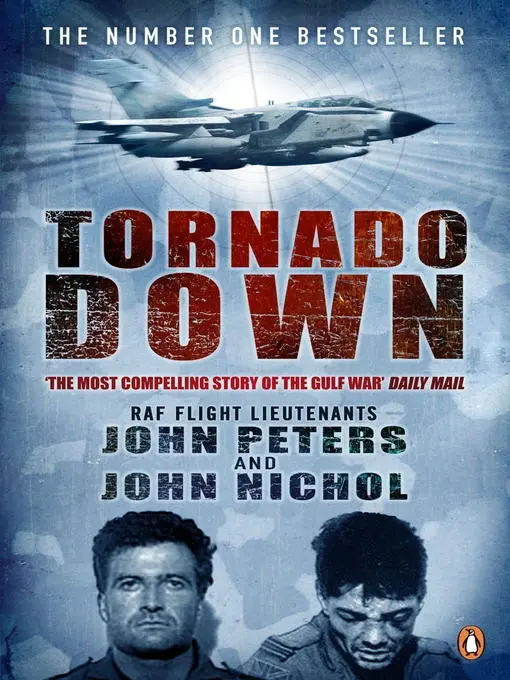
- Название:Tornado Down
- Автор:
- Издательство:Penguin Adult
- Жанр:
- Год:2008
- Город:London
- ISBN:978-0-14-193771-7
- Рейтинг книги:5 / 5. Голосов: 1
-
Избранное:Добавить в избранное
- Отзывы:
-
Ваша оценка:
Tornado Down: краткое содержание, описание и аннотация
Предлагаем к чтению аннотацию, описание, краткое содержание или предисловие (зависит от того, что написал сам автор книги «Tornado Down»). Если вы не нашли необходимую информацию о книге — напишите в комментариях, мы постараемся отыскать её.
In
, John Peters and John Nichol tell the incredible story of their part in the war against Saddam Hussien’s regime. It is a brave and shocking and totally honest story: a story about war and its effects on the hearts and minds of men.
Tornado Down — читать онлайн бесплатно полную книгу (весь текст) целиком
Ниже представлен текст книги, разбитый по страницам. Система сохранения места последней прочитанной страницы, позволяет с удобством читать онлайн бесплатно книгу «Tornado Down», без необходимости каждый раз заново искать на чём Вы остановились. Поставьте закладку, и сможете в любой момент перейти на страницу, на которой закончили чтение.
Интервал:
Закладка:
‘These people are not going to be happy to see us,’ I thought. ‘How would our own ground-crew treat an Iraqi pilot who had just dropped an awful lot of high-explosive on them, and killed all their mates?’ Answer: a mite roughly.
As we drew nearer to that airfield, we were sneaking looks out of the window when we could. The sheer quantity of the anti-aircraft weaponry around it amazed us. There was Triple-A everywhere. There were, quite literally, hundreds of gun emplacements. It was bloody staggering. One thing Saddam Hussein did not lack was manpower and basic weaponry. There were SAM sites; gunpits dug into the sand with single-, double- and quadruple-barrelled heavy-calibre machine-guns and cannon; tanks with extra machineguns mounted on them; trenchloads of infantry clutching light-calibre machine-guns, automatic rifles and hand-held missile launchers… it was a real rats’ nest. And this was just in the one small sector we were in. Nobody on the Intelligence side had foreseen this amount of Triple-A, or if they had, we certainly had not been briefed about it. It would be common knowledge to the Intelligence bods now though, now that the first couple of raids had gone in and been hosed down with lead. There was little wonder we had been hit, overflying this lot… If you got anywhere near it, sheer weight of numbers meant that somebody would probably get lucky at your expense.
Driving through these emplacements, our guards began waving their guns out of the window, tooting the horn of the Land Rover and pointing at us. We passed three Iraqi soldiers in a trench. We could clearly recognise the SAM-7 missiles they were holding at the ready from the pictures we had seen pre-war. We drove past a French-built Roland missile battery, sitting on its truck with its radar going, the missiles rotating slowly on their launcher. From down here it looked enormously formidable.
Our captors paraded us around two sides of the huge airfield, tooting and waving, as if we were some sort of travelling sideshow. They drove us through the HAS sites, which were exactly like our own back in Germany. Snug inside, Iraqi Air Force Mig-23 ‘Floggers’ and Mig-29 ‘Fulcrums’ glowered back at us. Although our mission had been only to harass, to deny them the use of their runways, there was clearly quite a bit of work still to be done around here for the rest of the Coalition Air Forces. As they bundled us out of the vehicle, we saw a huge crowd of enlisted men, ordinary airmen and some soldiers, standing around waiting for us. There was hate in their eyes, a burning, intense glare of pure hatred. That was horrible. In Vietnam, it had been known for the locals to kill US aircrew shot down near their village, sometimes slowly, for instance by tying them to a tree and flaying them. The same sort of thing had happened occasionally in the Second World War to Allied aircrew baling out over Germany – death by pitchfork or by spade. These airmen looked angry enough for anything.
Once again, we felt it was the officers who saved us. Speaking good English, many of them trained in Britain, the Iraqi aircrew in charge were professionally curious, and concerned. They treated us exactly as if we were friendly visiting fliers, who had dropped in to overnight at their airbase on a training sortie, instead of an enemy trying to blow it to bits. Noticing JP’s injured eye, some of them started asking, ‘Who hurt you? Who hit you? Which one of these men hit you?’, assuming we had already been beaten up. We kept our silence. Despite their evident friendliness towards us, we did not really feel like establishing friendly relations in return; they were, after all, the enemy. Like any aircrew when we visited a foreign base, the officers were interested, they wanted to know what we flew, how it performed, where we had come from. There was also, and this was surprising, something like a suspicion of awe in their eyes: they respected us.
At that moment the air-raid sirens began to wail. The next raid was incoming. The officers grabbed us, pulling us down with them into the Pilots’ Briefing Facility. Unlike our own PBF, this one was underground, a concrete bunker that had been dug deep into the desert. They had to help JP down the steps, as his leg was by now stiff and painful.
Once under cover, the Base Commander, a Colonel, came up and greeted us. A Saddam Hussein lookalike, as were many of the Iraqi senior officers, he was affability personified: ‘How are you? How are they treating you? Do you want anything? Coffee?’ We held our peace. ‘Don’t worry,’ he said, ‘you are safe now. Would you like some water?’ We both accepted this, since we could see that the water was the same as they drank themselves. With our hands still tied behind our backs, they had to feed us the water. They brought us dates, cake and oranges with the water, but we refused them. We did not want to risk the chance of being drugged. We were sitting on the stairs, because the bunker was crowded out with Iraqi aircrew. Above our heads, we could hear the Triple-A ripping out incessantly at the incoming raid. The Colonel carried on talking to us as if nothing were happening.
‘What were you flying? Were you flying Jaguars?’ We gave him name, rank and number, but nothing else. Everybody in the room kept staring at us, as if we were a circus act, but there was no unpleasantness. Overhead, we could hear the distant thud of the bombs exploding.
When the raid was over, the Colonel pointed at JP’s leg, and said, ‘We are going to take you to the doctor.’ They bundled us back up the steps. Outside, there was still a big crowd of airmen hanging around, waiting for the second performance of the pantomime.
‘Don’t be afraid. Nothing will happen to you here.’ Another guard came up. The Colonel took us over to the jeep we had arrived in. ‘Look, I am going to put you in this vehicle. You must not try to escape. If you try to get out, this man will shoot you.’ He pointed at the guard.
Instead of going to the doctor, we were driven to the main gate, where another guard armed with an AK-47 got in. Both of these guards were great bears of men, not the type one could overpower, except, perhaps, with a bullet. An hour or so later, we saw a highway with the sign ‘Baghdad’ on it. There was plenty of traffic rolling along this road, but we turned in another direction. After another hour, we arrived at a second airfield, graced at its entrance with an enormous image of Saddam Hussein. We were both thinking, ‘This is where the fun starts.’
They kept banging our heads with the rifles, to keep them down, presumably so that we would not see any aircraft or the layout of the base. One of the guards led us into another underground bunker, this one a War Operations Centre (WOC), obviously important to them because they put blindfolds on us first. The atmosphere had suddenly become a lot less friendly. They kept poking us with the guns. Tied back for so long, virtually since the moment of our capture, the muscles of my arms were on fire, the hands numb from the interrupted circulation.
The younger of the two guards prodded us sharply with his pistol. ‘Now you are in Iraq!’ he shouted. ‘Now you are in Iraq!’ As if we didn’t know.
Once we were right inside the WOC, the Iraqis, still aircrew at this stage, took the blindfolds off. The fluorescent lights gave the room a bluish tinge, sucking the colour from the faces around us. There was no depth to their features, they looked flat and pallid, menacing. They began questioning us again, much more aggressively now, the words shouted in our faces: ‘What did you fly? Where are you from? Which base?’ They alternated between the two of us. We gave them name, rank and number, as usual, but nothing else.
A doctor appeared, and for some reason decided to take my blood pressure. They had to untie my hands for this. The blood began flowing back into my fingers, but was stemmed to begin with by the cramped tissues; it was agony and relief at the same time, but mostly agony, just like the slow unfreezing after extreme cold. Once they were untied, I could not bring my arms forward, they had seized up, straight out behind my back; the muscles had cramped rigid. I sat there with them sticking out behind me.
Читать дальшеИнтервал:
Закладка:
Похожие книги на «Tornado Down»
Представляем Вашему вниманию похожие книги на «Tornado Down» списком для выбора. Мы отобрали схожую по названию и смыслу литературу в надежде предоставить читателям больше вариантов отыскать новые, интересные, ещё непрочитанные произведения.





Обсуждение, отзывы о книге «Tornado Down» и просто собственные мнения читателей. Оставьте ваши комментарии, напишите, что Вы думаете о произведении, его смысле или главных героях. Укажите что конкретно понравилось, а что нет, и почему Вы так считаете.