John Nichol - Tornado Down
Здесь есть возможность читать онлайн «John Nichol - Tornado Down» весь текст электронной книги совершенно бесплатно (целиком полную версию без сокращений). В некоторых случаях можно слушать аудио, скачать через торрент в формате fb2 и присутствует краткое содержание. Город: London, Год выпуска: 2008, ISBN: 2008, Издательство: Penguin Adult, Жанр: nonf_military, Биографии и Мемуары, на английском языке. Описание произведения, (предисловие) а так же отзывы посетителей доступны на портале библиотеки ЛибКат.
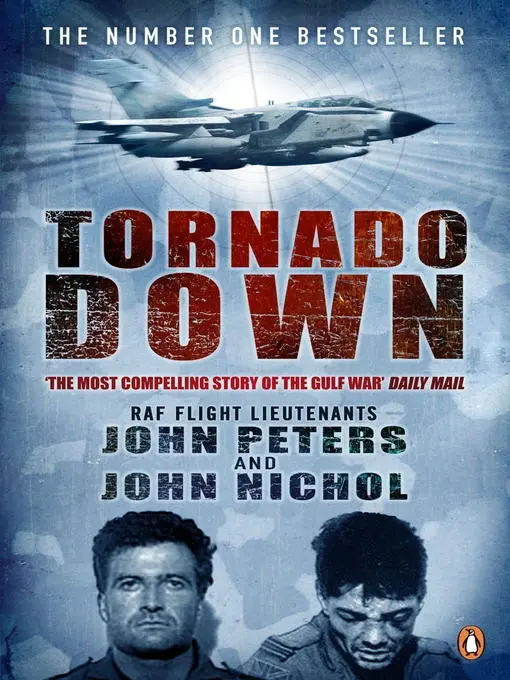
- Название:Tornado Down
- Автор:
- Издательство:Penguin Adult
- Жанр:
- Год:2008
- Город:London
- ISBN:978-0-14-193771-7
- Рейтинг книги:5 / 5. Голосов: 1
-
Избранное:Добавить в избранное
- Отзывы:
-
Ваша оценка:
Tornado Down: краткое содержание, описание и аннотация
Предлагаем к чтению аннотацию, описание, краткое содержание или предисловие (зависит от того, что написал сам автор книги «Tornado Down»). Если вы не нашли необходимую информацию о книге — напишите в комментариях, мы постараемся отыскать её.
In
, John Peters and John Nichol tell the incredible story of their part in the war against Saddam Hussien’s regime. It is a brave and shocking and totally honest story: a story about war and its effects on the hearts and minds of men.
Tornado Down — читать онлайн бесплатно полную книгу (весь текст) целиком
Ниже представлен текст книги, разбитый по страницам. Система сохранения места последней прочитанной страницы, позволяет с удобством читать онлайн бесплатно книгу «Tornado Down», без необходимости каждый раз заново искать на чём Вы остановились. Поставьте закладку, и сможете в любой момент перейти на страницу, на которой закончили чтение.
Интервал:
Закладка:
We both started chuckling. Suddenly it all seemed desperately funny. We were struck by the absurdity of it all. Once we had started laughing, it was difficult to stop; nervous relief, perhaps.
‘Let’s get out of here,’ I finally said, when we had calmed down a bit. We scrambled to pull ourselves together. I was eyeing the deadly pall of red and black smoke that the Tornado, burning a mile or two away, had become. Hello, Saddam, we’re right here: come and get us.
Weighed down by g-suits, water bags, pistols, flying and biological warfare suits, life-jackets, helmets and the packs, we staggered about fifty yards away from the parachutes billowing on the ground. Then we dropped down: must make contact immediately with the Combat Search and Rescue guys. To get our personal locator beacons out, we had to inflate our Dayglo orange life-jackets. Perfect camouflage, of course: about as unnoticeable as a pack of baboons Christmas shopping on Oxford Street. As soon as the beacons came free, I started transmitting: we were both down, both alive, at such and such a bearing and distance from the bullseye point. We could only pray that someone friendly was receiving these signals.
The bright yellow fibreglass survival box holds a dinghy (also Dayglo orange) for ditching in the sea, and a separate haversack with water, food, extra clothing and a survival knife. Great, but the way the kit was always packed meant we had to inflate the dinghies to get the haversacks out. We watched helplessly as the bright orange inflatables careered out of the packs. Very useful in the desert, a Dayglo orange dinghy – and very good target practice for someone, if we were not very careful.
We looked at one another: you really did have to laugh. We could hardly have attracted more attention if there had been a Royal Marines band playing. There we were, standing near a tower of thick smoke, surrounded by bright orange dinghies and yellow fibreglass boxes. A few yards away, the huge orange-and-white parachutes were merrily flapping and billowing over the completely flat and cover-free terrain…
A sobering realisation dawned on us both at the same time. The missile that had brought us down must have been hand-held, because there had been no warning on the RHWR before it hit, and because if it had been anything else we would almost certainly have seen it. It would have been swooping down on us, rather than swarming up from behind. This meant only one thing: the guys who shot us down were near – and they were looking for us, now. Somehow, that wasn’t quite so funny.
Hurriedly, we stabbed the life-jackets with JP’s Swiss Army penknife, and buried them in the sand. The dinghies were more difficult: they are compartmentalised so you can’t deflate them by accident. We stabbed and slashed at them, shovelling sand over the deflated bits as best we could. But we wanted to get away from our parachutes as quickly as possible, they were just lying back where we had left them. There was a trail of equipment leading to where we were crouched: parachutes, harnesses, helmets, half-buried life-jackets and life-rafts. It would have taken the rest of the day to conceal it successfully. This was not like training: this was not Europe, where you could hide things in a nice bush.
Perhaps if we moved fast enough, I thought, the stuff would not make much difference as to whether we got caught. I decided we should just run for it. I glanced at JP; he was still looking a bit muzzy from the smack on the head, and he definitely wasn’t thinking very straight. But he was the Roger Bannister round here, at home he ran a mean half-marathon. He should be able to outpace me: provided, that is, he could run in a straight line.
We swung the haversacks onto our backs. I told JP to take his pistol out, and make sure it was loaded, with the safety-catch on. We each had two magazines, with nine rounds per mag. The search parties had better come in ones and twos, I thought. The idea was to start jogging. I realised at once that JP’s leg, as well as his eye, had been damaged on ejection. Always a danger. Nothing seemed to be broken, the ligaments were probably torn though. He was limping quite badly.
Still, we had to put as much distance between us and the mound of tell-tale litter as possible. We walked for about five or ten minutes, then JP stopped. It was like walking through treacle, the sand deep and slippery around our boots, treacherous. It was searing hot in our flying gear. This wasn’t so much making a run for it, as making a shuffle for it.
‘We’ll have to get down on our hands and knees and crawl,’ he said, ‘we’re leaving tracks.’ We looked back, and burst out into another fit of the giggles. There were great big parallel footprints travelling through the sand from the point where we had landed. They read: ‘Enemy officers this way.’ We pulled ourselves together, continuing westward for a while. I realised it was going to be extremely difficult to judge time or distance in the desert: no landmarks, no nothing.
Another thought struck me: what if we did meet an Iraqi patrol? Were we carrying anything that might be of intelligence value to them? I quizzed JP. He looked at me blankly. His kneepad with the target map in it had been ripped clean off in the course of the ejection, but I was carrying a route map, with the Combat Search and Rescue reference points on it. Shit, that could be very useful to them. I took it out. It definitely had to go; but how, without matches?
I did what they always do in the Boy’s Own stories: ripped out a bloody great chunk of it, stuffed it in my mouth, and started chomping. For some reason, JP began laughing again. I can’t think why the sight of his navigator standing in the middle of the Iraqi desert eating a tasty little map should be so amusing. The rest of the map I buried.
Then it occurred to me: what if we met friendly tribesmen? I asked JP if he had the list of useful Arab phrases on him, that somebody at the British Club in Bahrain had jotted down on a piece of paper for us a few days previously, at the party I now wished fervently we were still enjoying. He dug the paper out of his flying-suit and unfolded it.
The first phrase read: ‘I am hurt, can you help me?’ This seemed quite useful, so we read on eagerly. Then came ‘Pilot, need food, please give me water’ and ‘May the peace of God be with you’. Better still. But as the list continued, to our amazement the phrases grew increasingly bizarre:
‘The red bandana looks lovely on you. Please put it on for me…’
‘I did enjoy the dried breadcrumbs and water, you really must give me the recipe before I leave…’
‘Yes, Your Excellency, travelling in the boot of your car would be fine…’
Our friend at the party had been having a little joke with us… What a wag. There were more laughs, but then right at the bottom, the last phrase read ‘Saddam Hussein is a bastard, I hate him’. When JP came to this one he stopped grinning. ‘Oh, shit!’ We buried that list in the desert, too; I’d eaten enough paper for one day.
After an hour or so at a steady walk, we suddenly got a bad feeling that we had been spotted. We both had this sudden sensation down the backs of our necks that we were being watched. I could feel my neck and scalp prickling. The ground was very, very flat. We tried to crouch down even more. Around us, the odd bit of bush pushed its way up through the sand; for ‘bush’ read twig with a couple of stalks on it, sprouting a handful of tiny leaves – useless for cover. We tried to move more quietly, quickening the pace.
Then we heard something – vehicles, noises, something was happening away to the right of us. We dropped down immediately, flat against the ground, frozen. Gradually, the noises faded.
We lay there for what seemed hours, convinced we could see somebody over on a slight rise, looking in our direction. It was a horrible feeling: exposed; vulnerable; insecure.
Читать дальшеИнтервал:
Закладка:
Похожие книги на «Tornado Down»
Представляем Вашему вниманию похожие книги на «Tornado Down» списком для выбора. Мы отобрали схожую по названию и смыслу литературу в надежде предоставить читателям больше вариантов отыскать новые, интересные, ещё непрочитанные произведения.





Обсуждение, отзывы о книге «Tornado Down» и просто собственные мнения читателей. Оставьте ваши комментарии, напишите, что Вы думаете о произведении, его смысле или главных героях. Укажите что конкретно понравилось, а что нет, и почему Вы так считаете.