John Nichol - Tornado Down
Здесь есть возможность читать онлайн «John Nichol - Tornado Down» весь текст электронной книги совершенно бесплатно (целиком полную версию без сокращений). В некоторых случаях можно слушать аудио, скачать через торрент в формате fb2 и присутствует краткое содержание. Город: London, Год выпуска: 2008, ISBN: 2008, Издательство: Penguin Adult, Жанр: nonf_military, Биографии и Мемуары, на английском языке. Описание произведения, (предисловие) а так же отзывы посетителей доступны на портале библиотеки ЛибКат.
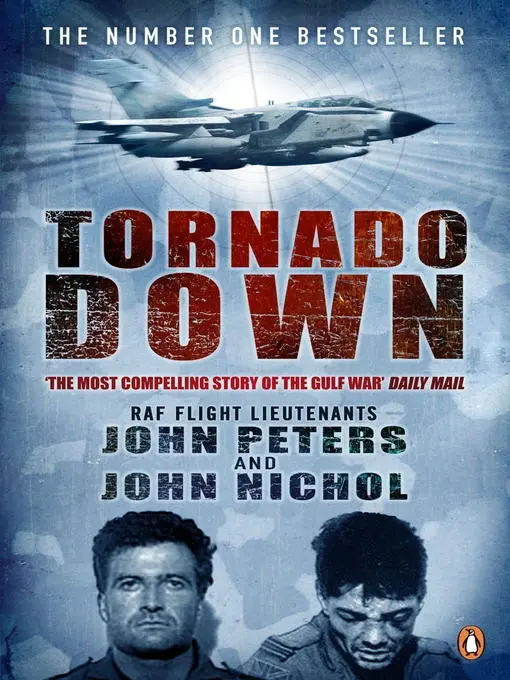
- Название:Tornado Down
- Автор:
- Издательство:Penguin Adult
- Жанр:
- Год:2008
- Город:London
- ISBN:978-0-14-193771-7
- Рейтинг книги:5 / 5. Голосов: 1
-
Избранное:Добавить в избранное
- Отзывы:
-
Ваша оценка:
Tornado Down: краткое содержание, описание и аннотация
Предлагаем к чтению аннотацию, описание, краткое содержание или предисловие (зависит от того, что написал сам автор книги «Tornado Down»). Если вы не нашли необходимую информацию о книге — напишите в комментариях, мы постараемся отыскать её.
In
, John Peters and John Nichol tell the incredible story of their part in the war against Saddam Hussien’s regime. It is a brave and shocking and totally honest story: a story about war and its effects on the hearts and minds of men.
Tornado Down — читать онлайн бесплатно полную книгу (весь текст) целиком
Ниже представлен текст книги, разбитый по страницам. Система сохранения места последней прочитанной страницы, позволяет с удобством читать онлайн бесплатно книгу «Tornado Down», без необходимости каждый раз заново искать на чём Вы остановились. Поставьте закладку, и сможете в любой момент перейти на страницу, на которой закончили чтение.
Интервал:
Закладка:
The questioning went on and on. Eventually, one of the interrogators said, ‘You must answer our questions now, or we’ll have to send you to the nasty people. We don’t want to send you there. Talk to us now, and we will keep you here.’
We ignored them.
‘We are all pilots together,’ they said. ‘We are friends. Although we are at war, we have the same job to do. Talk to us, it will be better for you.’ It was an attractive offer. It was so tempting to say, ‘OK, mate’, tell them what we knew, and avoid the little physical treats that we were pretty sure lay in store for us. But we did not.
‘If you do not tell us we will send you to Baghdad. They will hit you in Baghdad, they will put you on television, you will not like it.’
The words ‘on television’ rang a big alarm bell. Did that mean we were going to be paraded for propaganda purposes, or would we be held as ‘human shield’ hostages – as some Britons were after the invasion of Kuwait – at a high-value target, and displayed to reduce the probability of an air raid on the place?
After an hour of this interrogation, angry that we had refused to speak, they untied the ropes and put ratchet handcuffs on our wrists, racking them up tight until they cut further into the rope-reddened flesh. The crepe bandage blindfolds went back on, cutting into our eyelids. Blindness must be terrible. For us, used to relying absolutely on sight for our jobs, being blindfolded was appalling. We kept looking up, to check if we could see out under the edge of the cloth at all. They guided us back upstairs and into a station-wagon; this one had its windows smeared with mud so that we could not see out. In fact, I could make out a little through the crêpe, but then night fell suddenly, coming as a complete surprise. We had been shot down at 0932 local time, and had already been in Iraq a whole day. It felt like about five minutes. Time flies when you are having fun.
We drove on for hours, both sleeping fitfully. My left hand was once again in agony, it was ballooning, the steel circle cutting into my flesh. I could tell JP’s leg was giving him major problems: he kept trying to ease it out straight. When we stopped for fuel, we asked them for something to drink. My mouth was like a dried bone. They refused to allow us any of the water they took themselves.
We buzzed along the tarmac for another hour. Finally the vehicle slowed. As the main gate of a third airfield swam up out of the inky desert blackness, there was a sudden flash of light, brilliant even through the crêpe, followed by an earthquaking explosion that shook the car. The earth erupted around our ears, debris spattering down on the roof. Bombs started exploding all around us. Away to the right, something big exploded, illuminating the horizon. The air-raid sirens started going off, the sky absolutely lit up with Triple-A, while hundreds of guns across the airfield began hammering away; it was a deafening, bludgeoning noise. Heavy-calibre gunfire, when you are near it, unable even to stick your fingers in your ears, numbs all thought, shatters the nerves, rattles the fillings in your teeth. No matter how many times you go through it, you never get used to it. Sitting smack in the middle of this pyrotechnic inferno, we felt extremely small, extremely insignificant and fantastically vulnerable. And scared.
During a slight lull in the attack, they drove the station-wagon in through the gate and parked it next to a concrete blast wall. Immediately, the next wave of aircraft came racketing in, the bombs rippling across the ground, creeping across the airfield towards us, crump after terrifying crump. We were very pleased when they hustled us down into a bunker. Just as we got into the room, we heard the horrible intensifying whine of an incoming bomb. The noise curved across space to meet us, winding up to a furious high-pitched whistle as the bomb winged along its trajectory, louder and louder as it scythed in. Then the whistling suddenly got lower in pitch. Everybody in the room could tell it was going to be a direct hit – on us. They were expressionless with fear. Time slowed right down, unwinding frame by frame. The room had gone death-quiet; we were frozen, waiting. Then, a bullseye, it hit with a shattering roar. The room we were in was prefabricated, a substructure built within the concrete shell of the bunker. Its roof fell in, the walls curling in towards us, the grey plastic facings bulging and then splitting under the enormous crunching force of the blast behind. Chunks of concrete protruded through the split plastic, like bones sticking through ruptured flesh. Furniture went flying everywhere, the desks whizzed past, the lights shattered, splinters of glass rained down. As the bomb came screaming in at us, John and I both hit the floor, out of sheer self-preservation. But the Iraqis were extraordinary: they just stood there, screaming curses at the sky and invoking the wrath of Allah. Perhaps they really believed that ‘The life beyond is greater…’, as the Koran promises. It struck me as brave in the extreme.
Through the blindfold, I could see great clouds of dust billowing in the darkened room, lit now by a single emergency bulb. The rank, acrid stench of cordite from the bomb filled the air; broken glass crackled underfoot. His curses tailing off as the dust settled, one of the guards began signalling to his friend, smacking a fist into his cupped palm, then pointing at us. As he strode through the debris towards me, fist drawn back, I flinched away from him, anticipating the blow. He stopped, realising suddenly that I could see him.
‘Don’t worry,’ he said. ‘Don’t worry.’
‘Yes, you bastard,’ I thought, ‘don’t worry is right. I know what you’ve got in store for us.’ He fetched another piece of bandage, and re-tied the blindfold. Now, like JP, I, too, was completely blind.
They took us down a level, further into the bunker. We were standing together in a room, surrounded by a hostile crowd. We had just been dropping bombs on them, now they were going to make sure we paid for it. Then I heard JP being hustled out. I was alone.
15
Name, Rank and Number
John Nichol: No one had asked me any questions. That’s the strange thing. But I knew what was coming. There was a horrible presence in the room, an aura of hatred. I could smell the sharp body odour of the surrounding guards; I could feel their enmity. I sensed a gauntlet of hostility – silent, brooding, expectant, savouring my helplessness. It was time.
There was a sudden rush as they fell on me.
The first fist in the mouth is a mind-numbing shock, whatever you have been told to expect in training. I was trying to hold my head down to protect my face, my legs together to protect my balls. A crowd was around me, whipping, kicking, punching, the blows driving in from all angles. I swerved away from the blows; I could feel the skin bruising in their path. The bones felt crunched under the impact of the thudding boots.
The blood spurting from my nose was thick and grimy on my tongue and teeth. I could not protect myself. They had total control; they could do anything they damn well liked to me, and they could take as long as they liked doing it. I’d come from being a significant part of the biggest high-tech military offensive in history to being a speck in a Third World desert. I was surrounded by an implacable enemy population, and there was just me. Talk about coming down to earth with a bang. I twisted away, but it was not much use when there were seven or eight of them, kicking, punching, whipping on all sides, eager men, anxious to please their masters, to show what they could do. When they got tired, they left me curled up in a corner to think about it. There was no sense of time, it was like being in a black vacuum, seamless and endless.
Читать дальшеИнтервал:
Закладка:
Похожие книги на «Tornado Down»
Представляем Вашему вниманию похожие книги на «Tornado Down» списком для выбора. Мы отобрали схожую по названию и смыслу литературу в надежде предоставить читателям больше вариантов отыскать новые, интересные, ещё непрочитанные произведения.





Обсуждение, отзывы о книге «Tornado Down» и просто собственные мнения читателей. Оставьте ваши комментарии, напишите, что Вы думаете о произведении, его смысле или главных героях. Укажите что конкретно понравилось, а что нет, и почему Вы так считаете.