Thomas Goltz - Chechnya Diary
Здесь есть возможность читать онлайн «Thomas Goltz - Chechnya Diary» весь текст электронной книги совершенно бесплатно (целиком полную версию без сокращений). В некоторых случаях можно слушать аудио, скачать через торрент в формате fb2 и присутствует краткое содержание. Город: New York, Год выпуска: 2011, ISBN: 2011, Издательство: Thomas Dunne Books, Жанр: Биографии и Мемуары, military_history, Публицистика, на английском языке. Описание произведения, (предисловие) а так же отзывы посетителей доступны на портале библиотеки ЛибКат.
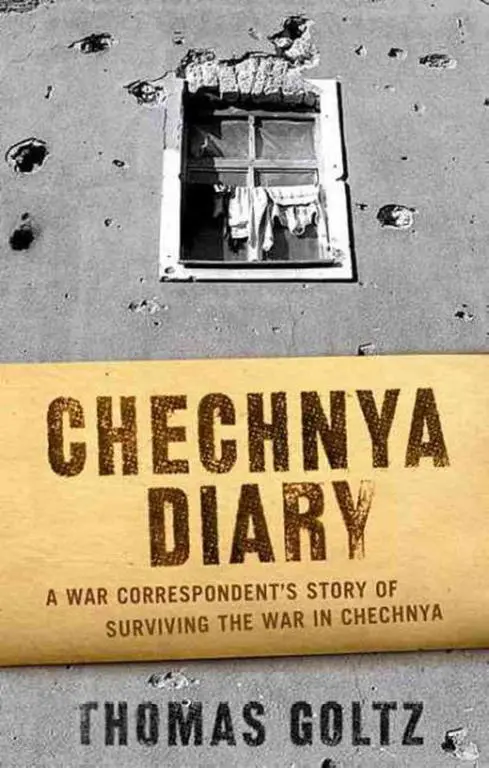
- Название:Chechnya Diary
- Автор:
- Издательство:Thomas Dunne Books
- Жанр:
- Год:2011
- Город:New York
- ISBN:0-312-26874-2
- Рейтинг книги:3 / 5. Голосов: 1
-
Избранное:Добавить в избранное
- Отзывы:
-
Ваша оценка:
Chechnya Diary: краткое содержание, описание и аннотация
Предлагаем к чтению аннотацию, описание, краткое содержание или предисловие (зависит от того, что написал сам автор книги «Chechnya Diary»). Если вы не нашли необходимую информацию о книге — напишите в комментариях, мы постараемся отыскать её.
is part of a larger exploration of the role (and impact) of the media in conflict areas. And at its heart,
is the story of Hussein, the leader of the local resistance in the small town that bears the brunt of the massacre as it is drawn into war.
This is a deeply personal book, a first person narrative that reads like an adventure but addresses larger theoretical issues ranging from the history of ethnic/nationalities in the USSR and the Russian Federation to journalistic responsibility in crisis zones.
is a crossover work that offers both the historical context and a ground-level view of a complex and brutal war.
Chechnya Diary — читать онлайн бесплатно полную книгу (весь текст) целиком
Ниже представлен текст книги, разбитый по страницам. Система сохранения места последней прочитанной страницы, позволяет с удобством читать онлайн бесплатно книгу «Chechnya Diary», без необходимости каждый раз заново искать на чём Вы остановились. Поставьте закладку, и сможете в любой момент перейти на страницу, на которой закончили чтение.
Интервал:
Закладка:
We rolled up the windows as we passed through the industrial zone, once home to the Chechen oil refineries, but now only the source of the thick black smoke that hung over the city like an evil cloud. Flames shot out of natural gas pipes at every intersection. The empty shells of heavy ordnance lay everywhere, as did the twisted wrecks of cars, trucks, tanks, and APCs.
The impression of vast, gratuitous destruction and carnage was only underlined and framed by the weirdly ordinary. There were blossoms on the trees, beer and candy salesladies on virtually every street, and paddleboats gliding across the city’s reservoir, its filtration and delivery system long since bombed into rubble. Long lines formed at wells to fill milk containers and other vessels with dubiously clean drinking water, shuffled to basement “homes” via pushcarts.
But the strangest thing was that everyone was smiling.
Smiling.
They would not take the smiles off their faces, no matter what they had to say.
“Shock,” said Sheets succinctly.
One of those smiling people we met was Tzutzayen Hampash, age twenty-nine, who owned or managed or had taken control of a restaurant near the reservoir. There were no doors or windows and no kitchen, really—just part of the building where Mr. Hampash kept a coal fire burning both for heat as well as to grill his kebabs.
“How are things?” asked Lawrence.
“Couldn’t be worse!” smiled Hampash.
We culled a few operational details. Hampash first opened on January 12, shortly before the fall of the city. It was not clear whether he aimed to serve approaching Russian troops or retreating Chechen guerrillas, and we thought it indiscreet to ask. Then a renewed onslaught, coupled with the Ramadan fast, forced a new closure for most of February, but Hampash had reopened on March 14, and business had been pretty good since. He had sixteen customers that very day. We declined to be the seventeenth and eighteenth. Our decision had nothing to do with money or the lack thereof. Roving packs of dogs were eating corpses throughout the city, and we were worried about where Hampash got his meat. Our concern may have been legitimate in the abstract, but it was dumb and downright unfriendly in the concrete circumstances at hand. Hampash was open.
We drove to the city center.
Or what was left of it.
The gutted, blackened, and pockmarked presidential executive building still stood on the main square and represented a recognizable monument for general orientation, as well as the backdrop for victory photographs being shot (via the new Polaroid camera craze) by the roving units of Russian troops in town. A Russian flag blew in the breeze above the building like some warped reminder of the Soviet banner flying atop the Berlin Reichstag in 1945, as if the conquest of the two cities were equal in martial glory in Russian eyes. Curiously, that same red banner of the defunct USSR flew from the flag masts atop any number of APCs prowling the town on patrol.
I took a picture of Lawrence in front of the presidential building and he took one of me. Then we were interrupted by the warnings of a demolition team about to raze the building across the square that had once served as the local parliament, or council of ministers, I forget which. We stood our ground and trained our cameras on the building.
Boom, went the charge. Crash —the five-story structure came tumbling down, filling the square with dust. To look at the pictures we took, it might appear we were at ground zero when the bombs went off.
We sought out various locations that meant something to us, like the French House hotel. Destroyed. Then the Mona Lisa restaurant. Crushed. A private family home where Lawrence had stayed during the siege. Obliterated. Finally, we drove over to the guest house where Zviad Gamsakhurdia had set up his Georgian government in exile after his ousting from power in Tbilisi in 1992, and where his remains were reinterred during my first visit to the city in February 1994. It was difficult finding the place, due to lack of familiar reference points. The two-story building was half blown away, and the interior walls were exposed. The Georgian Apostolic cross marking Zviad’s grave, however, was still in place, even if shrapnel-hacked and scarred. Nearby was the memorial to the Deportations of February 23-24, 1944. The commemorative plaques had been blasted off the walls and the ancient cemetery was completely destroyed by bombs, or more likely, given the dearth of craters, Russian soldiers who had used the evocative sight for target practice. But in the middle of the holy rubble stood the stone Quran, unscathed—down to the green cloth “page marker” resting on the Surat An-Nas.
“Awuzzu fi Rabb an Nas
“ Malik an Nass …”
I seek refuge in the Lord of Man
“The King of Man…”
“Let us see if we can interview Khadjiev,” Lawrence suggested, and we made our way through the rubble-filled streets to a compound housing the Grozny city administration that served as the seat of government for the Moscow-appointed administration.
Security was high. The outer streets were lined with APCs, the entrance was strung with barbed wire between concrete sentry posts, manned by shaven-faced Russian youths in alligator-plate flak jackets holding back vicious guard dogs. All windows were draped with anti-grenade netting, and snipers prowled the roof.
“We have an interview with Comrade Salman,” Uncle Larry told the guards, lying. Remarkably, we were escorted inside. Word passed from secretary to secretary and even more remarkably, we were soon escorted into the presence of the man regarded by virtually all nationalists as the ultimate predatl, or traitor, a man who had accepted the mantle of Chechen leadership from the blood-tainted Russian hand—Salman Khadjiev.
In the flesh, however, the former Minister of Chemical Industry in the Russian Federation was a surprisingly frank and friendly individual whose main motivation for assuming the unsavory position of Russian-appointed interim leader of Chechnya was his deep and personal loathing of General Djohar Dudayev, whom he repeatedly compared with Hitler. While Lawrence’s questions were wide-ranging indeed, I only had one, and I saved it for the end of the interview. It concerned what was happening at Samashki.
“I don’t know,” he said after a long silence. “No one knows. They will not tell us.”
Back along the Trasa, or main Grozny-Mozdok highway, Lawrence told me he wanted to file the Khadjiev interview as a television news feed, backed up by the generic pictures of wanton destruction in Grozny. None of it was really news, but it was better than nothing, and somehow it justified his presence in the region.
“Post 13,” I pleaded, as we started our descent into Sernovodsk.
“It’s a waste of time,” said Sheets.
“Five minutes,” I begged.
Uncle Larry relented and told Nodar to turn left and not right at the Sernovodsk Friday Mosque, and we trundled out the four or five miles to the Post 13 checkpoint blocking access to Samashki. The crowd on our side of the APC had grown, augmented by even more Canadian reporters, who seemed to take a greater interest in the Samashki story than all the American publications with Moscow-based correspondents combined. They were led by Elizabeth Ward of the Toronto Star, and also included Geoffrey York of the Globe and Mail, as well as Jennifer Gould, a Canadian writing about the disappearance of Fred Cuny for the Village Voice. There were more Russians gathered at Post 13, too. The yellow bus of Old Jesus had been augmented by a couple of cars festooned with the markings of the Russian Emergency Services Ministry, an institution with strong military links that still serves as a sort of local Red Cross, as well as a vehicle very clearly marked with the logo of the International Committee for the Red Cross itself. A French, or perhaps Belgian woman sitting in the front seat was having an animated discussion through a translator with our baby-faced sergeant with blonde hair and Nike sneakers. The subject was Russia’s obligations as a member and signatory of the Geneva Conventions, and subsequent protocols, to allow the ICRC access to anywhere it wanted to go. But the sergeant just smiled and shook his head and evoked his mantra about “orders from Mozdok.”
Читать дальшеИнтервал:
Закладка:
Похожие книги на «Chechnya Diary»
Представляем Вашему вниманию похожие книги на «Chechnya Diary» списком для выбора. Мы отобрали схожую по названию и смыслу литературу в надежде предоставить читателям больше вариантов отыскать новые, интересные, ещё непрочитанные произведения.




Обсуждение, отзывы о книге «Chechnya Diary» и просто собственные мнения читателей. Оставьте ваши комментарии, напишите, что Вы думаете о произведении, его смысле или главных героях. Укажите что конкретно понравилось, а что нет, и почему Вы так считаете.