Mila 18 - Leon Uris
Здесь есть возможность читать онлайн «Mila 18 - Leon Uris» весь текст электронной книги совершенно бесплатно (целиком полную версию без сокращений). В некоторых случаях можно слушать аудио, скачать через торрент в формате fb2 и присутствует краткое содержание. Жанр: Старинная литература, на английском языке. Описание произведения, (предисловие) а так же отзывы посетителей доступны на портале библиотеки ЛибКат.
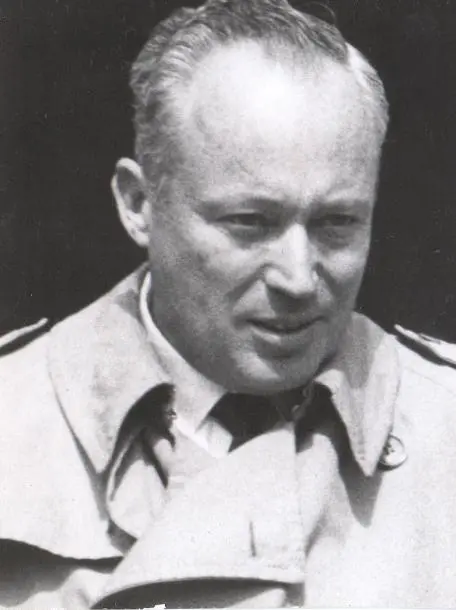
- Название:Leon Uris
- Автор:
- Жанр:
- Год:неизвестен
- ISBN:нет данных
- Рейтинг книги:4 / 5. Голосов: 1
-
Избранное:Добавить в избранное
- Отзывы:
-
Ваша оценка:
Leon Uris: краткое содержание, описание и аннотация
Предлагаем к чтению аннотацию, описание, краткое содержание или предисловие (зависит от того, что написал сам автор книги «Leon Uris»). Если вы не нашли необходимую информацию о книге — напишите в комментариях, мы постараемся отыскать её.
Review
"Not only authentic as history . . . . It is convincing as fiction . . . . The story of a sacrifice that had real meaning and will forever be remembered . . . . A fine and important novel." --
Leon Uris — читать онлайн бесплатно полную книгу (весь текст) целиком
Ниже представлен текст книги, разбитый по страницам. Система сохранения места последней прочитанной страницы, позволяет с удобством читать онлайн бесплатно книгу «Leon Uris», без необходимости каждый раз заново искать на чём Вы остановились. Поставьте закладку, и сможете в любой момент перейти на страницу, на которой закончили чтение.
Интервал:
Закладка:
“You do want the truth, Your Grace?” Gabriela asked bluntly.
The round Polish face of Archbishop Klondonski reddened. He did not want the truth. He simmered down and weighed his words with astute care, for his adversaries were sharp and persistent. “We do have a natural humanitarian concern. Yet the Catholic Church is not a political body, a welfare agency, or an underground. Whether or not we like the present occupants of power is a moot point. The fact is, they do constitute the government of Poland. We have a clearly outlined duty to perform. We cannot enter the Church into any schemes in wholesale defiance of authority.”
“It seems to me, Your Grace, that our Church was born in defiance of the authority of Rome,” Gabriela said. “If you would only see the cardinal in Krakow. If we could organize a thousand convents to take five children each ... If ...”
The archbishop held up his hand. “I have closed my eyes and turned my back and shut my ears to those priests and nuns who have engaged in these activities. But my office is for the spiritual welfare—”
“Your Grace, this is basic Christianity we are pleading for.”
“—the spiritual welfare of the Polish people,” he finished, ignoring the interruption.
“Those are Polish people behind the wall.”
“Not really, Miss Rak. The fact of the matter is, we could do more for them if they agreed to conversion. Now, if they allowed us to give their children instructions in Catholicism—”
Gabriela came to her feet. “Your Grace! I am shocked! You cannot demand what God has decided.”
“I will overlook your rudeness and forgive because of the tensions of the times. I suggest penance.”
What was left of Gabriela’s restraint exploded. “I will not forgive yours. And I suggest penance for you, sir! For every child who dies within your power of saving.”
The archbishop was on his feet, as was Monsignor Bonifacy. A frightened Father Kornelli knelt and kissed the archbishop’s ring. He held it in Gabriela’s direction.
She looked at his hand. “You are not the representative of the Jesus Christ my father taught me of,” she said, and walked from the room.
Chapter Three
Journal Entry
STRANGE STUDIES ARE BEING initiated. Dr. Glazer told me six months ago that he had cancer and his time was limited. A few weeks ago he became very ill. Subsequent examination also revealed a severe case of malnutrition. Glazer has chosen to starve to death so that the Orphans and Self-Help doctors can initiate through him the world’s first comprehensive medical study on starvation. There is a mania to have some good come out of even this basest form of human death. Each day the doctors meet and hold forums on the mental and physical changes of those dying of hunger. Most all of them have malnutrition themselves and discuss their own cases. (The full study of starvation is carried as a separate volume of the journal, 9A.) Dr. Glazer dictates his symptoms, his mental changes. The patterns are shrinking flesh, gauntness, skin changing color, weakness, running sores, depressions, hallucinations, gnarling bones, bloating stomachs. A Jewish gift to posterity—a detailed account of what it is like to starve to death.
Irony. This week a shipment of wheat and tons of potatoes poured in to Transferstelle and was distributed without cost to the orphanages. Our orphanage on Niska Street also received medicines we no longer thought existed and even chocolates (which no one has seen for two years). Then a school was licensed and textbooks arrived. The orphanage was painted; new bedding arrived. Then we discovered why we were being killed with kindness. Elaborate preparations were for the benefit of a delegation of Swiss from the International Red Cross who had arrived to investigate ghetto conditions. Our orphanage was designated as “typical and representative.”
The Swiss carried out the sham to a T. They called a committee together at the Jewish Civil Authority building and called witnesses. The JCA, led by Boris Presser and Paul Bronski, dutifully testified to “bettering-leveling” conditions. (Truth: December death by starvation went over 4000.) Silberberg, the last friend left on the JCA board, tried to get to the Swiss to give them the truth. He was hauled off to Pawiak Prison as a “Bolshevik agitator.” I was invited to testify and declined. What could I say? Could I endanger these life-giving shipments when I know that the moment the Swiss leave it would all return to as before.
We decided to get Andrei over to the Aryan side to reach Christopher de Monti. It is known that De Monti is escorting the Swiss about Warsaw. Andrei reasoned that it would be better not to attempt to get to De Monti, for even if he were to turn in our report the Swiss would not submit it. It is doubtful the Swiss would stick their necks out or suddenly make overt moves in behalf of humanity. I conceded that Andrei was correct. The Swiss do not wish to anger the Germans. They treat the entire war with indifference. We hear of numerous examples of courage by the Danes, Dutch, French, et al., in behalf of their Jewish communities. Even the Swedes, who are neutral, are harboring thousands of Jewish refugees. Could it be that ghettos could exist only in Poland, the Baltics, and Ukrainia? Our Bathyrans in Hungary and Rumania tell us that Adolf Eichmann is even having trouble extracting the Jews there. Ervin Rosenblum works in the basement, filing more and more documents. It seems that everyone is writing diaries these days. There is a terrible fear that we will be forgotten.
Jules Schlosberg continues to build weird weapons in the next room to Ervin. I am certain we’ll be blown up someday.
ALEXANDER BRANDEL
It became dangerous in the streets in the winter of 1941 after the American entry into the war. The only regulars on the streets were the corpses deposited each morning for the sanitation squads. Even the sanctity of the Club Miami became suspect.
Andrei seldom showed up in public these days, so when a feeler was sent out by Paul Bronski for a meeting, Bronski was led through a series of blind alleys before he was finally allowed to come face to face with his brother-in-law in a basement somewhere near the Gensia Gate. Bronski’s blindfold was removed. He adjusted his eyes to the candlelight.
Andrei stood over him, thinner and wearier. He studied Paul. Paul had aged with a sudden sagging of his face muscles. The thin face was prune-like, he shook with constant tension, and his fingers were yellow with tobacco stains.
They changed amenities without feeling.
Paul took out a cigarette and went through one-armed contortions of lighting it “This business of arms smuggling and underground press is putting the entire population in grave danger,” he said.
“Go on.”
“No matter what you think about us on the Civil Authority, we try our best under very limited conditions. If your activities increase it will only antagonize the Germans.”
“Shut up, Paul! For Christ sake—antagonize the Germans. Do you think this death on the streets is a result of any underground? Are you so damned naive after two years of this as to think the population is in any less danger whether there is an underground or not?”
Bronski shook his head. “I told Presser it was useless to argue with you. Andrei, there is no magic formula for getting rid of the Germans. Your activities are costing us millions of zlotys in fines and the lives of hundreds in reprisals.”
“And what about the fines and the executions before the underground existed?”
“I’m trying to do the best I can,” Paul whined.
Andrei could not even bring himself to hate Paul Bronski. Once, before the war, he had had a reluctant admiration for the penetrating mind and sharp wit that could run him through mental acrobatics. The thing before him was a mumbling shell.
Читать дальшеИнтервал:
Закладка:
Похожие книги на «Leon Uris»
Представляем Вашему вниманию похожие книги на «Leon Uris» списком для выбора. Мы отобрали схожую по названию и смыслу литературу в надежде предоставить читателям больше вариантов отыскать новые, интересные, ещё непрочитанные произведения.










Обсуждение, отзывы о книге «Leon Uris» и просто собственные мнения читателей. Оставьте ваши комментарии, напишите, что Вы думаете о произведении, его смысле или главных героях. Укажите что конкретно понравилось, а что нет, и почему Вы так считаете.