Mila 18 - Leon Uris
Здесь есть возможность читать онлайн «Mila 18 - Leon Uris» весь текст электронной книги совершенно бесплатно (целиком полную версию без сокращений). В некоторых случаях можно слушать аудио, скачать через торрент в формате fb2 и присутствует краткое содержание. Жанр: Старинная литература, на английском языке. Описание произведения, (предисловие) а так же отзывы посетителей доступны на портале библиотеки ЛибКат.
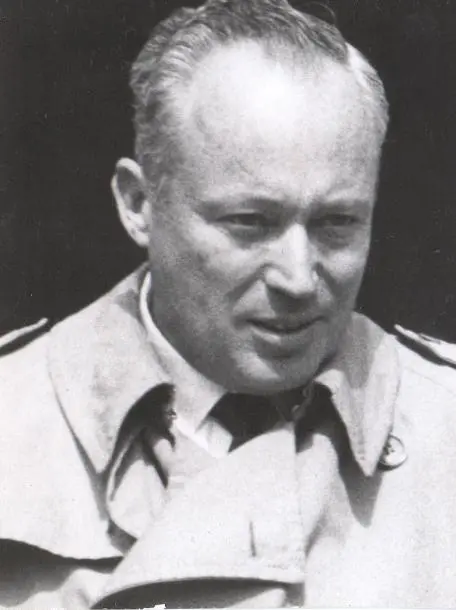
- Название:Leon Uris
- Автор:
- Жанр:
- Год:неизвестен
- ISBN:нет данных
- Рейтинг книги:4 / 5. Голосов: 1
-
Избранное:Добавить в избранное
- Отзывы:
-
Ваша оценка:
Leon Uris: краткое содержание, описание и аннотация
Предлагаем к чтению аннотацию, описание, краткое содержание или предисловие (зависит от того, что написал сам автор книги «Leon Uris»). Если вы не нашли необходимую информацию о книге — напишите в комментариях, мы постараемся отыскать её.
Review
"Not only authentic as history . . . . It is convincing as fiction . . . . The story of a sacrifice that had real meaning and will forever be remembered . . . . A fine and important novel." --
Leon Uris — читать онлайн бесплатно полную книгу (весь текст) целиком
Ниже представлен текст книги, разбитый по страницам. Система сохранения места последней прочитанной страницы, позволяет с удобством читать онлайн бесплатно книгу «Leon Uris», без необходимости каждый раз заново искать на чём Вы остановились. Поставьте закладку, и сможете в любой момент перейти на страницу, на которой закончили чтение.
Интервал:
Закладка:
Andrei Androfski surrendered unconditionally.
It was night. Gabriela came out of her sleep laughing. Andrei sat up, startled. When his heart stopped racing he turned to her. “What’s so damned funny at two o’clock in the morning?”
“I forgot to deliver the candles to Father Jakub!”
And Andrei roared. “Hell! They’re only converts. In a pinch they can de-kosherize some of Rabbi Solomon’s stock.”
They settled into each other’s arms and spoke with that particular endearment known only to those who are very much in love and who feel they have discovered something unique in the universe.
“We have had something, Gaby. More than most people have in a lifetime.”
“There is only one Andrei Androfski. He makes me very sad and he makes me very happy, but I am so glad he is mine. I have more wonderment—more fulfillment—than a hundred ordinary women have in their hundred ordinary lives.”
“No regrets?”
“No regrets. I have been happier with you than a woman has a right to expect.”
“I feel that way about you, Gaby. I wonder why God has been so good to me.”
“Promise me, Andrei, you'll never again try to send me away.”
“I promise—never again.”
“Because I am prepared to take anything. Whatever lies ahead, we go it together, and if the very worst comes, I am happy.”
“Oh, Gabriela ... Gabriela ... Gabriela ...”
“Love ... love ... love ... love ...”
Chapter Two
Journal Entry
GABRIELA RAK HAS GIVEN us all a shot in the arm. Why didn’t we use her earlier? I guess because Andrei tried to shield her. A natural, forgivable impulse. Her first action was to have Father Kornelli organize a dozen young priests about Warsaw who agreed not to register the deaths in their parishes with the authorities. In this way Gabriela (through the priests) can purchase the Kennkarten from the families of the deceased. We estimate in the neighborhood of twenty thousand hidden Jews on the Aryan side. With Aryan Kennkarten they can at least get ration books.
The Ursuline Sisters have always been sympathetic and have taken as many children from us as they possibly can. They have enlisted similar help from the Sisters of the Order of the Lady Immaculate and the Sisters Szarytki of the municipal hospitals in Warsaw.
Gaby has rented flats for three more of our runners (code names: Victoria, Regina, Alina), whose main job is to supply money to hidden Jews.
Andrei tells me her flat on Shucha Street contained a windowless alcove two meters deep. A bookcase was built across it on hinges. Andrei says it is impossible to detect there is a hidden room behind the bookcase.
Zygielboim and Schwartzbart in London radioed us that fifteen thousand dollars had been dropped for us to the Home Army. Tolek Alterman was able to get only $1650. We have put an urgent priority on establishing our own direct contact with England.
Gabriela traveled to Gdynia (where her father was a key engineer in building the port) to see an old friend, Count Rodzinski. He is almost unique, a sympathetic nobleman. His estate includes several kilometers of coast line and he owns several boots. He made a successful trial run to Karlskrona, Sweden. This could be an enormous break for us. From his estate we can smuggle out key people, and from Sweden we can bring in American funds as well as visas and passports. (Our forgeries here are expensive and crude.)
What could we accomplish with a thousand Poles like Gabriela Rak — or a hundred — or two dozen?
ALEXANDER BRANDEL
Of the two, Father Kornelli was far more nervous than Gabriela Rak as they sat in the anteroom of the office of Archbishop Klondonski. The room had a bare, cold, dark, musty appearance. The walls were lined with expressionless statues.
Father Kornelli was young and highly excitable, one of a handful of priests moved to action by the happenings in the ghetto. To him it was a simple basic rule that the saving of lives was the carrying out of Christ’s work.
Monsignor Bonifacy opened the door to the archbishop’s office. “His Grace will see you now.”
Archbishop Klondonski studied them from behind his desk. He was a square, squat man with blond hair, blue eyes, and rugged features that revealed his Slavic peasant ancestry. He was deceptively simple in appearance.
The monsignor, on the other hand, was a thin, gaunt man with slender, even delicate features and dark, penetrating eyes which hinted a shrewd, probing mind.
Gabriela and Father Kornelli kissed the archbishop’s ring, and he waved them into chairs opposite him. Monsignor Bonifacy slipped into a chair across the room, watching, listening, unnoticed.
“Gabriela Rak!” Klondonski said expansively, in the manner of a politician running for office. “By chance the daughter of Fryderyk Rak?”
“Yes, sir.”
“A fine man. A great Pole. I remember him when he was one of the engineers building the port of Gdynia. I was a young priest at the time, not much older than Father Kornelli. Gdynia was my first parish.”
Gabriela studied his open pleasantness and calculated it was a ruse with which he disarmed his visitors.
“If I am not mistaken,” the churchman continued, “he met an untimely death in Switzerland.”
“Your Grace has a phenomenal memory.”
“And your mother—and sister, was it?”
“They live in America.”
“A good place these days. Great Pole, your father. Now, tell me about yourself, young lady.”
“After finishing my schooling I returned to Warsaw and until the war I worked as an aide in the American Embassy. I am now teaching at the Ursuline Convent.”
“Ah, yes.” He leaned back in his chair, smiling like an amiable Friar Tuck, reasonably assured her request would be nominal and in the nature of a personal favor. “And your problem, my child?”
“I am here to speak to Your Grace in behalf of the Jewish Orphans and Self-Help Society in the ghetto.”
The momentum of the conversation stopped. Kiondonski’s blue eyes lost their sweet sparkle. He covered his temporary puzzlement by tapping his fingertips together in mock meditation.
“There is imminent peril that thousands of children will die of starvation in the next few months unless immediate help is forthcoming.”
Bonifacy spoke quickly. “Your Grace has studied the report on the situation.”
“Oh, yes,” he said, taking the cue. “Yes, we have been concerned, naturally.”
“While His Grace expressed concern,” Bonifacy continued to refresh his superior’s memory, “and we concluded in our report that there are hardships in the ghetto, it is a reflection of the times in Poland.”
“Yes, my dear,” said Klondonski, “we are all undergoing hardships.”
“It is difficult to comprehend,” Gabriela answered swiftly, “that Your Grace could study an impartial report and fail to discern the difference between mass starvation and rampant disease in the ghetto and mere privation out here. People are dying off in there at a rate of over five thousand a month.”
Bonifacy spoke in a slow measured whisper now. “Our reports are based on examinations of the ghettos in Poland by a responsible international body, a commission of the Swiss Red Cross. They will be in Warsaw again next week. To date their reports do not bear out your contentions. We feel that the Jews are inclined to a natural tendency to exaggerate.”
Gabriela looked to Father Kornelli for support. Willful cowardice? Closed minds? Fear? A crass expression of anti-Semitism?
“Your Grace ... Monsignor ... ” Father Kornelli said unevenly. “You must necessarily realize that any Swiss report is based on expediency and fear. While I do not have the details of their investigations I am quite certain they are seeing only what the Germans wish seen, listening only to those with whom the Germans will let them speak. Switzerland is vulnerable to German invasion and defenseless. They have everything to lose by getting the Germans angry. If you wish the truth, I suggest you call in Father Jakub, who heads our Convent’s congregation inside the ghetto.”
Читать дальшеИнтервал:
Закладка:
Похожие книги на «Leon Uris»
Представляем Вашему вниманию похожие книги на «Leon Uris» списком для выбора. Мы отобрали схожую по названию и смыслу литературу в надежде предоставить читателям больше вариантов отыскать новые, интересные, ещё непрочитанные произведения.










Обсуждение, отзывы о книге «Leon Uris» и просто собственные мнения читателей. Оставьте ваши комментарии, напишите, что Вы думаете о произведении, его смысле или главных героях. Укажите что конкретно понравилось, а что нет, и почему Вы так считаете.