Alexander Theroux - Darconville’s Cat
Здесь есть возможность читать онлайн «Alexander Theroux - Darconville’s Cat» весь текст электронной книги совершенно бесплатно (целиком полную версию без сокращений). В некоторых случаях можно слушать аудио, скачать через торрент в формате fb2 и присутствует краткое содержание. Год выпуска: 1996, Издательство: Holt Paperbacks, Жанр: Современная проза, на английском языке. Описание произведения, (предисловие) а так же отзывы посетителей доступны на портале библиотеки ЛибКат.
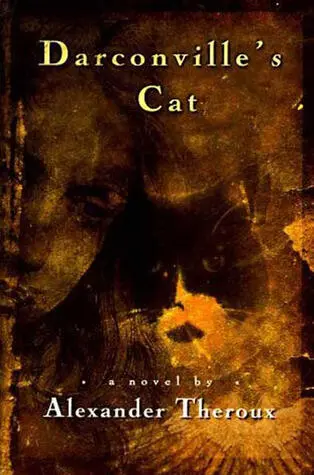
- Название:Darconville’s Cat
- Автор:
- Издательство:Holt Paperbacks
- Жанр:
- Год:1996
- ISBN:нет данных
- Рейтинг книги:3 / 5. Голосов: 2
-
Избранное:Добавить в избранное
- Отзывы:
-
Ваша оценка:
Darconville’s Cat: краткое содержание, описание и аннотация
Предлагаем к чтению аннотацию, описание, краткое содержание или предисловие (зависит от того, что написал сам автор книги «Darconville’s Cat»). Если вы не нашли необходимую информацию о книге — напишите в комментариях, мы постараемся отыскать её.
Darconville's Cat Its chapters embody a multiplicity of narrative forms, including a diary, a formal oration, an abecedarium, a sermon, a litany, a blank-verse play, poems, essays, parodies, and fables. It is an explosion of vocabulary, rich with comic invention and dark with infernal imagination.
Alexander Theroux restores words to life, invents others, liberates a language too long polluted by mutters and mumbles, anti-logic, and the inexact lunacies of the modern world where the possibility of communication itself is in question. An elegantly executed jailbreak from the ordinary,
is excessive; funny; uncompromising; a powerful epic, coming out of a tradition, yet contemporary, of both the sacred and the profane.
Darconville’s Cat — читать онлайн бесплатно полную книгу (весь текст) целиком
Ниже представлен текст книги, разбитый по страницам. Система сохранения места последней прочитанной страницы, позволяет с удобством читать онлайн бесплатно книгу «Darconville’s Cat», без необходимости каждый раз заново искать на чём Вы остановились. Поставьте закладку, и сможете в любой момент перейти на страницу, на которой закончили чтение.
Интервал:
Закладка:
Darconville considered his idolatry: the imagination peopling a vain theogony with creatures it is satisfied to stand back and watch bombinate in the vacuum of art. And so was it with jealousy. A photograph hadn’t come alive, a fancy had. The artist, rarely emerging from himself, so deceives — a man who tries to bribe God with examples of what he means by that deception, offering to a coterie world what he has fashioned by staring at the universe through an eyecard and arranged in fussy selection of what life offers to avoid: an agglomeration of methodically ordered masterproductions in paint and plaster, marble and music, sheetpads and stagecraft which assume the bounds of the conceivable to be the limits of the actual. The more orderly the art, thought Darconville, the more dishonest. The more methodic? Then did it render less the complexities that hide in the causes of man, his love, his astonishment, the stunning shocks which await him in the savage forest of equivocations and inscrutabilities. The very nature of art — failures by which man sought to memorize his experience — spiritually underdeveloped the very disciples who most needed to know what it wasn’t, could not be, able to do. The symbol of art is the tombstone, thought Darconville, an obelisk sticking up out of the earth with the inscription, “I count!”
It was blasphemy, concluded Darconville, who’d long been a student of meanings that stole out in subtle replies, a sacrilege to bang gold, hammer silverswirls, and fashion anti-vital faces with blank and pitiless eyes squinting out cold and one-dimensional from niches cozily recessed from the flux of the world where suffering, if inevitable, at least proved life real. The aesthetic mode, he saw, was that of anti-renunciation! And even as he sat there under that crucifix, before those flickering candles, in that silence, Darconville fully assumed this mandate, that the man who entered a church to get out of the heat or cold lived closer to the spirit of God than he who came there for reasons aesthetic. Darconville prayed. Shall I, he wondered, shall I become some ikonodule, tall and white as a paschal candle, its aesthetic feet folded in prayer? A simulacrum of Mme. de Maupin, that he-she-or-it draped in jumbles of jewels and flowrets, skirting out of the world and begging entrance of the doorman of the ideal? One of those anti-social geniuses of refusal, pteriopes wrapped in procinian cloaks, or pale spectres who, with a delicate extremity of leg put forward and wrists turned after the manner of Parmigianino, floods the world with perfect tears and sighs with pampered weariness, “O come to me, Death! Come, lovely wanton death, to me!”?
Away with drawn pentacles! Away with my pretty pages! Away with formed perfections, compounded electuaries, phoenixes raised out of hypocritical flames!
If he didn’t write, Darconville determined, so be it. He was in love, and the lover who didn’t prove selfless committed a solecism with his heart. And if his writing became poorer in image, it would become more human, he felt, in intent. Away with a prose squeezed free of the real! The shallow jealousies he’d felt low in his soul ate through to his conscience, shot through with self-indulgence and merciless egotism where the difficulty of writing — even the attempt — had its origins. He had committed, he saw, Durtal’s sin of “Pygmalionism”: corruptly falling in love with his own work while bearing a grudge against anything that went against it. Onanism! Onanism and incest! It was a new sin, the exclusive crime of artists, a vice reserved for priests of art and princes of gesture, the father violating his spiritual child, deflowering his dream, and polluting it with a vanity that was only a mimicry of love. Was that one not mad, thought Darconville, who draws lines with Archimedes whilst his house is ransacked and his city besieged? The slogan of the artist is eritis sicut dii . The Anatomy Lesson of Dr. Tulp is a dissection scene of the physicians.
Darconville prayed harder. He saw that jealousy was not the obverse of vanity, rather its ugly twin, the failure in full sumptuousness of one’s private aesthetic, and that was what he suddenly came to loathe in the aesthetician — antagonism by exaggeration for what of nature he couldn’t realize in himself. Jealousy! Jealousy! Was it the cause or the symptom of his madness? What did it matter, for mad it was, the madness that parodied love. A monster! Other’s harm! Self-misery! Beauty’s plague! Virtue’s scourge! Succor of lies, which to one’s own joys one’s hurt applies! It proved a faithlessness, not a devotion, to the girl he loved — and fed on the solitary weaknesses and perverse images of those symbolist projecticians and chimerical madmen for whom language, immoderate, diseased, cabalistic, was an entity, not an activity. To love Isabel was to live for Isabel, for what sculpture casts a shadow that can be touched, what shadow, empty as shade, thin as fraud, that doesn’t recapitulate the static figure throwing it? Were his fictive characters then the servants who’d live for him? Foolish in the conception, twice foolish in the extreme!
Sorrowfully, Darconville looked up at the beaten, traduced Christ, crowned with thorns, stabbed and naked, omnivisual over all the tragedies of mankind that were as real as sin and as heartless as betrayal.
I will polish no massebah with my kisses, vowed Darconville, nor suffîtes will I light to myself. He rose and, walking to the front of the church, lighted a votive candle. Reflected in the shiny obsidian foundation there he saw his face. It was sculpted to shape affectation and to peddle vanity, like one of those hieratic or royal effigies in relief on the antique medals of the Medes. He wished to pray as he watched the asterisk of fire touch the wick aglow and so prayed more deeply for simple selflessness than he had ever prayed before — and, feeling an uprush of grace in the very intention, shed the night in his heart and called it light. And walking out of the little church he felt confirmed in not only the worth of his whispered prayer but in the realization, as well, that Christ had become man and not some bell-shaped Corinthian column with volutes for veins and a mandala of stone foliage for a heart.
XXXI A Gnome
Hang up philosophy.
— WILLIAM SHAKESPEARE, Romeo and Juliet“I WANT TO BE what I was when I wanted to be what I am now,” said Darconville to his cat after he got home. Spellvexit, with one eye raised in a slight circumflex, rather wished his master might descend into particulars, as aphorisms tended to be vague. But Darconville said no more, locked his manuscript into the trunk, and went out for a long walk in the bright sunshine, stopping several times to listen to the nightingales, for spring was advancing rapidly, with multitudes of primroses, a prevalence of crocuses, and on some trees, sycamores, chestnuts, blackthorns, the lower buds were already opening into leaf.
XXXII Fawx’s Mt
I slept and dreamt
That life was joy;
I awoke and saw
That life was duty;
I acted and beheld
Duty was joy.
— RABINDRANATH TAGORE“MY UNCLE is deformed,” said Isabel quietly and kept staring straight ahead. Although it was the first time she’d ever mentioned that, Darconville said nothing in reply. The Bentley wound through several verdant declivities, bumped over a small wooden bridge, and slowly took the hill when the loaftops of the Blue Ridge mountains came into view. It was pine country with faintly Augean smells, a rolling landscape running into lopsided barns, tiny sikes, and dark groves. This was only one of several trips that year along that familiar serpentine road through Scottsville, into Charlottesville, then north over the pummeled turns to where Isabel lived, but Darconville had, for some reason, never met the family. It seemed to be more of a consolation, somehow, for Isabel finally to have got shut of her news— how long she’d kept silent! — than suddenly to hear Darconville say it didn’t matter. And then they arrived.
Читать дальшеИнтервал:
Закладка:
Похожие книги на «Darconville’s Cat»
Представляем Вашему вниманию похожие книги на «Darconville’s Cat» списком для выбора. Мы отобрали схожую по названию и смыслу литературу в надежде предоставить читателям больше вариантов отыскать новые, интересные, ещё непрочитанные произведения.





Обсуждение, отзывы о книге «Darconville’s Cat» и просто собственные мнения читателей. Оставьте ваши комментарии, напишите, что Вы думаете о произведении, его смысле или главных героях. Укажите что конкретно понравилось, а что нет, и почему Вы так считаете.