Alexander Theroux - Darconville’s Cat
Здесь есть возможность читать онлайн «Alexander Theroux - Darconville’s Cat» весь текст электронной книги совершенно бесплатно (целиком полную версию без сокращений). В некоторых случаях можно слушать аудио, скачать через торрент в формате fb2 и присутствует краткое содержание. Год выпуска: 1996, Издательство: Holt Paperbacks, Жанр: Современная проза, на английском языке. Описание произведения, (предисловие) а так же отзывы посетителей доступны на портале библиотеки ЛибКат.
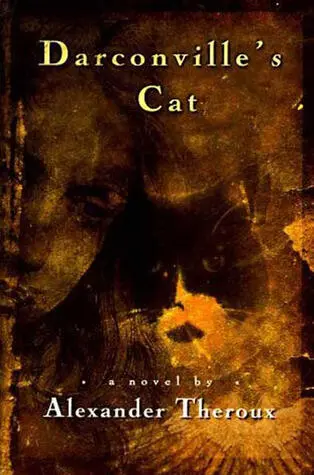
- Название:Darconville’s Cat
- Автор:
- Издательство:Holt Paperbacks
- Жанр:
- Год:1996
- ISBN:нет данных
- Рейтинг книги:3 / 5. Голосов: 2
-
Избранное:Добавить в избранное
- Отзывы:
-
Ваша оценка:
Darconville’s Cat: краткое содержание, описание и аннотация
Предлагаем к чтению аннотацию, описание, краткое содержание или предисловие (зависит от того, что написал сам автор книги «Darconville’s Cat»). Если вы не нашли необходимую информацию о книге — напишите в комментариях, мы постараемся отыскать её.
Darconville's Cat Its chapters embody a multiplicity of narrative forms, including a diary, a formal oration, an abecedarium, a sermon, a litany, a blank-verse play, poems, essays, parodies, and fables. It is an explosion of vocabulary, rich with comic invention and dark with infernal imagination.
Alexander Theroux restores words to life, invents others, liberates a language too long polluted by mutters and mumbles, anti-logic, and the inexact lunacies of the modern world where the possibility of communication itself is in question. An elegantly executed jailbreak from the ordinary,
is excessive; funny; uncompromising; a powerful epic, coming out of a tradition, yet contemporary, of both the sacred and the profane.
Darconville’s Cat — читать онлайн бесплатно полную книгу (весь текст) целиком
Ниже представлен текст книги, разбитый по страницам. Система сохранения места последней прочитанной страницы, позволяет с удобством читать онлайн бесплатно книгу «Darconville’s Cat», без необходимости каждый раз заново искать на чём Вы остановились. Поставьте закладку, и сможете в любой момент перейти на страницу, на которой закончили чтение.
Интервал:
Закладка:
At best, Darconville now coped. He who once wrote with beauty and speed, who in the late hours of creation, even after those long walks in Venice from his home out to the Isola di San Pietro and back, could almost forgo any illumination as his fingers gave out the necessary light, now found himself in the grip of woeful indolence— not writing, nor organizing to do so, but waiting around idly leafing through lexicons and coming to resent the fat cast of characters alphabetically lined up there as if in some melodramatic pre-theatrical to defy his direction and so challenge his art.
Verrine, one of the evil Thrones, had begun to tempt him with long and unrelieved bouts of impatience: “the lyf so short, the craft so long to lern.” Words! They seemed his only experience, his only sophistications. And yet what were they? Merciless little creatures, crowding about and eager for command, each with its own physical character, an ancestry, an expectation of life and a hope of posterity. And yet how he wanted to scream or stamp his foot and scatter them away, terrorizing them into disappearance letter by letter, all those clicks, bangs, buzzes called consonants and vowels that howled and ululated and cooed! It was frustrating, for he believed in the word-as-written, those sweet puncts, safe from the dangers of loss and paralalia, which alone rendered ideas clearly, and until words were written, formulated, he felt, they couldn’t even be considered properly thought out. No, previous to the word, Darconville had always thought, one couldn’t argue that even the most elementary relationships existed. But if they expressed, he wondered, did they communicate? He didn’t know anymore. He put out his cigarette, stubbornly to go back to work, and clicked on the light. The skull on his desk was still smiling.
Darconville set out a bottle of ink and filled “The Black Disaster,” the pen that had served him so long: it seemed labor in itself. He felt a sudden dread in the suck of the drawing nozzle — it sputtered “Govert”! He ignored it. And consulting the watch on the nail he resumed, with obsessive intensity, trying to write, with this insane fancy taking possession of him, however, that at that moment he knew something of what the lonely Power behind life must have known as it drove towards the purpose of a creation which then and thereupon, in the form of two humans, refused to ascribe any benevolence to the act. He hovered over his desk, the pen motionless. But nothing came. In an absurd kind of game he then systematically tried to force himself to believe he was totally incompetent to the task of writing, a methodic dialectic he used with himself on occasion taken from homeopathic therapy in which, to reverse a mood, he dosed himself with a relentless and pitiless exaggeration of it in order to reconstruct its opposite. For who is always what he is at any instant? And so, hopeful, he went profitably hopeless, to remind sickness of health, evil of good, and hunger of abundance, but for it all he made small headway and saw out the profitless forepart of the day with only a single ragged paragraph, one split in two by a particularly inexact image that reflected in the mirror of his craft exactly what he feared he had become — and so he drew his pen in a looping circumlitio over the page and walked out of the room.
The afternoon went poorly, as well. Darconville sat in another room, drinking, wishing to detach himself from the pressure of reflection, the better to mock memory and the misery it made in a mind to worry it to words. Parody of anticipation, parody of meditation: slouching on a sofa, he found the mindless darkness to be even more venal than his own disabilities, the room a Piranesian cell where he sat in demented soliloquy, an examination of his own self-disobedience which, even if it clarified the sense of order at the core of his worst outrages, still kept him from work. He drank more and smoked until his lungs, never strong, ached, thinking, for some reason, of the strange people roaming the world called Coords who, though hating the devil, worshipped him lest, unplacated, he destroy them utterly in the fullness of his malice. Spellvexit, butting about between his legs, was whining — a sound, terribly, like “Govert! Govert!” It was ridiculous. Darconville drank even more and, borne up like the duck who floats on what he drinks, put back his head, concentrating on trying to improve accident by meditation, and closed his eyes for what seemed more hours than idleness warranted or despair ever deserved.
It was late when Darconville woke up, his head light, his body cold, the colder, somehow, for the March winds blowing outside. He went to the front window, gazed at the leafless hedges under the huge tree that still retained a few withered leaves, and returned to his desk. He took up his pen, which seemed to parch like a martyr in his hand. He began to write, nevertheless, addressing the nine-and-ninety lies of the moment he hoped to bargain with for a night of saloperie at the side of the twisted strumpet, Fiction, who lasciviously rolled her eyes at him, hised up her skirt, and beckoned him on. He had come to detest every aspect of that chair and desk which began to assume the shape of a scaffold and found now in the repetition of each failure there a spirit of corruption and death which only confirmed that they were the end of all endeavor, rendering effort itself absurd. The room with its old-fashioned wallpaper seemed an illusion of life, a shadow-scenery of disorganization. And the skull! The skull, making sardonic commentary on his predicament, seemed to cry, “I am still alive, you fool of folly, while you are dead! Hoodoo! Hoodoo! The most beautiful things in life blossom and fade, while only ugly things like ice-floes, boulders, and the brainless ooze remain. What is to be preserved forever? The attributes of immortality are cruelty, greed, and the dogs of war — the serpent with its deathless coil round the concept of Eden!”
But Darconville wrote, and wrote while he doubted to write, and as he wreaked his harms on ink’s poor loss, there was nothing for the trouble in his head, and more, for always — scratch, scratch — the pen went whispering across the page, “Govert! Govert! Govert!” He wrote, erased, and wrote. A line here. A line there. He worked for an hour and, weary, leaned back to look at the dead syntax and désuète word-groupings. A face loomed up, grey. With angry joy, he erased its filthy ears — and began again.
But it was impossible: he saw only an incomplete and unwieldy aftergrief in front of him. Sentences were pulling out of paragraphs, phrases didn’t fit, and words got lost, slip-sliding about in baffling arrangements all their own like those emanations of God we are doomed now to curse, now to bless, in eternal alternation, yet never fully to understand. The tragedy of writing was that its hiding place was its habitat, those secret and inaccessible desert places we seek to violate, like tombs, for miracles we’d have but can only blaspheme in the touching. It was hopeless to know and nowhere to be had. I have divided my life into pages and pilcrows, thought Darconville: a squid’s brain is only one-sixth the size of his ink sack.
Refusing to abide the futility and fakery, the fear, of ritually waiting to write, trying in surviving the world to transfigure his survival, he resumed — until he thought he heard a noise. He listened a moment, then went back to work. But again there came a sudden knocking at the door. He went to the window, threw it up, and called, “Isabel?” The world, he thought, is always as near as my doorknocker is loud. “Isabel?”
There was no answer.
Darconville walked downstairs, wiping his eye, and opened the door. It was iniquitous: in the doorway— tacita sudant praecordia culpa —stood two pedantic ushers from the School of Anabaptism who nightly went trudging about Quinsyburg, house to house, looking for converts. He went to shut the door, impossible for an interposed foot.
Читать дальшеИнтервал:
Закладка:
Похожие книги на «Darconville’s Cat»
Представляем Вашему вниманию похожие книги на «Darconville’s Cat» списком для выбора. Мы отобрали схожую по названию и смыслу литературу в надежде предоставить читателям больше вариантов отыскать новые, интересные, ещё непрочитанные произведения.





Обсуждение, отзывы о книге «Darconville’s Cat» и просто собственные мнения читателей. Оставьте ваши комментарии, напишите, что Вы думаете о произведении, его смысле или главных героях. Укажите что конкретно понравилось, а что нет, и почему Вы так считаете.