Alexander Theroux - Darconville’s Cat
Здесь есть возможность читать онлайн «Alexander Theroux - Darconville’s Cat» весь текст электронной книги совершенно бесплатно (целиком полную версию без сокращений). В некоторых случаях можно слушать аудио, скачать через торрент в формате fb2 и присутствует краткое содержание. Год выпуска: 1996, Издательство: Holt Paperbacks, Жанр: Современная проза, на английском языке. Описание произведения, (предисловие) а так же отзывы посетителей доступны на портале библиотеки ЛибКат.
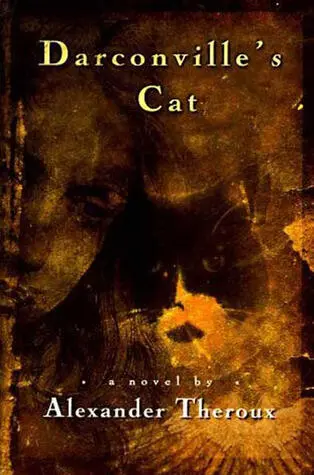
- Название:Darconville’s Cat
- Автор:
- Издательство:Holt Paperbacks
- Жанр:
- Год:1996
- ISBN:нет данных
- Рейтинг книги:3 / 5. Голосов: 2
-
Избранное:Добавить в избранное
- Отзывы:
-
Ваша оценка:
Darconville’s Cat: краткое содержание, описание и аннотация
Предлагаем к чтению аннотацию, описание, краткое содержание или предисловие (зависит от того, что написал сам автор книги «Darconville’s Cat»). Если вы не нашли необходимую информацию о книге — напишите в комментариях, мы постараемся отыскать её.
Darconville's Cat Its chapters embody a multiplicity of narrative forms, including a diary, a formal oration, an abecedarium, a sermon, a litany, a blank-verse play, poems, essays, parodies, and fables. It is an explosion of vocabulary, rich with comic invention and dark with infernal imagination.
Alexander Theroux restores words to life, invents others, liberates a language too long polluted by mutters and mumbles, anti-logic, and the inexact lunacies of the modern world where the possibility of communication itself is in question. An elegantly executed jailbreak from the ordinary,
is excessive; funny; uncompromising; a powerful epic, coming out of a tradition, yet contemporary, of both the sacred and the profane.
Darconville’s Cat — читать онлайн бесплатно полную книгу (весь текст) целиком
Ниже представлен текст книги, разбитый по страницам. Система сохранения места последней прочитанной страницы, позволяет с удобством читать онлайн бесплатно книгу «Darconville’s Cat», без необходимости каждый раз заново искать на чём Вы остановились. Поставьте закладку, и сможете в любой момент перейти на страницу, на которой закончили чтение.
Интервал:
Закладка:
A tiny man in a queer peddler’s hat was thrashing in the turnips down behind the house. The name on the mailbox read: Shiftlett .
“O Lord!” squealed Isabel’s mother, snatching at her haircurlers and bouncing up from the sofa, the springs of which flexed with the noise of Homerican Mars, “why, welc—” she barked her shin “—come to Fawx’s Mt.” Rushing to snap off the television set (a buzzer show) and clapping a bottle (cheap gin) into an under cabinet, she revocif-erated her boisterous welcome. She took Darconville’s hand and squeezed it damply. The striped housecoat she wore — of a croquet-ball pattern — billowed behind her. She explained to Isabel, while dumping an ashtray sprouting a bouquet of long butts, explicitly what she wanted Darconville to forgive and implicitly forgave Isabel what Darconville didn’t really need explained. It was Saturday, she said. A good ol’ reason, she said, just to take it easy. She said not to mind her one bit. “We’ve sure heard right much about you from Isabel, my,” she exclaimed, straightening on the wall a dime-store painting (browsing horse ignoring sunset), “I declare we have. Now you make yourself right at home here, y’hear?”
Isabel seemed embarrassed. But Darconville was frankly relieved. The magic flute of his imagination had, previous to this visit, blown a few melancholy notes: the High Priest Sarastro caught out trying to rescue Pamina from her wicked mother, the Queen of Night. It was not perhaps to be overlooked, least of all by the subject, that he was a Northerner, older, a Catholic, an artist, and that he drove a foreign car ! And he never wanted to put in a position of having to be civil to him anyone who’d have to be; it seemed discourteous. It would have been perfect simply to state that he loved Isabel right then and there, if not to justify his presence then at least to free his mind, but he knew Isabel felt awkward about expressing intimate words in front of anyone, especially, as she once confided to him, her mother.
“Call me Dot,” smiled Isabel’s mother, lighting a cigarette and covering with that commodious housecoat most of the kitchen chair upon which she perched. She was a comic but slightly nervous woman, a mudsill whose English was a queer gumbo of mispronounced words and faulty grammar. Suddenly, the filter of her cigarette, to her great amusement, burst into flames: she’d lit the wrong end. Her face lost its modest attractiveness when she laughed, less for the grin that was too wide than for the myocardial ischemia one heard at the height of risibility.
A tall long-footed woman, she had short perked hair and her eyes, too close together, almost oriental, hesitant enough at times to suggest an affrighted conscience, had a protuberant root-vegetable look which under certain conditions was more exaggerated than, but slightly resembled, her daughter’s. Her cheekbones were pronounced. It was a kind enough face which, however, became queerly distressed and almost cootlike when she was drunk or made a stupid remark — the frutex and suffrutex, surely, of keeping herself too long to the strict boundaries of Fawx’s Mt. — and she spoke, gesturing with secretarial hands which looked like tough bast fiber, in a slovenly Southern accent that refaned even the most regular words into small indistinguishable poverties. Her conversation consisted only, always, of misdis-tributed stresses, spoonerisms, and other ingenuities that extended to using the word “city” as an adjective and even to the founding of a new state, “ Massatoochits .” It was, nevertheless, the stupidity that endears. And she had suffered.
Mrs. Shiftlett loved to talk. Her surname — a not-royal one — had been legally reassumed following the dissolution of her marriage, an acidulous failure she hoped to forget in the process of lifting herself out of general disenfranchisement into local respectability. The axiom that has it that there is one good interview in everyone held true in this case. The story was, however, an old one. A Scotch-Irish trimmer who’d wandered out of Arkansas with only one change of socks and even less principle than education, Mrs. Shiftlett’s husband — Isabel’s father — decamped almost at the very moment she was born and then remarried soon after. (“He had no conscience,” confessed his ex-wife, who added not only that she’d never marry again but vowed, somewhat cynically, that grand and mighty visions were sure as hell visions not of this world.) The hapless mother, sans wedbed and getting even further separated from her alphabet, scrooped about as best she could from Norfolk to Richmond to Petersburg trailing along her daughter through an inclement world of hunger, disappointment, and recession for more than a decade. They lived for periods with relatives, struggled and saved, and then rented a listing farmhouse on the edge of the woods adjoining Fawx’s Mt. whereupon, it so fell out, her only brother, having initially come to the hospital in Charlottesville for a perilous operation — it was explained he’d been shot in the face during a card-game — eventually moved down from over the mountains, some three or four years previous, and settled in with them. They pooled what money they had for a somewhat better house. Life, such as it was, continued. And Isabel kept her father’s name.
Mrs. Shiftlett bird-wittedly gaped through the window down to the turnip patch and gulped a drink from another bottle that suddenly appeared. “You know he’s—”
“Yonder,” interrupted Isabel, nervously. They hadn’t been in the house ten minutes, but she turned to Darconville with pained, pleading eyes. “But let’s go, anywhere,” she whispered, “ please ?”
And so they did.
Fawx’s Mt. was a jerkwater — a little rustic boosterville running in a crazy thalweg along the base of the Blue Ridge chain and hedged in by slonks and dark deciduous forests of rotting logs, leaf-mold, and eaten-away pines. The village consisted of a single street — a woodcart rut brimming with rainwater, wisps of fallen hay — where hunched together were a midget post-office, one general store-cum-gas-station, and two sad old churches of indeterminable denomination. It was a place sunk in blind ignavia, a chaos, a nulliverse of stifling monotony, little movement, and a zipcode of ee-i-ee-i-o. Nature itself, weirdly, seemed not to have existed there in any shape of health. A terrible seriousness breathed through the place, a grim deutero-canonical uneasiness in which, with suspicion their mood and subjection their lodestar, the townsfolk all trod the particular path that paradoxically led to isolated houses, to isolated lives, and to isolated fears. It was as if the people there felt preternatural powers spied down on them with evil intent, with each haunted, whether in the ghost of blight or the spectre of depression, by whatever dismal fantasy he chose as penalty for his puppet sins. There was a subtle mood of guilt there, of unproductive renunciation, of anger. People kept to themselves. And there was usually never a soul in sight. You might have heard the sound of a buzz-saw somewhere, a pigsqueal from a faraway farm, wind. But that was all.
On one particular day, however, the hamlet was all astir. This was Saturday —the day of exception in the South that can repel the heaviest stone melancholy can throw at a man and which alone among others, even in the hazy-mazy stillness of a Virginia heat that breeds flies, sloth, and humidity in the scuppernong vines, can relieve responsibility and somehow refer it to fun. And with what joy is it met! With what excitement! Suddenly, everybody appears. The tools and trials of the workaday week are put away, inhibitions are forgotten, and all tumble-belly together — in feed-hats and hickory-staved bonnets, chinos and calicos, crocheted shawls and cracked leather jerkins — for a bit of community: ice-cream socials, barbecues, country sings, quilting bees, barn dances, or, hell, just an afternoon of plain ol’ hanging around. It was the one day in Fawx’s Mt. when all the good ol’ boys who worked their truck patches or humped pulpwood all week could put on their boots and boiled jeans — the original straight stovepipes — and come into town to suck beers, ogle girls, punch each other with mock sidewinders, and swap stories in terms generally borrowed from the category of human evacuations. But best of all they preferred just to sit around and gawp.
Читать дальшеИнтервал:
Закладка:
Похожие книги на «Darconville’s Cat»
Представляем Вашему вниманию похожие книги на «Darconville’s Cat» списком для выбора. Мы отобрали схожую по названию и смыслу литературу в надежде предоставить читателям больше вариантов отыскать новые, интересные, ещё непрочитанные произведения.









Обсуждение, отзывы о книге «Darconville’s Cat» и просто собственные мнения читателей. Оставьте ваши комментарии, напишите, что Вы думаете о произведении, его смысле или главных героях. Укажите что конкретно понравилось, а что нет, и почему Вы так считаете.