Alexander Theroux - Darconville’s Cat
Здесь есть возможность читать онлайн «Alexander Theroux - Darconville’s Cat» весь текст электронной книги совершенно бесплатно (целиком полную версию без сокращений). В некоторых случаях можно слушать аудио, скачать через торрент в формате fb2 и присутствует краткое содержание. Год выпуска: 1996, Издательство: Holt Paperbacks, Жанр: Современная проза, на английском языке. Описание произведения, (предисловие) а так же отзывы посетителей доступны на портале библиотеки ЛибКат.
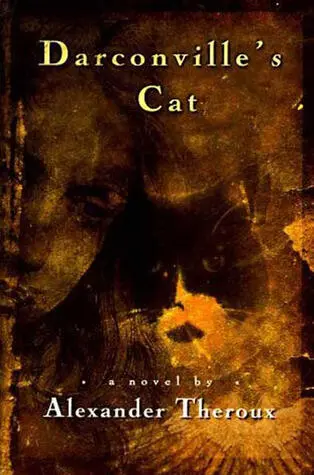
- Название:Darconville’s Cat
- Автор:
- Издательство:Holt Paperbacks
- Жанр:
- Год:1996
- ISBN:нет данных
- Рейтинг книги:3 / 5. Голосов: 2
-
Избранное:Добавить в избранное
- Отзывы:
-
Ваша оценка:
Darconville’s Cat: краткое содержание, описание и аннотация
Предлагаем к чтению аннотацию, описание, краткое содержание или предисловие (зависит от того, что написал сам автор книги «Darconville’s Cat»). Если вы не нашли необходимую информацию о книге — напишите в комментариях, мы постараемся отыскать её.
Darconville's Cat Its chapters embody a multiplicity of narrative forms, including a diary, a formal oration, an abecedarium, a sermon, a litany, a blank-verse play, poems, essays, parodies, and fables. It is an explosion of vocabulary, rich with comic invention and dark with infernal imagination.
Alexander Theroux restores words to life, invents others, liberates a language too long polluted by mutters and mumbles, anti-logic, and the inexact lunacies of the modern world where the possibility of communication itself is in question. An elegantly executed jailbreak from the ordinary,
is excessive; funny; uncompromising; a powerful epic, coming out of a tradition, yet contemporary, of both the sacred and the profane.
Darconville’s Cat — читать онлайн бесплатно полную книгу (весь текст) целиком
Ниже представлен текст книги, разбитый по страницам. Система сохранения места последней прочитанной страницы, позволяет с удобством читать онлайн бесплатно книгу «Darconville’s Cat», без необходимости каждый раз заново искать на чём Вы остановились. Поставьте закладку, и сможете в любой момент перейти на страницу, на которой закончили чтение.
Интервал:
Закладка:
“I have in my hand here,” said one of them, “a personal love-letter from God, and—”
Darconville almost came at him. The speaker’s face fell, seeing danger, and became a patch of wavering greyness against the blanket of night into which, the better to avoid this gothic adversary and his mood of incorrigible refusal, both suddenly fled. A pamphlet fluttered down in the vacuum of their sudden departure — reading “Sparks from My Anvil” by W. C. Cloogy, Evangelist.
Shutting the bolt to, returning upstairs, Darconville roamed the room in maniacal pursuit of what became only confused and scrambled thoughts that left only shadow within shadow, and, although his poor heart was beating at the time for quite another cause, he took a long hard look, one out of which all sentiment had fled, in the direction of his desk. No doom, thought Darconville, is ever executed in the world, whether of annihilation or any other pain, but the Destroying Angel is in the midst of that visitation, and, not ignorant, not blinded to supernatural horror, he could hear the overhead thrashing of evil Exterminans and his bat-colored wings, on parole through the uni-verse, sickening the air with his logocidal wails.
A vision rose up before him. It was Cacotopia, suddenly, all around him, a land of nightsoil swept over by aboriginal winds and lit by a dim moronic moon under which, songless and illiberal, the only tribe of humans left on earth sat around shouting and mocking all that language could, a cultureless people who, having looked back into the past, saw there was no future. Agitprop throttled fable, libraries had been torched, and in the rubble of what once was were enacted scenes better imagined than described, with words, no longer lovely magical influences on nature anymore but now bleats of perversion serving only as a means of evil report, slander, strife, and quarrel.
The final day of pollution had come, and everywhere crowds of the disaffected gathered together in an earsplitting din to smash printing-presses, incinerate books, and befoul manuscripts in an orgy of violence, with everyone spitting, shitting, and bouncing up and down on his heels. Impatience was upon them! Where can we go, they screamed, never to hear or read a word again? They clapped in chant to be led somewhere. But where, where?
Suddenly, political sucksters and realistic insectivores, shoving to the front, puffed up their stomachs and blew lies out of their fingers! A parade was formed! It was now an assembly on the march, an enthusiastic troop of dunces, pasquil-makers, populist scribblers and lick-penny poets, anti-intellectual hacks, modernistic rubbishmongers, anonymuncules of prose and anacreontic water-bibbers all screaming nonce-words and squealing filthy ditties. They shouted scurrilities! They pronounced words backwards! They tumbled along waggling codpieces, shaking hogs’ bladders, and bugling from the fundament! Some sang, shrill, purposely mispronouncing words, snarping at the language to mock it while thumping each other with huge rubber phalluses and roaring out farts! They snapped pens in half and turned somersaults with quills in their ears to make each other laugh, lest they speak and then finally came to the lip of a monstrously large hole, a crater-like opening miles wide, which, pushing and shoving, they circled in an obscene dance while dressed in hoods with long earpieces and shaking firebrands, clackers, and discordant bells! A bonfire was then lit under a huge pole, and on that pole a huge banner, to hysterical applause, was suddenly unfurled and upon it, upsidedown, were written the words: “ In the End Was Wordlessness .”
And as the night grew darker, the noise reached a more deafening level than ever, a thunderous earth-shaking explosion of curses, imprecations, and terricrepant screams which worked the crowd up to such a pitch of frenzy that, suddenly, everyone began leaping into the hole, plummeting into the yawning darkness, flying in feet first as if crazed by oblivion itself! And then it was over. A few harpies and birds of Psapho circled overhead. But not a word, not a note, not a sound was ever heard on earth again.
There was such hopelessness suddenly felt in the room that night that Darconville, who took anthropomorphic devils seriously, snatched up a page in a paroxysm of utter despair and ripped it in half; snatched up another and did the same; then with a spasm of savage relief, he swept the entire manuscript off his desk and without a pause violently kicked the wastebasket into the air. It bounced like a shot across the room—”Govert!”—and rebounded upsidedown—”Govert!”—and then rattled toward a single spot, foolishly spinning to the sound, again, of that enigma variation—”Govert!” And then unable to bear it anymore, Darconville cried out like some adenoidal moron in a gulf of high winds with a voice that collapsed all his grief at once into a blind lamentation that could have been the question he might have asked but, for fear of knowing, was afraid to: “ Why must one’s double always be one’s devil ?”
XXX Examination of Conscience
From the suffering of the world you can hold back, you have permission to do so, and it is in accordance with your nature; but perhaps this holding back is the one suffering you could have avoided.
— FRANZ KAFKAST. TERESA’S, the small Catholic church in Quinsyburg, was the one place above all others where Darconville could always find peace. The following morning found him sitting alone in a back pew and, while regarding the crucifix hung over the altar with its battered, twisted corpus, feeling humiliated by the perfection of form he sought, ignoring life, in his art. Was it possible, had he taken his own personality merely as a debt to discharge that he might sublimate his humanity, seeking to acquire through the vanity of high aesthetic the power of becoming that which he felt threatened him in the beyond? It was a terrible mistake, to be seen as truth only by the gaslamp from which Gérard de Nerval hanged himself.
It had been for more than half a year now that Darconville, long beyond reconsidering the question as to whether language as such was capable of expressing anything of the meaning of life, actually wondered if he himself were. The particular gifts which he had formerly possessed seemed to vanish as he grew in consciousness, as though his very attempts to understand himself, to accept himself, in relation to Isabel, had dried up the springs of his creativity.
Writing, he’d come to see, was the spiritual disease of which it considered itself to be the cure. His “real” jealousy of this person called Govert he aligned, with increasing conviction, to the “ideal” coruscations of his writing, antipodal and, for that, curiously related extreme points of dehumanization, both, with each a fussiness that failed to comprehend that the most important thing for lovers, as for writers, was to know how love, how writing, can be kept vital, not what must exist without it. It was almost a revelation. He had been for so long increating, looking into his artistically nihilitic heart, or otherwise excreating, looking beyond the stars for further promises of the sky and demanding, with romantic arrogance, all suit him, that he had failed to see just what was in front of him — stretched out, as he was, in a hopeless parody of Vitruvian man, his arms unable to close in anything like an embrace. Thaïes had fallen into a well while gazing at the heavens, as Pliny had, into a volcano, while searching the fires. Was there a lesson here?
There was.
It wasn’t that Darconville perceived the world and its meaning differently — he had, in fact, found more meaning — but he could no longer put that meaning into words, nor could he find reason to. The embellishments, the slippered voluptions of his prose? It was praying into a mirror, he saw, in which, reflecting only what was outside it, could be found only the mock and pockless life within the symmetry of its frame. The mirror reversed nature! He knew now why he couldn’t write, for art, like jealousy — living upon what they must deny — considered a sphere of facts altogether distinct from a sphere of values. Darconville looked long at the terrible figure of Christ. Perfection of form, unpronounceable artifice was, he realized, insufficient, and concepts and images without any genuine relation to existence could never any longer for him convey what was most important in life. The Word was made flesh ! And yet what had he made it?
Читать дальшеИнтервал:
Закладка:
Похожие книги на «Darconville’s Cat»
Представляем Вашему вниманию похожие книги на «Darconville’s Cat» списком для выбора. Мы отобрали схожую по названию и смыслу литературу в надежде предоставить читателям больше вариантов отыскать новые, интересные, ещё непрочитанные произведения.





Обсуждение, отзывы о книге «Darconville’s Cat» и просто собственные мнения читателей. Оставьте ваши комментарии, напишите, что Вы думаете о произведении, его смысле или главных героях. Укажите что конкретно понравилось, а что нет, и почему Вы так считаете.