Alexander Theroux - Darconville’s Cat
Здесь есть возможность читать онлайн «Alexander Theroux - Darconville’s Cat» весь текст электронной книги совершенно бесплатно (целиком полную версию без сокращений). В некоторых случаях можно слушать аудио, скачать через торрент в формате fb2 и присутствует краткое содержание. Год выпуска: 1996, Издательство: Holt Paperbacks, Жанр: Современная проза, на английском языке. Описание произведения, (предисловие) а так же отзывы посетителей доступны на портале библиотеки ЛибКат.
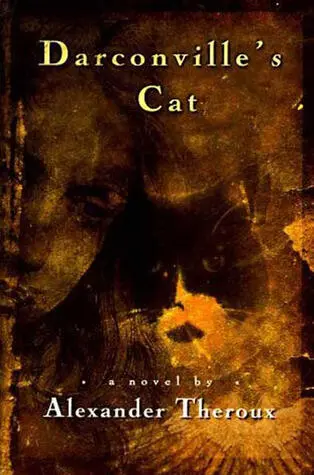
- Название:Darconville’s Cat
- Автор:
- Издательство:Holt Paperbacks
- Жанр:
- Год:1996
- ISBN:нет данных
- Рейтинг книги:3 / 5. Голосов: 2
-
Избранное:Добавить в избранное
- Отзывы:
-
Ваша оценка:
Darconville’s Cat: краткое содержание, описание и аннотация
Предлагаем к чтению аннотацию, описание, краткое содержание или предисловие (зависит от того, что написал сам автор книги «Darconville’s Cat»). Если вы не нашли необходимую информацию о книге — напишите в комментариях, мы постараемся отыскать её.
Darconville's Cat Its chapters embody a multiplicity of narrative forms, including a diary, a formal oration, an abecedarium, a sermon, a litany, a blank-verse play, poems, essays, parodies, and fables. It is an explosion of vocabulary, rich with comic invention and dark with infernal imagination.
Alexander Theroux restores words to life, invents others, liberates a language too long polluted by mutters and mumbles, anti-logic, and the inexact lunacies of the modern world where the possibility of communication itself is in question. An elegantly executed jailbreak from the ordinary,
is excessive; funny; uncompromising; a powerful epic, coming out of a tradition, yet contemporary, of both the sacred and the profane.
Darconville’s Cat — читать онлайн бесплатно полную книгу (весь текст) целиком
Ниже представлен текст книги, разбитый по страницам. Система сохранения места последней прочитанной страницы, позволяет с удобством читать онлайн бесплатно книгу «Darconville’s Cat», без необходимости каждый раз заново искать на чём Вы остановились. Поставьте закладку, и сможете в любой момент перейти на страницу, на которой закончили чтение.
Интервал:
Закладка:
Why, there was even entertainment.
The town brothel, formerly the orphanage, represented the major holding of a certain Mijnheer van Cats who lived alone with his son, a dissolute half-wit seen once a year moping into town to paint its shutters and touch up the wooden sign out front that read : De Zwarte Hertogin.
It became famous. Merchant sailors, visiting in droves, always wept with laughter at the idle boast of its madam, that she had once been the village beauty.
Or was Time, indeed, the archsatirist?
For the place was run by an ooidal-shaped sow with chin hairs, a venomous breath, and grit-colored hair who always carried a ladle and trounced her girls. They called her “Mother Spatula.”
The legacies passed on by the sailors were worse than the legacies they received. It began with the “sweats.”
The town of Sleutel was soon aflame with flews, black spots, boils, pink eye, and the stinking wind that broadcast one to another. Lost souls screamed aloud to be crimped with knives like codfish.
A whole Arabian pharmacy could do no good.
Nothing could stop the contagion, neither chanters nor flagellants. The townsfolk spun into dancing fits, cat-concerts, and fell to biting each other and frying jews. Men castrated themselves and flung their severed genitals into the hopeless sky to placate an angry God.
”The Black Death” struck, and struck, and struck. Bodies fell like the leaves of Vattombrosa. It beggared rhetoric: recorded only by historians as the worst disaster that had ever visited the world.
Mijnheer van Cats, staring upon his son’s flapping tongue and hopeless insanity, waddled up high into the black windmill, took off his clogs, and — pinching his nose — stepped past the revolving vanes and cowardly made his quietus .
They both went to their accounts impenitent.
But more. Mother Spatula ran into her dank room, made mouths in a glass — and shrieked! Her drazels, horrified at the telltale nosebleed, held to her lips a little statue of St. Roch, the Plague Saint; but she went deaf as a beetle to their pleas, curled up into a fork and died, notwithstanding the fact that to her black feet — in order to draw the vapors from her head — they had applied two dead pigeons .
She didn’t seem to attach a good deal of importance to them before she went.
Darconville whispered, “Isabel?”
But she was fast asleep in his arms, her face still smeared with dry tears, her complexion washed of its color and showing a slight an-timonious tint. He noiselessly raised himself on one elbow and, watching over her in the darkness, first blew softly on her forehead and cheeks and then stanched with an ever-so-slight kiss a single tear that sparkled at the edge of one eye like a tiny drop of chalcedony. He felt the physical ache of love as he watched her perfect mouth, slightly open, exhaling the sighs of sleep. They had never made love, but the synecdoche of desire, he knew, waited crucially upon the larger understanding of love in whose fiefdom, until proven true, it always walked a stranger. And, then, he wasn’t even certain she was in love with him ! Or ever could be!
There was so much he wanted to tell her, and it seemed a perfect time to confess it, to hear matters spoken which up to that time he hadn’t, but privately, dared even acknowledge, and yet he hesitated lest the tiniest utterance break the spell of that beautiful moment and, somehow, end it — like the angels called Ephemerae who lived merely for the twinkle of an instant, expiring upon the second they recited the Te Deum . Only let me live, prayed Darconville, as he watched Isabel there, no longer than I might love.
A sleepy voice, then, murmured something. It was inaudible. Isabel suddenly swirked up in alarm. “Oh, if I miss my curfew—”
Darconville placed a finger to her lips, assuring her he’d have her back to Fitts in plenty of time. She smiled, hugging him, and in a sleep-enthralled voice told him about the strange dream she’d had; she was a princess in a beautiful white dress, living all alone in a kind of fairy-forest where she was safe, and then one day — but Isabel clapped her mouth. How thoughtless of her, she said, to have missed his story! Darconville laughed.
Story, tale, book: what were these, he thought, next to the gentle creature whose waist he now took, whose eyes he now searched — and it shamed him to have held back the words of passion, born in his heart, that still beat against his consciousness for deliverance. But what, asked Isabel, could she do to make up for her thoughtlessness? Tell me you love me . Darconville, pushing her back, insisted the story he told was nonsense and that she didn’t have to do anything.
“Oh please.”
Tell me you love me.
“Well, let me see.” Darconville paused. “All right,” he said. “Have you visited Miss Trappe yet?”
“That’s what I’ll do!”
“Do you promise? She wanted to see you, you know.”
Isabel took Darconville’s face in her hands and kissed him, her eyes, sending out sparkles like a carcanet of jewels, brightening with resolution. She witched him in one set gaze, and they fell against each other, giving and taking kisses, with Isabel pausing only to add, by repetition, to the weight of her vow.
“I promise.”
XXVIII A Promise Unfulfilled
Ascend above the restrictions and conventions of the World, but
not so high as to lose sight of them.
— RICHARD GARNETT, De Flagella MyrteoA WEEK LATER Darconville met Miss Trappe in the street. She mentioned in passing, again, that she had a special present she wanted to give to Isabel: the cameo. But, asked Darconville, hadn’t she yet come by for a visit? Miss Trappe smiled sadly. That night when Darconville inquired of Isabel why she hadn’t gone to see Miss Trappe, it was with some surprise that he heard her reply. “I don’t want to dominate her,” said Isabel.
That seemed very odd, indeed.
XXIX “Sparks from My Anvil”
Vain are the documents of men
And vain the flourishes of the pen
That keep the fool’s conceit.
— CHRISTOPHER SMART, “A Song to David”Rumpopulorum , meanwhile, was going poorly. The manuscript had lost its kick, and Darconville, as late as March, flashing back through the accumulation of sheets, found only an unedited mess of junk and logomachies, a collection of pages pierced by arrows of afterthought, marginal loops, and harebrained squirts and scribbles twad-dleized out of doubt and belated reflection: a penman’s alibi. It was, he felt, as if his ability to write were now only a tiny, fitful flame, no, not a flame even, a scarcely visible vapor flickering over a chaos of conflicting wishes, purposes, and hopes that were so disorganized as ut-terly to cancel one another. A line here. A line there.
It was wounding not to be able to write easily, upgathering what of life seemed barren without the expression of it, but Darconville hadn’t written well for months and recently had almost begun to grow ill when walking into the room to work, a dull nausea overcoming him at the prospect, troubling his mind as a touch of lust might trouble a soul only half-escaped from it. Write, wrote, written: it was the most painful verb in the language. He somehow couldn’t believe in it anymore.
There was nothing to be done. He pulled out a cuesheet and randomly set to for half an hour with his pencil, tentative tool, but the words sat on the lines like disgusted birds forming and fulgurating in a cacophonous gamut along a washwire. Doodled mimicries pulled faces at him from the margins. Furious, Darconville x’ed out three trial pages, clicked off the light, and smoked in the dark thinking of Isabel’s photographs and how, perhaps, he should never have seen them. Did he mean that? Maybe. Eurydice is impossible if Orpheus looks away. No, it was a stupid blasphemy. He wouldn’t think of it again.
Читать дальшеИнтервал:
Закладка:
Похожие книги на «Darconville’s Cat»
Представляем Вашему вниманию похожие книги на «Darconville’s Cat» списком для выбора. Мы отобрали схожую по названию и смыслу литературу в надежде предоставить читателям больше вариантов отыскать новые, интересные, ещё непрочитанные произведения.




Обсуждение, отзывы о книге «Darconville’s Cat» и просто собственные мнения читателей. Оставьте ваши комментарии, напишите, что Вы думаете о произведении, его смысле или главных героях. Укажите что конкретно понравилось, а что нет, и почему Вы так считаете.